


Updated 5 months ago
What are the different types of Vacuum Blood Collection Tubes and their uses?

Admin
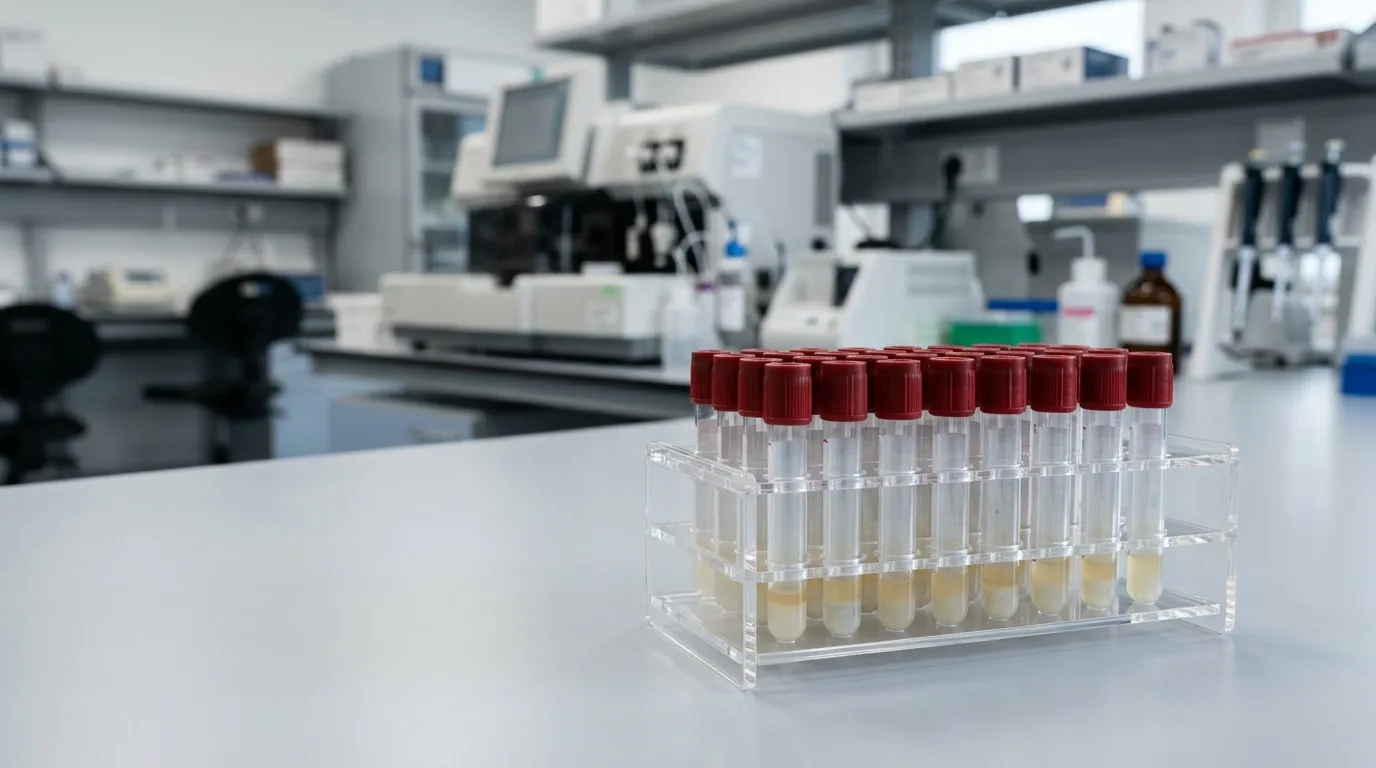
What are the different types of Vacuum Blood Collection Tubes and their uses?
Vacutainers are also referred to as vacuum blood collection tubes which are very important tools in contemporary clinical laboratories and hospitals. They enable medical workers to collect and store blood safely to be tested diagnostically. The selection of the appropriate type of tube is important since all tubes have certain additives that determine the properties of the blood sample to be used so that the test results become correct. We will discuss the various kinds of vacuum blood collection tubes, their applications, and how to select them in this article.
What are Vacuum Blood Collection Tubes?
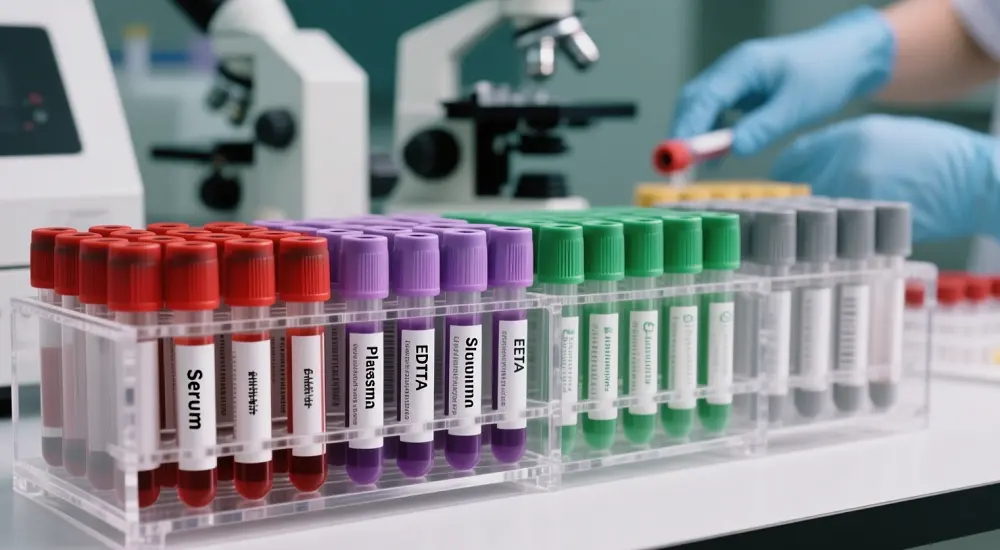
Vacuum blood collection tubes are pre-labeled, sterile negative-pressure tubes that are used to capture a set amount of blood. These tubes were introduced in the 1940s and revolutionized blood collection by decreasing the chances of contamination and preserving the integrity of the samples. The tubes are color-coded and this denotes the kind of additive present. Such additives may be anticoagulants, clot activators or preservatives, depending on the laboratory test to which they are intended.
Types of Vacuum Blood Collection Tubes.
1. Red-Top Tube (Electric Tube)
Additive: none (plain), or clot activator.
Application: Serum collection to perform chemistry, serology and immunology tests.
Tests which need serum are performed in red-top tubes. They are not anticoagulant-containing, so the blood clots naturally and the serum is separated following the centrifugation. Red-top tubes are frequently used in tests such as liver functions, cholesterol, and antibody detection. There are also variants with a silica-based clot activator to accelerate the clotting process and are therefore appropriate in emergency laboratories or high-throughput labs.
2. Tiger-Top Tube/Gold (SST -Serum Separator tube)
Additive: Gel and clot activator to serum separation.
Applications: Chemistry panels, serology and immunology.
There is a gel barrier in gold or tiger-top tubes to separate serum and blood cells following centrifugation. This gel can be used to stop contamination and to extend the stability of samples which is why these tubes are the best in a complete metabolic profile, thyroid functional analysis and hormonal tests.
3. Light Blue-Top Tube
Additive: Sodium citrate
Use: Coagulation tests (PT, aPTT, INR)
Coagulation testing is done using light blue-top tubes. The sodium citrate chelates the calcium in the blood, and does not allow the formation of clots until the laboratory is available to test it. The proportion of blood to additive is very crucial; either underfilling or overfilling may cause inaccurate coagulation results.
4. Green-Top Tube
Additive: Heparin (sodium, lithium, or ammonium)
Use: Plasma chemistry, ammonia, and genetic studies
Green-top tubes are those tubes that hold heparin, which is an anticoagulant as it inhibits thrombin and factor Xa. The tubes are suitable in the plasma-based tests, particularly where the sample processing has to be done quickly. They find application in such tests as electrolyte panels, ammonia levels, cytogenetic studies.
5. Lavender/Purple-Top tube.
Additive: EDTA (Ethylenediaminetetraacetic acid)
Application: Hematology, CBC, ESR and blood typing.
Lavender-top tubes are commonly used in hematology. EDTA chelates calcium, inhibits clotting of blood and maintains cell morphology. They are ideally used in complete blood count (CBC), hemoglobin A1c and erythrocyte sedimentation rate testing (ESR). Molecular diagnostics and PCR-based tests are also performed with EDTA.
6. Pink-Top Tube
Additive: EDTA
Use: Blood banking and crossmatching
Pink-top tubes are the same as lavender tubes but they are specifically used in blood bank procedures. They keep accurate blood typing, antibody screening, and crossmatching prior to transfusions. Tubes usually have barcodes to trace the procedures in transfusion medicine.
7. Gray-Top Tube
Additive: Potassium oxalate and sodium fluoride.
Use: Glucose test, blood alcohol test.
Gray-top tubes inhibit glycolysis, maintaining the level of glucose to be tested. Sodium fluoride prevents the enzyme activity and potassium oxalate is an anticoagulant. They find a wide application in fasting blood glucose, oral glucose tolerance, and ethanol level.
8. Light Yellow-Top Tube
Additive: Acid-citrate-dextrose (ACD)
Applications: DNA analysis, HLA typing, and bone marrow analysis.
Light yellow-top tubes are mainly used in molecular biology and immunogenetics. ACD maintains the viability of nucleated cells and improves the survival of lymphocytes, vital in the extraction of DNA, HLA typing, and other cell studies.
9. Specialty Tubes
Certain laboratories have specialty tubes of special tests:
· Royal Blue-Top: For trace elements like lead, copper, and zinc; can contain EDTA or none.
· Orange-Top: Swift serum tubes with thrombin to use in stat chemistry tests.
· Black-Top: When using Westerngren ESR tests.
Vacuum Blood Collection Tube: How to Select the Right one.
The selection of the tube is very important to the accuracy of the test. Take into account the following:
1. Type of Test: Determine whether the sample needed in the test is serum, plasma, or whole blood.
2. Additive Compatibility: This is to make sure the additive does not affect the assay.
3. Sample Volume: Fill the tube to the indicated level in order to ensure the appropriate blood-to-additive proportion.
4. Sample Stability: Sample viability is enhanced with some tubes, making them useful in the transportation of samples to distant labs.
5. Laboratory Procedures: Use sequential order of draw to avoid cross-contamination of the tubes.
Advantages of Vacuum Blood Collection Tube.
· Safety: Closed system minimizes needle-stick and contamination.
· Efficiency: Collects exact volume quickly and easily.
· Precision: Special additives maintain the integrity of samples to give credible test results.
· Comfort: Color-coded tubes make work easier in a busy lab.
Conclusion
Vacuum blood collection tubes are considered to be essential in contemporary healthcare as they provide safety, accuracy, and effectiveness of sample collection. Knowing the various varieties of tubes and their applications will provide correct diagnosis outcomes, which are crucial in patient care. Doing regular blood tests, coagulation studies or even molecular diagnostics, choosing the right tube is a little step but a big difference.
The reliability of laboratory results is increased through proper training and protocols that, in the long run, leads to improved patient outcomes. To hospitals, clinics, and laboratories in any city across the globe, understanding the subtleties of vacuum blood collection tubes is not only a technical necessity, but a pillar of quality healthcare.