



Updated 5 months ago
How to choose a suitable Blood Collection System for a hospital/laboratory?

Admin
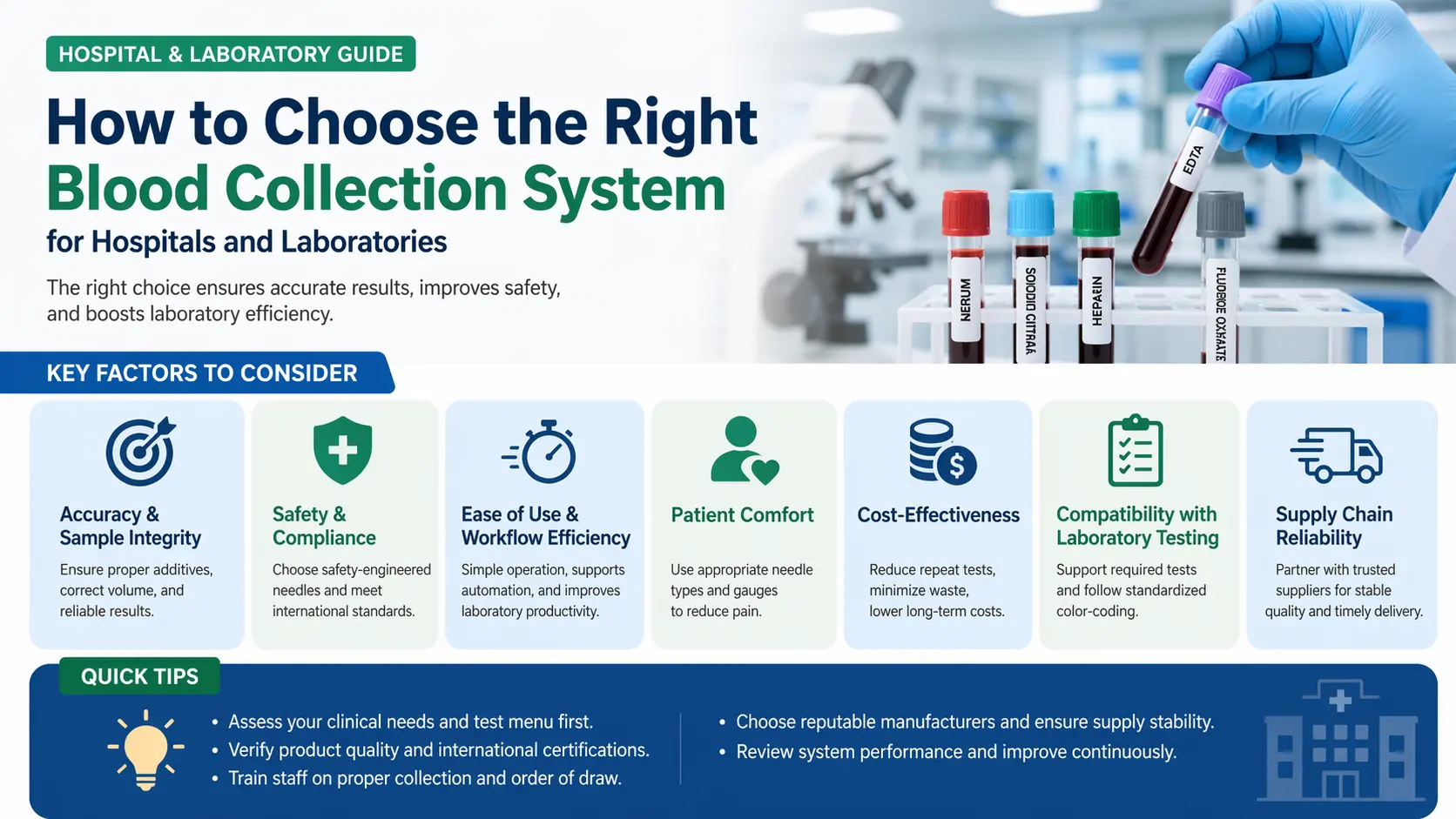
How to choose a suitable Blood Collection System for a hospital/laboratory?
Selecting the right blood collection system is a critical decision for hospitals and laboratories. It directly impacts diagnostic accuracy, patient safety, workflow efficiency, and overall healthcare quality. With increasing demand for reliable laboratory results, healthcare providers must carefully evaluate various factors before choosing the most appropriate system.
This guide explores key considerations, system types, and best practices to help you make an informed decision.
1. Understanding Blood Collection Systems
A blood collection system is a system in its entirety constituting the devices to draw, handle and transport blood samples. These are usually needles, holders, tubes and safety accessories.
The evacuated tube system (also referred to as the Vacutainer system) is the most popular system currently used. It applies vacuum pressure to force an exact amount of blood into tubes to enhance uniformity and reduce contamination.
Other systems include:
- Butterfly (winged infusion) sets – ideal for pediatric or difficult veins
- Syringe-based systems – used in special cases requiring controlled pressure
Each system serves different clinical needs, making proper selection essential.
2. Key Components of a Blood Collection System
Understanding system components helps in evaluating quality and compatibility:
a. Needles
Sterile needles vary in gauge size (typically 18–22). Larger gauges allow faster blood flow, while smaller ones are suitable for fragile veins.
b. Tube Holders
These connect the needle and collection tube, ensuring stability during venipuncture.
c. Blood Collection Tubes
Vacuum-sealed tubes contain additives that preserve samples for specific tests.
d. Safety Features
Modern systems include safety-engineered needles to prevent needlestick injuries and contamination.
3. Types of Blood Collection Tubes and Their Uses
Choosing the correct tube is crucial because additives directly affect test results.
Common types include:
- Serum tubes (Red/Yellow cap) – for chemistry and serology tests
- EDTA tubes (Purple cap) – for hematology tests
- Sodium citrate tubes (Blue cap) – for coagulation studies
- Heparin tubes (Green cap) – for plasma-based assays
- Fluoride oxalate tubes (Gray cap) – for glucose testing
Using the wrong tube can lead to sample contamination or inaccurate results, potentially causing misdiagnosis.
4. Key Factors to Consider When Choosing a Blood Collection System
4.1 Accuracy and Sample Integrity
Accurate diagnostics begin with proper sample collection. Incorrect tube selection or handling can cause hemolysis or contamination, leading to rejected samples and repeated tests.
Look for systems that:
- Maintain correct blood-to-additive ratios
- Prevent leakage and contamination
- Ensure consistent sample volume
4.2 Safety and Compliance
Healthcare worker safety is a top priority. Needlestick injuries can expose staff to infections.
Choose systems with:
- Safety-engineered needles
- Protective shields or retractable mechanisms
- Compliance with international standards (e.g., CLSI guidelines)
4.3 Ease of Use and Workflow Efficiency
A user-friendly system reduces training time and improves efficiency.
Important considerations:
- Simple assembly and operation
- Compatibility with automated lab equipment
- Ability to collect multiple samples with a single puncture
Vacuum systems are particularly efficient because they allow multiple tubes to be filled quickly without repeated needle insertion.
4.4 Patient Comfort
Patient experience is increasingly important in modern healthcare.
Systems that improve comfort include:
- Butterfly needles for sensitive patients
- Smaller gauge needles for reduced pain
- Smooth blood flow to minimize vein trauma
4.5 Cost-Effectiveness
While advanced systems may have higher upfront costs, they often reduce long-term expenses by:
- Minimizing sample rejection
- Reducing repeat tests
- Improving workflow efficiency
Hospitals should evaluate total cost of ownership rather than just unit price.
4.6 Compatibility with Laboratory Testing
Ensure that the system supports all required test types, including:
- Hematology
- Biochemistry
- Immunology
- Molecular diagnostics
Standardized color-coded tubes help laboratories quickly identify the correct sample type.
4.7 Supply Chain Reliability
A consistent supply of consumables (tubes, needles, holders) is essential for uninterrupted operations.
Choose suppliers that offer:
- Stable production capacity
- Global certifications
- Reliable logistics support
5. Comparing Common Blood Collection Systems
| System Type | Advantages | Limitations | Best Use Cases |
|---|---|---|---|
| Vacutainer System | Accurate, fast, low contamination | Higher cost | Routine hospital/lab testing |
| Butterfly System | Comfortable, precise | Slower collection | Pediatrics, geriatrics |
| Syringe System | Controlled pressure | Higher contamination risk | Special procedures |
The Vacutainer system remains the most widely adopted due to its efficiency and reliability.
6. Best Practices for Selection
To ensure optimal performance, hospitals and laboratories should:
- Conduct a needs assessment based on patient volume and test types
- Evaluate product quality and certifications
- Train staff on proper usage and “order of draw” protocols to avoid contamination
- Partner with reputable manufacturers
- Regularly review system performance and error rates
7. Future Trends in Blood Collection Systems
Modern innovations are shaping the future of blood collection:
- Automation integration for faster lab workflows
- Safety-enhanced devices to reduce injuries
- Micro-sampling technologies for minimal blood volume
- Eco-friendly materials to reduce medical waste
These advancements aim to improve both efficiency and patient care outcomes.
Conclusion
Choosing the right blood collection system is not just a procurement decision—it is a strategic investment in healthcare quality. Hospitals and laboratories can guarantee quality diagnostic outcomes and better patient outcomes by taking into account accuracy, safety, efficiency, as well as compatibility.
The perfect system must strike a balance between performance, cost, and usability and fulfill the requirements of your facility. The right selection will help healthcare providers to increase the efficiency of the workflow, minimize mistakes, and, in the end, improve care.