



Updated 5 months ago
How does a Blood Collection System improve patient safety?

Admin
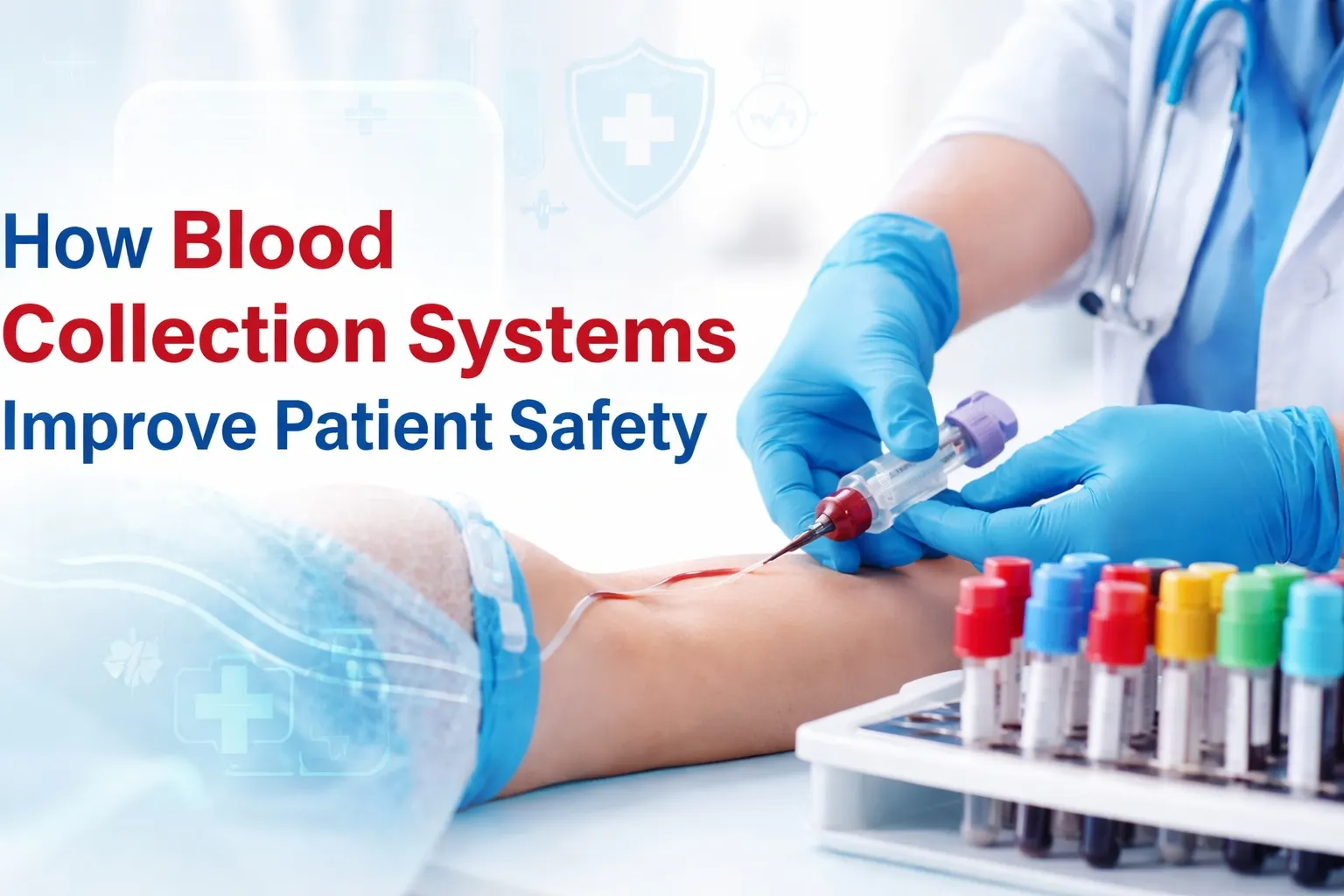
How does a Blood Collection System improve patient safety?
In modern healthcare, patient safety is a top priority. All the steps involved in the diagnosis to treatment should be precise, careful, and reliable. The blood collection system is one of the most important and important aspects of this process that is frequently ignored. Blood collection systems are essential in hospitals, clinics or diagnostic laboratories to ensure the correct result and minimize the risk or overall patient outcome.
This article discusses the benefits of blood collection systems in improving patient safety, the technologies associated with them and why healthcare providers should invest in high-quality systems.
What Is a Blood Collection System?
A blood collection system is the collection of tools and devices that are utilized in drawing, handling, and transporting blood samples safely to be tested. This consists of needles, collection tubes, holders, safety devices and labeling systems. Contemporary systems are not only efficient but also help to reduce risks to both patients and medical personnel.
1. Reducing Risk of Contamination
Contamination reduction is one of the most important means that a blood collection system can enhance patient safety. Polluted blood may produce inaccurate test results and this may cause misdiagnosis or wrong treatment.
Closed-system blood collection devices have particular expertise in ensuring sterility. The systems avoid exposing them to outside contaminants and therefore the blood moves straight into the vein to a closed tube. This reduces the possibility of infection and maintains the sample integrity.
2. Enhancing Accuracy of Test Results
Diagnosis requires quality blood samples. Blood collection systems are developed in such a way that they are able to guarantee that the samples are gathered in the right amount of volume and that the samples are stored in the best possible conditions.
For example:
· Vacuum tubes are pre-calibrated to make sure that sample volumes are accurate.
· Colored tubes facilitate the choice of additives to be used on a particular test by the healthcare workers.
· Effective labelling mechanisms will minimize chances of sample confusion.
These attributes greatly minimize human error, resulting in more dependable laboratory findings and less risky clinical judgments.
3. Minimizing Needlestick Injuries
The problem of needlestick injuries is a critical issue in healthcare. They not only put healthcare workers at risk but indirectly patients too since they may result in cross-contamination or care delays.
The safety-engineered devices used in modern blood collection systems include:
· Retractable needles
· Shielded needle tips
· Safety mechanisms that operate using one hand.
These innovations decrease the threat of unforeseen injuries and guarantee a healthier atmosphere among individuals and personnel.
4. Improving Patient Comfort
Patient experience is an important aspect of safety. The complications that may arise as a result of pain, anxiety, and discomfort during blood collection are fainting and refusal of future procedures.
State-of-the-art blood collection systems are patient-friendly:
· Slim needles cause less pain when inserted.
· A coating on the needles makes them easy to insert into veins.
· Healthcare providers can have better control with ergonomic designs.
These systems assist in making the procedures smoother and more cooperative of the patients by reducing discomfort.
5. Preventing Sample Misidentification
The misidentification of the sample is a serious mistake, which can lead to serious consequences, such as improper treatment or late diagnosis. To avoid this, blood collection systems have become more sophisticated with the introduction of cutting-edge labeling and tracking systems.
Barcoding and computerized trackage enable:
· Accurate patient identification
· Online monitoring of samples.
· Less manual data entry errors.
These systems can make sure that every sample is properly associated with the appropriate patient, which will contribute greatly to safety.
6. Supporting Infection Control
One of the pillars of patient safety is infection control. The process of blood collection is characterized by direct contact with body fluid, so it is crucial to pay attention to good hygiene.
Contemporary systems aid infection control by:
· With single-use and disposable components.
· Incorporating sterile packaging
· Limiting exposure via closed systems.
These attributes assist in avoiding the transmission of infections in healthcare facilities.
7. Streamlining Workflow and Reducing Errors
Efficient workflow is one of the factors that promote patient safety because it reduces delays and the risk of errors. The blood collection systems are created to streamline the processes and make them standardized.
Benefits include:
· Faster collection times
· Reduced handling steps
· Well defined guidelines on usage.
With the processes becoming less complicated, healthcare providers have more time to pay attention to patients and less time to fix the mistakes.
8. Enabling Compliance with Safety Standards
There are stringent rules and safety measures that must be adhered to in healthcare facilities. Good blood collection systems are functional and will comply with international standards and assist the organization to achieve compliance.
These systems support:
· Occupational safety regulations
· Infection control guidelines
· Laboratory quality standards
The adherence does not only safeguard the patients but also improves the credibility and reliability of the healthcare providers.
9. Supporting Training and User-friendliness.
Healthcare professionals find it simpler to conduct procedures appropriately through user-friendly blood collection systems. The learning curve is minimized with clear instructions, user-friendly designs and standardized parts.
This is particularly critical in high-stress work settings where speedy and prompt action is crucial. Properly designed systems can be used to maintain uniform performance, even among less qualified employees.
10. Keeping up with Technological Developments.
The healthcare sector is changing very fast and blood collection systems are also following suit. Patient safety is further improved with integration with digital health records, automation and smart tracking technologies.
For instance:
· Error of labeling is minimized by automated labeling.
· It can be integrated with electronic medical records to enhance data accuracy.
· The sample conditions in the course of transportation can be tracked by smart devices.
These innovations make the healthcare ecosystem safe and more interconnected.
Conclusion
Blood collection systems are the basic component of the modern healthcare system that is essential in enhancing patient safety. These systems offer several lines of defense, whether it is the reduction of contamination and injury prevention or the increase of accuracy and aid in the preservation of infection control.
With the modernization of healthcare, investing in new blood collection technologies not only is a question of efficiency, but also an obligation to patient well-being. With the adoption of systems that are of high quality, the healthcare providers will be able to offer safer procedures, more precise diagnoses, and improved overall results.