


Updated 5 months ago
How to develop a regular maintenance plan for laboratory equipment?

Admin
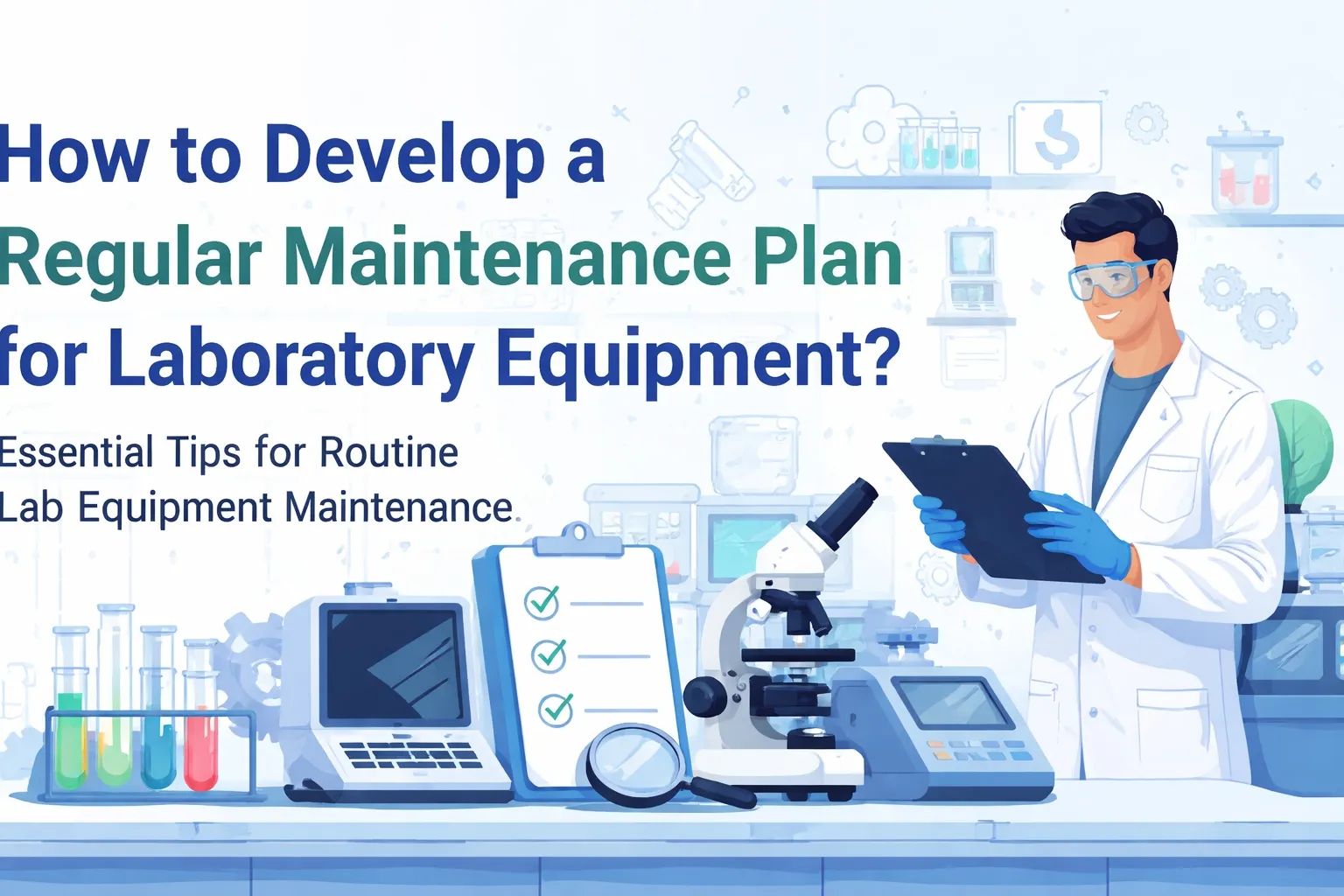
How to develop a regular maintenance plan for laboratory equipment?
Laboratories are also dependent on high-quality and time-efficient equipment in order to provide high-quality results and ensure the safety of both the researchers and their experiment. Nonetheless, the efficiency of these fundamental tools may decline due to neglect and this results in expensive repairs, downtime or even hazardous failures. To make sure that laboratory equipment does not malfunction during its service life, it is essential to have a properly designed maintenance plan. This blog will specify the critical steps in developing a strong and efficient maintenance plan of laboratory equipment.
1. Understand the Types of Laboratory Equipment and Their Needs
Prior to developing a maintenance plan, one must first and foremost evaluate the various types of laboratory equipment and how they may be in need of maintenance. The equipment in the laboratories can be classified into:
- Analytical Instruments: Spectrophotometers, chromatographs, microscopes, etc.
- General Equipment: Centrifuges, incubators, autoclaves, water baths, etc.
- Support Equipment: HVAC systems, gas cylinders, lab refrigerators, etc.
The needs of each type of equipment will differ because of the frequency and complexity of its use, and manufacturer requirements. Knowledge of how the equipment works and its significance in experiments will aid in prioritizing the maintenance work.
2. Review Manufacturer Recommendations and Warranties
The most appropriate source of information about the maintenance schedules and procedures is usually the manufacturer recommendations. These instructions will contain specifics on the frequency of servicing equipment, the nature of maintenance needed (preventive maintenance or corrective maintenance) and warranty restrictions or coverage. Most manufacturers of laboratory equipment offer maintenance instructions, which are to be followed, so that the warranty of the equipment could be maintained.
Should warranty still be in force, all the recommended services should be carried out as per the agreed terms to prevent it being invalidated. It is also in the best interest of the equipment to operate at its optimum and minimizes chances of inappropriate maintenance because it is being operated as recommended by the manufacturer.
3. Develop a Preventive Maintenance Schedule
A good maintenance plan is founded on preventative maintenance. This kind of maintenance aims at prevention of problems before they occur so that the laboratory equipment works in the most optimal way. A preventive maintenance schedule must contain:
- Routine Inspections: Check equipment for any visible damage or wear and tear. Look for leaks, rust, or unusual noises. These inspections should be conducted regularly, with the frequency determined by the equipment's usage and manufacturer recommendations.
- Cleaning: Many types of laboratory equipment, particularly analytical instruments, require regular cleaning to maintain accuracy. Schedule cleaning based on the type of equipment and its exposure to reagents or samples.
- Calibration: Accurate calibration ensures the reliability of data and results. Set intervals for calibration based on equipment type and frequency of use. Some instruments require monthly calibration, while others may only need calibration biannually or annually.
- Lubrication: For moving parts, like motors and bearings, proper lubrication is essential to reduce wear. Set a lubrication schedule based on equipment type and usage frequency.
- Software and Firmware Updates: Many modern lab instruments have software or firmware components. Schedule updates to ensure compatibility with the latest features and security protocols.
4. Implement a Record-Keeping System
The record-keeping system is a vital part of any maintenance plan. All the maintenance activities, be it preventive or remedial, must be recorded and documented. This will give a record of the past which can be used to trace the performance of the equipment, trace recurring problems and check that regulatory requirements are met. The main information to be contained in the maintenance log is:
- Date of service
- Nature of the maintenance performed
- Parts replaced (if any)
- Calibration details
- Any issues encountered and corrective actions taken
- Service personnel name/signature
Digital tools can assist labs in managing and tracking maintenance activities. A software (EMMS) to manage laboratory equipment maintenance can simplify the process and give real-time information and warnings about upcoming maintenance.
5. Assign Responsibilities and Train Staff
Training of staff will help in ensuring that every staff in the laboratory will be trained to use equipment appropriately and will be in a position to perform routine maintenance procedures effectively. It is also important to designate particular roles of maintenance so that nothing can be left to fall through the cracks. Depending on the size of the laboratory, the roles can be as follows:
- Lab Technicians: Responsible for daily or weekly checks on equipment functionality and cleanliness.
- Maintenance Personnel: Dedicated to more specialized tasks like calibration, part replacements, and software updates.
- Lab Managers/Supervisors: Oversee the maintenance program to ensure that schedules are being adhered to and equipment is being serviced on time.
Training should include not only how to perform basic maintenance tasks but also how to troubleshoot common issues, recognize early warning signs of failure, and understand the importance of timely repairs.
6. Plan for Corrective Maintenance
While preventive maintenance is the primary focus, there will always be instances where equipment malfunctions unexpectedly. A plan for corrective maintenance should be in place to address these unanticipated issues swiftly. Corrective maintenance involves:
- Rapid Response: Setting up a protocol for urgent repairs. The protocol should include how to report issues, who to contact for repairs, and the expected response time.
- Service Agreements: Some laboratories opt for service contracts with manufacturers or third-party service providers. These agreements ensure that a technician is available when necessary to perform repairs, often with a guaranteed response time.
- Spare Parts Inventory: Keeping an inventory of common spare parts can help reduce downtime. Items like fuses, motors, or calibration equipment should be available so that repairs can be completed quickly.
7. Evaluate the Performance of Your Maintenance Plan
A maintenance plan is only effective if it is continuously evaluated and improved. Regularly assess the performance of the plan by reviewing equipment downtime, maintenance costs, and feedback from laboratory personnel. Key performance indicators (KPIs) to monitor include:
- Equipment uptime: How often is the equipment available and functional?
- Maintenance costs: Are there any trends of rising maintenance expenses or recurring issues with specific equipment?
- Equipment lifespan: Has the equipment’s lifespan been maximized through regular maintenance?
By continuously monitoring these metrics, the laboratory can refine the maintenance plan and ensure its long-term effectiveness.
8. Comply with Regulatory Standards and Guidelines
Laboratories in most industries are highly regulated, with certain standards that outline maintenance and safety measures. An example of this is the laboratories that work with hazardous materials or in the pharmaceutical and medical sector whereby they are required to adhere to the Good Manufacturing Practices (GMP), ISO standards and other applicable regulations. Make sure that your maintenance plan is in accordance with these standards to make sure it will comply and prevent possible legal problems.
Conclusion
A regular maintenance plan on laboratory equipment is a very important measure that needs to be developed and implemented to guarantee the longevity and reliability of your equipment. Downtime can be reduced, costly repairs avoided, and the accuracy and safety of your laboratory operations maintained by knowing your equipment needs, following manufacturer instructions, and planning preventive and corrective maintenance. Periodic reviews and adequate documentation will also add more efficacies to your maintenance program. By having these steps, your laboratory will run more efficiently, incur less operational expenses, and the total life time of your equipment would be extended.