


Updated 5 months ago
Safety Lancet With Triple-Bevel Needle Geometry: Achieving Faster Blood Flow And Fewer Redraws

Admin
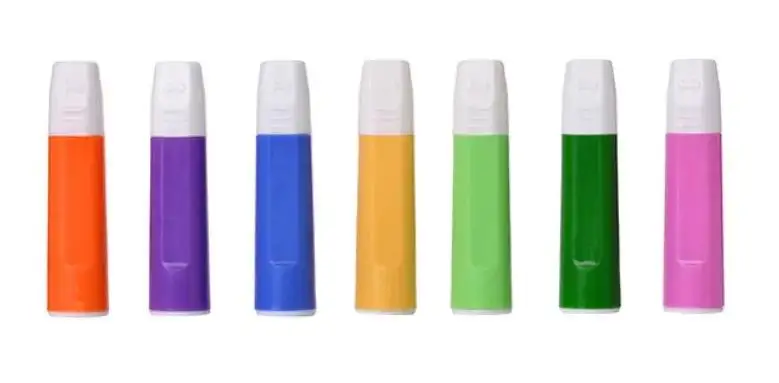
Safety Lancet
When healthcare providers choose a Safety Lancet, the two most critical performance metrics are blood flow rate and first-stick success rate. A slow or insufficient sample leads to repeated punctures, patient discomfort, and wasted clinical time. Trustlab has met this challenge head-on: employing sophisticated triple-bevel needle geometry, dual-spring precision, and self-destructing mechanisms. This design represents the demand for 2026: the next era for the safer, smarter, and more reliable single-use devices.
The Hidden Cost of Subpar Needle Geometry
The needle grind on most safety lancets is primitive. The design is not for cutting, but for tearing, resulting in insufficient capillary blood flow, collapsed veins, and a high incidence of redraws. In high-throughput clinics and hospital labs, the cost of each redraw includes:
•Direct labor costs: The clinician's time, disposal of the new device, and repeat patient interaction are incurred after a second stick.
•Patient anxiety: In pediatric or diabetic care, where multiple sticks are involved, compliance suffers, and trust is eroded.
•Supply waste: Two or more lancets per successful sample double your procurement volume.
A poorly designed tip also increases hemolysis risk, compromising lab results. Procurement managers who overlook needle geometry end up paying hidden operational penalties.
How Triple-Bevel Needle Geometry Transforms Capillary Blood Sampling
Trustlab's Safety Lancet features a triple-bevel, sharpened cannula—a design borrowed from advanced hypodermic needles but now adapted for capillary puncture. Three angled cutting edges create a smoother entry path through the epidermis and dermis.
•Decreased friction from the tissue damage: The triple bevel design means the puncture site is dilated, rather than torn, so crush injury is minimized.
•Increased flow from the capillaries: The sharp, clean incision made by the capillary is longer open, allowing the blood volume to adequately reach the surface in mere seconds.
•Decreased pain for the patient: The multiple bevels design means that the insertion force is spread out over a wider area, and snap through the standard lancet isn't felt
With this geometry in mind, Trustlab has designed an improved lancet that meets the needs of all phlebotomists. Flow for Trustlab lancets stays consistent and uninterrupted until a desired drop size is achieved.
Dual-Spring Engineering: The Perfect Partner for Triple-Bevel Tips
A superior needle tip alone cannot guarantee performance without controlled activation and retraction. Trustlab equips its Safety Lancet with two independent SUS304 stainless steel springs. Here is why dual springs matter:
•One spring drives the needle forward at optimal speed: Too slow causes hesitation and patient movement. Too fast creates excessive trauma. The first spring is calibrated for a decisive, yet gentle, puncture.
•The second spring retracts the needle instantly: After the triple-bevel tip reaches full depth, the retraction spring pulls it back into the handle, sealing the sharp inside the housing.
•Synchronized timing prevents “wiggle”: Some single-spring designs allow lateral movement during withdrawal. Dual springs keep the needle path straight, preserving vessel integrity.
Together with the triple bevel, this dual-spring system achieves what clinicians call a “clean draw”—ample blood on the first attempt, no second stick.
Self-Destructing Mechanism: Safety Without Compromise
A Safety Lancet that flows well but can be accidentally reused is a liability. Trustlab integrates a physical self-destructing mechanism that activates after a single puncture. The internal trigger mechanism permanently deforms, making re-arms impossible.
•This also means zero risk of cross-infection: even if a used device is picked up again, it cannot fire. This is critical for clinics sampling for infectious diseases, such as hepatitis or HIV.
•Clear visual indicator: The post-use state is different, allowing for quick spot checks by supervisors.
•Meets the WHO and OSHA recommendations: Regulatory bodies are increasingly stipulating sigle-use engineering controls that make reuse impossible.
This is a must for 2026 procurement contracts. It is a baseline requirement.
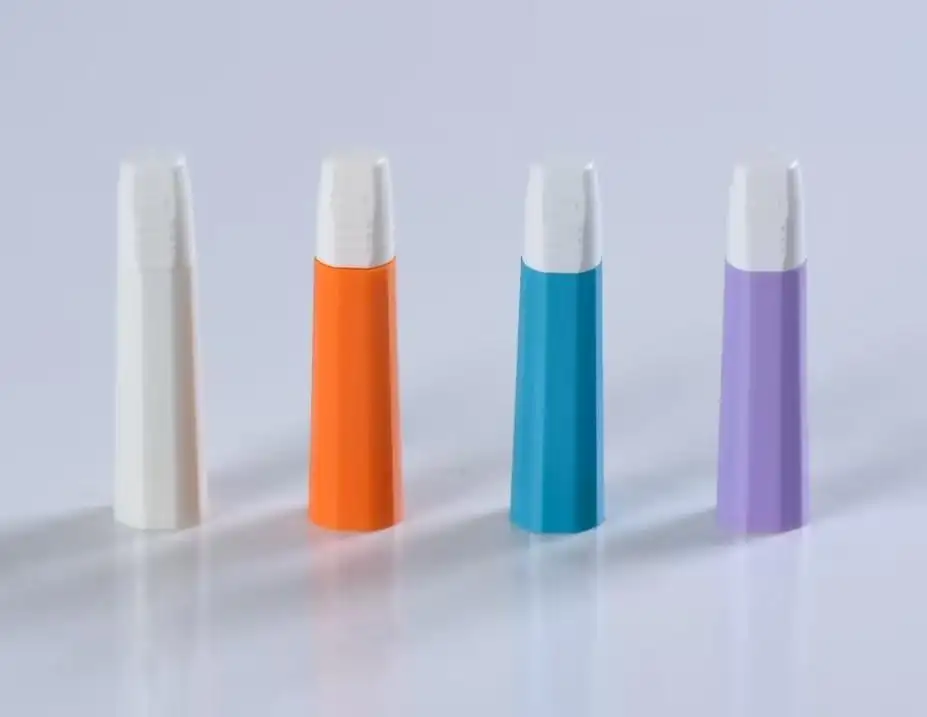
No Lancing Device, No Pre-Loading: Two Steps to a Reliable Sample
Many safety lancets still require a separate lancing device—a pen-like holder that adds cost, training, and failure points. Trustlab eliminates the device entirely. Each Safety Lancet is a complete, ready-to-use unit.
•Open the sterile blister pack: Gamma irradiation (Co-60) ensures sterility for five years under proper storage.
•Twist and remove the needle cap: The integrated twister exposes the triple-bevel tip safely.
•Press firmly against the puncture site: The trigger activates both springs in one smooth motion.
•Discard into a sharps container: The needle is already sealed and locked.
An auto-loading lancing device requiring no assembly, no depth adjustment, and featuring no loose or damageable parts. For procurement teams, this means fewer SKUs to manage and less clinician training time. Studies show that two-step activation reduces usage errors by over 70% compared to multi-step systems.
Why 2026 Procurement Trends Favor Trustlab's Safety Lancet Design
Global buying patterns for single-use medical devices are shifting. Hospitals now evaluate lancets based on total cost of ownership, not just unit price. Trustlab's Safety Lancet aligns with four major trends:
•Outcome-based purchasing: Fewer redraws directly lower your cost per completed test. A 20% reduction in redraws can save a mid-sized clinic thousands of dollars annually.
•Sharps injury prevention: The triple-bevel tip combined with automatic sealing reduces exposure risks. According to the CDC sharps injury data, nearly 40% of needlesticks occur during or after disposal. Trustlab's sealed post-use needle addresses exactly that window.
•Sustainability without sacrificing safety: The compact design (store no more than five cartons high) reduces warehouse footprint and shipping emissions. ABS and polyformaldehyde components are compatible with standard medical waste incineration.
•Supply chain simplification: One device replaces “lancet + lancing device” systems. Fewer SKUs mean lower inventory carrying costs and less expiry waste.
Real-World Impact: Fewer Redraws, Lower Supply Costs
Consider a busy outpatient lab performing 200 capillary blood draws per day. With a standard safety lancet, redraw rates often run 5–10% due to poor flow. That is 10–20 extra punctures daily. Over a year, that translates to over 3,000 wasted lancets and 3,000 additional patient sticks.
Switching to Trustlab's triple-bevel Safety Lancet typically reduces redraws to under 2%. The numbers speak for themselves:
•Reduced use of direct materials: Lancets will be used less with each successful sample drawn.
•Increased productivity: Clinicians will be able to spend time on patient care rather than drawing blood multiple times.
•Increased patient satisfaction: Reduced blood draws will improve patient ratings and reduce anxiety for patients who will need to return.
Trustlab justifies this with its own internal flow testing using standardized capillary simulators. Every lot is tested for sample sterility (via gamma irradiation), sharpness of the needles, and spring force.
The Bottom Line
Your choice of Safety Lancet directly impacts clinical efficiency, patient experience, and procurement budgets. Trustlab's triple-bevel needle geometry, backed by dual-spring engineering and a self-destructing mechanism, delivers faster blood flow and dramatically fewer redraws. It meets 2026's demands for simplicity, safety, and sustainability—without requiring a separate lancing device.
Ready to test the difference? Request a sample case of Trustlab's Safety Lancet (available in 30G to 21G, plus blade option). Evaluate the triple-bevel flow performance against your current brand. Your clinicians will notice fewer second sticks. Your safety officer will appreciate the sealed post-use design. And your procurement team will see the total cost savings.
Contact Trustlab's manufacturing team for technical data sheets, compliance certificates (ISO 13485, CE), and volume pricing tailored to your 2026 sourcing plan.
Trustlab — Engineering precision into every safety lancet.
FAQ
Q: What gauge options do you have for the triple-bevel safety lancet?
A: Trustlab has 30G, 28G, 26G, 23G, 21G, and a blade version (Cat No. 640610–640615). This is an option for a controlled blood flow and larger gauge.
Q: Does the triple-bevel work with fragile or sclerotic veins?
A: Yes, the design reduces trauma and is of benefit in the elderly, diabetic, and oncology patients and is necessary in patients where standard lancets collapse the capillary bed.
Q: What evidence do you have to support a claim of fewer redraws?
A: Every production lot is capillary flow tested with standard simulators. All internal data indicates a first-stick success rate of greater than 98% for all gauges.
Q: Is this safety lancet compatible with standard lancing devices?
A: No devices are needed. Trustlab safety lancets are self-contained and activate in 2 steps (twist, press). This resolves the secondary issues surrounding device compatibility and simplifies training.
Q: What are the shelf-life and storage requirements?
A: 5 years from manufacture date if stored in a dry, clean, and ventilated storage area. Cartons should be stacked no more than five high to maintain gamma irradiation (Co–60) sterility.