


Updated 5 months ago
Stool Contianer Leaks? How A Screw Cap Saves Your Lab From Biohazard Risks

Admin
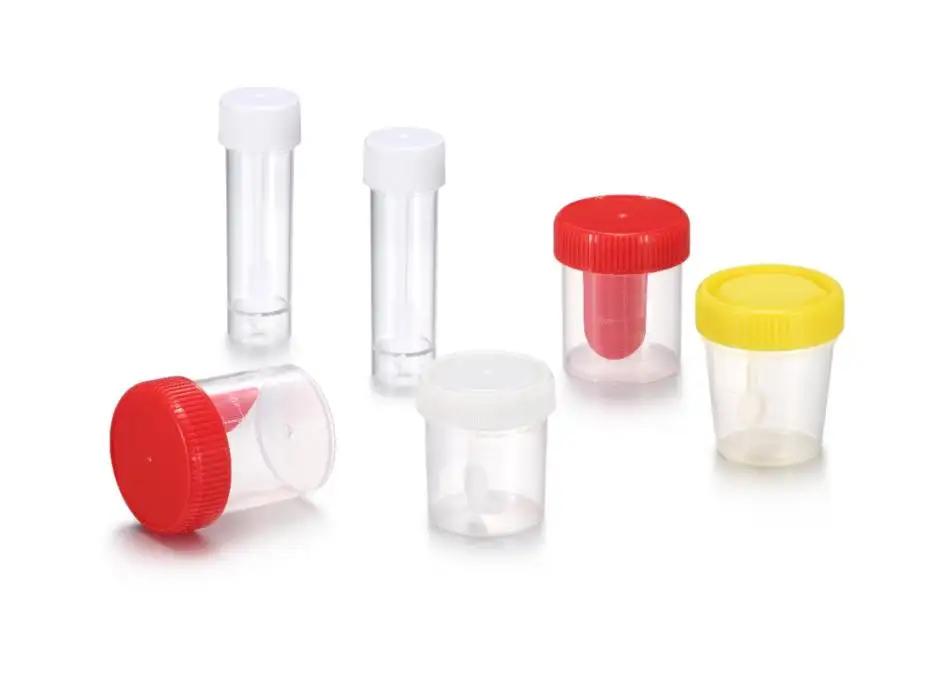
Stool Contianer
Stool Container leaks threaten laboratory biosafety, staff health, and diagnostic accuracy. Clinical and research laboratories incur significant annual costs from biohazard incidents caused by leaks from improperly sealed specimen containers. A single leak can damage contaminated transport bags, labs and benches, and require sample rejection and retesting, and costly regulatory fines. As laboratory biosafety regulations tighten around the globe in 2026, selecting a proven stool container will become a strategic sourcing decision rather than a simple purchase.
With the added advantage of a patented screw-cap design, Trustlab has a leading solution for this leakage. Trustlab’s new stool container utilizes a design that integrates advanced medical-grade polypropylene snap cap technology to ensure labs eliminate leakage at the source, secure and simple.
Leakage Crisis in Specimen Handling
Leakage from stool containers has become so commonplace that many laboratory staff have loss of containment leakage events during transport, storage, and transfer of specimens. Evidence suggests that leakages occur in 3%- 5% of all biological samples during transport or storage, resulting in:
•Biohazard exposure: fecal pathogens, including C. difficile, norovirus, and Salmonella
•Dehydration and or effective sample contamination.
•Interrupted workflow: Leaked samples require re-collection, postponing diagnoses and frustrating clinicians.
•Cleaning and disinfecting costs: Biohazard spills demand specialized protocols and downtime
The root cause is most certainly the same: closing systems. Snap-cap systems, or loose threaded containment systems systems, standard restroom laboratory sample collection, have not been designed to trap containment and refuse to stand and seal at ambient and decent room temperatures alteration, vacuum and excess pressure changes, and percussive agitation during transport.
How Trustlabs Screw Cap Design Ensures No Chance of Leaks
Trustlabs collection system has been designed from the ground up to maintain the integrity of the entire system from the moment of collection to the moment of disposal. The screw-cap design has been thought through down to the smallest detail, and the core design feature that makes the whole system work. This is how the design features work to ensure that there are no leaks and no damage to your laboratory.
•Continuous thread engagement: The screw cap design allows the cap to be screwed down fully, which secures and distributes the cap over the entire lip of the cap. This design does not provide a weak point, ensuring that liquid or semi-solid samples cannot escape.
•Chemical resistant polypropylene (PP) material: The body and the cap are designed to ensure that the container remains intact, even with the use of strong fixatives or preservatives, or with extreme temperatures (up to -20°C to +60°C). This design allows the container to maintain a seal throughout storage for any period of time.
•Internal lip seal design: The internal design of the container has been engineered such that the internal lip seal design fits in such a way that it creates a seal that provides a secondary seal, even if that seal is not totally sealed. This design is meant to be forgiving, even for the most careless of technicians.
•No O-ring failure risk: The main body of Trustlabs design is a rigid polypropylene material which is designed to provide a seal. This seal is a polypropylene to polypropylene seal which is a positive contact seal. This will eliminate there being any failure, which is usually a failure during long-term storage.
The design has passed internal leak testing, as a minimum standard of testing and ensuring that the design is fully functional in extreme real world application testing, to be fully compliant with regulations.
These design features translate into a decrease in the risk of the samples being biohazardous and an increase in the acceptance of samples being provided for testing. These are the features that laboratory managers and procurement offices are seeking, and these are the features that we are providing.
The Future of Laboratory Safety: Mandatory Screw Caps
The market for lab consumables is changing rapidly. Following the most recent updates to the WHO Laboratory Biosafety Manual, creating secondary containment for stool sample collection is now an absolute requirement for BSL-2 labs. Additionally, OSHA’s Bloodborne Pathogens Standard has made it clear that primary collection, transport, and storage containers must be leak-proof.
Trends for 2026 that shrewd buyers will be looking for include:
•Closed-system designs that limit air and external contamination.
•Containers that don’t compromise the integrity of seals.
•Documentation that is audit-ready with traceability for manufacturing lot numbers and confirmed sterility (or SAL).
All these aforementioned guidelines are met by Trustlab’s screw-cap stool containers, and with the added flexible sizing design (30 ml, 60 ml, 120 ml, and 100 ml) and the option to choose sterile (EO gas) and non-sterile versions. For further contamination control, the integrated spoon and wide mouth design further minimize manual handling.
Features to Enhance Routine Laboratory Activities
Though the primary function of a screw cap is to ensure leak prevention, Trustlab has added additional touches that ensure the container is a functional addition to the lab’s workflow and not just a safety fixture:
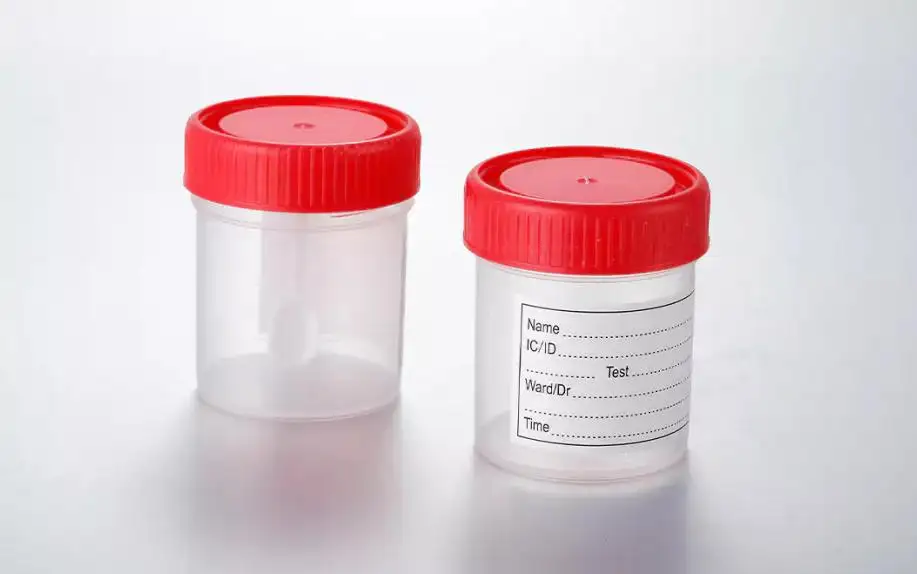
• Labeling area with clear divisions: No tape is required for labeling or creating identifications, or users can forgo the personalized labeling and instead use pre-printed labels to reduce misidentification.
• Color coding (blue and red) of cap is an option: No need to read fine print at a glance. Color distinctions can represent different categories of patients, different samples or tests, and can also indicate varying levels of priority.
•Opaque body: Ambient transport of light sensitive samples can be safely done without risk of exposing them, e.g. certain parasites, porphyrins, bilirubin etc.
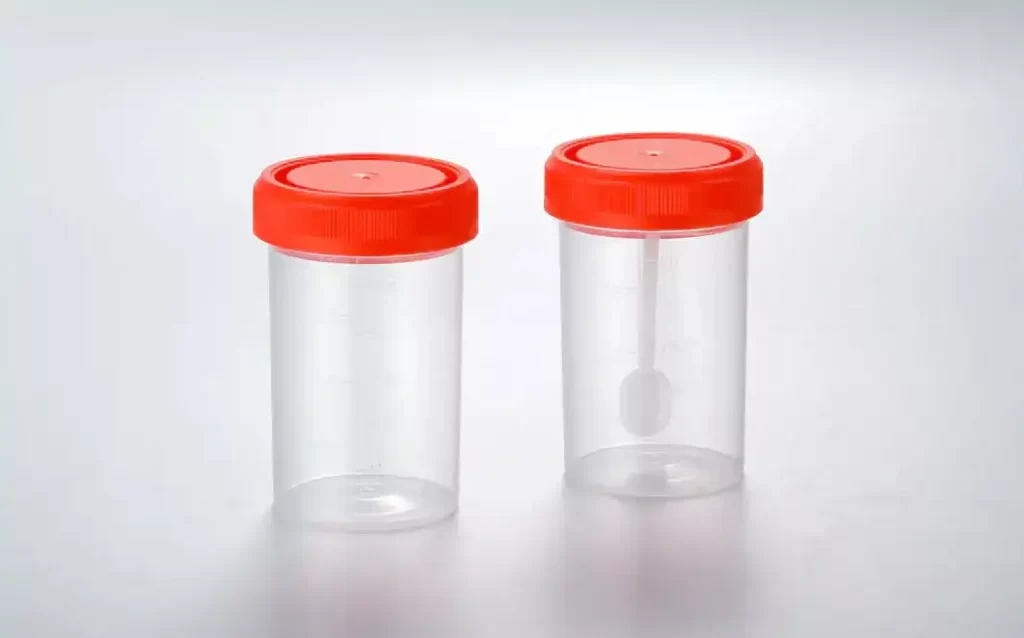
•Graduated markings: For accurate volume determinations, there’s no need to transfer samples to another vessel which saves time and reduces the risk of spills.
•Constructed from shatterproof polypropylene rather than glass, eliminating risks associated with sharps and glassware breakage.
The features outlined above are the direct solution to the challenges most commonly faced by laboratory technicians, as reported in the 2025 survey of the industry: difficulty in labeling, guesswork in determining volume, and anxiety over breakage.
What Laboratory Procurement Should Aim for in 2026
For a hospital laboratory, diagnostic center, or research institute, stool sample containers must fulfill the following five requirements:
•Leak-tight certification: Ensure the manufacturer can provide evidence of actual leak testing rather than just leakage claims.
•Material certification: Confirm biocompatibility according to USP Class VI or ISO 10993 for diagnostic use.
•Sterility: Select E.O. Sterile for microbiology; non-sterile is adequate for chemistry.
•Temperature: Confirm -20 to +60°C.
•Reliable supplier: Trustlab has quick lead times and consistent stock.
•Bottom Line: Great Upgrades, with Great Risk Reduction:
A well-designed screw-cap stool container is the safest, lowest-cost, and most impactful improvement for your laboratory. Trustlab has taken the guesswork out of the equation with an engineered container that provides a secure, chemical-resistant seal, and one that is designed to fit seamlessly into your current operational structure. For laboratories processing 50 or 5,000 stool samples weekly, the reduction in leakage will more than pay for the upgrade in staff safety, sample integrity, and confidence in the audit.
Ready to eliminate stool container leaks in your lab? Contact Trustlab for a free sample kit and compare side-by-side with your current container. Request bulk pricing or sterile certification documents—no obligation.
Frequently Asked Questions (FAQs)
Q: Do the screw caps hold up to the temperatures of a deep freezer for long term storage of stool samples?
A: Yes. Trustlab’s polypropylene (PP) stool container remains sealed at temperatures ranging from -20°C to +60°C. This design gives the container the ability to be stored in a freezer or be transported in warmer climates without the container cracking or leaking.
Q: Are Stool Containers reusable after cleaning?
A: No. This container is made with single-use laboratory protocols that contain cross-contamination and biohazard concerns. The container is to be discarded after the sample is taken.
Q: Do the screw caps comply with standard laboratory automation?
A: Yes. The screw caps have a uniform design that is compatible with most decappers and sample processors. We encourage you to request for a sample and test with your specific apparatus.
Q: How do I confirm that a given batch of Stool Containers is guaranteed to be leak-proof?
A: Trustlab conducts random leak tests in accordance with ISO 13485. You may request specific batch test results and quality certificates with each order.
Q: What options do you have for different volumes of stool samples?
A: The container is available in 30ml, 60ml, 100ml, and 120ml sizes, with uniform screw caps and graduated markings for easy volume references.
Q: Is it possible to obtain sterile Stool Containers for applications in microbiology?
A: Yes. Both E.O. gas sterile and non-sterile options are available. The sterile containers are individually wrapped to preserve sterility until they are ready to be used.
Q: Do the red and blue caps serve a function besides aesthetics?
A: The caps are color-coded for a reason—caps can visually organize by specimen sort, patient level of triage, or department; and help decrease labeling confusion in a hectic laboratory.