


Updated 5 months ago
What are the typical components of a complete Blood Collection System?

Admin
What are the typical components of a complete Blood Collection System?
The modern healthcare cannot live without a complete blood collection system because it is a critical component of diagnostic, treatment monitoring and medical research. Hospitals and clinics, laboratories and blood donation centers, all of them have these systems that assure safety, efficiency, and minimum discomfort to patients when collecting blood samples. Knowledge of the system elements of a blood collection system may assist healthcare providers, purchasing departments and even patients to more fully understand how the process operates and why each component is important.
In this article, we are going to discuss the common aspects of a complete blood collection system, their roles and how they serve to give accurate and reliable blood sampling.
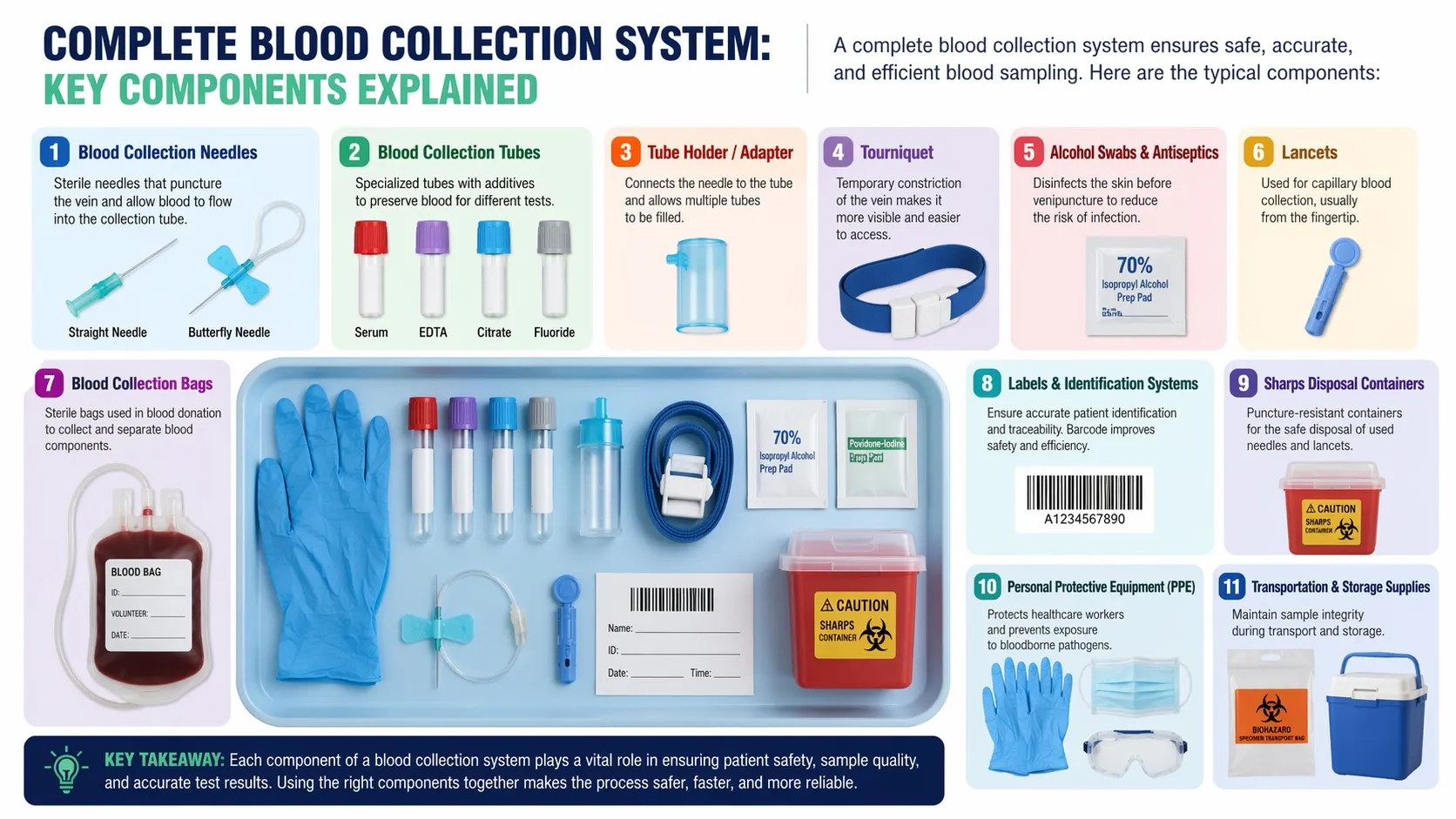
1. Blood Collection Needles
One of the most basic elements of the system is blood collection needles. These are single-use sterile devices that are used to stab the vein and have the blood flow into a collection container.
There are different types of needles depending on the application:
- Straight needles (multisample needles): Commonly used with evacuated tube systems for venipuncture.
- Butterfly needles (winged infusion sets): Ideal for patients with small or fragile veins, such as children or elderly individuals.
Needles are typically made from stainless steel and are designed with safety features such as retractable mechanisms or protective shields to reduce the risk of needlestick injuries.
2. Blood Collection Tubes
Blood collection tubes are specialized containers used to hold and preserve blood samples after collection. These tubes are usually made of glass or plastic and come pre-filled with additives depending on the type of test required.
Common types of tubes include:
- Serum tubes: Used for chemistry tests, often containing clot activators.
- Plasma tubes: Contain anticoagulants such as EDTA, heparin, or citrate.
- Specialty tubes: Designed for specific tests like glucose or blood gas analysis.
Each tube is color-coded for easy identification, which helps healthcare professionals quickly select the correct tube for each test, reducing errors and improving workflow efficiency.
3. Tube Holders or Adapters
Tube holders, also known as adapters, are used in conjunction with blood collection needles and evacuated tubes. They serve as a connection point between the needle and the collection tube, allowing multiple tubes to be filled during a single venipuncture.
These holders are typically made of plastic and are designed for single use to maintain sterility and prevent cross-contamination. Some advanced versions include safety features that help secure the needle after use.
4. Tourniquets
Tourniquets are simple yet essential tools used to temporarily restrict blood flow in the veins. By applying pressure to the upper arm, tourniquets make veins more prominent and easier to locate, which improves the success rate of venipuncture.
Tourniquets can be made from elastic materials, latex, or latex-free alternatives for patients with allergies. Disposable tourniquets are increasingly preferred in healthcare settings to minimize infection risks.
5. Alcohol Swabs and Antiseptics
Proper skin preparation is crucial before inserting a needle. Alcohol swabs or antiseptic solutions are used to disinfect the puncture site and reduce the risk of infection.
Typically, 70% isopropyl alcohol is used, although other antiseptics such as chlorhexidine may be applied in certain clinical situations. These are usually provided in individually packaged sterile wipes for convenience and hygiene.
6. Lancets (for Capillary Blood Collection)
Lancets are small, sharp devices used to obtain capillary blood samples, usually from a fingertip or heel (in newborns). They are commonly used for point-of-care testing, such as glucose monitoring.
Modern lancets are designed with safety mechanisms that automatically retract the blade after use, minimizing pain and reducing the risk of accidental injury.
7. Blood Collection Bags
Blood collection bags are applied in blood donation facilities, replacing the use of tubes. These are sterile, flexible bags that are used to collect greater amounts of blood and in most cases include anticoagulants to preserve the sample.
Blood bags can be of various compartments, where blood can be separated into different parts, which include the plasma, platelets and red blood cells. It is particularly significant in transfusion medicine.
8. Labels and Identification Systems
Proper labelling is an important part of blood collection system. The samples should also be labeled appropriately with the details of the patients, time of collection, and any other information to facilitate tracing and avoid mistakes.
Barcodes or RFID technology are common in modern systems to make the identification easier and more accurate. The integration of electronic health records (EHR) also increases effectiveness in tracking samples.
9. Sharps Disposal Containers
One of the most important requirements in the process of blood collection is safety. Sharps disposal containers are special purpose bins which are utilized to dispose of needles, lancets and other sharp objects safely after they have been used.
These are puncture resistant, leak resistant and have biohazard symbols written on them. When properly disposed, it will help avoid needlestick injuries and the possibility of infection transmission.
10. Personal Protective Equipment (PPE)
Healthcare workers involved in blood collection must use appropriate personal protective equipment to ensure their safety and that of the patient. Common PPE includes:
- Gloves
- Face masks
- Protective eyewear
- Gowns (in certain settings)
PPE helps prevent exposure to bloodborne pathogens and maintains a sterile environment during the procedure.
11. Transportation and Storage Supplies
Once collected, blood samples must be transported and stored under appropriate conditions to maintain their integrity. This includes:
- Specimen transport bags: Often with separate compartments for paperwork.
- Coolers or temperature-controlled containers: Used for samples that require refrigeration.
- Racks and holders: To keep tubes organized and upright.
Proper handling during transportation is essential to ensure accurate test results.
12. Vacuum Blood Collection Systems
Vacuum-based systems, also known as evacuated tube systems, are widely used in modern healthcare. These systems rely on pre-evacuated tubes that automatically draw a specific volume of blood when connected to a needle.
This technology offers several advantages:
- Consistent sample volume
- Reduced risk of contamination
- Faster and more efficient collection process
Vacuum systems are considered the standard in most clinical laboratories due to their reliability and ease of use.
Importance of an Integrated Blood Collection System
A complete blood collection system is not just a collection of tools, but a complex solution that is geared towards ensuring safety, accuracy, and efficiency throughout the process. All the components have their role, and the quality may be compromised, which may influence the whole work of diagnosis.
Investing in high-quality blood collection systems can result into the following to healthcare providers:
- Improved patient comfort
- Reduced risk of errors
- Enhanced workflow efficiency
- Better diagnostic outcomes
Conclusion
It is necessary to know the main elements of a full blood collection system that may be used by all the people engaged in healthcare or laboratory work. Needles and tubes, labeling systems and safety equipment are all parts of the success of blood sampling procedures.
Medical technology has been evolving, and blood collection systems are becoming more advanced, with enhanced safety aspects and increased interconnectivity with digital healthcare solutions. Healthcare facilities can guarantee consistent outcomes and excellent treatment through an appropriate selection of components and adherence to best practices.
As a healthcare professional, medical supplier, or just a person who is interested in the field, it is advisable to understand clearly these aspects so that you can manoeuvre through the intricacies of the modern blood collection process with confidence.