



Updated 5 months ago
What performance indicators should be focused on when selecting a blood collection system?

Admin
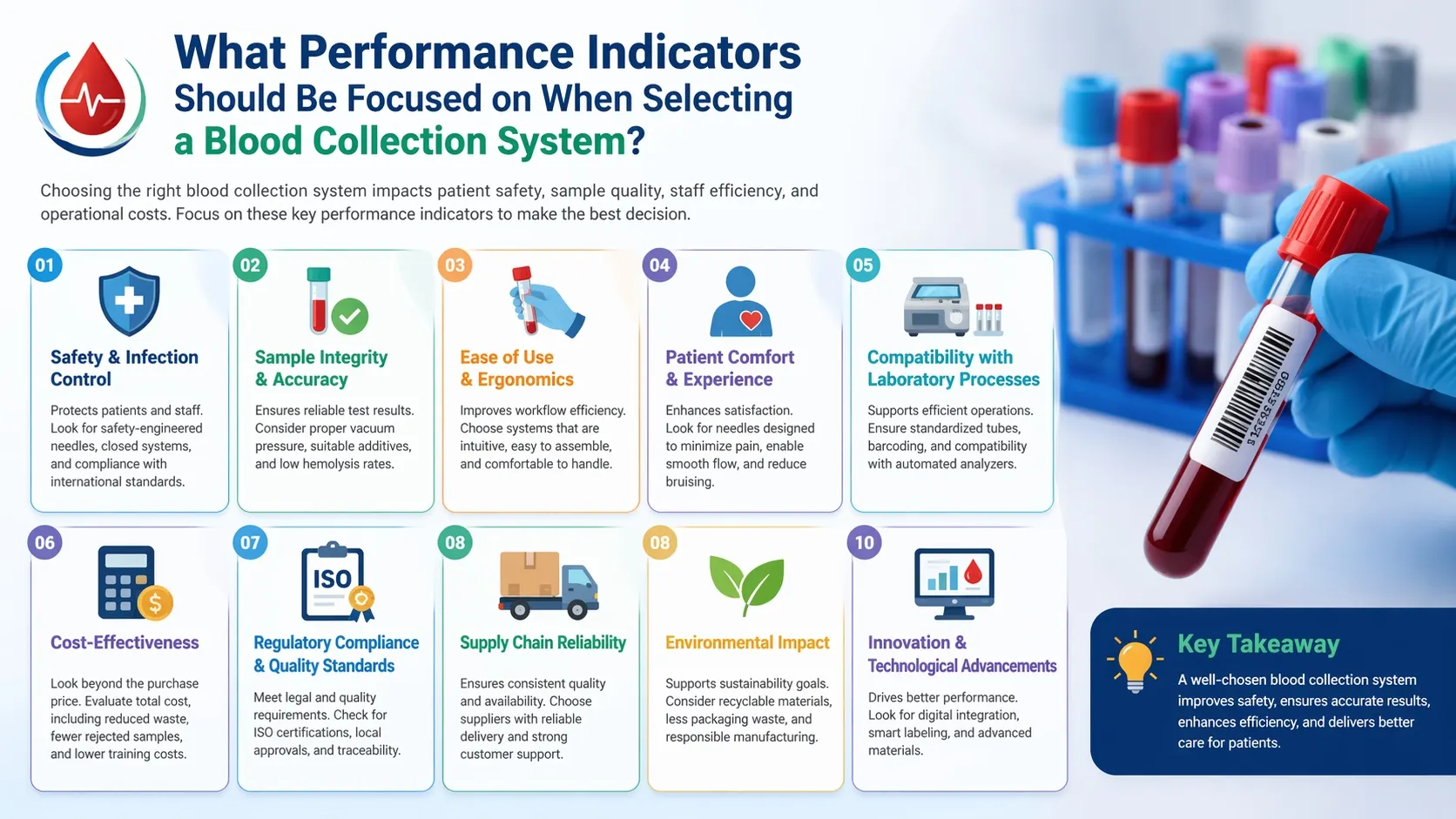
What performance indicators should be focused on when selecting a blood collection system?
The selection of an appropriate blood collection system is a crucial choice to be made by healthcare providers, laboratories, and diagnostic centers. Patient outcomes, staff productivity, and total operational costs are directly influenced by the efficiency, safety and reliability of this system. Since the market has a variety of products, having insights into the key performance indicators (KPIs) to be measured can enable organizations to make decisions that are strategic and informed.
This article will discuss the most significant areas of performance that should be taken into account when choosing a blood collection system, which would guarantee not only clinical excellence but also operational efficiency.
1. Safety and Infection Control
Safety is one of the most significant performance indicators, both in terms of patients and healthcare workforce. Blood collection is associated with certain risks, such as needlestick injuries and exposure to bloodborne pathogens. The quality system must have the following features:
- Safety-engineered needles with automatic retraction or shielding
- Closed systems that minimize exposure to blood
- Compliance with international safety standards (e.g., OSHA, WHO guidelines)
Reducing the risk of contamination and infection is not only a regulatory requirement but also a critical factor in maintaining trust and credibility in healthcare services.
2. Sample Integrity and Accuracy
The main aim of a blood collection system is to get precise and valid samples on which diagnostic testing is to be done. As such, it is important to preserve the integrity of the sample. Key factors include:
- Proper vacuum pressure to ensure correct blood volume
- Additives that preserve sample quality without interfering with tests
- Minimal hemolysis rates during collection and transport
Poor sample quality can lead to inaccurate test results, repeat procedures, and delayed diagnoses, all of which negatively impact patient care and increase costs.
3. Ease of Use and Ergonomics
Healthcare professionals often perform multiple blood draws daily, making usability a crucial consideration. A well-designed system should:
- Be intuitive and easy to assemble
- Require minimal training for proper use
- Offer ergonomic handling to reduce strain and fatigue
User-friendly systems can significantly improve workflow efficiency and reduce the likelihood of errors during the collection process.
4. Patient Comfort and Experience
Patient satisfaction is a more and more significant indicator in healthcare. Many people find blood collection a stressful, or even painful experience, so a system that increases comfort is extremely valuable. Signs to watch out for are:
- Needle design that minimizes pain
- Smooth and quick blood flow to reduce procedure time
- Reduced risk of bruising or multiple punctures
Improving patient experience not only enhances satisfaction but also encourages compliance with necessary medical testing.
5. Compatibility with Laboratory Processes
A blood collection system should seamlessly integrate with existing laboratory workflows. Compatibility issues can lead to delays, errors, and additional costs. Important aspects include:
- Standardized tube sizes and labeling systems
- Compatibility with automated analyzers and centrifuges
- Barcoding and tracking capabilities for efficient sample management
Systems that align well with laboratory infrastructure help streamline operations and improve turnaround times.
6. Cost-Effectiveness
While initial purchase price is important, total cost of ownership is a more meaningful indicator. This includes:
- Cost per unit or per test
- Waste reduction due to fewer rejected samples
- Reduced training and maintenance expenses
Investing in a slightly more expensive but higher-quality system can result in long-term savings through improved efficiency and fewer errors.
7. Regulatory Compliance and Quality Standards
Compliance with regulatory requirements is non-negotiable in healthcare settings. A reliable blood collection system should meet:
- International quality standards (e.g., ISO certifications)
- Local regulatory approvals
- Traceability and documentation requirements
Using compliant systems ensures legal safety and maintains high standards of patient care.
8. Supply Chain Reliability
Availability and consistency of supply are often overlooked but critical factors. A dependable supplier should provide:
- Consistent product quality across batches
- Reliable delivery schedules
- Strong customer support and after-sales service
Interruptions in supply can disrupt healthcare operations, making this an essential KPI for evaluation.
9. Environmental Impact
Sustainability is becoming an important consideration in healthcare procurement. Blood collection systems with lower environmental impact can contribute to organizational sustainability goals. Consider:
- Use of recyclable or biodegradable materials
- Reduced packaging waste
- Environmentally responsible manufacturing practices
Choosing eco-friendly options not only benefits the environment but can also enhance an organization’s reputation.
10. Innovation and Technological Advancements
The current blood collection systems are also undergoing new technologies that enhance the safety, efficiency, and data integration. Signs of innovation are:
- Integration with digital health systems
- Smart labeling and tracking technologies
- Advanced materials that improve performance
Staying updated with technological advancements can provide a competitive edge and future-proof healthcare operations.
Conclusion
To choose the appropriate blood collection system, a detailed analysis of various performance indicators is necessary. The priorities should be safety, sample integrity, easy to use, patient comfort, and compatibility with laboratory processes. Also, cost-effectiveness, regulatory compliance, supply reliability, environmental impact, and innovation are important factors to make the best decision.
With the help of these key performance indicators, healthcare organizations will be able to make sure that they choose a system that will help meet the requirements of clinical needs but also improve the efficiency of the operation and patient satisfaction. An investment in quality care, safety and long-term success is a well-chosen blood collection system.
The informed decision making on the basis of these metrics will eventually result in improved provider and patient outcomes in an ever-challenging healthcare setting.