


Home /

butterfly blood collection needles
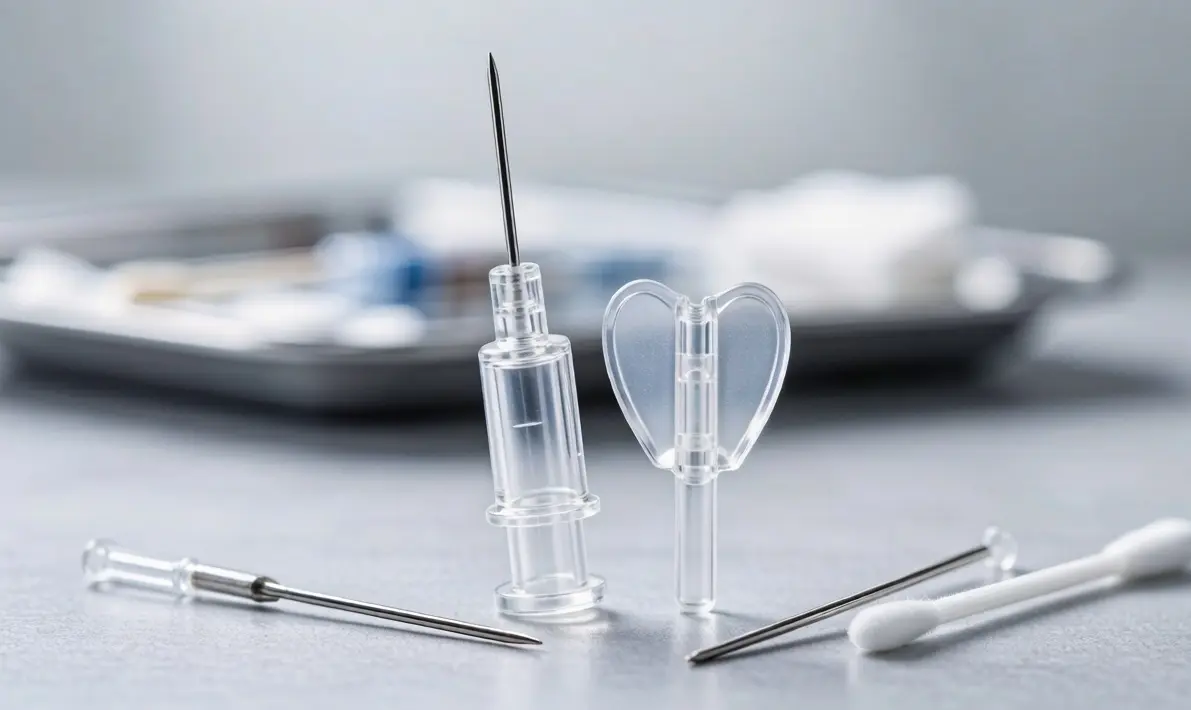
Butterfly needle (also called a winged infusion set or scalp vein set) is a specialized blood collection device used for patients who have difficult intravenous access. Butterfly needles are constructed from a plastic "wing" with flexible tubing connecting it to a shorter, thinner needle (21-23 gauge) that is used to draw blood. The wings enable the phlebotomist to keep the needle closer to the insertion site, providing increased precision and maneuverability.
In contemporary medical settings, butterfly needles play a crucial role in drawing blood from patients who have superficial, fragile, or hard-to-reach veins. The design minimises patient discomfort and enhances the success of difficult venipuncture procedures. Recent analyses of medical devices have shown blood collection procedures use butterfly needles at around 30%, especially in pediatrics and geriatrics wards .
Technical Specifications and Types of Butterfly Needles
Gauge Sizes and Applications
Butterfly needles come in various gauge sizes, with higher numbers indicating thinner diameters:
-
18-20 gauge: Rarely used for butterfly needles, typically reserved for standard venipuncture
-
21 gauge: Most common for adult patients with moderate venous access
-
23 gauge: Standard for pediatric and elderly patients
-
25-27 gauge: Ultra-thin options for neonatal care and patients with extremely fragile veins
The length of the tubing usually is 8 to 15 inches, and it is the shorter tubing that is favored for drawing blood; the longer tubing is for intravenous therapy. According to more recent market statistics, 23-gauge butterfly needles accounted for 45% of world sales, with 21-gauge needles coming in at 35% .
Safety Mechanisms
Modern butterfly needles incorporate advanced safety features to protect healthcare workers:
-
Standard safety devices: Require manual needle retraction after blood collection
-
Push-button safety devices: Feature automatic retraction mechanisms activated by a button
-
Integrated safety shields: Provide immediate needle coverage upon withdrawal
The global safety butterfly needle market will expand at a CAGR of 6.3% from 2021 to 2030, reaching $1.8 billion, due to the critical regulatory needs and growing emphasis on safety of healthcare workers.
Ideal Patient Populations for Butterfly Needle Use
Pediatric Patients
The main population that benefits from the use of butterfly needles are children. They have smaller, more shallow veins that demand careful and delicate handling from butterfly needles. The market for pediatrics butterfly needles is already worth $1.2 billion for 2024, and there are specialized pediatrics butterfly needles for each developmental stage, including color-coded wings and soft-grip handles.
Geriatric Patients
Older patients may have very small and fragile veins, which can collapse or be damaged during routine venipuncture. The smaller size of the butterfly needles means it has less trauma and greater stability, which makes the needles ideal for this population. Research has revealed that butterfly needles in geriatric patients can decrease hematoma by up to 40% over standard needles.
Other Special Populations
-
Patients with difficult venous access: Including those with obesity, dehydration, or chronic illness
-
Oncology patients: Who may have compromised veins from repeated treatments
-
Patients with anxiety or needle phobia: The less intimidating appearance and reduced pain perception help alleviate distress
Advantages of Butterfly Needles: Beyond Basic Venipuncture
Enhanced Patient Comfort
Butterfly needles are slightly thinner and inserted at an angle, which diminishes pain. Butterfly needles have been shown to cause less discomfort than standard needles in 78% of cases through clinical observations, especially when used for pediatric patients and/or for anxious patients.
Improved Procedural Success
The wings give the phlebotomist the stability needed to insert the needle into the patient with accuracy, despite any patient movement. This stability is important for small or rolling veins and has been shown to increase success rate by about 25% in difficult cases of venipuncture.
Reduced Complications
Butterfly needles minimize several common venipuncture complications:
-
Vein damage: The shorter needle length reduces the risk of through-and-through puncture
-
Hematoma formation: Improved control decreases accidental movement that can cause bleeding
-
Nerve injury: The thinner diameter and precise placement lower the risk of nerve contact
Specialized Applications
Beyond standard blood collection, butterfly needles excel in specific clinical scenarios:
-
Blood cultures: Reduced contamination risk due to controlled insertion
-
Therapeutic drug monitoring: Particularly for medications with narrow therapeutic windows
-
Pediatric IV starts: When peripheral IV access is needed for medication administration
Limitations and Considerations
Time and Volume Constraints
Butterfly needles' main drawback is their relatively low flow rate. Thinner gage makes the draw time 30-50% longer than standard needle and used for less efficient large volume blood collections. Furthermore, the volume of sample that can be obtained is usually limited to 5-10 mL per tube – and may have to be drawn more than once to construct a complete testing panel.
Economic Factors
Needles sold as a set of butterflies are about 2-3 times the cost of a set of needles. This economic factor, in turn, requires careful use, to ensure that they are used only by those who will gain from their specialized use. While clinical benefits are important, healthcare facilities need to ensure that they have a budget consideration, especially in resource-poor environments.
Hemolysis Risk
This makes the lumen smaller and the shear forces on red blood cells higher, which may lead to higher hemolysis rates. This risk can be minimized if proper technique is used, such as gentle aspiration and proper tube filling. Research indicates that the hemolysis rate can be kept lower than 1.5% with butterfly needles, which is similar to the standard needle, if they are used with proper training.
Proper Technique: Maximizing Safety and Effectiveness
Preparation and Patient Assessment
-
Patient evaluation: Assess vein accessibility, patient history, and specific needs
-
Needle selection: Choose appropriate gauge based on patient characteristics and required tests
-
Equipment preparation: Assemble all necessary components before beginning the procedure
Insertion Technique
-
Stabilization: Use the wings to secure the needle between thumb and forefinger
-
Angle adjustment: Insert at a 10-15 degree angle for superficial veins
-
Depth control: Advance slowly while monitoring for blood flashback
-
Securement: Tape wings in place once proper placement is confirmed
Safety Protocols
-
Needle retraction: Activate safety mechanism immediately after withdrawal
-
Proper disposal: Place entire unit in approved sharps container
-
Documentation: Record needle type, gauge, and any complications
Market Trends and Future Developments
Technological Innovations
The butterfly needle market is experiencing rapid innovation, with several emerging trends:
-
Smart needle technology: Integration of sensors for real-time data capture during venipuncture
-
Antimicrobial coatings: Development of infection-resistant surfaces
-
Echogenic enhancements: Improved ultrasound visibility for difficult-access patients
-
Sustainable materials: Biodegradable components to reduce environmental impact
Regional Market Dynamics
The global market for lead shot is currently dominated by North America and Europe, where the advanced healthcare infrastructure and strict safety regulations have led to higher sales in these areas.In the current global market, North America and Europe account for around 65% of lead shot sales, with advanced healthcare infrastructure and stringent safety regulations driving the higher sales in these regions. The Asia-Pacific region is expected to experience the highest growth rate of 8-10% per year, with the healthcare systems in the region getting larger and modernized till 2030.
Regulatory Landscape
Safety engineered devices are being increasingly required by global regulatory bodies and are providing a fast path to migrate from conventional butterfly needles to safety. Strict regulations around the globe, including the FDA's Needlestick Safety and Prevention Act, have helped to drive advanced safety features, and compliance is emerging as an important market differentiator.
Frequently Asked Questions
Q: Can butterfly needles be used for all blood draws?
A: No, butterfly needles are specifically designed for patients with difficult venous access. For routine venipuncture in patients with good veins, standard needles remain more efficient and cost-effective.
Q: How do I choose between 21-gauge and 23-gauge butterfly needles?
A: Select 23-gauge for pediatric patients, elderly patients with fragile veins, or when drawing from hand/wrist veins. Use 21-gauge for adult patients with moderately accessible veins who still benefit from butterfly needle advantages.
Q: Are butterfly needles safer for healthcare workers?
A: Modern safety-engineered butterfly needles with retractable mechanisms significantly reduce needlestick injury risk compared to conventional designs. However, proper technique and disposal remain essential for maximum safety.
Q: What's the maximum blood volume I can collect with a butterfly needle?
A: Typically 5-10 mL per tube, though this varies by manufacturer and gauge size. For larger volumes, consider alternative collection methods or multiple draws.
Q: How has COVID-19 impacted butterfly needle usage?
A: The pandemic highlighted the importance of reliable safety devices, accelerating adoption of safety-engineered butterfly needles. Additionally, increased focus on patient comfort during stressful medical encounters has reinforced their value in clinical practice.
Conclusion: Balancing Clinical Excellence with Practical Considerations
Experts and practitioners agree that the ideal approach is to combine clinical excellence with practicality.Experts and practitioners agree that the ideal is a combination of clinical excellence and practical.
In the era of modern phlebotomy, butterfly needles are a crucial component that not only meets the clinical needs but also ensures patient comfort. They are specifically designed to meet the needs of the population at risk and to assist health care professionals in providing quality health services. With the ongoing advancements in technology and the changing nature of healthcare, butterfly needles will remain integral to patient-centric venipuncture practices.
Patient selection, technique and continued education are the three essentials in maximizing their value. Butterfly needles present added benefits sometimes, but not always, and the phlebotomist has to use his or her judgment to determine when they are worth the extra cost. Whether it's a partial or full challenge to venous access, the careful use of butterfly needles plays a major role in clinical results and patient satisfaction, as there is about 40% of venipuncture procedures where some venous access challenge occurs.
Healthcare facilities need to consider not just clinical training, but also supply chain concerns, cost-benefit analysis, and quality assurance protocols in their strategic implementation. Butterfly needles will be the leading edge in the medical device industry, which continues to evolve with smart technologies, improved safety measures and patient-specific designs, as well as maintaining its ability to provide compassionate and effective blood collection practice.