


Updated 5 months ago
Chemical Lab Consumables Guide | Laboratory Supplies & Uses
sidrahafeez754
Chemical Lab Consumables
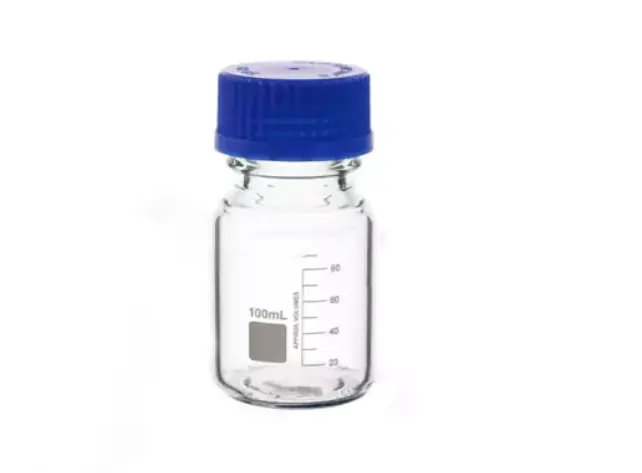
What are Chemical Lab Consumables?
Chemical lab consumables are scientific consumable products that are used in experiments and have a single-use or limited usage life. They are engineered to be accurate, handling, and chemical compatible.
These include:
- Laboratory reagents and solvents.
- Lab testing materials
- Analytical chemistry consumables
- Chemical-grade lab disposables
- Experimental lab supplies
- Lab materials to run the daily activities.
These consumables are necessary since they will make sure that experiments are not contaminated and results can be reproducible. The majority of laboratories have rigorous requirements on consumables, including the ISO quality standards, ASTM test procedures, and GLP (Good Laboratory Practice) standards.
Ultimate Guide to the Laboratory Supplies, Applications, and Technical Expertise
The unsung heroes of any lab are chemical lab consumables. They are used in research centers, industrial testing units, and guarantee accuracy, safety, and repeatability of results. Chemical analysis would not be so accurate and reliable without them.
- In contemporary science, chemical laboratory consumables are all the laboratory reagents, solvents, and disposable labware and analytical chemistry products. They are not reusable tools but necessities that are never repeated to give purity and reliability to experiments.
- Scientific discovery, whether it is the creation of a drug, environmental testing, or forensic testing, utilizes laboratory chemical consumables in all phases.
Chemical Laboratory Consumables
The chemical laboratory supplies can be classified according to purpose and use.
Laboratory Reagents and Chemicals
These include:
• Buffer solutions
• Analytical standards
Reagents and Solvents
• Titration materials
• Chemical assay materials
They are used in chemical reactions, calibration, and analysis.
Disposable Labware
These are single-use laboratory plastics that are to be contaminated:
- Micro tips and pipette tips.
- Sample tubes and vials.
- Culture plates and petri dishes.
- Disposable labware containers
- Sterile sampling containers
They are normally applied in biotech lab supplies and pharmaceutical lab consumables.
Laboratory Glassware Consumables
Precision work needs glass consumables:
- Conical flasks and beakers.
- Laboratory measuring cylinders
- Burettes and pipettes
- Glass storage bottles
Borosilicate glass of high quality can withstand temperatures of up to 500 o C, and is highly resistant to acids and alkalis.
Separation and Filtration Materials
- Filter papers and membranes.
- Centrifuge tubes
- Chromatography supplies
They are commonly found in analytical laboratory consumables in chemical testing and purification procedures.
Protective Consumables and Safety
- Chemical-resistant gloves
- Protective lab disposables
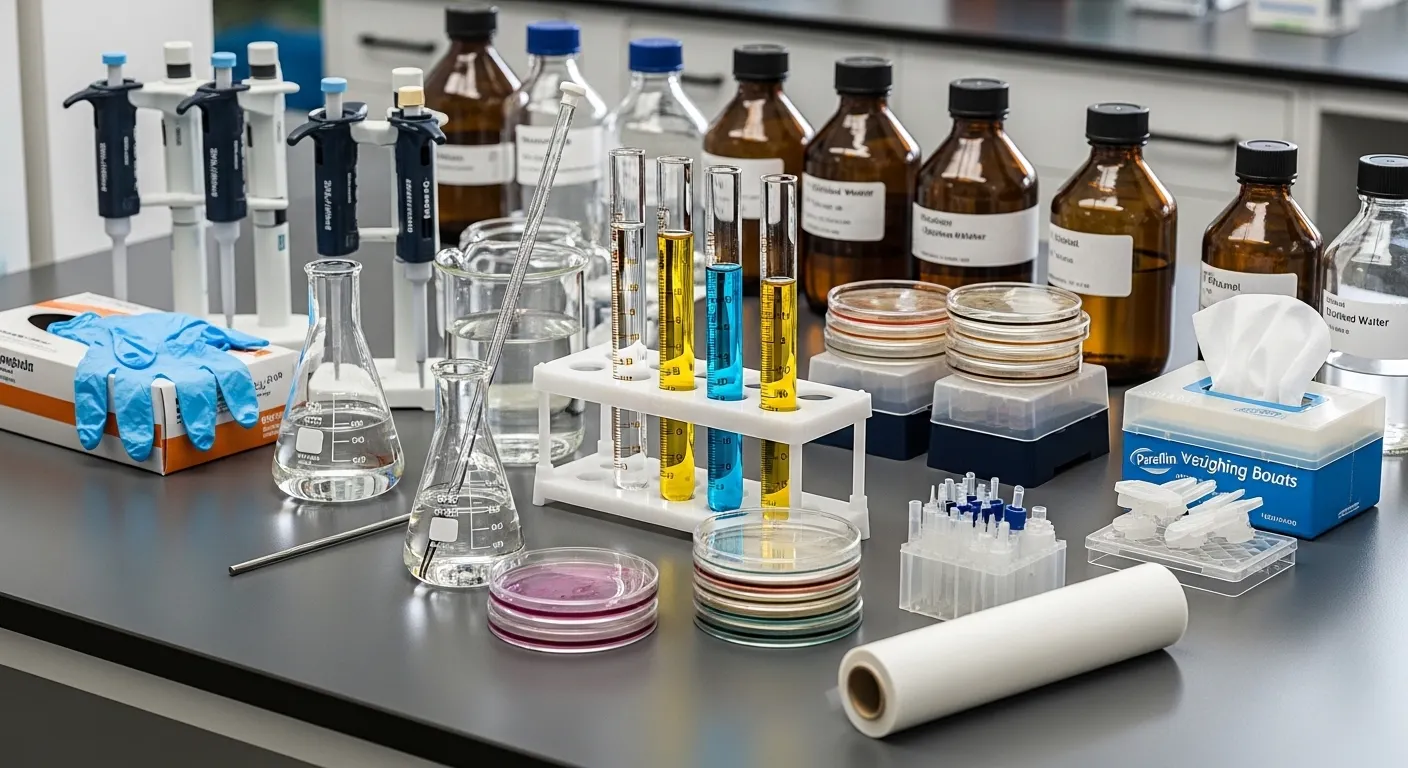
Material Composition and Technical Standards
The currently produced chemical laboratory consumables are of high-quality materials that are resistant to chemicals and durable.
Common materials include:
Polypropylene (PP) to be chemical resistant.
• Extremely high corrosion resistance: Polytetrafluoroethylene (PTFE).
• Borosilicate glass is to be thermally stable.
• Storage systems with polyethylene (PE).
Key Technical Properties
- Temperature resistance: -80 C to 500 C (depending on material)
- Resistance to chemicals: strong acids, alkalis, and organic solvents.
- Sterilization compatibility: autoclave 121 o C.
- Transparency: to analytical sense.
These standards guarantee the use of quality materials in chemical analysis and good testing results.
Chemical Laboratory Consumables
Other scientific industries use the chemical laboratory supplies.
Pharmaceutical Industry
• Drug formulation testing
• Quality control labs
• Stability testing
Biotechnology
• DNA/RNA analysis
• Cell culture studies
• Genetic research
Environmental Testing
• Water quality analysis
• Soil contamination studies
• Air pollution testing
Forensic Science
• Toxicology testing
• Crime sample analysis
• Substance identification
Industrial Chemistry
• Material testing
• Chemical production control
• R&D laboratory consumables
In order to obtain the right results, right and contamination-free consumables should be used in all applications.
Significance of Chemical Testing Lab Consumables
The consumables of the chemical testing lab play a vital role in ensuring the integrity of the experiments.
Key benefits include:
• Assurance of good and reproducible outcomes.
• Preventing cross-contamination
• Sterile laboratory conditions.
• Enhancing laboratory work efficiency.
• Reducing operational errors
Even the smallest contamination may cause inaccurate data in analytical chemistry, and consumables are a very important aspect of laboratory success.
Laboratory Safety and Handling
One of the key issues in the chemical laboratories is safety. This is the reason why laboratories require safety consumables.
The major safety considerations are:
• Protective gloves that are resistant to chemicals.
• Sterile laboratory disposables to avoid contamination.
• Adequate materials for hazardous chemical handling.
Most of the laboratories are in accordance with GMP (Good Manufacturing Practice) and OSHA safety standards of chemical handling.
Selecting the Most Suitable Chemical Lab Consumables
The laboratories are concerned with quality, durability, and compatibility when it comes to the choice of consumables.
Key Selection Factors
• Chemical resistance level
• Sterility standards
• Quality of materials (glass, plastic, polymer)
• Temperature tolerance
• Certification (ISO, CE, ASTM)
The issue of where to buy chemical laboratory consumables is more decisive to the institutions that want to buy chemical laboratory consumables online than the price.
Product Insight- Lab Reagent Bottle
A lab reagent bottle is one of the most significant products of any chemical laboratory.
These bottles may be used as:
Laboratory reagents and solvents.
• Maintaining chemical stability
• Avoiding contamination and evaporation.
• Long-term storage of chemicals safely.
Reagent bottles are made of high-quality, chemical-resistant materials and provide:
• Close tightly to prevent leakages.
• UV-resistant designs
• Immunity to corrosive compounds.
• Very noticeable to the eye.
The product enjoys an enormous market in chemical laboratory supplies and industrial chemical lab consumables because of its durability and precise design.
Industry Demand and World Usage
The world is experiencing a rise in the demand for laboratory consumables in chemical analysis because of the rise in research activities.
Consumable-intensive industries:
• Pharmaceutical manufacturing
• Academic research institutions
• Environmental agencies
• Food testing laboratories
• Industrial R&D centers
Such industries need chemical lab supplies that are economical and do not affect the accuracy.
Conclusion
Accuracy and accuracy, respectively, are dependent on chemical laboratories and quality consumables. Starting with reagents and glassware, all the products are used in the creation of realistic scientific results, including disposable plastics and safety equipment.
Discover good solutions with Trustlab China and transform your laboratory performance. Your study should be accurate, and accuracy should begin with the correct Chemical Lab Consumables.