


Updated 2 days ago
POCT Test Kit Manufacturer for Point-of-Care Programs
trustlabofficial

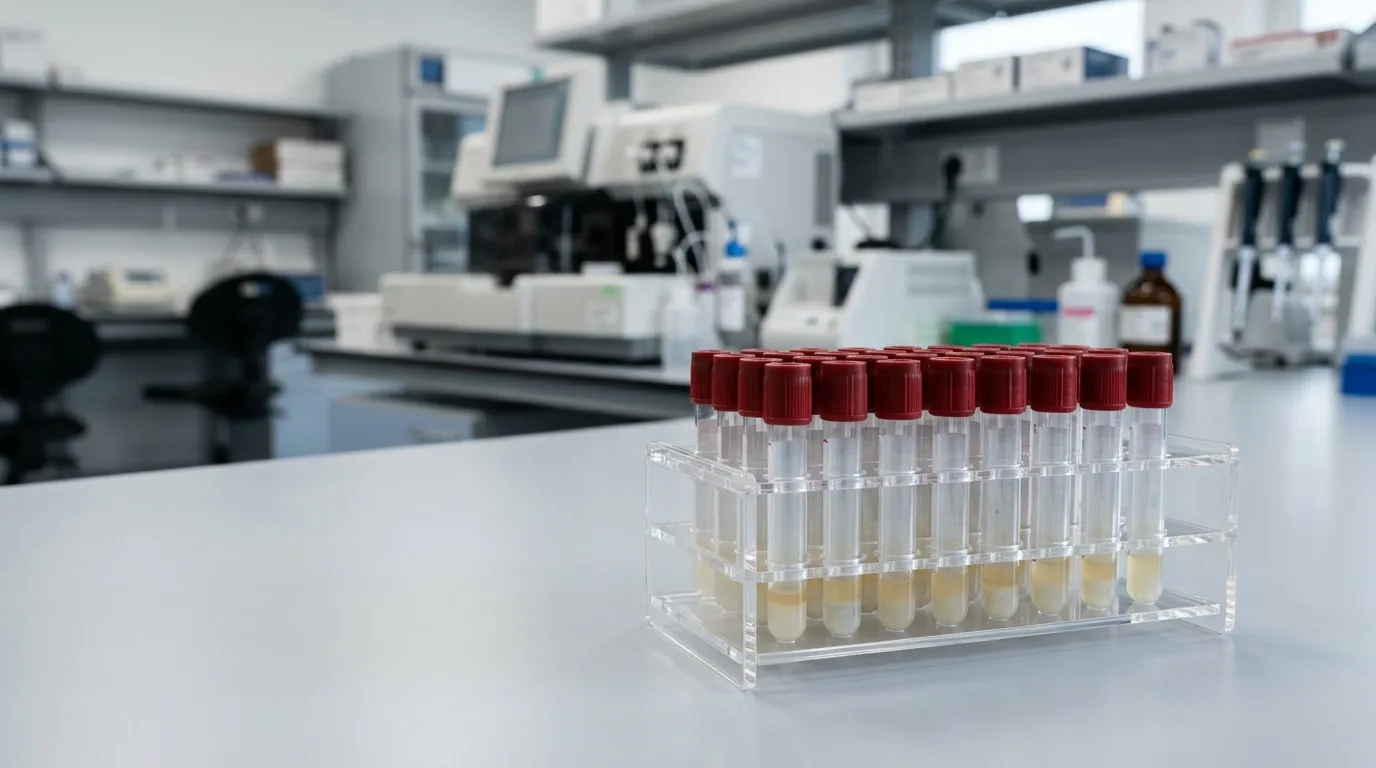
Inspection of unlabeled POCT rapid test kit packaging by a laboratory professional.
Selecting a POCT test kit manufacturer is a procurement decision that affects program reliability, regulatory compliance, and patient care. The right manufacturer provides not just test kits, but the documentation, quality systems, and technical support that allow your program to operate with confidence. This guide walks through what to evaluate, what documents to request, and how to verify a manufacturer's claims before you commit to a supply relationship.
For broader context on how rapid testing fits into global health programs, see our global health rapid testing overview.
What Is a POCT Test Kit Manufacturer (and Why Evaluation Matters)
A POCT (point-of-care testing) test kit manufacturer designs, produces, and supplies diagnostic test kits used at or near the point of care — clinics, outreach programs, emergency departments, community health settings, and laboratory-adjacent environments. These kits detect markers for conditions such as pregnancy, infectious diseases, and other clinical indicators using specimen types like whole blood, serum, plasma, urine, or other biological samples.
The term "manufacturer" matters in procurement. A manufacturer is responsible for the product's design, production, quality control, and regulatory status. A distributor, by contrast, resells products made by others. When you buy directly from a manufacturer, you typically gain more direct access to documentation, quality systems, batch traceability, and customization options — but you also take on more responsibility for verifying the manufacturer's claims yourself.
This evaluation matters because not every supplier claiming "manufacturer" status operates with the same quality systems, regulatory approvals, or documentation standards. The cost of a poor supplier choice extends beyond the purchase price — it can affect test reliability, audit outcomes, program credibility, and patient care.
Manufacturer vs Distributor: What's the Difference
| Factor | Direct Manufacturer | Distributor |
|---|---|---|
| Source of product | Designs and produces the kit | Resells kits made by others |
| Documentation access | Usually direct — IFU, CoA, stability data | May require extra steps to obtain |
| Customization/OEM | Potentially available | Rarely available |
| Minimum order quantity | Often higher | Often lower |
| Pricing | Potentially lower per-unit | May include markup |
| Supply chain control | More direct | Depends on distributor's inventory |
Both channels can work. The right choice depends on your program's volume, documentation needs, regulatory requirements, and whether you need customization.
What to Look for in a POCT Test Kit Manufacturer — Evaluation Criteria
A reliable manufacturer should be able to demonstrate competence across four areas: quality management systems, regulatory documentation, product documentation, and batch-level quality evidence. Here's what to check in each area.
Quality Management System (QMS) Certification
A QMS certificate shows that a manufacturer operates under a documented quality management framework. The most common international standards are ISO 13485 (medical devices) and ISO 9001 (general quality management).
What to request:
- A copy of the current QMS certificate (not just a mention on a website)
- The certificate's scope — what activities it covers
- The issuing body and certificate number
- The certificate's expiry date
- Whether the certificate covers the specific product category you're purchasing
The critical distinction: a QMS certificate demonstrates that the company has a quality management system. It does not prove that a specific product has been approved, registered, or cleared by any regulatory authority. That requires product-level regulatory documentation.
Regulatory Documentation and Market Approvals
POCT test kits are in vitro diagnostic (IVD) devices. Their regulatory status depends on the markets where they are sold. Different jurisdictions require different approvals.
Common regulatory pathways include:
- CE marking (European Union): Under the In Vitro Diagnostic Regulation (IVDR), IVD devices must meet applicable requirements before being placed on the EU market.
- FDA clearance or approval (United States): Depending on the device classification, products may require 510(k) clearance, De Novo classification, or premarket approval. CLIA waiver status affects where tests can be performed.
- WHO prequalification: Relevant for global health programs, particularly those procuring through UN agencies or large international funders.
- Country-specific registrations: Many countries maintain their own device registries and require local registration before import and sale.
What to request:
- Product-specific certificates or registration documents — not just general company statements
- Documentation showing which jurisdictions the specific product is approved for
- The product name and model/SKU as listed on the certificate, matching the product you intend to buy
A buyer should be cautious when a manufacturer states broadly that products are "CE approved" or "ISO compliant" without providing product-specific documentation. The general company statement is not equivalent to a product-specific certificate.
IFU Quality and Readability
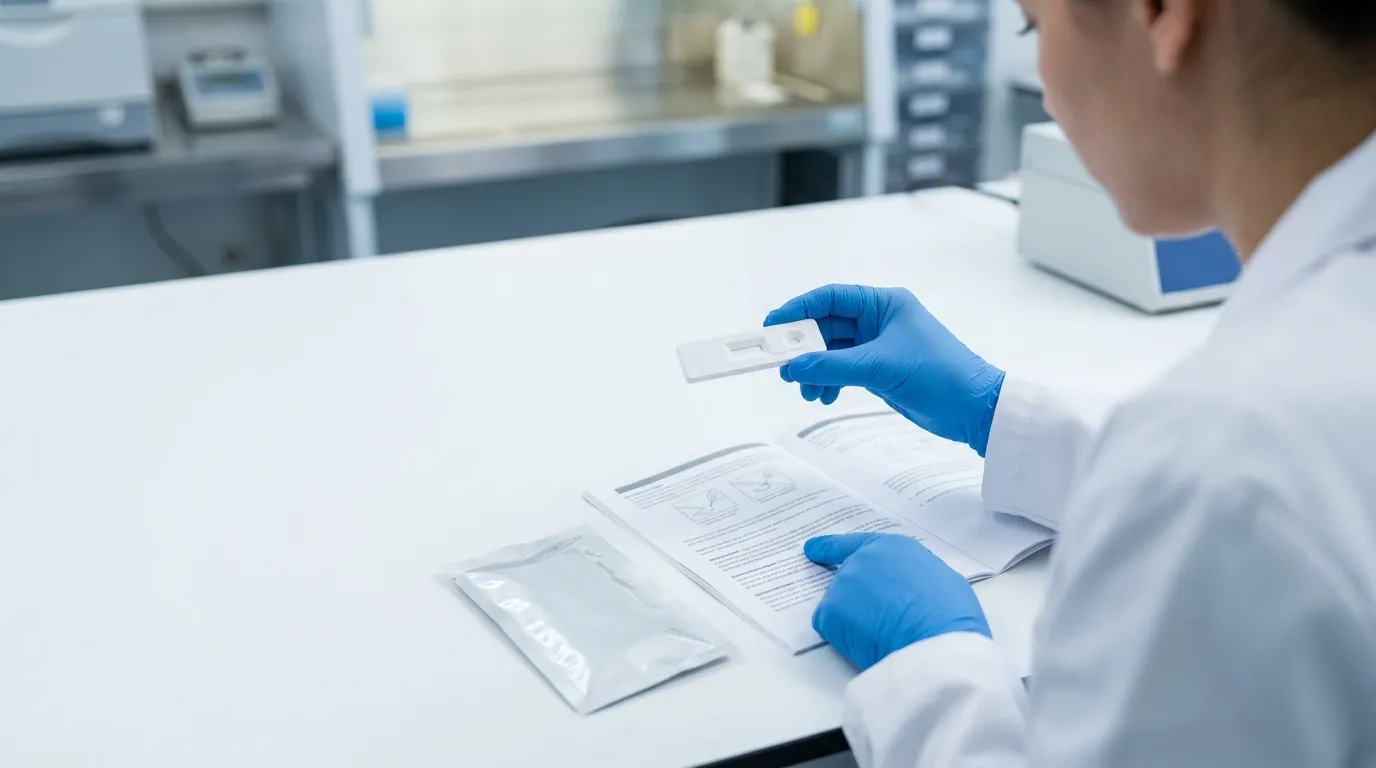
The Instructions for Use (IFU) — sometimes called a package insert — is the document that explains how to use the test correctly. It should be clear, complete, and written for the people who will actually perform the test.
What to check in an IFU:
- Intended use or intended purpose
- Specimen type(s) — what sample is appropriate
- Test principle and procedure steps
- How to interpret results
- Storage conditions and shelf life
- Limitations and warnings
A well-written IFU signals that the manufacturer has invested in making its product usable in real-world settings. A poorly written or incomplete IFU is a red flag, regardless of what the marketing materials claim.
Batch-Level Documentation: Certificate of Analysis and Stability Data
Beyond product-level documentation, buyers should request batch-specific evidence.
Certificate of Analysis (CoA): A document issued for a specific production batch, showing that the batch met its quality specifications during testing. A CoA is batch-specific — it does not cover other batches. Each shipment should have its own CoA.
Stability data: Evidence supporting the product's stated shelf life and storage conditions. This matters if you're buying in bulk or shipping to facilities with variable storage conditions.
Batch traceability: A reputable manufacturer should be able to trace a specific batch from production through release to shipment. This becomes critical during recalls or quality investigations.
| Document | What It Proves | Request When |
|---|---|---|
| QMS certificate | Quality management system exists | Initial evaluation |
| Product certificate/registration | Product has regulatory status in a jurisdiction | Before purchase |
| IFU | Product's intended use and procedure are documented | Product evaluation |
| Certificate of Analysis | A specific batch met quality specifications | Before shipment |
| Stability data | Product shelf life is supported | Bulk purchase or long storage |
How to Verify a Manufacturer's Claims — A Practical Checklist
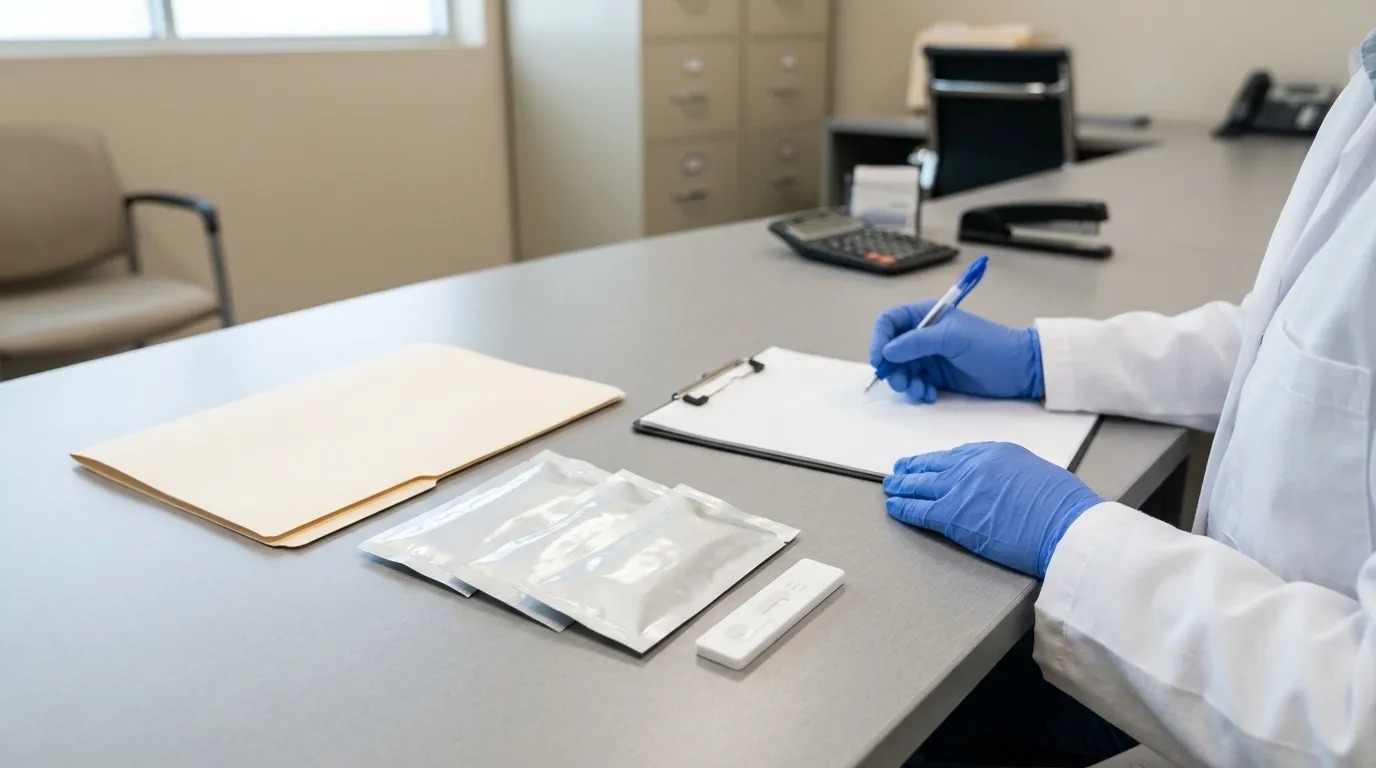
Verification is about confirming that what a manufacturer claims on its website or in sales conversations is backed by actual documents. Here is a practical sequence:
- Check certificate scope. When you receive a QMS certificate, read the scope. It should name the activities it covers. Ask whether the certificate applies to rapid test products or only to other categories.
- Verify regulatory status product-by-product. A manufacturer may have CE marking for one product but not another. Ask which specific products hold which approvals, and request the corresponding certificates.
- Request the actual IFU. The IFU should be product-specific. Review it for intended use, specimen types, procedure steps, interpretation guidance, storage conditions, and limitations.
- Ask for batch-level documentation. Request a CoA for the batch you're considering. Confirm that it matches the product name, model/SKU, and batch number you expect to receive.
- Look for contradictions. If a product page lists a specification that differs from the IFU or certificate, flag it. If a company states broad compliance but cannot produce product-specific documentation, treat the claim as unverified.
- Confirm documentation version. Ask whether the documentation you receive is current and applies to the exact product version you're purchasing.
POCT Test Kit Procurement — Direct Manufacturer vs Distributor
Once a manufacturer passes your evaluation, the procurement process typically follows a structured sequence.
The Procurement Sequence
- Initial inquiry. Contact the manufacturer with your product requirements, target volumes, and regulatory expectations. Be specific about the documentation you will require.
- Product evaluation. Request product details, including the IFU, available certificates, and specification sheets.
- Sample request. Ask for a sample from current production, along with the batch's CoA. Inspect the sample packaging, labeling, and documentation quality.
- Quotation and terms. Request pricing based on your target volume. Clarify minimum order quantities (MOQ), lead times, packaging configurations, and shipping terms.
- Order and logistics. Confirm export documentation, shipping conditions, and storage requirements.
- Ongoing quality assurance. Establish how the manufacturer handles batch documentation, delivery inspections, and any quality issues that arise.
The Sample Request Step
A sample request is a standard part of manufacturer evaluation, not a sign of distrust. It allows you to:
- Inspect the packaging and labeling quality
- Review the IFU that ships with the product
- Verify that the batch documentation matches the product
- Assess whether the product meets your program's practical needs
When requesting a sample, ask for the batch-specific CoA so you can confirm the sample's quality evidence.
Minimum Order Quantities and Lead Times
MOQ and lead time vary by manufacturer and product type. These are commercial terms, not product specifications, and they should be confirmed directly with the manufacturer during the inquiry process.
Key questions to ask:
- What is the MOQ for the product I need?
- What is the current production lead time?
- How does lead time change with order size or customization?
- What packaging configurations are available?
Trustlab Rapid Test Portfolio — Examples of POCT Test Kits
Trustlab, operating as Ningbo Trustlab Instruments Co., Ltd., supplies rapid test products for point-of-care applications. The company's portfolio includes tests for HCG, HIV/Syphilis, and dengue, among others. For product-specific information — including intended use, specimen types, and performance characteristics — please refer to the individual product pages:
Each product page provides the technical and clinical details relevant to that specific test. As with any manufacturer, buyers should request current documentation and verify product-specific claims during their evaluation process.
Frequently Asked Questions About POCT Test Kit Manufacturers
What is a POCT test kit?
A POCT test kit is a diagnostic product designed for use at or near the point of care. It detects clinical markers from biological samples and is intended for settings where rapid results support clinical decisions.
What MOQ can I expect from a POCT kit manufacturer?
MOQ varies by manufacturer and product. It is influenced by production batch sizes, packaging configurations, and whether the product is standard or customized. Confirm MOQ directly with the manufacturer during the inquiry stage.
What is the typical lead time for POCT test kits?
Lead times vary based on product availability, production schedules, order volume, and shipping destination. Ask for the current lead time when requesting a quotation.
Do I need regulatory approval to import POCT test kits?
Import requirements depend on the destination country. Many countries require IVD devices to be registered before import. Buyers are responsible for understanding and meeting their local regulatory requirements.
How do I verify a manufacturer's certificate?
Request a copy of the certificate, verify the issuing body, check the certificate number and expiry date, and confirm that the certificate's scope covers the product category you are purchasing.
Can I order a sample before buying in bulk?
Most manufacturers accommodate sample requests. Ask for a sample from current production and request the batch-specific Certificate of Analysis to support your evaluation.
Selecting a POCT test kit manufacturer is a process of verification, not just comparison of product lists. The manufacturer who can provide clear product-specific documentation, demonstrated quality systems, and reliable batch-level evidence is the one worth taking to the next stage of your procurement journey.
If you are evaluating rapid test products for a point-of-care program, contact Trustlab to request product documentation, specification details, or a quotation for your target volume.