


Updated 5 months ago
Specimen Slide Microscopy: Flatness Ends Rework in High-Volume Labs

Admin
Specimen Slide Microscopy
By 2026, high-volume labs encounter a hidden productivity sink: diagnosably reworkable, expensive, sliding, digital scanners that perform poorly, yet look fine, on slides.
With the rapid adoption of whole-slide imaging, the Specimen Slide Microscopy consumables demand is at a peak. However, slides are not created equally. Smooth workflows and less rework are determined by the most common overlooked variable: consistency of flatness.
The Inconsistent Slide Hidden Cost
Laboratory managers and supply chain professionals see slides' growing costs without losing out on productivity. In the absence of knowledge from the industry, a mid-stage biotech company works with suppliers from 50 to 200. Each vendor's onboarding time is a span of 16 to 26 days. In the absence of knowledge from the industry, poor quality slides result in the stretch and reach of a quality issues to NAS ultra-tech company and mid-stage stages of diagnostic turnaround time to late-stage biotech.
Whole slide imaging relies on a seamless digital image producer to provide scanners with precision and uniformity. Variations in slide flatness—even those invisible during manual viewing—become glaring defects under high-resolution capture. As whole-slide imaging scanners become widely adopted in hospitals and laboratories to support high-volume diagnostic workflows, the margin for error shrinks to near zero.

Why Flatness Consistency Matters More Than Ever
The relationship between slide quality and specimen slide microscopy outcomes is straightforward but often underestimated:
• Automated scanning demands precision: Digital pathology systems perform focus stacking and image stitching across entire slide surfaces. Flatness that is out of specifications makes it impossible for scanners to focus clearly or results in blurriness in parts of slides that cannot be analyzed by pathologists.
• Variation from batch to batch disrupts the validation process: Labs that have an ISO 13485-aligned quality management system, which will be mandatory under the FDA's QMSR effective February 2026, have to validate every batch of consumables against rigid criteria. Slides that have varying flatness disrupt that validation process.
• Reworking slides increases operational costs: Every slide that is rejected adds cost for the technician, time needed to rescan, and delays. In laboratories that process thousands of slides every day, a 2% rejection rate means that hundreds of hours are wasted in a year.
Trustlab: Engineering Flatness into Every GT201-7101 Slide
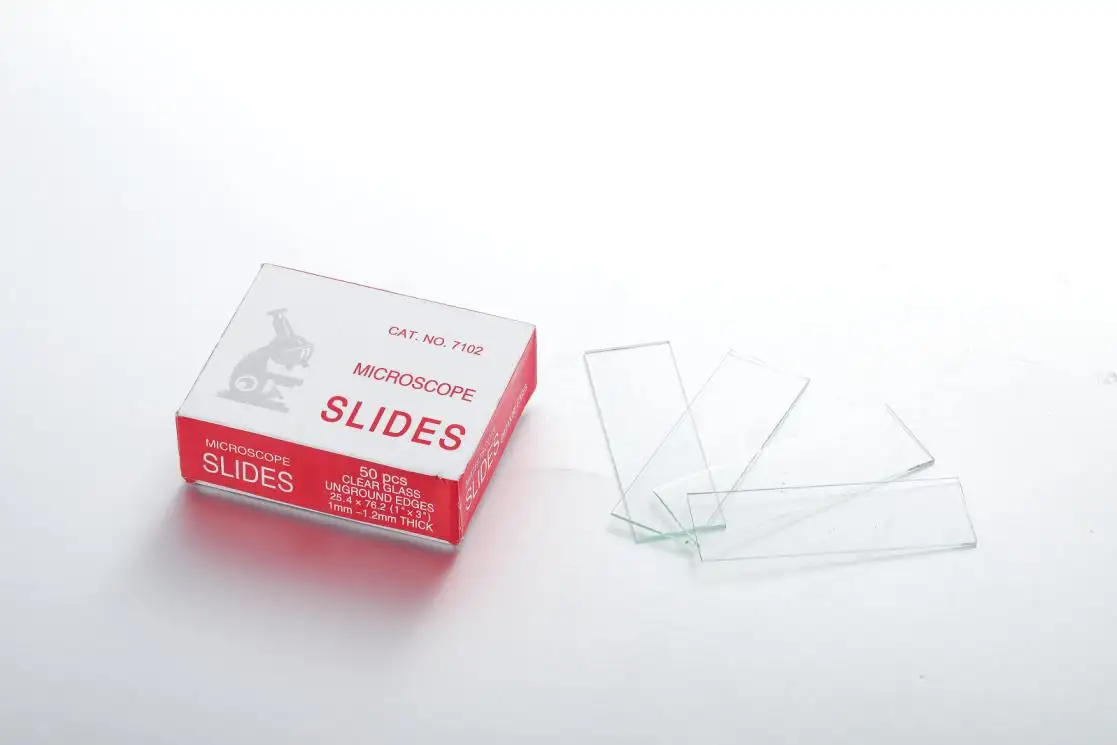
At Trustlab, we have constructed our production processes around a singular dictum: predictable slides lead to predictable results. The Microscope Slide GT201-7101-7109 series offers the best consistency in optical flatness and thickness of slides within a batch, which removes the cause of variability and the need for rework in high throughput environments.
Some of the features that will help in eliminating rework include the following:
•Optical flatness: The use of glass of higher quality, and of super white glass, along with the use of raw materials of high purity mean that the slides will have a high level of uniform geometry on the surface and improved imaging with no focus artifact.

•Control of thickness: The various sizes of 7101, 7102, 7105, 7107, and 7109 will ensure that high-resolution imaging will be of the best quality resulting in no distortion for the user.
•Scratch-resistant and smooth surfaces: The slides will have a finish that will be able to permit the maximum light transmission minimum distortion, leading to the best resulting slides.
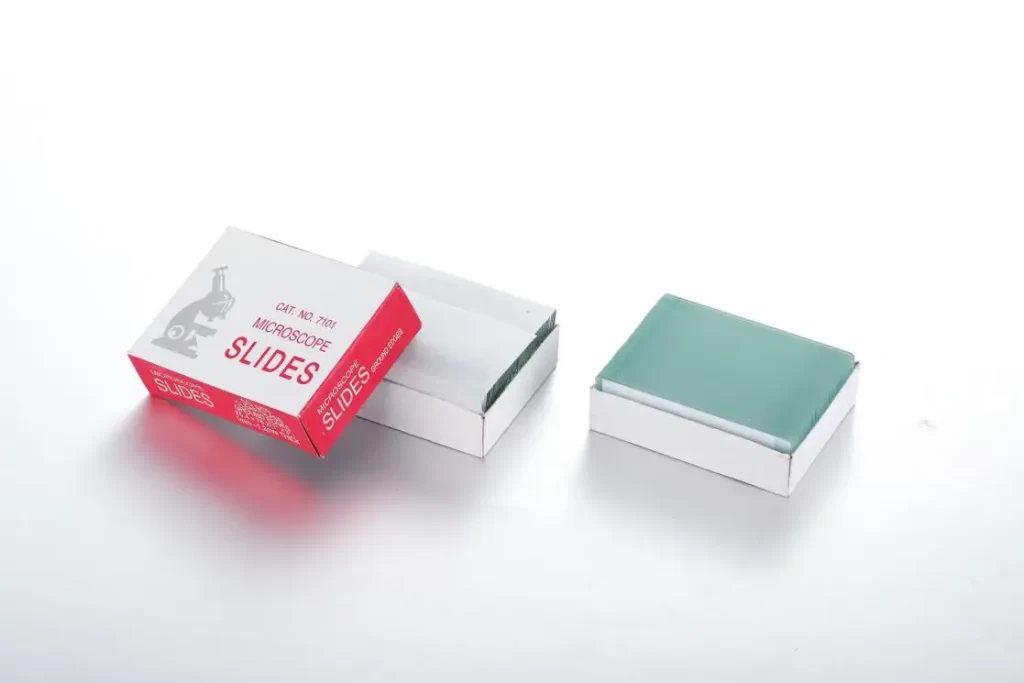
•Reliable and protective packaging: Packaging of either 50 slides or 72 slides will ensure that the slides are sufficiently protected from scratches while transport and storage and that the flatness is preserved from the factory to the workstation.
Optimized for Digital Pathology Workflows
More organizations are moving digital pathology from pilot to production as 2026 approaches. The focus has changed from microscope design to pathologist workflow analytics: scans, reworks, slides, and workstation. Trustlab slides are designed with these parameters in consideration:
•Automation-ready: For the slides to be scanned continuously without being removed for technician re-scanning. Trustlab slides are flat to the tolerances that allow for optimum performance at the high-throughput whole-slide scanners.
•Batch consistency guaranteed: Quality control is done to ensure uniformity in slides across boxes of 50 to 72 slides for sustained validated workflows without the need for requalification.
•Compatible across platforms: Standard optical and biological microscopes for routine work and digital capture systems for advanced research and clinical applications are the systems that our Trustlab slides work with.

Aside from the Glass - Trusted Supply Chain Partner
Laboratory consumables—trust laboratory or laboratory supply for short— are products that are expected to be replaced, but they contribute to the reliability of the workflow. Trustlab slides can be kept in the lab when they are needed. Supply chain volatility and tariff changes have made reliable procurement planning a priority. Innovative supply chain management is made possible by Trustlab. The direct manufacturing model means predictable lead times, transparent quality control, and consistent costs. The supply chain's reliability has helped laboratory leaders in effective and efficient planning.
The GT201-7101 series accommodates a wide range preparation methods including wet mount, dry mount, and staining methods. These slides are designed for laboratory use. They are designed to prepare biological and chemical samples, conduct routine laboratory observations, and perform research activities that require unambiguous, and high quality images. These slides are made of precision glass and designed to achieve perfect flatness to ensure optimum clarity and accuracy of microscopic assessment. In laboratory contexts where there is no room for error in sample prep and imaging, these slides are a superb, no-nonsense option.
Final Words
For supply teams assessing manufacturers of microscope slides for the next five years, there is no contradiction. Flatness is no exception—it is the defining quality of efficiency in microscopy at the specimen slide level. Trustlab provides that consistency, box after box, slide after slide.
Is your laboratory workflow burdened with the repeated work of re-doing tasks? For your no-obligation quote on GT201–7101–7109, or to gain access to the comprehensive spec sheet on material make-up, tolerance levels, labelling, and outer packaging, Trustlab is your partner. We design for the modern laboratory, and the products are for 2026 and beyond.
FAQs
Q: What is the impact of inconsistent slide flatness on digital pathology?
A: Automated scanners struggle to focus when slides are not even. This results in blurred images and stitching errors. Scan quality may get so poor that it requires manual rework.
Q: What is the Trustlab GT201-7101 slide advantage compared to other microscope slides?
A: Trustlab GT201-7101 slides eliminates rework. This is achieved through uniform precision flatness and thickness across all slides in all production batches.
Q: Are Trustlab slides only compatible with digital scanners, or can they be used with manual microscopes?
A: Trustlab slides can be used with digital scanners and manual microscopes. Trustlab slides can be used with standard optical microscopes (for direct observation) and entire slide scanning devices (for digital pathology automation).
Q: Do you provide sample boxes for quality assessment?
A: Certainly. Trustlab can provide sample boxes with 50 or 72 slides for laboratory evaluation before you make a decision for a bulk purchase.
Q: What are the available sizes for the GT201-7101 series?
A: GT201-7101 series standard sizes are 7101, 7102, 7105, 7107, and 7109. You can choose glass or super white glass as well.