


Updated 3 months ago
The Critical Role of Swabs with Amies in Special Pathogen Detection

Admin
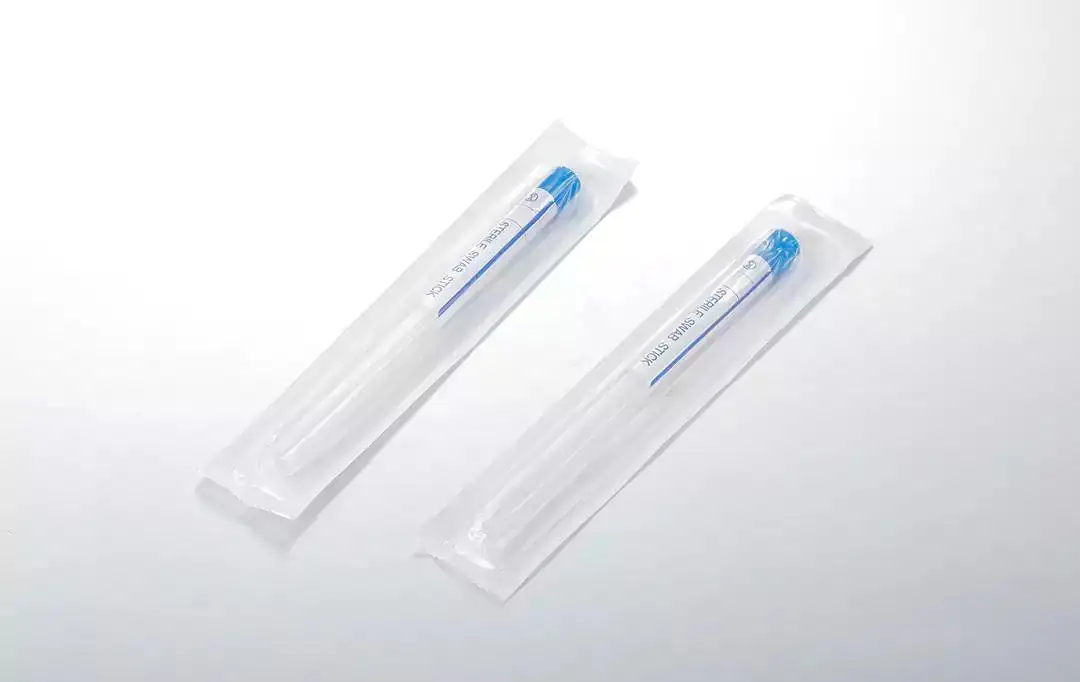
Swabs with Amies
Accurate diagnosis of infectious diseases depends on one often-overlooked step: how the clinical specimen is collected, transported, and preserved. For fastidious or fragile pathogens – bacteria that die quickly outside the human body – using a standard dry swab can lead to false-negative results. This is where Swabs with Amies become indispensable. Amies transport medium is a balanced salt solution designed to keep microorganisms viable without allowing them to overgrow. When combined with high-quality lab swabs, it becomes a powerful tool for detecting some of the most challenging pathogens in clinical microbiology.
Why Special Pathogens Demand Specialized Collection
Many clinically significant bacteria are highly sensitive to environmental changes. A dry swab exposes them to osmotic shock, pH shifts, and toxic by-products of their own metabolism. Consequently, fragile organisms may die within minutes to hours, leading to missed diagnoses.
•Some bacteria need immediate attention: some like Neisseria gonorrhoeae and Campylobacter jejuni can lose viability quickly after being isolated.
•Some bacteria like Bacteroides fragilis cannot survive exposure to air: obligate anaerobes like these can be killed by a small amount of air.
•Delayed transport occurs in most labs: There may not be a microbiological facility in the clinic which can require the specimen to survive several hours unrefrigerated or kept at a cold temperature.
•Low initial bacterial load makes preservation critical: In cases of early infection or prior antibiotic use, every surviving organism counts – loss of even a fraction can turn a positive result negative.
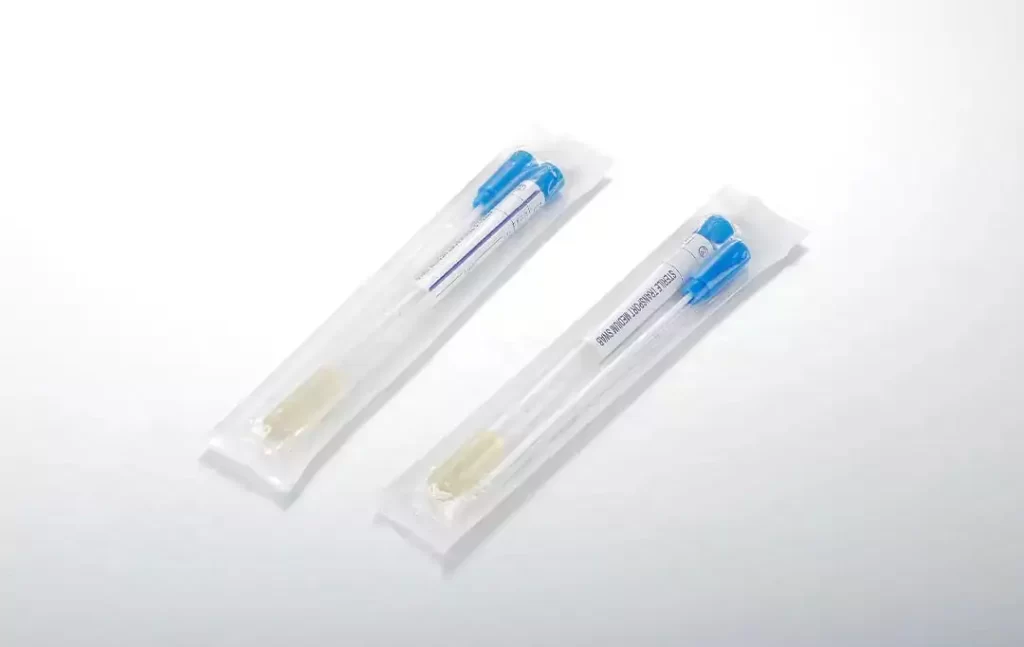
Swabs with Amies address all these challenges by providing a chemically defined, buffered, and non-nutrient environment that maintains bacterial integrity without promoting multiplication.
How Amies Medium Preserves Fastidious Organisms
The Amies formulation is a modified Stuart's medium, optimized with a phosphate buffer and calcium chloride to stabilize cell membranes. Its key features work synergistically to protect special pathogens.
•Osmotic lysis is prevented: Sodium and potassium Chloride help bacterial cells maintain their swell and shrink state.
•pH remains mostly neutral: Even if acidic or alkaline products are created by the bacteria, the medium is helped to stay at a neutral level (nearly 7) which is optimal for most bacteria.
•Increased Stability of the Bacterial Cell Walls: These protective divalent cations, of the outer membrane of Gram-negative bacteria, help stabilize and increase the survivability of Neisseria and Moraxella.
•Charcoal adsorbs toxic fatty acids and free radicals: Many commercial Amies media include charcoal (black swab) to neutralize peroxides and other bacterial inhibitors, dramatically improving recovery of Campylobacter and Gardnerella.
•No carbon source prevents overgrowth: Unlike enrichment broths, Amies medium does not contain carbohydrates or proteins – fastidious organisms stay alive but do not multiply, so normal flora does not outcompete the pathogen.
The Critical Role of Swabs with Amies in Detecting Key Pathogens
Using Swabs with Amies has transformed the diagnosis of several high-priority infectious diseases. Below are the most important special pathogens that rely on this transport system.
1. Neisseria gonorrhoeae (Gonorrhea)
•Extremely fragile outside the host: Gonococci lyse within 30–60 minutes on a dry swab, especially if exposed to temperature changes or drying.
•Amies medium preserves viability for up to 24 hours: Studies show that charcoal Amies maintains gonococcal recovery for culture-based antimicrobial susceptibility testing – critical for guiding therapy.
•Dual compatibility with NAAT and culture: Modern Amies swabs allow the same specimen to be used for PCR (molecular detection) and, if positive, subsequent culture, without needing a second collection.
2. Campylobacter jejuni (Campylobacteriosis)
•Microaerophilic and easily killed by oxygen: Campylobacter requires low oxygen; standard dry swabs are lethal within hours.
•Charcoal Amies is recommended by CDC: The charcoal in Amies medium neutralizes oxygen radicals and provides a micro-environment that extends survival to 48 hours at 4°C.
•Essential for enteric pathogen panels: Many foodborne outbreak investigations rely on Amies-transported rectal swabs to recover Campylobacter, Salmonella, and Shigella simultaneously.
3. Anaerobic Bacteria (e.g., Bacteroides, Clostridium)
•Oxygen exposure kills anaerobes within minutes: Routine aerobic transport is useless for deep wound or abscess specimens.
•Amies medium in an oxygen-reduced tube: When collected with a swab and promptly placed into Amies gel or liquid, anaerobes survive long enough for transport to an anaerobic chamber.
•Ideal for intra-abdominal and pelvic infections: Swabs with Amies are widely used in obstetric and gynecological settings to detect Bacterial vaginosis-associated anaerobes and Mobiluncus.
4. Gardnerella vaginalis and Ureaplasma urealyticum
•Fastidious and slow-growing: Culture and molecular methods cannot be used on these organisms without extensive care.
•Amies preserves DNA integrity for PCR: Even if a culture is not performed, the medium allows detection of Gardnerella and Ureaplasma via ready-to-use kits with preserved and stabilized nucleic acids.
•Reduces false negatives in polymicrobial samples: In vaginal swabs containing diverse polymicrobial flora, Amies allows the overgrowth of lactobacilli, enabling the detection of the target pathogen.
Trustlab's Design and Technical Advantages for Reliable Sampling
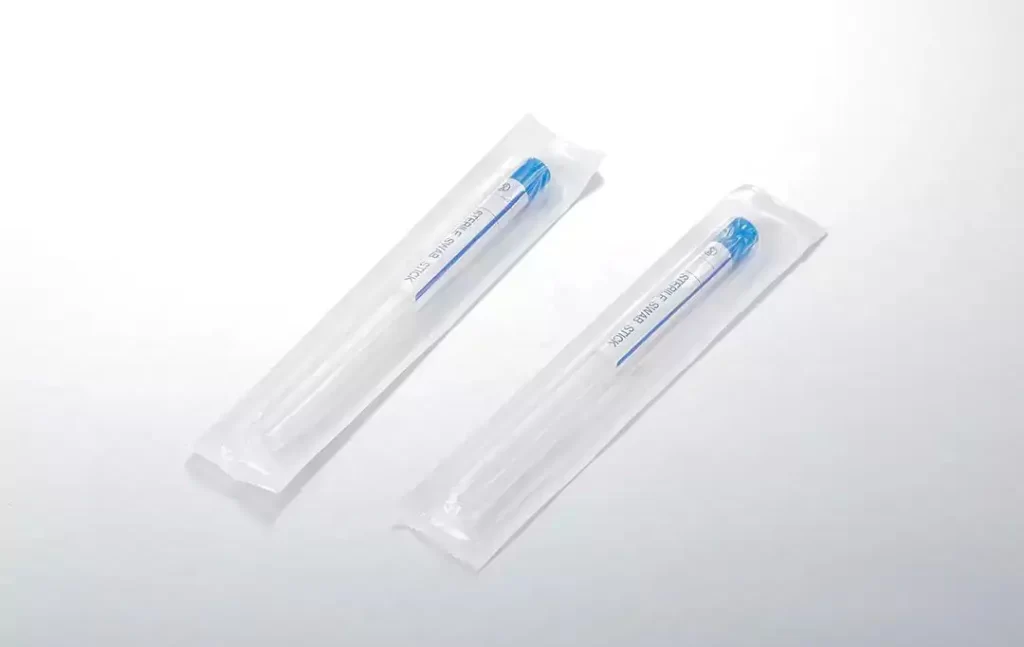
Trustlab has Lab Swabs that are fully compatible with Amies and transport media. User safety, specimen integrity, and laboratory workflow are the primary focuses of their design.
1. Sterile and Non-Sterile Formats
•Enviromental bacteria can be a substantial problem with swabs. To eliminate this contamination, each gamma-irradiated, individually packaged swab is sterile.
•Non-sterile options for low-risk applications: Non-sterile swabs are designed with the same level of material quality and integrity, giving a cost-effective option for bulk screening and environmental assessments.
2. Stick Material Choices for Flexibility and Chemical Resistance
•Wooden sticks offer traditional rigidity and absorbency: ideal for sampling with a firm handle. They are also biodegradable.
•Polystyrene and Polypropylene Swabs: For transport media, and engineering chemistry, swabs that are moisture and chemically stable are the most appropriate.
3. Swabs in Trustlab Sample Collection and Sample Release
•Synthetic Fiber Swabs: Synthetic fiber (rayon, polyester) swabs are better options than cotton swabs because the latter tend to trap and retain bacteria and/or protein. By using synthetic fibers, more than 90% of the sample will be eluted.
•Flocked Swabs: Flocked swabs that contain fibers arranged in a vertical orientation also show very low resistance to elution.
•Safe and Suitable for Cell Culture: These swabs are biocompatible and do not contain any PCR inhibitors. These are safe swabs, which have been tested in the field.
4. Compatible with Different Transport Media
•Prefilled Amies media tubes: Trustlab swabs come in prepacks. To sample, break the ampule (if the media is a gel) and send.
•Universal: These swabs will work with Amies, Stuart, Cary-Blair, and all Viral Transport Media (VTM) and allow laboratories to modify their sampling protocols without the purchase of new laboratory equipment.
5. Easy to Use and Integrate Into Existing Protocols
•Individually Peel Pouch or Bulk Packed: Sterile, individually packaged, tamper evident swabs or non-sterile, 100 count bulk swabs.
•No Mistake Sample Handling: Clear and charcoal Amies media are labeled to lessen handling errors.
6. Quality and Technical Support from Trustlab
•Produced in an ISO 13485 and CE-IVD environment: Established testing for sterility, endotoxins, and reference strains are performed for each batch.
•No cost technical documentation and quotation: Laboratories can access validation and performance documents and request personalized quotations via Trustlab's portal.
Practical Guidance on Amies Swabs in Special Pathogen Detection
The following guidelines will yield the best results.
•Sample Size: Swabs should capture lesions on the mucosal surfaces or in the mouth and rotated for 10 to 15 seconds to capture an adequate bacterial load.
•Do Not Allow the Swab to Dry: There should be no more than 30 seconds between swab collection and transfer to Amies.
•Charcoal Amies is your best choice for Campylobacter, Neisseria, and Anaerobic Pathogens, as well as for all other fastidious organisms. For more robust organisms like Staphylococcus and Streptococcus, Clear Amies is perfectly adequate.
•Transport and store at 4°C within 4 hours: Refrigeration slows bacterial death and reduces overgrowth of commensals; freeze only if molecular testing is planned (consult kit instructions).
•Label the transport tube clearly with patient ID, site, and time: Proper labeling prevents pre-analytical errors that waste both the specimen and the diagnostic effort.
Conclusion
Swabs with Amies are not a luxury – they are a necessity for accurate detection of special pathogens. From Neisseria gonorrhoeae to Campylobacter and anaerobes, the survival of these organisms during transport directly determines whether a patient receives correct treatment or remains undiagnosed. Trustlab's lab swabs combine sterile options, material versatility, high-efficiency tips, and broad transport medium compatibility to support clinical and research laboratories in this critical mission. By choosing the right swab and medium, microbiologists can confidently detect even the most fragile pathogens – and ultimately improve patient outcomes.
For more information on Trustlab's Swabs with Amies and other transport solutions, request a free quote or explore the full specifications online.
FAQs
Q1. What does "Amies" mean in swab collection?
Amies is a balanced salt transport medium designed to keep fragile bacteria alive during transit without allowing them to multiply.
Q2. Are Amies swabs PCR test-compatible?
Yes, Amies swabs, especially those with synthetic or flocked tips, support culture and molecular techniques and PCR.
Q3. What is clear Amies vs Charcoal Amies?
Charcoal Amies has activated charcoal which can absorb toxic fatty acids and free oxygen radicals, which can damage fragile bacteria, and improve the chances for pathogens like Neisseria and Campylobacter.
Q4. How long can a bacteria survive in an Amies swab?
Most bacteria can survive 24-48 hours at 4°C depending on the type of bacteria and whether charcoal Amies is used.
Q5. Are Trustlab's swabs filled with Amies medium?
Yes, Trustlab's swabs are placed in a tube with ready to use medium of Amies (clear or charcoal) for use right after collection.