


Updated 3 months ago
Swabs with Medium Explained: A Complete Guide to Five Transport Media Types

Admin
Swabs with Medium
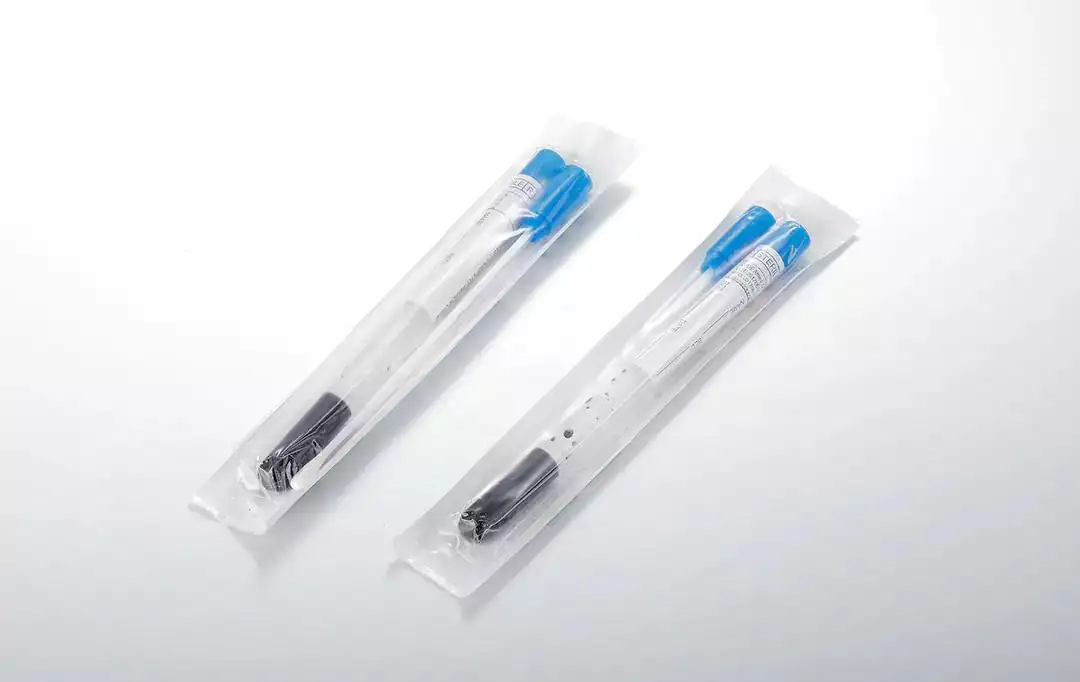
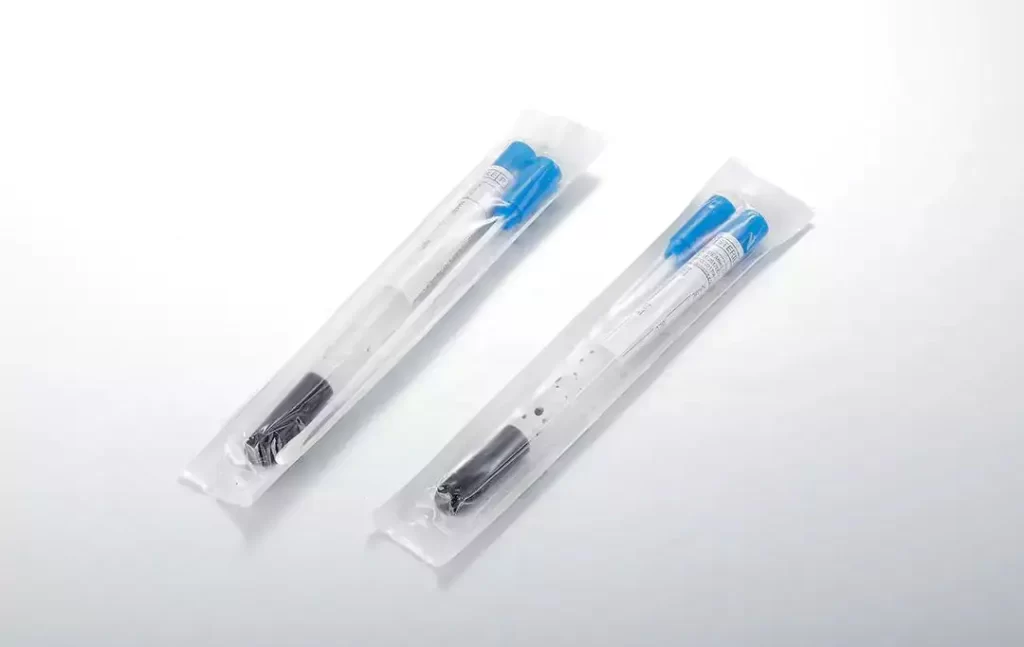
The collection of a clinical sample is only the beginning. A dry swab is essentially a death sentence for the collected sample. Swabs with medium, or transport media swabs, are an essential tool found in nearly all diagnostic and research labs. Because there are a number of different formulations, how does one select the appropriate transport media swab?
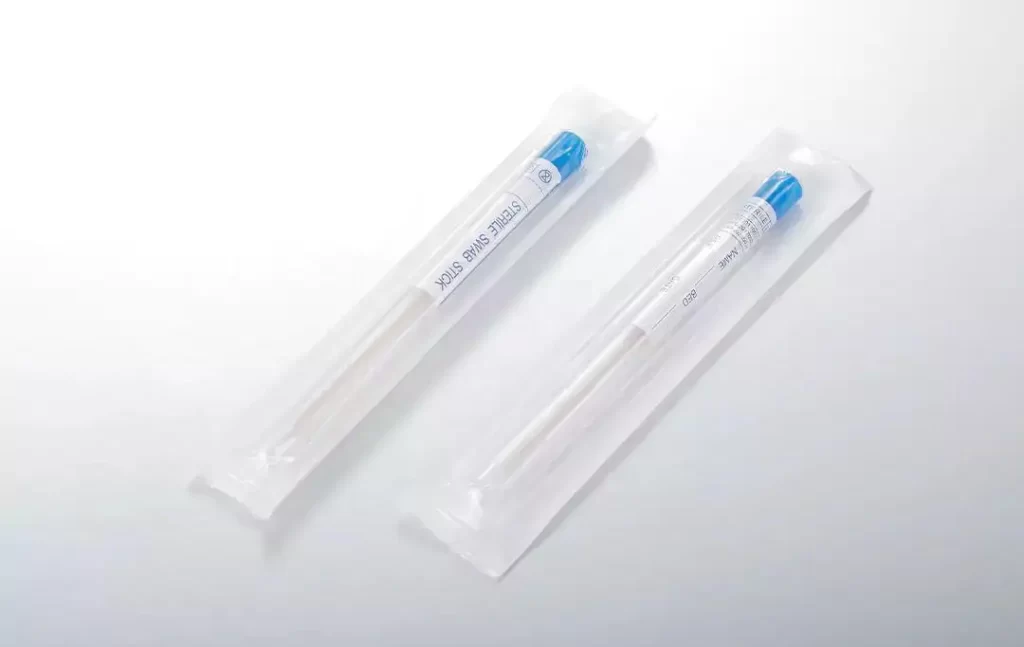
This article carefully addresses the different media transport options (Amies, Stuart, Cary-Blair, and the media transport options' charcoal variants) in a clear, neutral manner. In this article, their transport media swabs will be discussed in terms of the formulations, the microorganisms they target, the advantages they offer, and their thoughtful design.
Why is a Swab with Medium necessary?
Dry swabs (plain swabs) lose the ability to preserve the vast majority of microbes in about 30 to 60 minutes. After that period of time, many of the fastidious organisms die, thus creating false negative results. Swabs with Medium help buffer the sample in an isotonic environment that:
• Provides a preservative that helps maintain the specimen.
• Preserves and maintains the osmotic pressure and pH balance.
• Suppresses overgrowth of normal flora.
• Keeps sample microbes and pathogens in a maintainable state for hours or even days (depending on the medium).
The Lab Swabs transport media swabs and the other transport media swabs that are presented and discussed in this article are all designed with the aforementioned features.
| Type | Key Feature |
| Plain Swab | Immediate testing swab without a medium |
| Amies medium | General bacteria swab without charcoal |
| Amies with charcoal | Neutralizes fatty acids that are inhibitory |
| Stuart medium | Swab with traditional formula. Limited to certain bacteria. |
| Stuart with charcoal | Swab with charcoal for extended services to sensitive pathogens. |
| Cary-Blair medium | Swab designed to transport enteric/pathogenic bacteria |
Five Mainstream Transport Media — A Detailed Breakdown
1. Amies Medium — The All-Rounder for Routine Cultures
Amies medium is a modification of the Stuart formula with a balanced salt solution with charcoal and an inorganic phosphate buffer. It is charcoal-free unless specified.
• Best for: Most aerobic and facultative anaerobic bacteria — including Streptococcus, Staphylococcus, and Neisseria gonorrhoeae.
• Preservation time: 24–48 hours if kept at room temperature or refrigerated.
• Advantage: Clear medium which allows for the direct inspection of the tip of the swab.
• Limitation: Not appropriate for the more fragile anaerobes or stool pathogens.
• When to use Amies: For routine microbiological specimen collection from wounds, throats, or genitals.
2. Amies with Charcoal — For Sensitive or Overgrowth-Prone Specimens
Charcoal particles adsorb toxic fatty acids and other inhibitory substances that some bacteria release. This provides a "cleaner" environment.
• Best for: Neisseria meningitidis, Bordetella pertussis, and specimens from patients on antibiotics.
• Preservation time: Up to 48 hours, often with better recovery rates than plain Amies.
• Advantage: Neutralizes residual antibiotics or disinfectants.
• Limitation: Black color makes it impossible to see the swab tip; requires careful labeling.
Lab Swabs offer both Amies and Amies with charcoal formats, available with wooden or plastic sticks and in sterile individual packs.
3. Stuart Medium — The Classic but Declining Option
Stuart medium was one of the first semi-solid transport media. It contains sodium thioglycollate (a reducing agent) but has a weaker buffer than Amies.
• Best for: Neisseria gonorrhoeae and some streptococci.
• Preservation time: 24 hours maximum; refrigeration recommended.
• Advantage: Historically well-documented; suitable for labs with legacy protocols.
• Limitation: Poor survival of enteric bacteria and fragile gram-negatives.
�� Note: Many laboratories now prefer Amies over Stuart because of better buffering capacity.
4. Stuart with Charcoal — An Enhancement of the Original
Utilizing Stuart medium with charcoal adds versatility to the medium with respect to specimens where the toxicity of fatty acids is a concern.
• Most appropriate for: Neisseria spp. and respiratory pathogens.
• Time of preservation: 24–48 hours.
• Advantage: Charcoal removes inhibitors while the thioglycollate maintains low redox potential.
• Limitation: Still inferior to Amies for prolonged storage (>48h).
5. Cary-Blair Medium — The Gold Standard for Enteric Pathogens
Cary-Blair is a high-buffer transport medium specifically formulated for stool and rectal swabs. It contains no charcoal unless specified, but the "with charcoal" variant further adsorbs toxins.
• Best for: Salmonella, Shigella, Vibrio cholerae, and Campylobacter.
• Preservation time: Up to 72 hours or more, even at room temperature.
• Advantage: Preserves both bacterial viability and antigenic structure for PCR
• Limitation: Not suitable for respiratory or urogenital specimens.
✅ Expert tip: For multi-pathogen molecular panels (e.g., gastrointestinal PCR), a Cary-Blair Swab with Medium is strongly recommended.
How to Choose the Right Swab with Medium?
| If you are collecting… | Recommended medium |
| Throat / wound swab | Amies or Amies with charcoal |
| Genital swab (GC/CT) | Amies (clear, for microscopy) |
| Stool / rectal swab | Cary-Blair (with or without charcoal) |
| Respiratory pathogen (pertussis) | Amies with charcoal |
| General surveillance (no specific target) | Amies or Stuart |
Beyond the Medium — Swab Design Matters
Even the best transport medium fails if the swab itself is poorly designed. This is where Lab Swabs deliver clear advantages. Their Swabs with Medium combine multiple transport media with user-friendly hardware features.
• Sterile and non-sterile options: Meet diverse needs — from clinical diagnostics (sterile) to environmental monitoring (non-sterile reduces cost).
• Wood vs plastic sticks: Wood sticks offer the traditional benefit of being stiff sticks, while plastic sticks being flexible offer the benefit of being stiff while also providing resistance to chemicals for both PCR and toxicology.
• Swab sticks: Sticks engineered to hold as much sample as possible and to release as much sample as possible, while eliminating having a sample left stuck to the tip.
• Individual or bulk packaging: Individual sterile packs preserve integrity for patient contact; bulk packs (100pcs/bag) lower per-unit cost for high-volume research.
• Compatible with all major media: Plain, Amies (with/without charcoal), Stuart (with/without charcoal), and Cary-Blair — all available from a single supplier.
These features support microbiology specimen collection, PCR and molecular diagnostics, hospital sampling, research, and even educational training.
Practical Tips for Using Swabs with Medium
Always store transport media swabs at the temperature recommended by the manufacturer (usually 4–25°C, avoid freezing).
• Label the tube immediately after sampling — never rely on memory.
• Press the swab firmly against the transport tube wall to express excess fluid if required by your lab protocol.
• For charcoal media, vortex briefly before processing to release bacteria from charcoal particles.
• Do not use expired medium — buffer capacity degrades over time.
Conclusion: Match the Medium to Your Mission
Choosing between Amies, Stuart, or Cary-Blair is not about which is "best" — it is about which is most appropriate for your target microorganism and workflow. Amies is the reliable all-rounder, Stuart is the classic niche player, and Cary-Blair is the enteric specialist. Charcoal variants add an extra layer of protection for sensitive or inhibitor-prone specimens.
Lab Swabs provide these seven distinct types (plain, Amies, Amies+charcoal, Cary-Blair, Cary-Blair+charcoal, Stuart, Stuart+charcoal) in one integrated product line. With choices of sterility, stick material, and packaging, they ensure that your Swabs with Medium deliver consistent, accurate results — from the patient to the petri dish.
Need a reliable supply of transport media swabs? [GET FREE QUOTE]
FAQs
Q1: What is a Swab with Medium?
A: It is a transport swab ( that includes a transport medium, such as Amies, Stuart or Cary-Blair), which keeps the organisms alive until they can be delivered to the lab.
Q2: Can I use a Swab with Medium for PCR testing?
A: Yes, especially the swabs with Amies or Cary-Blair media, because they are designed to retain both bacterial and viral nucleic acids.
Q3: How long can a sample survive in a Swab with Medium?
A: It varies from 24-72 hours depending on the medium. For instance, Cary-Blair media can maintain enteric pathogens in a sample for 72 hours at room temperature.
Q4: What is the difference between Amies and Stuart medium?
A: Amies can support a wider range of bacteria for a longer time, as it is a stronger buffer. Stuart media has a weaker buffer, and is an older media.
Q5: When should I select a Swab with Charcoal?
A: Select these media when there are fatty acids, antibiotics or disinfectants that may be inhibitory to the growth of the pathogens. Charcoal will adsorb these components.