


Updated 4 months ago
The Science Behind The Visible Flashback Type Blood Collection Needle For Multi-Sample Draws

Admin
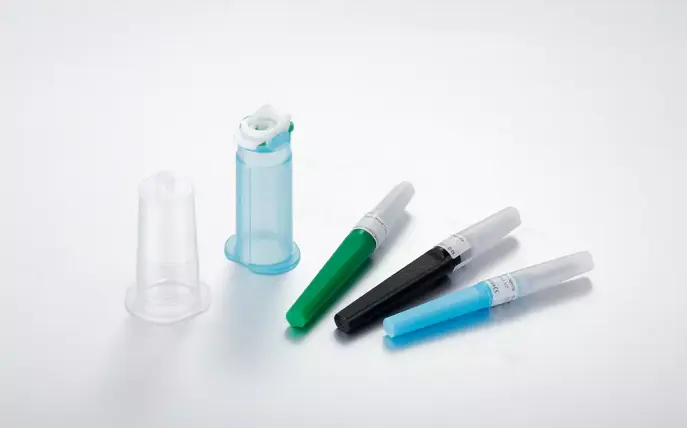
Visible Flashback Type Blood Collection Needle
For any phlebotomist, the difference between a smooth blood draw and a problematic one often comes down to one variable: confirmation. A Visible Flashback Type Blood Collection Needle provides that confirmation by showing blood immediately upon vein entry. But the real science lies in how that flashback behaves during a multi-sample draw—and why most needles fail at it.
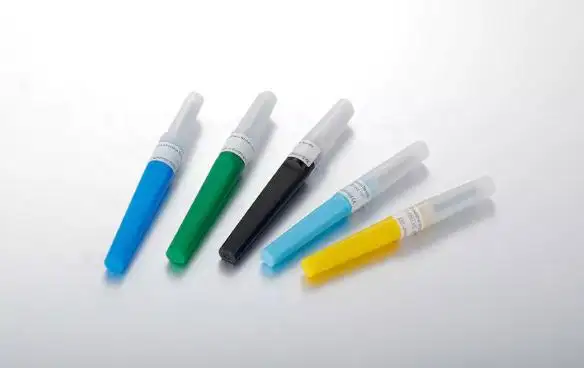
In a multi-sample procedure, the phlebotomist collects multiple tubes of blood from a single venipuncture. The needle must maintain steady blood flow and clear flashback visibility after every tube change. Many standard needles lose their flashback signal after the first or second tube. Trustlab engineered a solution that keeps the Visible Flashback Type Blood Collection Needle reliable from the first tube to the last.
The rest of this article explains how the design works, why it matters for clinical efficiency, and what specifications procurement teams should check before buying.
What "Visible Flashback" Actually Means In Practice
A Visible Flashback Type Blood Collection Needle is designed with a small transparent chamber located just behind the bevel. When the needle tip enters a vein, blood flows into this chamber immediately—without any vacuum tube attached. That visual confirmation tells the phlebotomist: you are in the right place.
However, in a multi-sample draw, the dynamics change:
•Tube vacuum creates suction: Each new tube applies negative pressure to pull blood through the needle.
•Flow may be intermittent: Between changes of the tubes, suction may be stopped.
•Flashback chambers may be drained: If the chamber is drained, the phlebotomist is left uncertain of the needle placement.
A well-designed Visible Flashback Type Blood Collection Needle maintains a small residual blood volume in the chamber between tube changes. This keeps the confirmation visible throughout the entire draw.
Why Standard Needles Lose Flashback Between Tubes
Most blood collection needles on the market use basic chamber geometry. When the first tube is removed, the sudden stop in suction causes the chamber to drain completely. The phlebotomist then faces a choice:
•Assume the needle is still in position and attach the next tube (risking a missed draw).
•Adjust the needle position (risking vein damage or patient discomfort).
•Neither choice is ideal. This is why our Visible Flashback Type Blood Collection Needle for multi-sample draws is designed with features that standard needles do not have.
Trustlab's Engineering Approach: Reliability Versus Allure
Trustlab designed the Visible Flashback Type Blood Collection Needle (Model GT210-1009A) with one goal: in multi-sample draws, the red indicator does not go unnoticed. This requires design addressing three components.
1. Chamber Volume and Capillary Retention
The chamber's volume is designed to be enough to keep the blood indicator visible, while not too much to cause clotting. Capillary retention is accomplished through design, and helps keep blood, even a small film, within the chamber, even with the suction stopped.
•Result: The phlebotomist can see a red blood indicator even while the tubes are being changed.
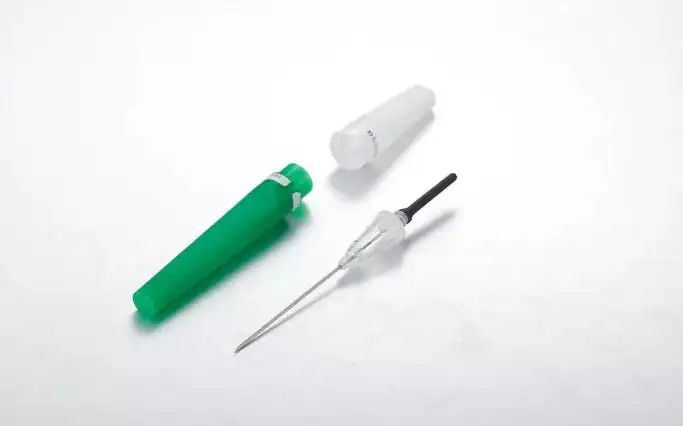
2. Aligning the Bevel and Flow Path
The design of the Visible Flashback Type Blood Collection Needle positions the chamber inlet in direct alignment with the needle bevel. Because of this design, sheering is reduced and the blood tube is less likely to be hemolysed. This design means that blood is pushed into the next tube, as opposed to waiting to do so.
•Result: Flow and rest of the tube attachings with no lag.
3. Anti-Reflux Valve Placement
Some multi-sample needles suffer from backflow—blood moving away from the chamber when the tube is removed. Trustlab includes a passive anti-reflux feature that maintains forward pressure in the chamber.
•Result: Consistent flashback visibility from tube one through tube five or six.
Measurable Benefits for Laboratories And Hospitals
Switching to a reliable Visible Flashback Type Blood Collection Needle produces measurable improvements in daily phlebotomy work. These are not theoretical benefits—they are outcomes that lab managers track.
•Fewer needle repositioning attempts: Clear flashback reduces the urge to "search" for the vein after each tube change.
•Lower hemolysis rates: Straight flow paths and smooth bevels reduce mechanical damage to blood cells. This matters most for potassium and coagulation tests.
•Shorter draw times per patient: Eliminating hesitation between tubes adds up over a full day of draws.
•Reduced patient anxiety: Patients notice when a phlebotomist works confidently. Visible confirmation reduces the chances of a painful second stick.
•Less tube waste: When flashback is unclear, some phlebotomists attach a discard tube to test flow. A reliable chamber removes this step.
Who Benefits Most From a Multi-Sample Design
Not every blood draw requires a high-performance Visible Flashback Type Blood Collection Needle. But certain clinical settings depend on it.
•High-volume outpatient labs: Phlebotomists may draw 50 to 100 patients per day. Any delay between tubes multiplies quickly.
•Hospital inpatient wards: Many patients in the wards have delicate veins. Multiple repositioning increases the likelihood of hematoma.
•Pediatric/Geriatric units: Veins are small and more likely to collapse. A clear flashback eases the necessity for deeper and more angled insertions.
•Research/Clinical Trial sites: Maintaining sample integrity becomes critical. Hemolysis invalidates results.
For these environments, the extra engineering in a purpose-built Visible Flashback Type Blood Collection Needle pays for itself in reduced redraws and higher sample quality.
Technical Specifications for Procurement Teams
When evaluating a Visible Flashback Type Blood Collection Needle for multi-sample use, look for these specifications:
•Sterilization method: EO sterile (industry standard for blood collection sets).
•Available gauges: 19G to 27G (Adults and Children).
•Conforms to: ISO 23908:2024, single-handed, passive shielding safety devices.
•Certifications: ISO 13485, CE, MDMA.
•Made from: Pyrogen free substances and medical grade stainless, steel with Bevel.
•DNase/RNase free: Required for molecular testing applications.
Trustlab's GT210-1009A meets all of the above. It is designed specifically for multi-sample workflows where a Visible Flashback Type Blood Collection Needle must perform consistently across multiple tubes.
The Bottom Line On Multi-Sample Flashback Design
A Visible Flashback Type Blood Collection Needle is only useful if it stays visible throughout the entire draw. Standard needles were designed for single-tube collections. Modern laboratories need something better.
Trustlab built the GT210-1009A for the realities of multi-sample phlebotomy: consistent flow, clear visual feedback, and minimal hemolysis. It is not a revolutionary claim—just a practical solution to a daily clinical problem.
Ready to evaluate the Visible Flashback Type Blood Collection Needle for your lab? Request a sample or request a quote through the Trustlab sales team.
Common Questions About Multi-Sample Flashback Needles
Q: Does the flashback chamber work with all tube brands?
Q: Does the chamber fill slowly?
A: No. The chamber autocompletes to the specified volume during draws. The vacuum only vacuums the plunger and doesn't influence the chamber's vacuum. The inject tube's one-way function allows the chamber to be filled post draw.
Q: Can the chamber break when it draws blood?
A: Breaking is virtually impossible due to the chamber design. The hinge undergoes rigorous screening. The design uses high-impact resistant plastic which prevents breaking.
Q: Is the device OSHA compliant?
A: Yes. The device complies with OSHA standards through an added protective mechanism.
Q: Are there devices available for purchase?
A: Yes. The Trustlab device is available for bulk purchase or a combined order with sample devices.