


Updated 4 months ago
One Petri Culture Dish, Three Experiments: The 2026 Trend Of Segmented Plates

Admin
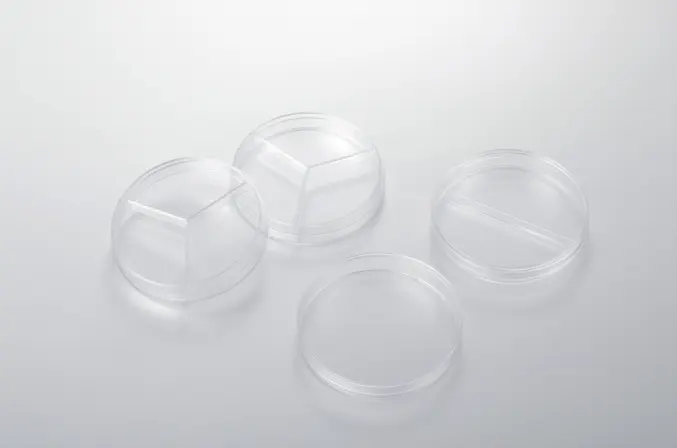
Petri Culture Dish
The standard Petri Culture Dish has remained largely unchanged for decades. One round container. One agar type. One experiment at a time. But in 2026, laboratory buyers are asking a different question: why use three dishes when one dish can do the work of three?
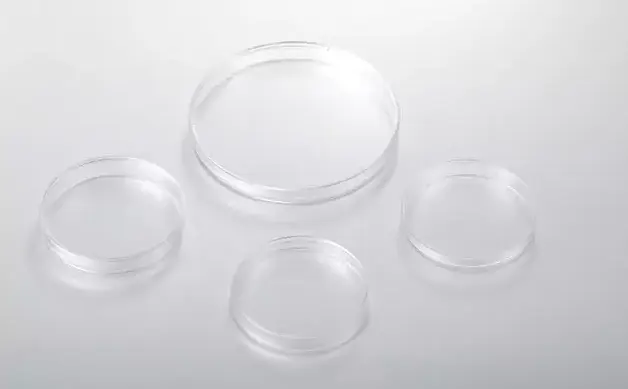
That question is driving demand for segmented Petri Culture Dish designs. Trustlab has responded with the GT207 series, specifically the ф90MM 2SECTIONS and ф90MM 3SECTIONS models. These are not flashy innovations. They are practical responses to real laboratory needs: saving bench space, reducing plastic waste, and running parallel tests without opening multiple sterile packages.
Here is how the segmented Petri Culture Dish is changing routine microbiology work.
Why Segmented Dishes Make Sense for Busy Labs
Laboratories run on efficiency. Every extra dish means more handling, more storage space, and more waste to process. The segmented Petri Culture Dish solves these small but constant friction points.
•Parallel testing without additional plates: You can place three different samples on the same plate and do a direct comparison of their growth in the same incubation conditions.
•Reduced plastic usage: One three-section ф90MM dish can aptly replace three different dishes. Less material entering the waste stream.
•Lower storage footprint: Stack fewer boxes in your incubator and on your shelves. One case of segmented dishes takes the same space as one case of standard dishes but delivers three times the testing capacity.
•Simplified record keeping: One label per plate. One image per experiment. One disposal step.
For labs processing hundreds of samples daily, these small savings add up quickly.
The Trustlab ф90MM 2SECTIONS: Two Tests, One Plate
The Petri Culture Dish with two equal halves is ideal for side-by-side comparisons. Trustlab's GT207 ф90MM 2SECTIONS model has a clear wall in the middle that keeps media separate and avoids mixing and cross-contamination during incubation.
Some applications are:
•Control and treatment: Pour the same media on both sides. Inoculate an organism to the control on one side, and a test organism to the other. Results can be read visually, and directly.
•Comparison of antibiotics: Place antibiotic disks on the same agar plate. This will control for temperature differences seen on separate plates, and comparison of zones of inhibition can be seen.
•Comparison of media: Two agar formulations can be used to see what supports growth better through the same method of comparison.
Cross-contamination through the wall brings more environmental control to the incubator than running the tests on separate Petri Culture Dish units. The reason is the divided dish design.
Trustlab ф90MM 3SECTIONS: Three Variables, One Incubator Space
For more difficult experiments, the Petri Culture Dish that has been divided into three sections give more flexibility. The Trustlab's GT207 ф90MM 3SECTIONS model splits a standard 90mm Petri dish into three equal sections, with each section being completely isolated from the other.
Some applications are:
•Testing of multiple dose-responses: On the same plate, show different concentrations of the same compound. The effect can be seen in the form of a gradient.
•Isolation of species: The same agar type can be used to provide three different environmental isolates for the species of interest to be compared directly.
•Training of students: The same agar plate can be used as a material for teaching labs. Students can reduce the costs of the different samples by having their students inoculate to the plate.
•Testing and screening: Reducing the number of plates on the bench can also be an efficient way to speed the screening of three samples.
The three-section design is in particular favorite among educational and quality control labs with limited space and high sample volume needs.
Material Quality: PS That Performs
There is limited use for a segmented Petri Culture Dish if each compartment is not made to be separable. Trustlab has mastered use of a high quality Polystyrene (PS) that has little to no warpage, cracks or leaks created by permanent dividers.
•Heat Resistance: The dividers are straight and endure distortion even at elevated incubation temperatures.
•Optical Clearity:The PS ensures easy colony counting, and clear photographs by preventing fogging and scratching.
•Uniform Thickness: The wall thickness is the same in all directions allowing even agar depth.
•Snug Lid Fit: One standard lid properly fits both set 2 and set 3 sectional models. The lids also properly vent with no rattling or falling off.
The PS material also retains its original color and structurally integrative ability with no chemical reaction to common stains and reagents.
Packaging and Sizes for 2026 Procurement
Trustlab realizes its customers' long term purchase also depends on predictable attributes, hence our segmented Petri Culture Dish models follow the same packaging as our circular dishes.
1.Ф90MM 2SECTIONS:
•(GT207 series: 500 pieces/carton.
•Carton dimensions: 48x47x34cm.
•PS material.
2.Ф90MM 3SECTIONS: Same packing configuration. Interchangeable lids with standard ф90MM dishes.
•Standard packaging: 10 pieces/bag. Bags are sealed to maintain sterility until use.
•Bulk purchase options without bags are available through Trustlab.
3.Cost Savings: Real Numbers
We can calculate how segmented Petri Culture Dish alternatives will save on the cost of frequent use.
•Material cost: one dish does cost less than three single dishes. Plastic content does go down.
•Storage cost: one carton with three-section dishes replaces three cartons with single dishes. Warehouse spatial area opened up.
•Handling cost: Headache alleviated. Increased efficiency. Labor time reduced by up to 60% with multiple tests on one dish.
•Waste cost: 1 item to dispose of. Container waste contains less. Disposal costs reduced.
Savings in the costs above exist in the selection of a single Petri Culture Dish format and require neither new equipment nor additional staff training.
Applications Beyond Microbiology
Although a Petri Culture Dish is recognized mainly in the field of microbiology and the culture of bacteria, certain laboratories may require differing arrangements of a dish. We cater to that need.
•Seed germination thing: test on the same media and analyze various seed types.
•Chemical compatibility screening: it's a lot faster to test reagents.
•Crystal growth thing: complex.
•Food testing: it's a lot faster to test pathogens.
This format of versatility is what makes one SKU sufficient to meet multiple lab needs.
Why Trustlab for 2026
Laboratory procurement in 2026 is more than low prices. Procurement teams want to partner with suppliers that understand and help to optimize workflow and reduce waste, with emphasis on unit costs. Trustlab believes in and translates those principles into practice with Petri Culture Dish.
We employ the following aspects of manufacturing:
•Cleanroom facilities, fully compliant with ISO standards. We are precise with sterilization.
•Integrity of mold: integrity of dividers and beaker diameters are assessed in every batch.
•Traceability: we maintain all records from raw material to packaging.
The distinct segmented Petri Culture Dish is not a concept of the distant future. It is a feasible product of the present, made possible by Trustlab.
Ordering Information
The Trustlab GT207 ф90MM 2SECTIONS and 3SECTIONS Petri Culture Dishes are in stock and available for immediate shipment.
•MOQ: Contact Trustlab for Bulk order and minimum order quantity quotes.
•Lead times: Deliveries are usually within 7-14 days.
•Custom options: Logo printing, sterile versus non-sterile, and alternative packaging available by request.
Ready to run three experiments on one dish? Request a sample pack of Trustlab segmented petri dishes. Test them in your workflow. Compare the savings yourself.
[Contact Trustlab for bulk quote] | [Download specification sheet] | [Request samples]
Frequently Asked Questions (FAQs)
Q: Is it possible to autoclave the Trustlab segmented Petri Culture Dish?
A: No. The PS (poly styrene) material cannot withstand the autoclaving process. For aseptic work, use sterile, pre-sterilized dishes. Consider glass dishes for repeatable applications.
Q: Do the dividers leak if I pour agar at different levels?
A: No. The dividers in Trustlab ф90MM 2SECTIONS and 3SECTIONS models are permanently bonded. Therefore, agar will remain in the section into which it is poured.
Q: Can I use the same lid for dishes that are both 2-section and 3-section?
A: Yes. The lid design is standardized for all Trustlab ф90MM dishes. The lids connect well to all single, 2-section, and 3-section models.
Q: Do segmented dishes cost more than standard ones?
A: The difference in cost between them is slightly higher, but the cost is actually lower per test because 1 dish substitutes 3 or more single dishes. Therefore, the majority of labs experience net savings.
Q: Do you have sterile bulk?
A: Yes. Sterile bulk packages contain 10s of pieces per bag. For non-sterile bulk, please contact us.