



Updated 5 months ago
How should medical institutions of different sizes configure their blood collection system solutions?

Admin
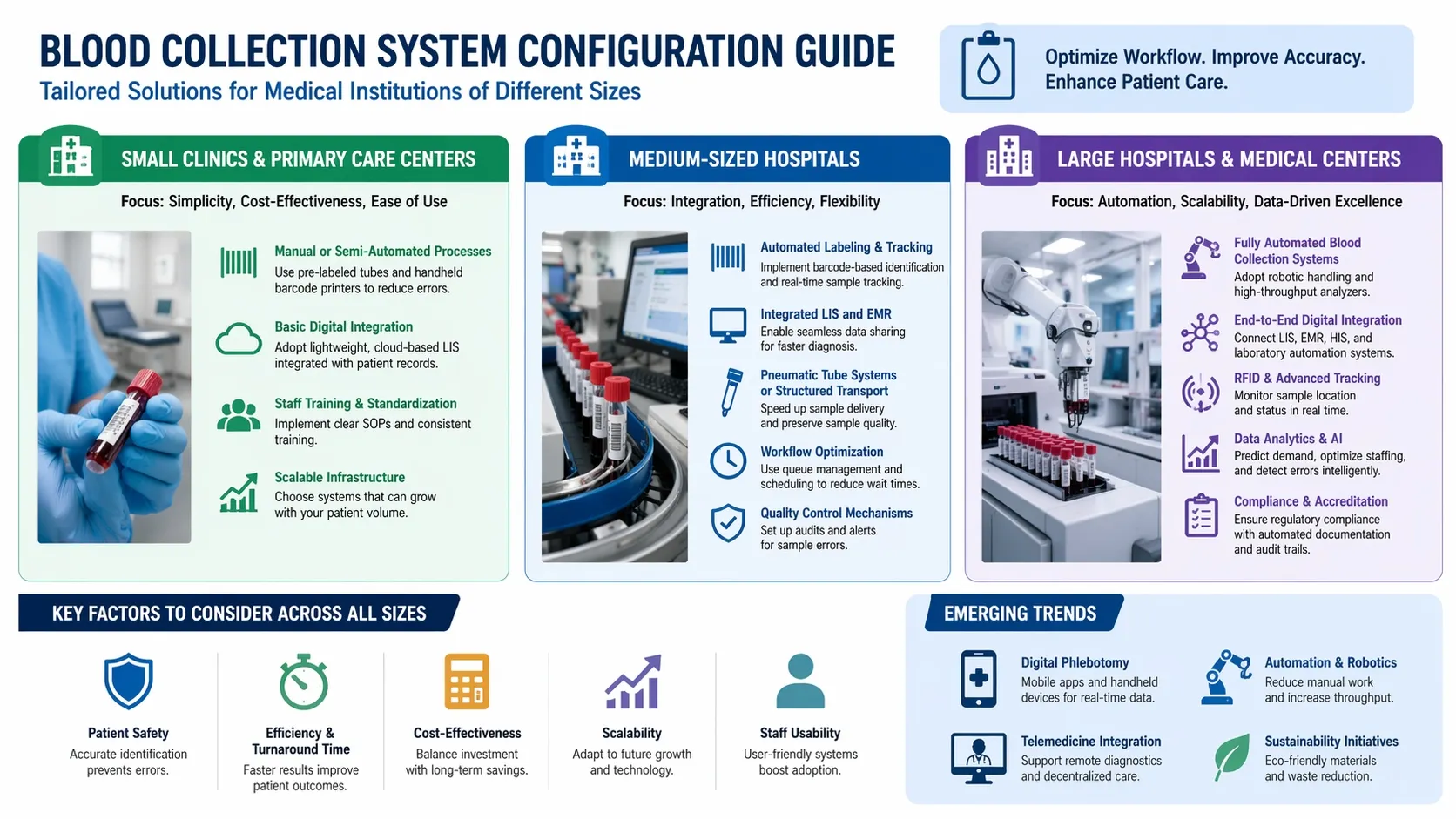
How should medical institutions of different sizes configure their blood collection system solutions?
In the modern healthcare environment that is rapidly changing, it is imperative to optimize blood collection systems to enhance patient care, operational efficiency, and diagnostic accuracy. The requirements of the medical institutions however differ greatly with regard to size, number of patients and resources. Small clinics, large tertiary hospitals, and all the facilities should adopt a bespoke solution to blood collection system in order to achieve optimal performance.
This article discusses the way in which medical institutions of various sizes can plan their blood collection systems strategically, providing useful information on how to optimize workflow, minimize errors, and provide scalability.
Understanding Blood Collection System Solutions
A blood collection system is usually a collection of equipment, software, and workflows that are optimized to simplify the process of drawing and labeling, transporting, and analyzing blood samples. Central elements tend to consist of:
- Blood collection devices (needles, tubes, vacutainers)
- Labeling and identification systems (barcodes, RFID)
- Sample transportation systems (manual or automated)
- Laboratory Information Systems (LIS)
- Integration with Electronic Medical Records (EMR)
The complexity and scale of these systems should align with the institution’s operational needs.
Solutions for Small Clinics and Primary Care Centers
Small clinics and outpatient facilities tend to deal with less patient load and have smaller budgets. Thus, simplicity, cost-effectiveness, and usability should be a priority of their blood collection systems.
Key Recommendations:
1. Manual or Semi-Automated Processes
Small facilities may use manual blood collection using basic labeling systems. Tubes with pre-applied labels or barcode printers that can be held in hands can minimize errors in identification without necessitating great amounts of investment.
2. Basic Digital Integration
The accuracy of data can be enhanced by means of a lightweight Laboratory Information System (LIS) combined with patient records. Cloud-based solutions are quite appropriate because of low cost of upfront implementation and low maintenance on IT.
3. Staff Training and Standardization
The limited automation means regular training of staff is of paramount importance. Standard operating procedures (SOPs) of good sample handling and labeling must be well defined.
4. Scalable Infrastructure
Even small clinics must select systems that can expand with an increase in the number of patients, so that they do not have to replace all the systems at some later stage.
Solutions for Medium-Sized Hospitals
The workflow in medium-sized hospitals is more intricate and has higher volumes of patients. The automation and flexibility of their blood collection systems should be balanced.
Key Recommendations:
1. Automated Labeling and Tracking
Install barcode-based identification of patients and tracking of samples. This minimizes human error, and enhances traceability during the diagnostic process.
2. Integrated LIS and EMR Systems
Seamless integration between LIS and EMR systems ensures real-time data sharing, faster diagnosis, and improved patient management.
3. Pneumatic Tube Systems or Structured Transport
For faster sample delivery to laboratories, hospitals can use pneumatic tube systems or dedicated transport workflows. This minimizes delays and preserves sample integrity.
4. Workflow Optimization
Introduce queue management systems and digital scheduling to streamline patient flow during peak hours, reducing wait times and improving patient experience.
5. Quality Control Mechanisms
Regular audits and automated alerts for sample errors (e.g., mislabeling, hemolysis risks) help maintain high-quality standards.
Solutions for Large Hospitals and Medical Centers
Big hospitals and tertiary care facilities are associated with great amounts of patients, complicated diagnostics, and departments. They should have their blood collection systems that are very automated, scalable, and integrated.
Key Recommendations:
1. Fully Automated Blood Collection Systems
Advanced facilities should adopt automated phlebotomy stations, robotic sample handling, and high-throughput analyzers. These systems significantly reduce manual workload and error rates.
2. End-to-End Digital Integration
A fully integrated ecosystem connecting LIS, EMR, Hospital Information Systems (HIS), and laboratory automation systems is essential. Real-time data exchange improves clinical decision-making and operational efficiency.
3. RFID and Advanced Tracking Technologies
RFID-based tracking allows real-time monitoring of sample location and status, reducing the risk of lost or delayed specimens.
4. Centralized vs. Decentralized Models
Large institutions should evaluate whether to centralize blood collection in dedicated centers or distribute it across departments. Hybrid models often provide the best balance between efficiency and accessibility.
5. Data Analytics and AI Integration
Leveraging analytics tools can help identify bottlenecks, predict peak demand, and optimize staffing. AI-driven systems can also assist in error detection and workflow improvements.
6. Compliance and Accreditation Standards
Large hospitals must ensure compliance with international standards and regulatory requirements. Automated documentation and audit trails are essential for maintaining accreditation.
Key Factors to Consider Across All Institution Sizes
Regardless of size, several universal principles apply when configuring blood collection system solutions:
1. Patient Safety
Accurate patient identification and sample labeling are critical to preventing diagnostic errors.
2. Efficiency and Turnaround Time
Faster sample processing leads to quicker diagnoses and improved patient outcomes.
3. Cost-Effectiveness
Institutions should balance upfront investment with long-term operational savings.
4. Scalability
Systems should be adaptable to future growth and technological advancements.
5. Staff Usability
User-friendly systems reduce training time and improve adoption rates.
Emerging Trends in Blood Collection Systems
Healthcare technology continues to evolve, bringing new opportunities for optimization:
- Digital Phlebotomy Solutions: Mobile apps and handheld devices for real-time data entry.
- Automation and Robotics: Reducing manual intervention and increasing throughput.
- Telemedicine Integration: Supporting remote diagnostics and decentralized care models.
- Sustainability Initiatives: Eco-friendly materials and waste reduction strategies.
Institutions that stay ahead of these trends can gain a competitive edge in patient care and operational efficiency.
Conclusion
The design of an efficient blood collection system solution will demand a case-specific design according to the size and complexity of the medical institution. Small clinics have simple cost-efficient systems whereas the medium-size hospitals are to concentrate on integration and partial automation. In contrast, big medical facilities need to have fully automated, data-driven ecosystems to manage large volumes and complex workflows.
With the help of aligning the technology, procedures, and staff capabilities, healthcare providers are able to significantly enhance diagnostic accuracy, patient experience, and long-term operational success.