


Updated 5 months ago
What are the key points for daily maintenance of laboratory equipment?

Admin
What are the key points for daily maintenance of laboratory equipment?
Lab equipment is important to achieve correct results, safe processes, and effective manpower. In research facilities, clinical labs or industrial testing environments, it is necessary to perform proper daily maintenance to prolong the life of instruments and to guarantee integrity of data. Failure to take care of the equipment may result in equipment breakdown, expensive repairs, and invalid experimental results. The article provides the main aspects of laboratory equipment maintenance that should be performed daily and provides practical advice to enable the labs to perform at their optimum.
Why Daily Maintenance Matters
Maintenance is not merely a daily routine, but a proactive measure towards a quality assurance. Laboratory instruments are usually delicate and need regular maintenance in order to work properly. Regular upkeep helps:
- Prevent unexpected breakdowns
- Ensure accuracy and reproducibility of results
- Maintain compliance with safety and regulatory standards
- Reduce long-term operational costs
Laboratories can reduce downtimes by adopting organized daily maintenance procedures that will enhance productivity.
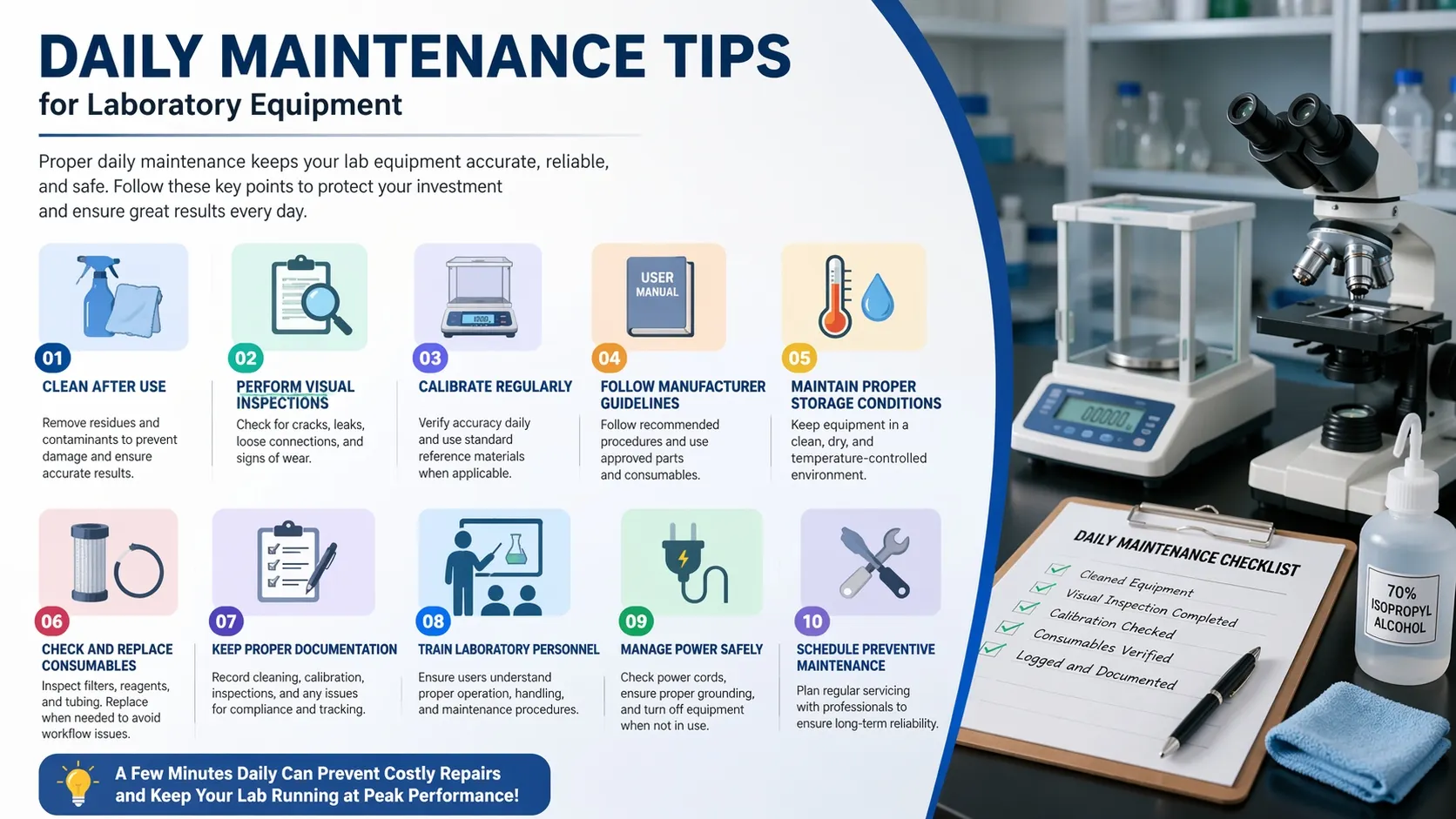
1. Clean Equipment After Every Use
One of the most fundamental aspects of daily maintenance is cleaning. Residues, dust, and contaminants can accumulate quickly and interfere with instrument performance.
- Use appropriate cleaning agents specific to each type of equipment
- Avoid harsh chemicals that may damage sensitive components
- Wipe down surfaces, screens, and control panels
- Clean sample holders, probes, and accessories thoroughly
For example, analytical instruments such as spectrophotometers or microscopes require careful cleaning to prevent contamination that could skew results.
2. Perform Visual Inspections
Daily visual checks help identify potential issues before they escalate into serious problems. Lab personnel should inspect equipment for:
- Cracks, leaks, or corrosion
- Loose cables or connections
- Unusual noises or vibrations
- Signs of wear and tear
Early detection allows for timely intervention, reducing the risk of equipment failure during critical operations.
3. Calibrate Instruments Regularly
Calibration ensures that laboratory instruments provide accurate and reliable measurements. While full calibration schedules may vary, basic checks should be performed daily.
- Verify calibration status before use
- Use standard reference materials when applicable
- Record calibration results in logs
Instruments such as balances, pH meters, and pipettes are particularly sensitive and require frequent calibration checks to maintain precision.
4. Follow Manufacturer Guidelines
Each piece of laboratory equipment comes with specific maintenance instructions provided by the manufacturer. These guidelines are designed to optimize performance and longevity.
- Adhere to recommended cleaning procedures
- Use approved replacement parts and consumables
- Follow proper startup and shutdown protocols
Ignoring manufacturer recommendations can void warranties and lead to improper functioning of equipment.
5. Maintain Proper Storage Conditions
Environmental factors such as temperature, humidity, and light exposure can significantly impact equipment performance.
- Store instruments in clean, dry, and temperature-controlled environments
- Avoid exposure to direct sunlight or corrosive substances
- Use protective covers when equipment is not in use
Proper storage helps prevent degradation and ensures equipment is ready for use at any time.
6. Check and Replace Consumables
Many laboratory instruments rely on consumable components such as filters, reagents, and tubing. Daily checks are necessary to ensure these parts are functioning correctly.
- Inspect consumables for signs of depletion or contamination
- Replace items according to usage and manufacturer recommendations
- Keep an adequate inventory to avoid workflow disruptions
Neglecting consumables can lead to inaccurate results and potential damage to equipment.
7. Ensure Proper Documentation
Accurate record-keeping is a vital part of laboratory maintenance. Daily logs help track equipment performance and identify recurring issues.
- Record cleaning, calibration, and inspection activities
- Note any irregularities or malfunctions
- Maintain maintenance schedules and service histories
Proper documentation supports compliance with regulatory standards and facilitates audits.
8. Train Laboratory Personnel
Well-trained staff are essential for effective equipment maintenance. All users should understand how to operate and care for instruments correctly.
- Provide training on proper handling and maintenance procedures
- Emphasize the importance of daily checks
- Encourage reporting of issues
A knowledgeable team reduces the risk of misuse and extends the life of laboratory equipment.
9. Power Management and Safety Checks
Electrical safety is a critical component of daily maintenance.
- Ensure equipment is properly grounded
- Check power cords for damage
- Turn off instruments when not in use
Proper power management not only enhances safety but also reduces energy consumption and wear on equipment.
10. Schedule Preventive Maintenance
While daily maintenance focuses on routine tasks, it should be complemented by periodic preventive maintenance.
- Coordinate with technical service providers
- Perform deeper inspections and servicing
- Replace aging components proactively
Combining daily care with scheduled maintenance ensures long-term reliability and performance.
Conclusion
Laboratory equipment requires daily maintenance to promote accuracy, safety and efficiency in any laboratory environment. Through regular cleaning schedules, visual inspection, calibration of equipment and observing the manufacturer requirements, laboratories can greatly minimize the chances of equipment breakdown. Effectiveness of maintenance practices is further improved by proper storage, documentation and staff training.
The daily maintenance, as opposed to just spending time on equipment repairs, not only prolongs equipment life, but also helps to protect the quality of experimental outcomes. In an industry where accuracy is a key consideration, the maintenance of laboratory equipment must always be one of the priorities.
These suggestions can help laboratories establish a culture of responsibility and excellence to make sure that their equipment is reliable and available to help scientific discovery each day.