



How to extend the service life of laboratory equipment?
Lab equipment is a big investment to research centers, medical centers, academic institutions and industrial laboratories. Be it in the field of pharmaceuticals, environmental testing or academic research, the operation of equipment must be maintained in order to achieve accuracy, safety and cost effectiveness. This guide will delve into the real-life techniques of increasing the life of laboratory equipment and enhancing the sustainability and reliability of operations.
Why Equipment Longevity Matters
Extending the lifespan of laboratory instruments is not just about saving money. It also contributes to:
- Consistent data accuracy
- Reduced downtime and disruptions
- Improved safety compliance
- Lower environmental impact
Replacing equipment frequently can be costly and inefficient. Rather, a proactive maintenance and management approach will provide a optimum performance after a period.
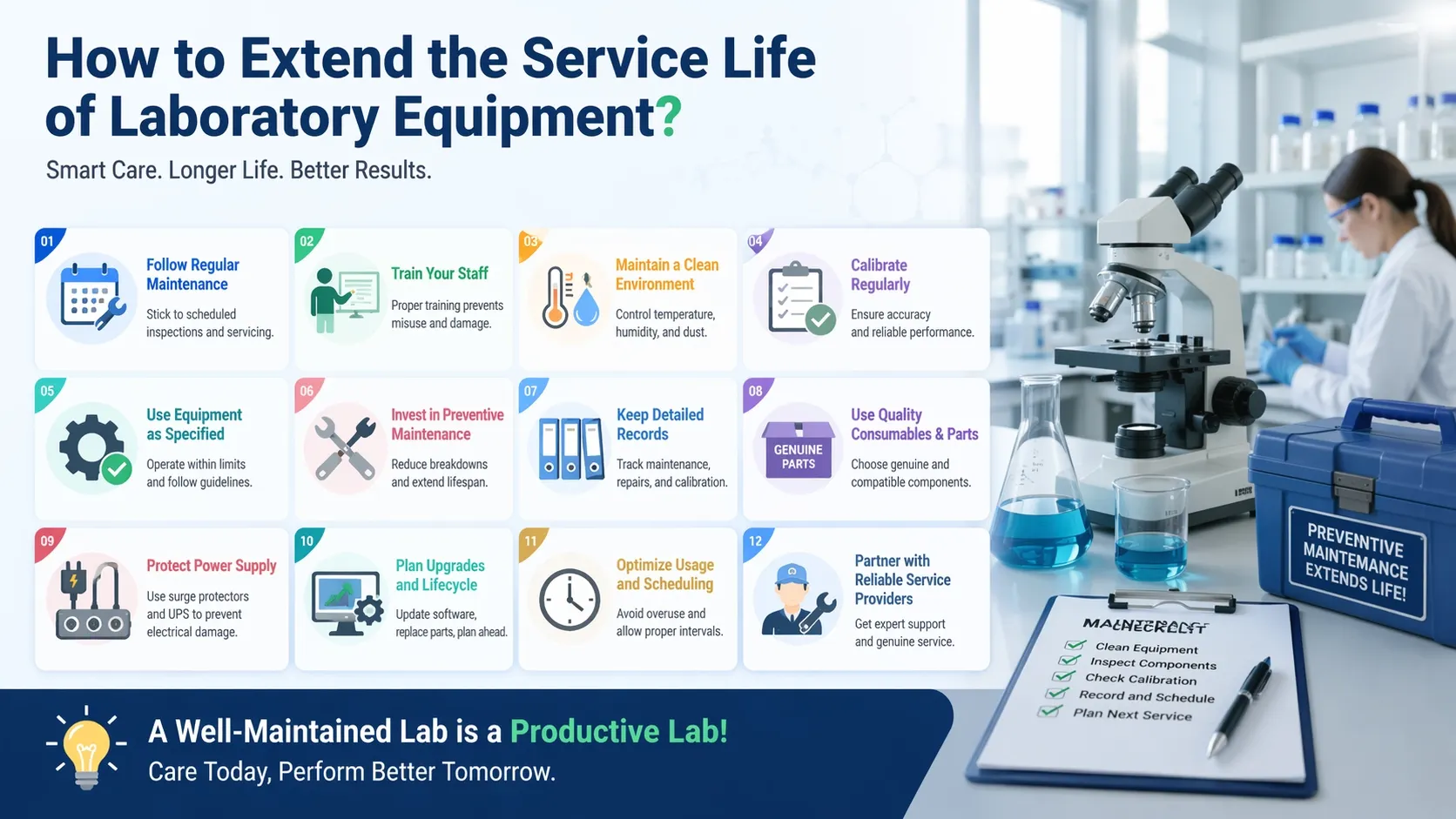
1. Implement Regular Maintenance Schedules
The basis of equipment lifespan is through routine maintenance. All laboratory equipment including centrifuges, spectrometers among others should undergo routine checks and repairs.
Key Maintenance Practices:
- Follow manufacturer-recommended service intervals
- Conduct daily, weekly, and monthly checks
- Replace worn-out components proactively
- Lubricate moving parts when necessary
An adequately documented maintenance schedule can assist in the detection of possible problems prior to their development into expensive repairs.
2. Proper Training for Laboratory Staff
User handling is one of the least considered factors in equipment lifespan. When used improperly, it may result in premature wear, calibration drift, or even permanent damage.
Training Tips:
- Provide hands-on training for all new staff
- Create standard operating procedures (SOPs)
- Emphasize correct startup and shutdown processes
- Train users to recognize early signs of malfunction
Well-trained personnel not only protect equipment but also ensure reliable experimental results.
3. Maintain a Clean and Controlled Environment
Environmental conditions significantly impact laboratory equipment performance and longevity.
Key Environmental Factors:
- Temperature: Avoid extreme fluctuations
- Humidity: Prevent corrosion and condensation
- Dust: Keep instruments clean to avoid internal damage
- Vibration: Minimize disturbances for sensitive instruments
Using air filtration systems and maintaining clean lab spaces can dramatically extend equipment life.
4. Calibration and Performance Verification
The calibration is conducted regularly to ensure instruments give reliable and accurate results. Even high quality equipment can over time drift out of the original settings.
Best Practices:
- Schedule periodic calibration based on usage frequency
- Use certified calibration standards
- Maintain calibration records for compliance
- Perform routine performance verification tests
Accurate calibration not only extends usability but also ensures compliance with regulatory standards.
5. Use Equipment According to Specifications
Each laboratory instrument is modeled with certain operational limits. When these limits are exceeded, permanent damage may be done.
Guidelines:
- Avoid overloading equipment
- Use compatible reagents and materials
- Follow voltage and power requirements
- Operate within recommended temperature ranges
Respecting manufacturer specifications is one of the simplest ways to prolong equipment life.
6. Invest in Preventive Maintenance Programs
Preventive maintenance is more than ordinary cleaning and maintenance. It includes regular maintenance by skilled personnel.
Benefits:
- Early detection of potential failures
- Reduced risk of unexpected breakdowns
- Extended equipment lifespan
- Improved operational efficiency
Many organizations adopt annual maintenance contracts (AMCs) to ensure consistent servicing.
7. Keep Detailed Equipment Records
Tracking equipment history is essential for effective lifecycle management.
What to Record:
- Purchase date and warranty details
- Maintenance and repair history
- Calibration logs
- Usage frequency
These records help identify patterns, predict failures, and make informed decisions about repairs or replacement.
8. Use High-Quality Consumables and Spare Parts
Using low-quality consumables or counterfeit spare parts can significantly reduce equipment lifespan.
Recommendations:
- Source parts from authorized suppliers
- Use manufacturer-approved consumables
- Avoid cost-cutting on critical components
While cheaper alternatives may save money upfront, they often lead to higher long-term costs due to equipment damage.
9. Power Protection and Backup Systems
Electrical issues are a common cause of equipment failure.
Protective Measures:
- Use surge protectors
- Install uninterruptible power supplies (UPS)
- Ensure proper grounding
- Regularly inspect electrical connections
Stable power supply prevents sudden shutdowns and protects sensitive electronic components.
10. Plan for Equipment Upgrades and Lifecycle Management
Even with the best care, laboratory equipment will eventually reach the end of its lifecycle.
Strategic Planning:
- Evaluate performance regularly
- Upgrade outdated software and firmware
- Replace obsolete components
- Budget for future replacements
A proactive lifecycle management strategy ensures smooth transitions and avoids unexpected disruptions.
11. Optimize Usage Through Scheduling
Overuse or improper scheduling can accelerate wear and tear.
Smart Usage Tips:
- Avoid continuous operation without breaks
- Schedule high-demand equipment efficiently
- Rotate usage among multiple devices when possible
Balanced usage helps distribute wear evenly and reduces stress on individual instruments.
12. Partner with Reliable Service Providers
Working with experienced service providers ensures that equipment receives expert care.
What to Look For:
- Certified technicians
- Fast response times
- Access to genuine parts
- Comprehensive service packages
Reliable support can significantly extend the operational life of your laboratory assets.
Conclusion
Maintaining the laboratory equipment and extending its working life is not achievable without appropriate maintenance, training users, and controlling the environment, as well as planning. With these best practices, the laboratories will be able to measure the maximum return on investment, performance consistency, and the necessary safety and accuracy levels.
Today, in the competitive and resource-aware world, the proactive approach towards managing equipment is not only helpful, but it is a necessity. These measures will assist you in boosting efficiency and minimizing the overall costs in the long-term, regardless of whether you run a small research laboratory or a large industrial plant.