


Updated 3 months ago
3-Ply vs. Single-Layer Bags: Why Biological Sample Transport Requires a 3-Ply Biohazard Specimen Bag

Admin

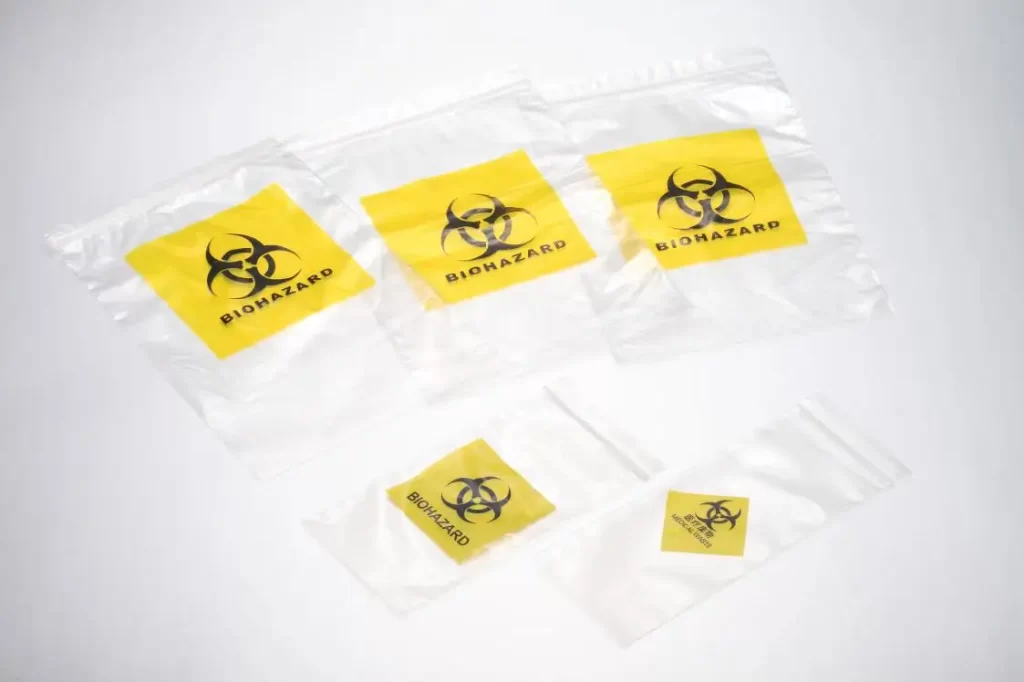
Biohazard Specimen Bag
Safeguarding biological samples is a responsibility that laboratories, clinics, and field testing sites take very seriously. Once a sample is compromised, it is not only a risk to those who come in contact with it, but it is also a loss to science. Because packaging is crucial, the packaging that is selected for transport (the Biohazard Specimen Bag) is of the utmost importance.
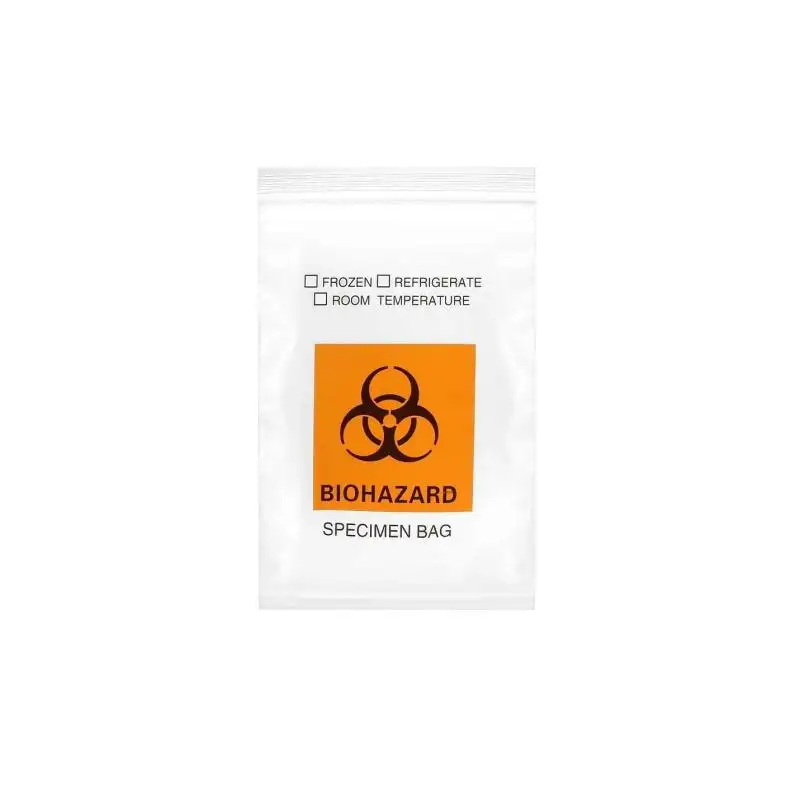
There is a serious debate within the realm of biohazard bags about the 3-ply co-extruded construction and the traditional bags that contain a single layer. Why is it that 3-ply bags are quickly dominating the market? Within this document, you will find the scientific explanation and the hazards and risk associated with the traditional single-layer bags. You will also see why bags like Trustlab's 2mil 3-ply Biohazard Specimen Bags are of higher quality and represent a better choice.
What Exactly is 3-Ply?
3-Ply bags combine 3 separate bags that are co-extruded. There is a purpose for each of these 3 layers:
• The outer layer is the first line of defense against the world and makes the bag abrasion resistant.
• The layer that is 2nd in line is responsible for blocking all the sharp edges.
• The layer that is innermost is responsible for keeping all contents permanently sealed within the bag and leak-proof.
In contrast, a traditional single layer bag is a film that is homogeneous. Those bags may come with a lower cost, but they are a better choice because they are not engineered and lack the needed features.
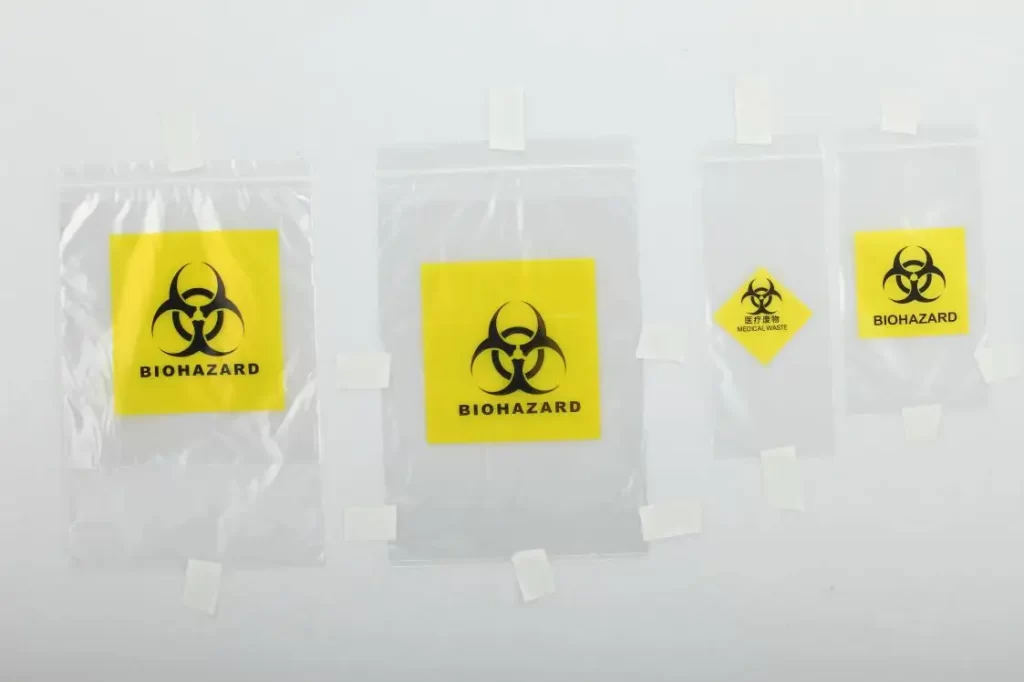
Single-Layer Biohazard Bags
Although single-layer bags can be adequate in certain low-risk settings, they pose four serious threats when used to transport infectious or diagnostic samples:
• Complete failure due to sharp contact: Breaking a pipette tip can scratch the bag and establish a direct escape route for pathogens.
• Cracks due to low-temperature stress: For frozen samples of plasma and/or tissues, single-layer bags become brittle at -20 °C, and can be found cracked due to normal handling.
• Weak seals: For single-layer bags of thinner films, sealing by heat or self-adhesiveness can fail when the bag is subjected to vibrations or stack pressure.
• No redundant protection: If the single layer is compromised, there is zero backup — the bag leaks immediately.
3-Ply Construction: Engineered for Real-World Transport
A properly manufactured Biohazard Specimen Bag with 3-ply co-extrusion addresses every weakness of single-layer designs. Here is how each performance attribute is achieved:
1. Puncture Resistance – Beyond "Thick"
• How 3-ply works: The middle layer uses high-molecular-weight polymers that stretch rather than tear when pressed against a sharp edge.
• Real-world benefit: A dropped vacuum tube with a jagged rim will dimple but not penetrate a 3-ply wall.
• Trustlab's advantage: Trustlab's 2mil 3-ply construction passes internal puncture tests exceeding ASTM F1306 standards for clinical sharps.
2. Leak-Proof Integrity – The Inner Layer's Role
• How 3-ply works: The innermost layer is formulated to swell slightly around punctures, self-sealing micro-tears.
• Real-world benefit: Even if the middle layer is breached, the inner layer maintains liquid containment for a critical window (enough to notice and transfer the sample).
• Testing evidence: Trustlab's Biohazard Specimen Bag undergoes a 30-minute water column pressure test — zero droplets appear on the outer surface.
3. Flexibility Without Fragility
• How 3-ply Works: The combination of a tough outer layer and soft, easy sealing and handling inner layers.
• Real-world benefit: The bag conforms around irregular-shaped containers (urine cups, histology cassettes) without creating stress points.
• Trustlab's specification: Available in 8"x10" and 6"x10" sizes, each with 2mil thickness — thin enough to seal easily but thick enough to stop sharps.
Why Biological Sample Transport Must Use 3-Ply
International regulations (UN3373 for Category B biological substances) require packaging that can withstand a 1.2-meter drop test, stacking pressure, and vibration. A single-layer bag rarely meets these requirements consistently. A 3-ply Biohazard Specimen Bag is not a luxury — it is a necessity for three reasons:
• Chain of custody protection: Every time a sample changes hands (phlebotomist → courier → lab reception → technician), the bag faces a new opportunity for puncture. 3-ply survives repeated handling.
• Secondary containment compliance: Most safety guidelines require an outer bag that is leak-proof and puncture-resistant. A single-layer bag fails the "puncture-resistant" clause.
• Reputation and liability: A sample leak results in contamination, exposure, fines. Using 3-ply shows responsibility.
Trustlab's Design and Technical Advantages
Trustlab has engineered its Biohazard Specimen Bag specifically for modern clinical and research environments. The key specifications are:
• Construction: 3-ply co-extruded film, not laminated (no adhesive layers that can delaminate).
• Thickness: 2mil overall — the sweet spot between flexibility (easy to close) and strength (stops 22-gauge needle hubs).
• Sizes available:
6"x10" – ideal for 5–10 blood tubes, swab transport tubes, or small tissue pots.
8"x10" – fits 500ml urine containers, slide mailers, or frozen sample packs with an ice block.
• Seal options: Heavy-duty self-adhesive closure, heat seal closure with write-on label area.
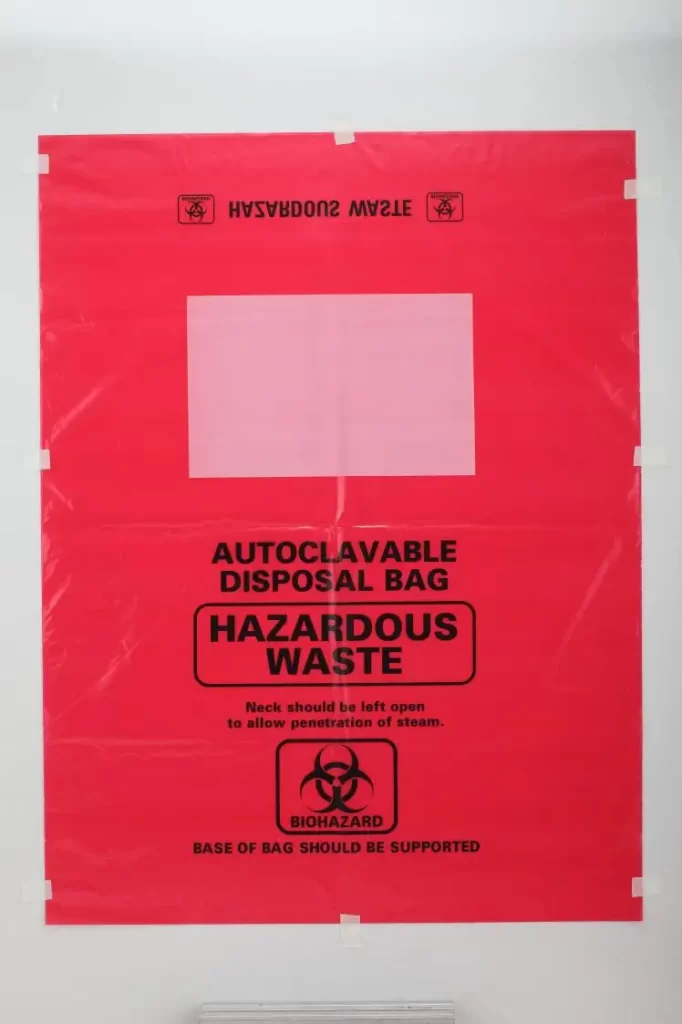
• Biohazard indication: Permanent, abrasion resistant, red/black imprint with OSHA/WHO minimum visibility standards.
Trustlab's manufacturing process includes online pinhole detection and batch leak testing — every roll is certified before leaving the factory.
Practical Recommendations for Lab Managers
When choosing a Biohazard Specimen Bag for your facility, follow this quick checklist:
• Always verify "3-ply" on the spec sheet: Some vendors claim "multi-layer" but actually use two thin plies glued together. Trustlab uses true co-extrusion.
• Match size to sample volume: For standard tubes → 6"x10". Select the 8"x10" for larger containers or for frozen samples.
• Properly train your employees: Do not fill beyond 75% full. Remove air from the bag and seal from the center toward the sides.
• Use a 3-ply bag and a cushion: A 3-ply bag and a cushion such as a paper towels or a diaper pad work best for bags that contain a primary container.
Conclusion: More Layers, More Safety.
In the event of a sample spill, there is no way to transport a biological sample a second time. A single-layer bag is cheap but provides a higher risk. A 3-ply Biohazard Specimen Bag provides three layers of bags and carries an engineered design of redundancy. Trustlab's design provides a 2mil measurement and a 3-ply, 6"x10" or 8"x10" bag size that provides ease of use and compliance for puncture resistance and leak proof seal.
Safety of employees and integrity of transportation of samples is the goal of every lab or clinic, and with Trustlab bags, you can have confidence that you safe to transport your samples and with confidence.
FAQs
Q1. What does "3-ply" mean?
There are three layers of film that have been co-extruded. The outer layer is strong and wear resistant, the middle layer is a barrier to punctures, and the final inner layer is a leak-proof seal.
Q2. Can I use a single-layer bag to fulfill UN3373 requirements?
No. A single-layer bag does not provide a sufficient outer layer of packaging that is puncture resistant for compliance to UN3373.
Q3. Are Trustlab 2mil 3-ply bags strong enough to contain packaging for sharp items?
Yes. A 3-ply bag provides a higher resistance to punctures than a 4mil single layer bag due to the design of the layers and the engineering of the structure.
Q4. Is it possible for me to write directly on the bag?
Without a doubt, writing on the bag is allowed. Trustlab's bags include a write-on space, resistant to smudging no matter the contact with either alcohol or moisture.
Q5. Does a 3 ply bag require an absorbent pad?
Of course. An absorbent pad is required to be placed in the bag compartment in compliance with the IATA/ P650 standard.