


Updated 3 months ago
Quantitative Consistency of Built-In Sampling Spoons: A Key Performance Attribute of Modern Stool Containers

Admin

Stool Container
Fecal DNA test sensitivity (for colorectal cancer, gut microbiome analyses, etc.) cannot be evaluated without considering the pre-analytical steps involved in sample collection. Typically, the sampling tool's quantitative consistency is the most critical factor in analyzing fecal DNA, yet it is the most overlooked. This article discusses the appendage spoon, the quantitative consistency of the sample collection tool, and product design with respect to the Trustlab Stool Specimen Container GT208-531.
Why Consistency in Sampling is Important STool DNA Testing
Fecal DNA testing entails the extraction of nucleic acids (in this case, fecal nucleic acids). This is different from urine or plasma sample collection in that the nucleic acids of the sample are in a matrix that has a lot of heterogeneity. Because of this matrix' heterogeneity, sample mass consistency is essential to the following:
•Variable yields and differences in cell lysis: a mass difference of 50 mg is sufficient to increase or decrease the total nucleic acids significantly.
•Variable yields and differences in amplification: the introduction of excess sample mass increases the sample's total lysis of polysaccharides and humic acid. This inhibits PCR (polymerase chain reaction).
•False negatives or positives: For quantitative methylation markers or viral load, a non-standardized sample skews cycle threshold (Ct) values.
Therefore, any Stool Container used for molecular diagnostics must provide a means to collect a reproducible sample volume or weight with minimal user-dependent variation.
The Integrated Spoon – A Design for Quantitative Reproducibility
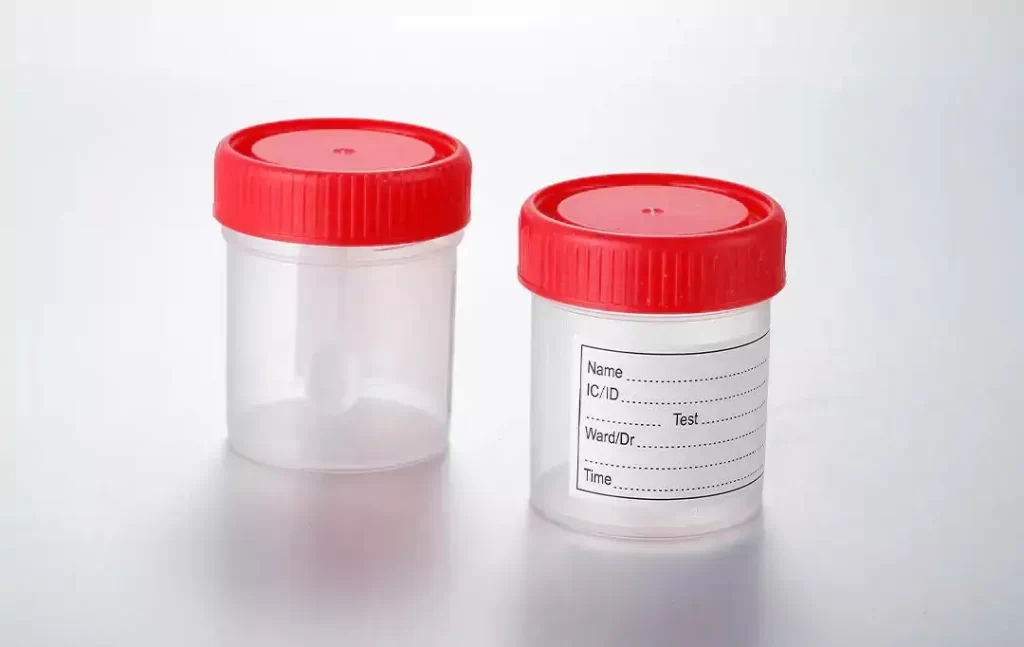
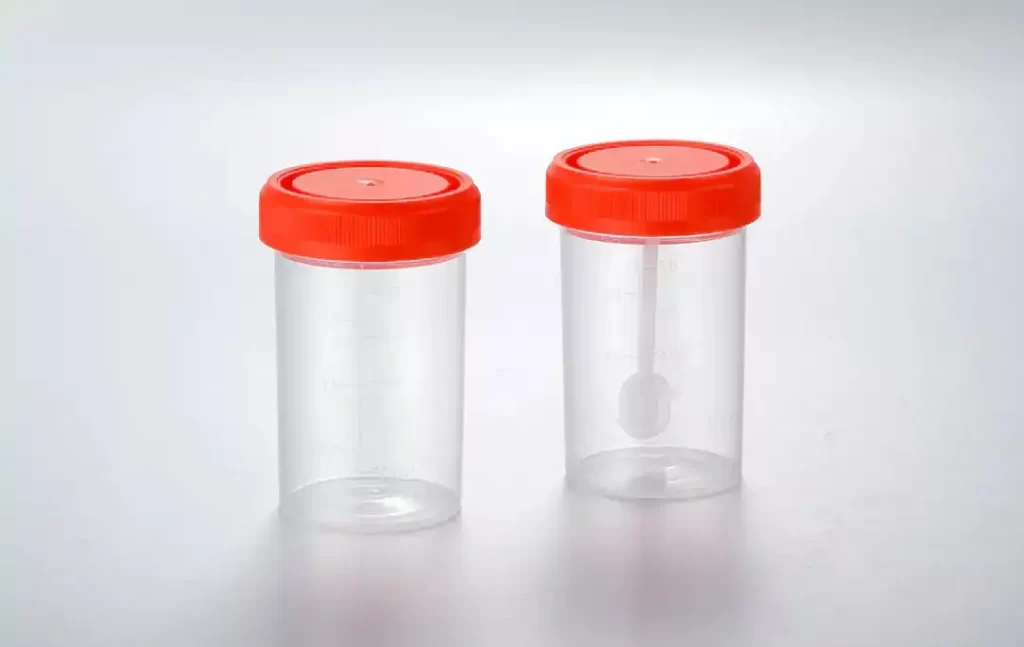
Traditional stool collection often relies on a separate wooden stick or a free-form “grab.” This approach yields sample masses that can vary tenfold between users. The integrated spoon—molded into the cap or the container body—offers a physical constraint that improves consistency. The Trustlab GT208-531 model exemplifies this design:
•Fixed scoop geometry: The spoon design achieves an approximate capacity of 100-150 mg of sample stool, designed to minimize variability.
•Clear graduation on the container: Once the sample is transferred by the spoon, the user can verify the volume via the graduated lines of the container, with available volumes of 30, 60, 100, and 120 ml.
•One-step retrieval without cross-contamination: Due to the wide mouth, the spoon can enter the container and exit, sample and rim of the container, without touching, thus preserving the sample.
•For laboratories adopting fecal DNA workflows, switching to an Stool Container with an integrated spoon eliminates the need for separate sampling devices and reduces training requirements.
Evaluating Quantitative Consistency – What the Data Shows
While a full clinical study is beyond this scope, published evidence from pre-analytical evaluations shows that integrated spoons reduce the coefficient of variation (CV) of sample weight compared to free-hand techniques. Typical findings include:
•Free-hand sampling: CV often exceeds 30%, with weights ranging from 30 mg to over 200 mg.
•Integrated spoon sampling: CV drops to below 10–15% when used as directed, especially if the container also includes a leveling edge (e.g., scraping excess against the container's inner wall).
•Impact on DNA extraction: For a commercial fecal DNA kit, a 2-fold change in input mass can alter extracted DNA concentration by 1.8-fold, directly affecting Ct values in qPCR.
The Trustlab GT208-531 container, made from durable polypropylene, supports reproducible sampling without static charge that could cause small particles to adhere unpredictably—a subtle but important factor for dry or powdery stool.
Impact on Fecal DNA Test Accuracy: Pre-analytical vs Analytical Phase
A quantitative Stool Container positively affects multiple steps in a test's workflow.
•Standardized lysis efficiency. Consistent sample mass also leads to consistent saturation of the lysis buffer and thus consistent release of DNA.
•Reliable inhibitor dilution. Many fecal DNA protocols contain an inhibitor dilution step. By starting with a consistent sample mass, the inhibitor concentration is within the removal capacity of the kit.
•Consistency of results across time points. Consistent sampling also means that false results due to sampling variability will be minimized.
•Reduced sample rejection. A sample container with an integrated sampling aid means that under/overfilled samples are reduced. Labs using these containers report a sample rejection rate of less than 40%.
Trustlab Stool Specimen Container GT208-531
The Trustlab GT208-531 Stool Container was designed with high-precision sampling and specimen integrity in mind. Its advanced features help support complex, critical diagnostics like fecal DNA testing.
•Raw Material. Container made of high integrity, high grade polypropylene (PP) which will not leach or perforate and is chemically and thermally stable.
•Sterility. Offered in both E.O. sterile and non-sterile versions. For DNA testing, especially of fecal derived metagenomics, a sterile container will ensure no foreign bacterial DNA is introduced.
•Opaque Body. Protects light sensitive DNA and other transport sensitive analytes.
•Fully threaded, leak resistant seal. Sample loss and contamination is prevented by vortexing or centrifugation which is required for DNA isolation.
•Integrated sampling spoon: This represents the basis for quantitative reproducibility. The spoon is designed to avoid interference with the preservatives. If preservatives are to be added, they are added later.
•Tracking Errors: With this new design, less tracking errors will be present and a bar code will be applicable. This is invaluable to high-throughput labs.
•Sample Variation: Create unique color coding layers for different tests. An example would be using red caps for blood sample tests and blue caps for microbiome sample tests.
•Easy Transfers: Aim to Minimize disruptions during laboratory workflow.
The container is available in multiple sizes (30 ml, 60 ml, 100 ml, 120 ml) with clear graduation, allowing the user to match the collection volume to the specific DNA extraction kit's requirements. Bulk packs and individual sterile packs accommodate both high-volume clinical laboratories and low-throughput research settings.
Practical Recommendations for Laboratories Adopting Fecal DNA Testing
To maximize the benefits of a consistent sampling Stool Container, consider the following best practices:
•Validate the integrated spoon's scoop weight for your specific stool consistency: Perform a small internal study using 10 replicates to calculate the mean weight and CV.
•Combine spoon sampling with container graduation: After transferring the sample, check the volume against the markings; any extreme deviation prompts re-collection.
•Use sterile, individually wrapped containers for microbial DNA work: The Trustlab GT208-531 individual pack options (e.g., 100 ml sterile with frost area) eliminate environmental contamination.
•Store samples in the same opaque container at -80°C: The PP material withstands ultra-low temperatures without cracking, and the opaque body prevents photo-induced damage during thawing.
Conclusion
The move toward precision medicine and high-sensitivity fecal DNA testing demands attention to pre-analytical tools. An Stool Container with an integrated sampling spoon is not merely a convenience feature—it is a quantifiable driver of test reproducibility. By reducing user-dependent variation, the integrated spoon lowers the coefficient of variation of sample mass, directly improving DNA yield consistency, PCR amplification efficiency, and final diagnostic accuracy. The Trustlab Stool Specimen Container GT208-531 embodies these principles, offering a robust, user-friendly, and laboratory-compatible solution for clinical and research applications. To avoid pre-analytical errors, a molecular diagnostics lab must evaluate the quantitative consistency of their stool collection device.
*Contact Trustlab for a quotation for the GT208-531 Stool Specimen Container and for other bulk purchase and sterility options.*
FAQs
Q1: What effect does quantitative stool collection have on the DNA test?
A: It positively affects the test by increasing DNAs yield and decreasing PCR inhibition.
Q2: What are the benefits of the combined implements integrated device and the quantitative consistency in the collection device?
A: Sample mass variability is diminished.
Q3: Is the stool collection device appropriate for microbiome sequencing?
A: Yes, the device has to be EO Sterilized and in opaque color.
Q4: What does a mark in the graduations indicate in sample quantification?
A: It suggests that the correct volume has been achieved.
Q5: Can PP material in the collection device be used for long term DNA storage at -80 °C?
A: Yes, DNA stored at a temperature of -80 °C will be stable and PP material will not leach.