


Updated 3 months ago
Matching Sample Containers to Test Requirements: A Guide for Urinalysis, Microbiology, and Toxicology

Admin
Sample Containers
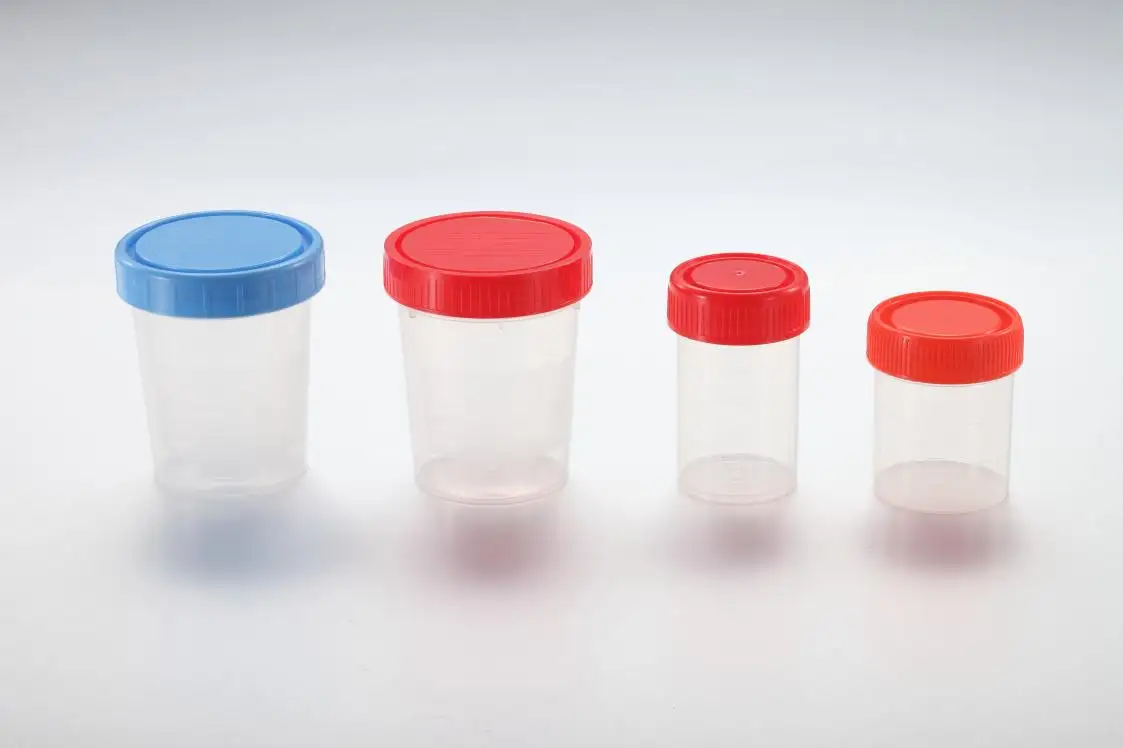
Selecting Sample Containers requires careful consideration and review on a case-by-case basis. Urine tests come with requirements for the collection containers, which may include the need for sterility, chemical inertness, anti-leak performance, and required volume. The use of the wrong container may lead to false negative results, sample rejection, and patient diagnosis errors. This article discusses the requirements set forth by different urine tests when describing Sample Containers, including Trustlab's GT208-517-1 and GT208-517-2 Sample Containers.
Importance of the Right Sample Containers
Urine is a biofluid consisting of many different components. Sample Containers that interfere with the collection, such as providing a background that absorbs or allows for the release of the analyte, will provide poor testing results. The Sample Containers must be matched to the application to ensure reliable results.
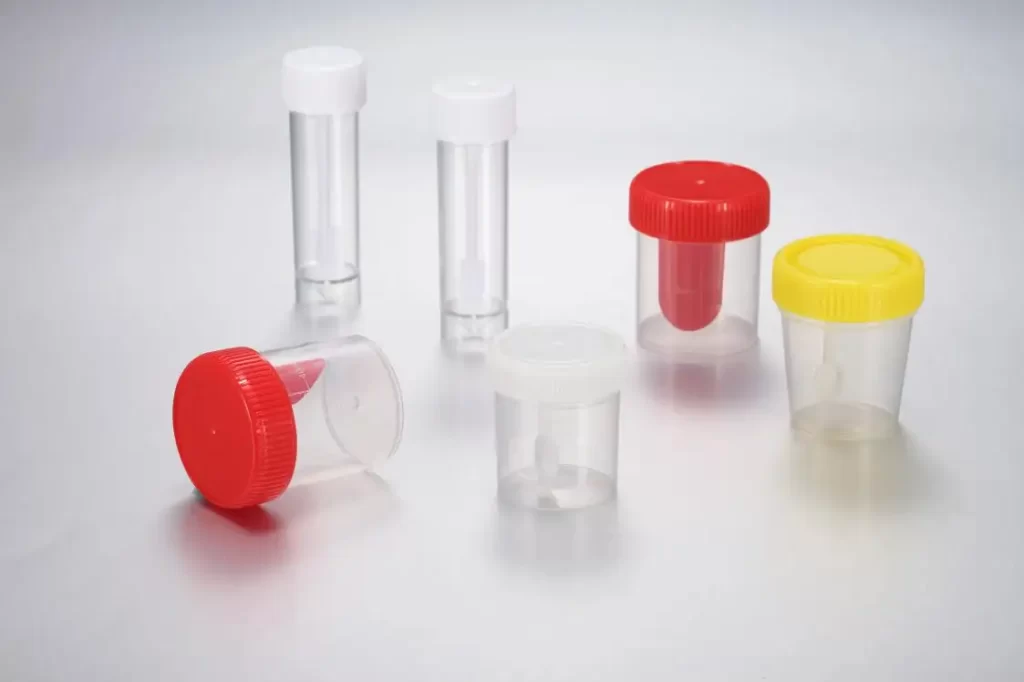
For a standard urine analysis, the container must be clear and allow for an inspection of the sample to verify the sample's volume. The container must also be leak proof to ensure the sample is not lost nor is anyone been exposed to a biohazard. Also, the container must be inert and not alter the sample in any way. Trustlab's GT208-517-1 (60 mL) and GT208-517-2 (40 mL with graduated markings) sample these requirements. Work in a hospital or a clinic may find these containers very useful.
The Interplay of Microbiology, Urine Cultures, and Sterility
Urine cultures grow pathogenic bacteria and test for antibiotic resistance. Even small amounts of contaminants or interfering substances can lead to a false negative.
•Sterilized surface: Before sample collection, EO or gamma radiation sterilization should be employed to eliminate all remaining viable microorganisms.
•No antimicrobial additives: The inner surface of the container must be free of leachable antimicrobial additives (e.g., some antioxidants, some mold-release agents, etc.) which may have a microbial growth inhibiting effect.
•Seal to avoid post-sterilization contamination: The screw cap uniquely protects the sample's sterility while transport to the microbiology lab.
•Wide mouth design: Allows a midstream clean-catch sample to be taken without direct contact with the container rim.
Trustlab provides an EO sterilization option for these Sample Containers. The PP Container material is EO Sterilized, and it passes the ISO 10993 biocompatibility tests with no bacterial inhibition.
Drug Testing, Toxicology, and the Container Sample Integrity
Drug testing for screening (opioids, amphetamines, and THC) and toxicology requires the Sample Container to not adsorb drug/metabolites. Chain-of-custody requires certain tamper evident features.
•Low-adsorption PP surface: Polypropylene has an adsorption of <0.5% for the most common drugs (compared to 1.5-2% for certain glass or PVC containers), and maintains the sample drug/metabolite concentration.
•Tamper evident design option: Though the GT208 series has a standard screw cap, it can be sealed with a tamper evident security seal to verify no unauthorized access.
•Leak proof for transport: The PP construction of Trustlab's containers seals the sample to prevent loss or contamination, and provides sample integrity for the required testing.
Specialized Tests: 24-hour Urine and Heavy Metal Testing
Some tests require special containers like the ones with bigger volumes or acid washed surfaces. While primary collection may use different vessels, Sample Containers like GT208-517-1 may also serve as aliquot transport or as split-sample tubes.
•24-hour urine protein/cortisol: Uses large 2-3L collection vessels with boric acid. PP Sample Containers (600mL) act as secondary containers to daily aliquot urine to the analyser.
•When testing heavy metals (lead, mercury, arsenic), it is important to use acid-leached containers in order to mitigate metal contamination. PP withstands dilute nitric acid washing without degradation.
•Pregnancy test (hCG): Needs surfactant-free interior; otherwise false-negative results may occur. Trustlab's containers are molded without wetting agents.
Trustlab's GT208-517 Series: One Platform, Multiple Capabilities
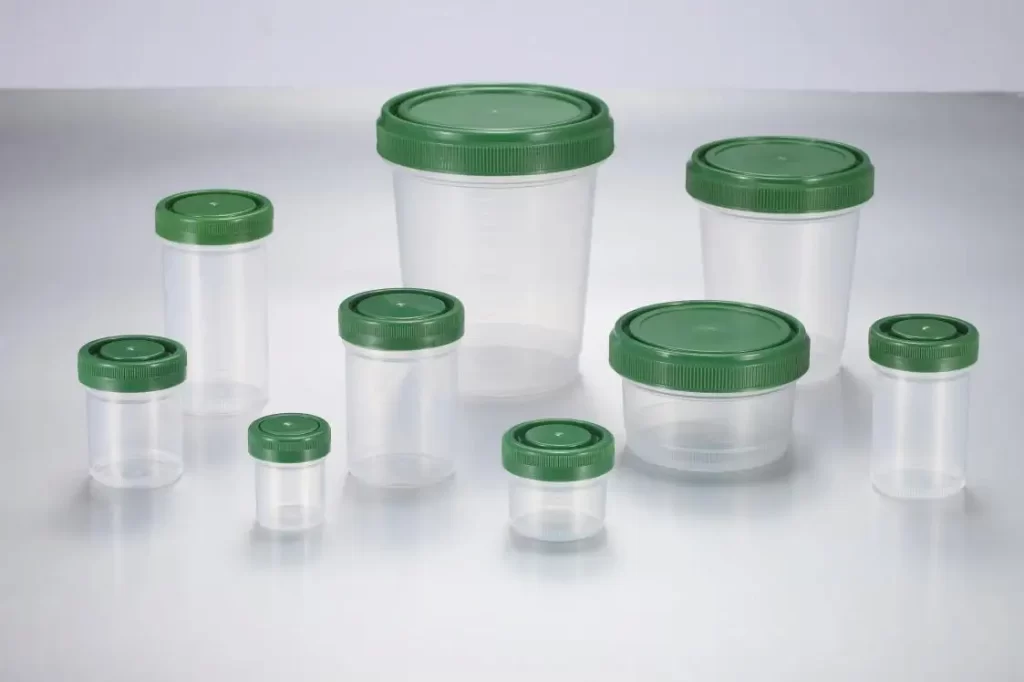
Trustlab designed the GT208-517-1 (60 mL) and GT208-517-2 (40 mL graduated) as versatile Sample Containers that bridge the requirements of different tests without compromise.
Key Design Advantages
•High-quality PP construction: Resists chemicals, acids, and bases; safe for routine, microbiology, and toxicology applications.
•PE Cap with PP Cup: Inverted leak test results indicate that securing with a screw cap provides leak proofing for 24 hours. Road transportation maintains sample integrity.
•Clear body with molded graduations: The graduations are built into the container. There is no fading or ink which would wash away.
•Light but strong: The product is designed to withstand the stacking of shipping cartons and drops from a height of a counter.
•EO sterilization is available: This is preferred for microbiology and other sterile use. Material properties are preserved.
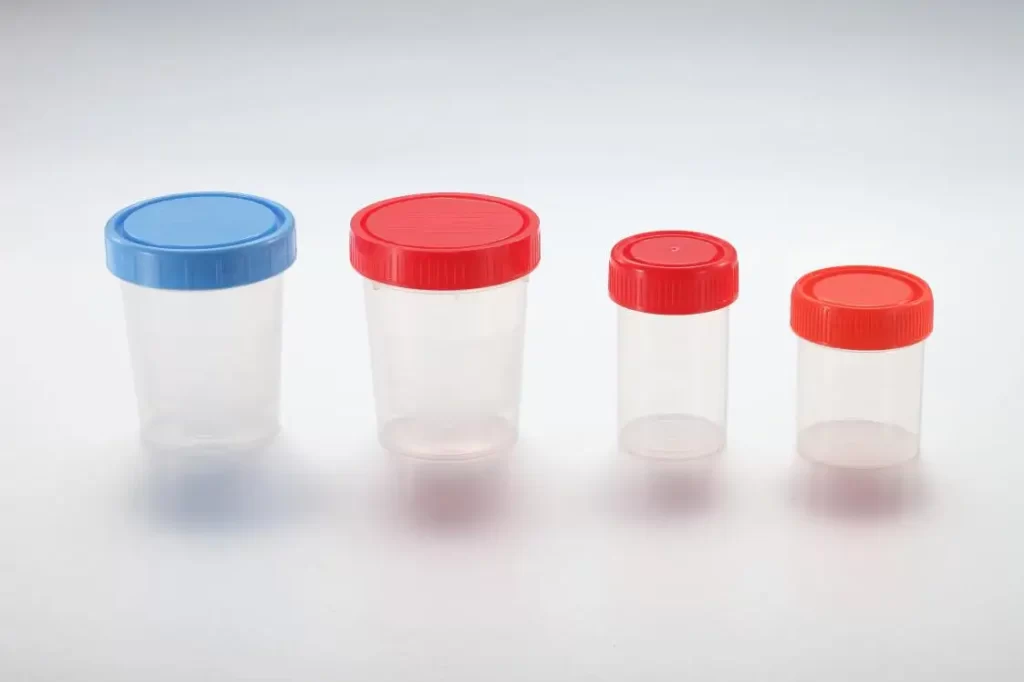
•Various capacities: 60 mL unit is standard for urinalysis. 40 mL graduated version is for pediatric use and other low volume testing.
Specifications Summary
| Code | Capacity | Graduations | Material (Cup/Cap) | Packing |
| GT208-517-1 | 60 mL | No (clear body) | PP / PE | 500 pcs/carton |
| GT208-517-2 | 40 mL | Yes (molded to 40 mL) | PP / PE | 800 pcs/carton |
Both variants limit laboratory personnel exposure and reduce the degree of workflow variability caused by the use of non-integral and leaking containers.
Practical Advice for Laboratories
• For regular urinalysis: Use GT208-517-1. 60 mL is the standard volume for dipstick and other microscopy.
• For urine culture: Order EO-sterilized GT208-517-1 and cap is secured immediately after collection.
• For drug screening: GT208-517-2 is the container. Graduated marking for the 40 mL cut off is exact. If required, store at PP at -20°C.
• For home collection kits: Designed to be patient compliant and unbreakable.
Conclusion
A single, all-encompassing urine sample container does not exist. However, Trustlab's Sample Containers—GT208-517-1 and GT208-517-2—may be the next best option. Trustlab containers are chemically resistant, leak-proof, and graduated with a sterile options. Combining different features of the containers based on the requirements of the urine tests helps minimize the chances of lab errors and keeps the staff safe while producing more accurate results for the patrons. These Sample Containers have also been designed to be the standardized, high-performance vessels for a wide variety of uses.
Please request a free quote to get more information, and/or to get a sample batch, from Trustlab.
Frequently Asked Questions
Q1: Why are graduated markings needed?
Trustlab Sample Containers help circumvent errors by providing accurately graduated markings for volume measurement when sample tubes are used for dipstick tests and when tubes are used for centrifuges.
Q2: Are Trustlab Sample Containers designed to be reused?
No, these containers are designed for a single clinical use to help prevent cross-contamination. However, the material does allow for recycling after thorough cleaning.
Q3: How do I avoid sample leakage while transporting?
GT208 containers have passed the inverted leak test, so make sure the cap is tightened, and use these containers.
Q4: For a 24-hour urine sample collection is a preservative needed?
No. The 24-hour urine sample collection container is meant for aliquot transfer and requires a preservative.
Q5: Are urine samples able to be frozen in this container?
Yes, the containers are suitable for frozen storage as polypropylene (PP) is −20°C cryo compatible.