


Updated 3 months ago
How to Choose the Right Plastic Laboratory Containers: A Comparison of PP, PS, PMP, and PETG

Admin
Laboratory Containers
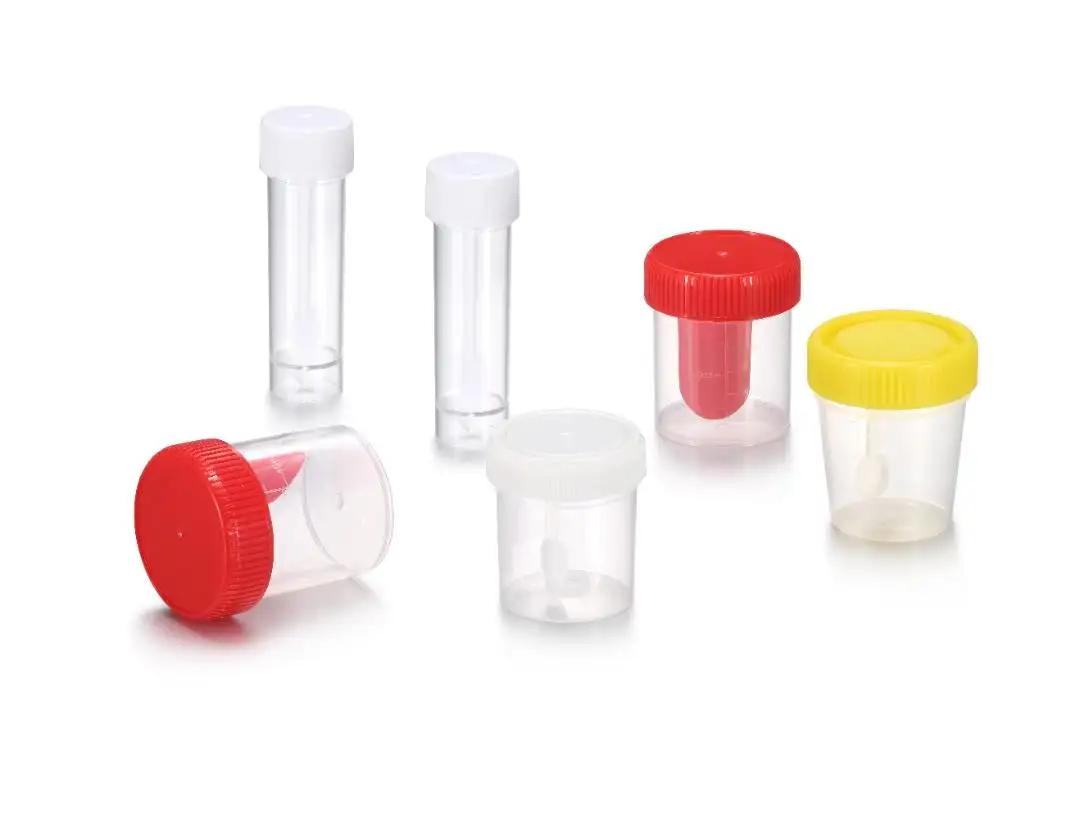
Selecting suitable Laboratory Containers impacts the safety, integrity, and accuracy of an experiment. Factors such as the type of plastic and its chemical resistance and thermal stability affect the integrity of the Laboratory Containers. Traditionally, the research community lacked the information to understand these differences and choices remained subjective, often biased, and based on opinion. Consequently, the aim of this article is to help fill this gap by analyzing the advantages and disadvantages of four of the most important plastic materials in the laboratory: polypropylene, polystyrene, polymethylpentene, and polyethylene terephthalate, as used by reputable brands such as Trustlab in the development and manufacture of their Laboratory Containers.
Importance of Material Selection in Laboratory Containers
Plastics containers are less damaging to transport and can be molded to fit designs more easily. However, plastic containers can also behave in more unpredictable and damaging ways. Choosing the right plastic container depends on the kind and amount of materials to be used in an experiment.
Laboratory Containers and the Four Important Plastics
Disposable Laboratory Containers most commonly use polypropylene, polystyrene, polymethylpentene, and polyethylene terephthalate. Below is an analysis of their uses in laboratory containers.
1. Polypropylene (PP)
•Properties: Good mechanical strength, semi translucent, and highly stable at elevated temperatures. Excellent resistance to chemical attack from acids, bases, alcohols, and nearly all organic solvents.
•Limitations: Not recommended for prolonged UV exposure. Poor optical clarity and resistance to strong oxidizing agents.
•Typical Uses: Centrifuge tubes. Auto clavable reagent bottles. Urine collection cups.
2. Polystyrene (PS)
•Properties: Inexpensive. Rigid.
•Limitations: Fragility. Dissolves in many common organic solvents. Poor chemical resistance.
•Typical Uses: Polystyrene is commonly manufactured into petri dishes and used in the manufacture of storage boxes, flasks, and in containers for non-aggressive aqueous solutions.
3. Polymethylpentene (PMP, e.g. TPX®)
•Properties: Less dense than most of the polymers. Translucent. Strong, and has good heat and chemical resistance.
•Limitations: Relatively speaking, PMP is more expensive, and is not as easy to find in the market, when compared to PS and PP.
•Typical Uses: PMP is often used in the fabrication of lab equipment, such as beakers and graduated cylinders.
4. Polyethylene Terephthalate Glycol (PETG)
•Properties: Reduced cost. Brittle. High clarity. Good barrier to gases. Can be sterilized by gamma radiation or immersion in ether.
•Limitations: Bas and organic solvents, heat.
•Typical Uses: Sterile sample storage bottles, serum vials, and cell culture media containers.
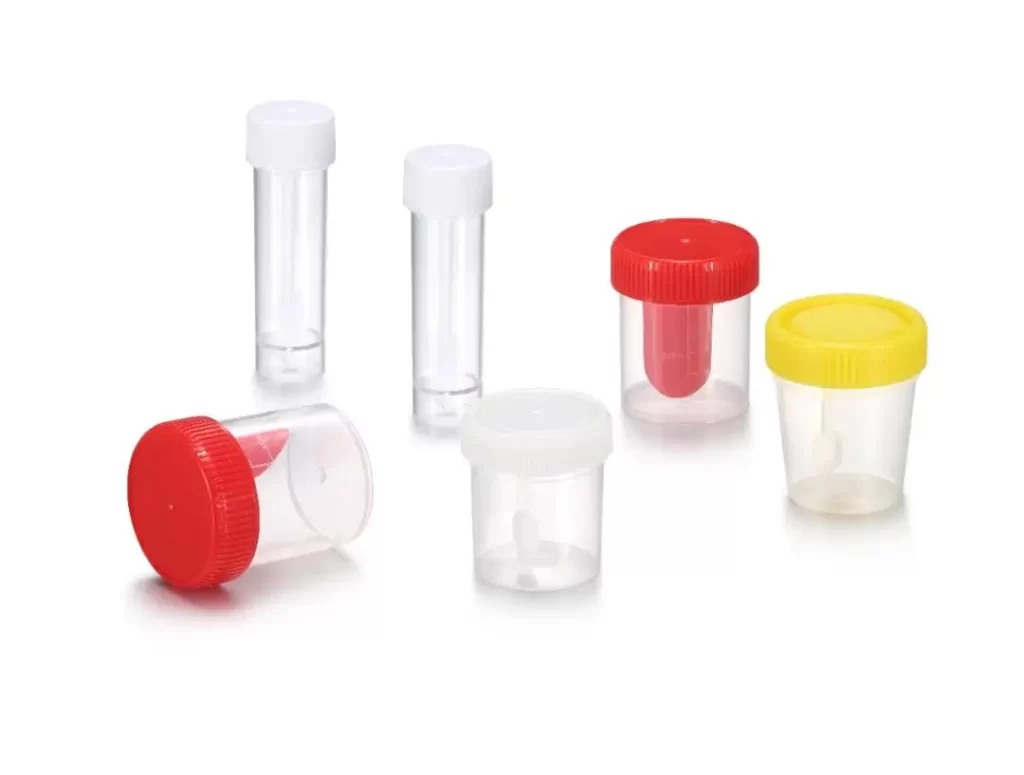
Material Selection Guide by Application
When choosing Laboratory Containers, match the plastic to your performance requirements.
| Application Requirement | Recommended Material | Why |
| Autoclaving (121°C) | PP or PMP | Withstand high heat and high pressure |
| High optical clarity (visual inspection) | PS or PETG (or PMP) | Glass-like transparency |
| Organic solvents (acetone, xylene) | PP (or glass) | Excellent chemical durability |
| Freezer storage (-80°C) | PP | Cross-linked PP stays flexible and casting does not crack |
| Gamma sterilization | PETG or PP | Compatible with radiation |
| Cost-sensitive, aqueous solutions | PS | Pennies and clear |
Examples from Trustlab's Portfolio
Trustlab employs smart material design in its Laboratory Containers to fulfill the CE and ISO requirements. The following examples demonstrate how the careful selection of plastics helps to solve specific laboratory problems.
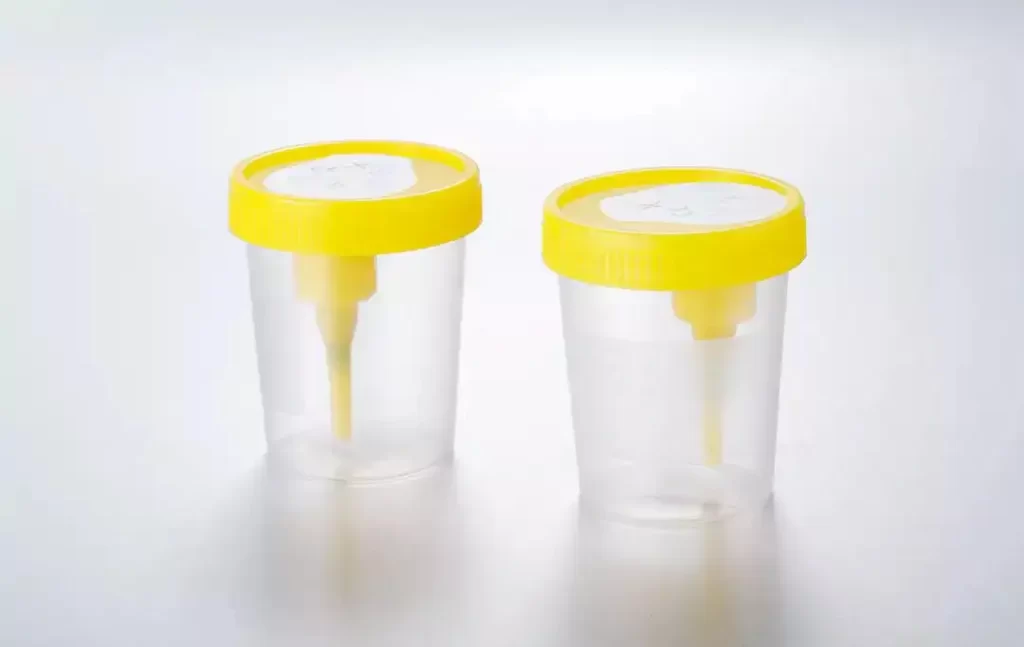
Urine Collection Cups
Trustlab Urine Collection Cups (GT208-518, GT208-517-1) are typically made of PP due to:
•Inert properties to urine and preservatives
•Ability to be centrifuged (if required)
•Leak-proof during transport
Stool Sample Containers
PP is again the plastic of choice for fecal sample containers due to:
•Inert to biological sample degradation
•Odor and biological sample contaminant tight seal
•Safe storage at ambient or refrigeration temperatures
Formalin Containers
Formalin (formaldehyde solution) is aggressive toward many plastics. Trustlab's formal containers are made from high-density formulations of PP and/or rest of the family of copolymers. The properties of these materials provide:
•No plasticizers and no leaching or clouding after prolonged contact
•Tight closures to seal formal containers to prevent escape of formal vapors
•Pathology safety compliance
PVC Urine Containers
Some Trustlab products utilize PVC (polyvinyl chloride) — flexible and low cost material. While good clarity and cost are advantages of PVC, it is not autoclavable and should only be used in routine diagnosis not involving aggressive chemicals.
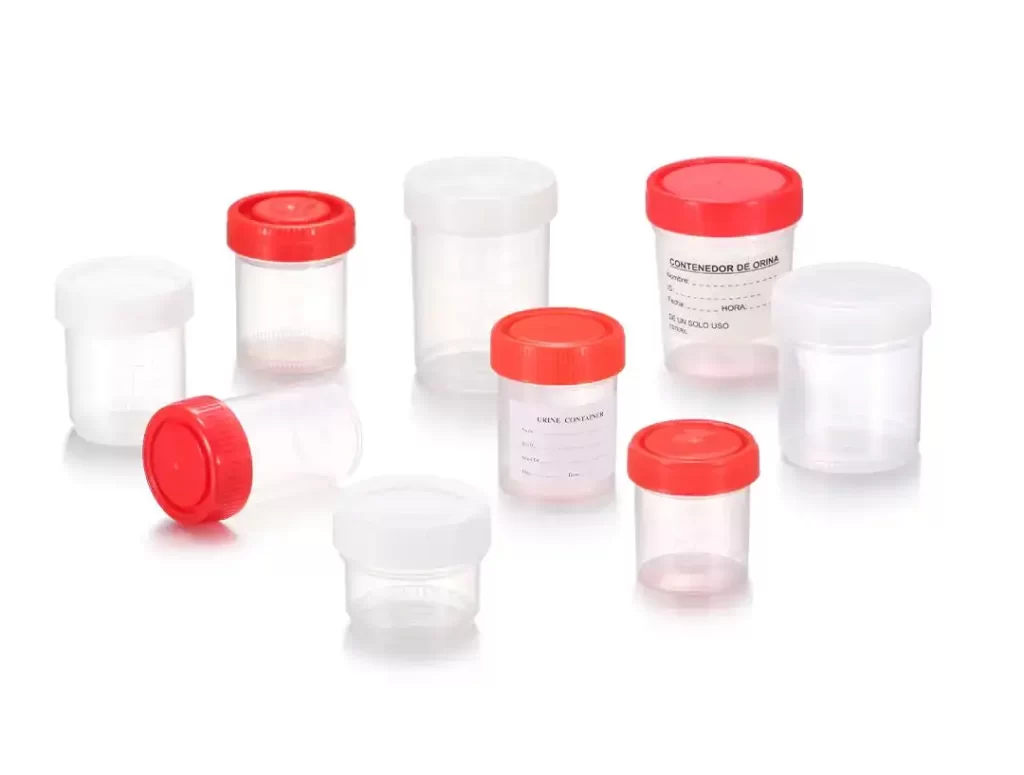
Trustlab's Laboratory Containers: Design & Technical Advantages
Trustlab incorporates many user-focused elements in its containers beyond material selection.
•Correct Material Selection: All new batches are assessed for their ability to meet the standards for chemical resistance, strength, and the optical characteristics of the material.
•Ready-to-Use Sterile Samples: Samples are pre-sterilized containers (via gamma radiation or Ethylene Oxide) to mitigate the risk of contamination for clinical and research samples.
•Easy to Use Packs: Perfectly shaped to fit an optimal grip and include slip resistant surfaces, easy access containers have large openings and snap on screw caps.
•Flexible Design: Automated systems can fully integrate the packs as the dimensions of the packs are standardized and fit most racks and rotors used in centrifuges.
•CE and ISO Certifications: Each product complies with the requisite International safety and performance standards and requirements.
This investment and care in design and user-focused elements make Trustlab's Laboratory Containers a reliable choice in hospitals, research, and diagnostic centers operating in over 130 countries.
Mistakes to Avoid
❌PS containers for organic solvents: The container/sample is ruined due to dissolution or crazed PS.
❌Autoclaving of PETG: This loses container integrity and causes deformation.
❌Strong acids in PS, PVC, or other weak containers: Container integrity and acid will leach.
❌Temperature limits in PP: At -196 °C (liquid nitrogen) without a cryo-tube, container integrity and PP will become brittle.
Conclusion: The Correct Laboratory Container
Determine if your sample is aqueous, organic, or biological. This will help you choose the correct Laboratory Containers. Next, determine your preferred sterilization method: autoclave, gamma, or chemical.
•Determine storage conditions – Room temp, fridge, freezer (-20°C or -80°C)?
•Check clarity needs – Visual inspection or automated reading?
•Match material – Refer to the table above.
For most clinical and research tasks, PP is the safest all-rounder. When transparency is paramount, PS (non-aggressive solutions) or PETG (impact-resistant) are excellent. For use in situations involving both high temperature and repeated autoclaving, PMP provides heat resistance with glass-like clarity.
Trustlab's complete bespoke range of laboratory containers, including blood collection devices, swabs, specimen cups, and transport vials, is manufactured with consideration of all of these factors and is made under the highest standard of quality control. In order to ensure the integrity of the sample and the safety of the operator and to achieve reproducible results, it is essential to select the material that is most appropriate for the application.
For more technical data on chemical compatibility, request Trustlab's material resistance chart or consult the product documentation for each container type.
FAQs
Q1. Can I autoclave all plastic laboratory containers?
No. Only PP and PMP are autoclavable (121°C). PS and PETG will warp or melt.
Q2. Out of the lab plastics, which are the best at resisting organic solvent action?
Polypropylene (PP) is among lab plastics, the best at resisting organic solvents.
Q3. Can PS safely store strong acids or bases?
No, PS cannot be used. Prefer PP or glass instead.
Q4. What is the main advantage of PETG over PP?
PP and PETG are comparable in many ways, but PETG has the upper hand in optical clarity and resistance to impact, however, PP has the better resistance to temperature, and PP is free from the autoclave limitation.
Q5. Which plastic container is best for freezer storage at -80°C?
PP is the best in performance, remaining flexible and resisting cracking.