


Updated 4 months ago
Blood Collection Devices: How Pre-Attached Holders Reduce Hidden Costs In High-Volume Labs

Admin
Blood Collection Devices
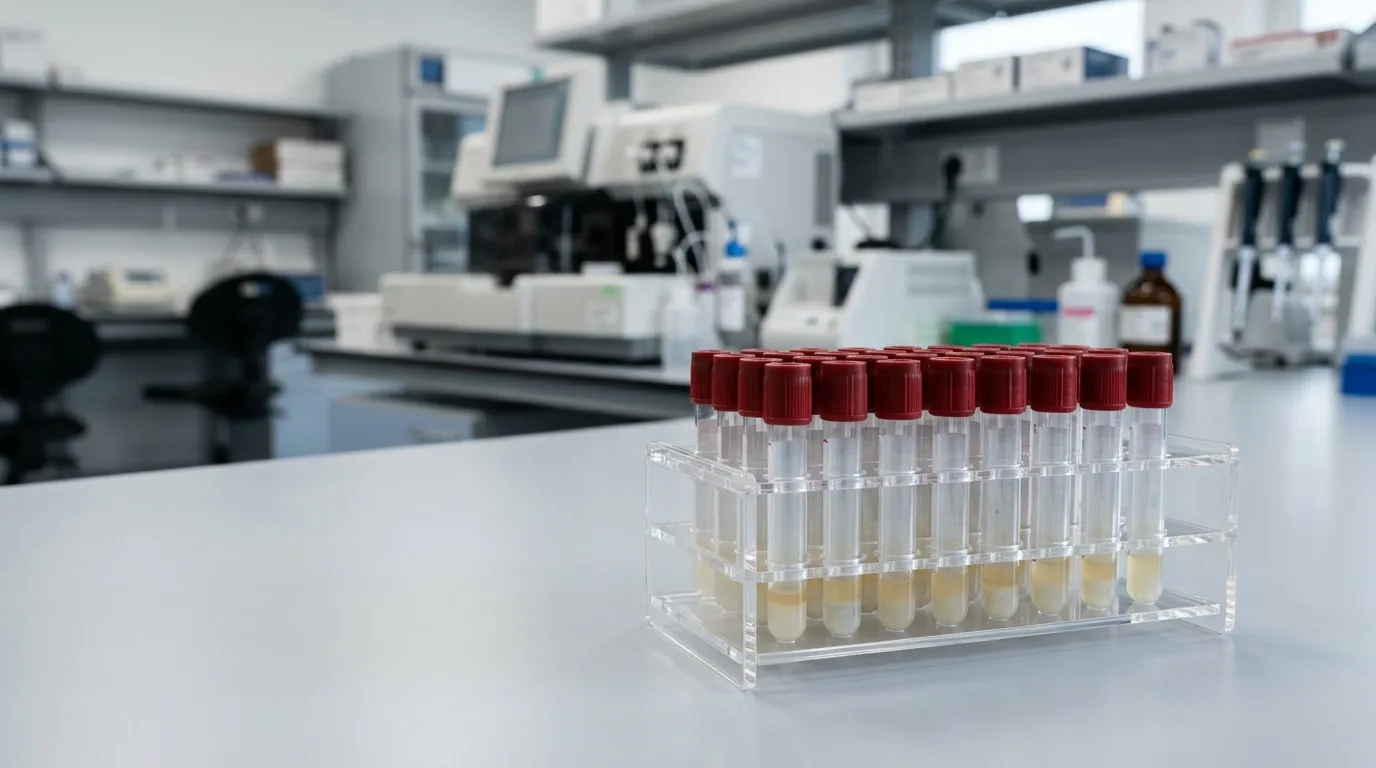
For laboratory managers and hospital procurement teams, the true cost of Blood Collection Devices is more than the unit price on an invoice. Blood draws at high-volume locations mean phlebotomists draw blood hundreds of times in one day. In these high throughput environments, small inefficiencies can cause operations to become expensive very quickly.
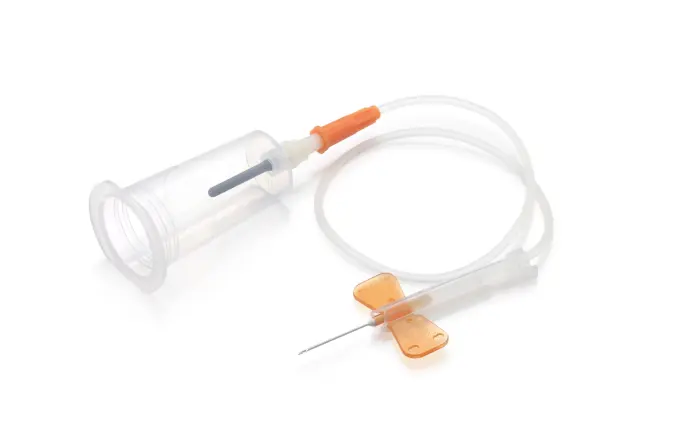
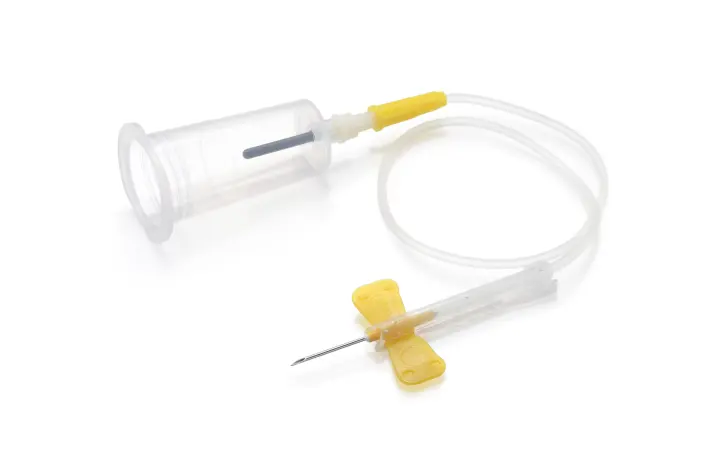
One design feature that solves this issue is the pre-attached holder. Devices like the Trustlab GT210-1010S Safety Blood Collection Needle can demonstrate this kind of improvement in workflow, waste, and total ownership costs.
The Hidden Costs of Loose Components
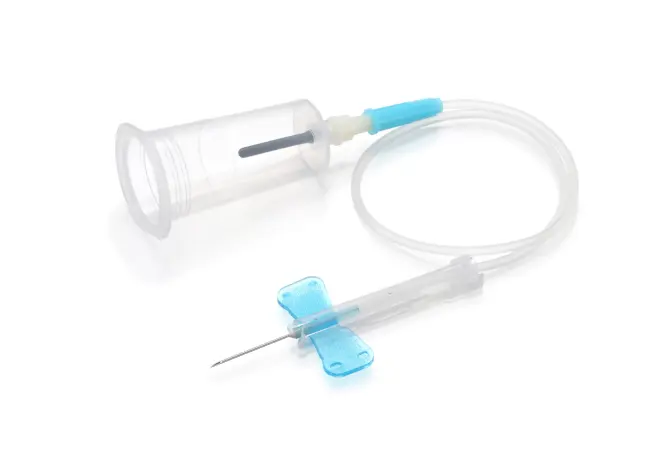
Conventional Blood Collection Devices are typically designed and constructed in two major components, the needles and the holders. This design strategy / construction system creates a lot of costs for the procurement teams.
•Assembly time costs: It can take up to 30 seconds to attach the needle to the holder for each blood draw. If there are multiple phlebotomists and 200 draws are done, this amounts to a significant amount of unproductive costs.
•Lost holders: Reusable holders are known to go missing. They may accidentally be thrown away, or taken.
•Cross-contamination: Reusable holders are not taken for the purposes of storage. They may contain dangerous blood residue from previous patients. Some facilities buy replacements weekly.
•Inconsistent handling: Gravity can slow the even training of new phlebotomists. Assembling the holders and needles incorrectly leads to failure of the draw, patient discomfort, and wasted time.
These costs rarely appear on a purchase order. Yet they directly impact the bottom line of any diagnostic lab, hospital ward, or high-volume collection center.
How Pre-Attached Holders Change the Calculation
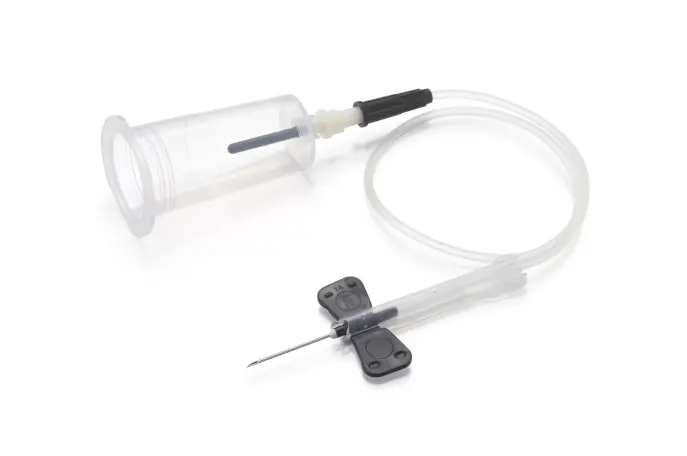
The pre-attached holder eliminates the assembly step entirely. When Blood Collection Devices arrive ready to use, the workflow becomes more predictable and faster.
Reduced Labor Minutes Per Draw
Consider a high-volume lab processing 500 venous draws daily. A traditional two-piece device takes approximately 12 seconds per assembly. A pre-attached device takes zero seconds.
•Daily time saved: 500 draws × 12 seconds = 6,000 seconds (100 minutes)
•Annual time saved (250 working days): 25,000 minutes (approximately 417 hours)
•Labor cost equivalent: At 30/hourloadedlaborrate,roughly12,500 annually per 500-draw facility
This calculation excludes the time spent searching for loose holders or unsnarling tangled components from storage bins.
Lower Consumable Waste
Pre-attached holders reduce waste in two specific ways.
•Fewer dropped components: Loose needles and holders fall off onto the floor and, because of sterility, must be discarded. That will be avoided with an integrated option.
•No accidental disposal of reusable parts: Loose holders are sometimes swept into sharps by staff. That can't happen with integrated options, as everything is designed to be a single-use.
Simplified Procurement
One of the concerns procurement staff have with pre-attached Blood Collection Devices is the compatibility with existing tube systems. The Trustlab GT210-1010S addresses these concerns.
•Standard tube fitment: Our device accommodates blood collection tubes between 13mm to 16mm without the need of any adapters.
•No retraining required: The one-handed operation remains as it always was. More steps have been removed than added, and phlebotomists should have little problem adapting to the new process.
•Consistent needle positioning: The integrated and fixed holder provides phlebotomists with a deeper, more consistent angle with less guesswork and less variability.
Benefits
Pre-attached holders make up for the savings of direct cost and are a key area for hidden costs. These holders improve/sustain the cost of safety metrics.
The GT210-1010S provides a pre-attached holder with an integrated safety mechanism that is engaged as soon as the holder is detached.
•Stable handling lessens slips: Being minimized by the integrated holder enhances control and handling. This results in a lower chance for inopportune injury caused by the holder slip, despite the sudden movements of a patient.
•One-handed activation: The safety shield can be activated using the same hand that is holding the device. Thus, a second hand is not needed and the holder does not need to awkwardly reach across the draw.
•Audible confirmation: When in operation, a clicking sound is heard before the safety mechanism locks to a rigid state. This reduces uncertainty and the possiblity of improper disposal.
High-Volume Real-World Application
The following environments show the highest return on investment when switching to pre-attached blood collection devices.
•Outpatient lab hospitals: These environments experience the highest patient turnover and the highest demand for fast draws. Assembly steps for the device in these environments are a significant cause of a bottleneck during the blood collection devices.
•Blood and Plasma Donation Centers: Donors wait in these environments to be Drawn, and assemble devices speed the draw and improve the flow of new arriving donors.
•Diagnostic Reference Labs: These environments draw daily and run thousands of draws for routine tests. Each draw in these environments saves the company a measurable amount.
•Occupational Health Clinics: These environments have a significant data collection from through highly predictable Blood Draws at each yearly physical.
Total Cost of Ownership Comparison
When evaluating blood collection devices, take a five-factor framework instead of focusing on just the price per unit.
•Unit Price: Pre-attached devices offer a higher unit price when compared to a wholesale price on devices with a loose device.
•Assembly Labor: Pre-attached devices offer a price of zero, and for loose devices, there is a significant price, particularly for markets with high cost of labor.
•Holder Replacement: Pre-attached devices have a zero price for each integrated unit, and there is a price for each unit of reusable holders that are likely to be misplaced or claimed.
Training Takes Less Time with Pre-attached Designs Assembly Errors Require Remediation and Competency Checks for Loose Component Systems.
Injury risk adjustment: Integrated safety mechanisms with stable holders produce fewer incident reports compared to loose components with separate safety features.
Why Trustlab Designed The GT210-1010S for 2026
Trustlab observed that high-volume labs were quietly overpaying for Blood Collection Devices through inefficiency, not through unit cost. The GT210-1010S responds to three specific requests from working phlebotomists and lab managers.
•Pre-attached holder: Eliminate the assembly step that serves no clinical purpose.
•Integrated safety mechanism: Reduce needlestick risk without changing the draw motion.
•Universal tube compatibility: Work with existing inventory rather than forcing a full supply chain overhaul.
Available in gauges 21G through 25G, with EO sterilization and ISO, CE, and MDMA certifications, the GT210-1010S fits into regulated markets worldwide without compliance gaps.
Final Recommendation for Procurement Teams
Switching to pre-attached Blood Collection Devices rarely requires a capital investment. It is a specification change on your next consumables order. Run a 30-day pilot on one phlebotomy station. Measure draw time per patient for two weeks with your current system, then switch to a pre-attached design for two weeks.
Most labs see measurable time savings within the first three days. Those savings translate directly into either reduced staffing pressure or increased draw capacity with existing headcount.
The hidden costs of loose components are real, quantifiable, and avoidable. Pre-attached holders do not solve every workflow challenge in high-volume blood collection. But they solve one of the most consistent and overlooked inefficiencies in the process.
FAQ
Q: Are my blood work tubes going to work with the pre-attached Blood Collection Devices?
A: Totally! The Trustlab GT210-1010S can take any standard blood work tubes (13mm-16mm). You can use any of your existing tubes, no adapter or inventory change will be needed.
Q: Does the pre-attached Blood Collection Device holder change the unit price by a lot?
A: You can expect the price to be a bit higher than blood work tubes sold with loose needles by themselves. But when you take holder replacement and the labor to assemble the holder into consideration, you can expect to pay a lower price per blood work draw.
Q: Is the safety feature able to be engaged with one hand?
A: Definitely. You reach the safety feature by engaging the integrated shield. You don’t have to awkwardly reach with your non-dominant hand.
Q: What kind of certifications are there for the GT210-1010S?
A: The GT210-1010S is EO sterile and has secured ISO, CE, and MDMA certifications. So you can use it in just about any country!