


Updated 4 months ago
Biohazard Safety First: How A Urine Collection Container Reduces Exposure Risk

Admin
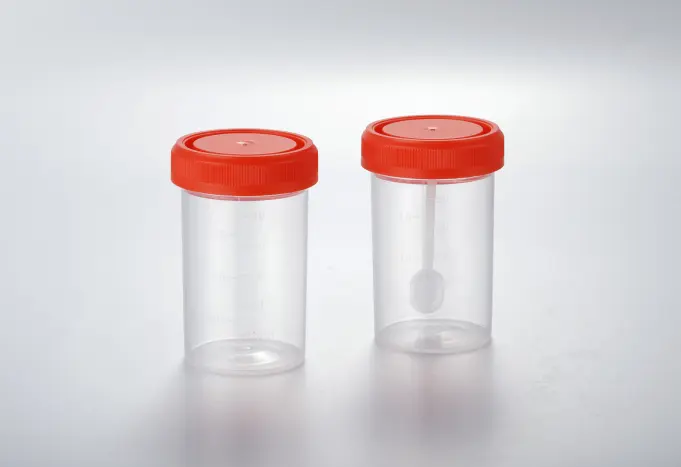
Urine Collection Container
A Urine Collection Container in a clinical laboratory or hospital goes beyond a simple plastic container as it serves as quite possibly the primary barricade to biohazard exposure. Handling mistakes and container malfunctions cause biohazard contact. Lab managers and procurement professionals in the year 2026 will directly influence the selection of Urine Collection Containers as those factors will determine the level of safety of their workers, legal compliance, and business confidence.
Trustlab, a experienced manufacturer in diagnostic consumables, has engineered its GT208-512 and GT208-515 Urine Specimen Containers to address these exact risks. Below, we examine how thoughtful design reduces exposure risk — without overpromising or relying on unrealistic usage scenarios.
Why Biohazard Exposure Remains a Daily Lab Challenge
According to the World Health Organization (WHO), more than 3 million healthcare workers experience percutaneous exposure to bloodborne pathogens annually . Although urine may not be as dangerous as blood, it can be harmful if leaky or cracked containers are mishandled during transport.
Common points of exposure include:
•Leaking Screw Caps: Allow contaminated gloves and surfaces. These are the most frequent points of failure.
•Cracking Thin Walls: These are economically constructed and can develop cracks in pneumatic tubes and stoic.
•Poor Graduated Markings: May compel lab staff to transfer samples, and incurs the opportunities of spilling.
•Unclear Labels: May result in misplaced or misidentified samples that incur excessive handling.
A well-designed Urine Collection Container eliminates these vulnerabilities before they reach the lab bench.
Trustlab's Approach: Designing Out The Risks
Trustlab does not claim to eliminate every possible laboratory hazard. However, our engineering choices deliberately target the most common failure mechanisms documented in real-world clinical feedback. The result is a Urine Collection Container that supports safer, more consistent workflows.
Leak-Proof Screw Cap Engineering
The cap is where most containers fail. Trustlab uses a deep-thread PE screw cap paired with a precision-molded PP cup body. This combination offers a reliable mechanical seal that will not loosen while in transport.
•In a typical pneumatic tube system, the GT208-512 cap will not lose integrity due to pressure, even without excessive torque from the employees.
•To check the quality of the cap seal, each cap is tested for leaks before sending them to storage.
Resistant To Heavy Impact
When it comes to laboratories, we pay a lot of attention to the materials. Trustlab uses the best chemical impact resistant medical grade Polypropylene. You will not crack the Tip Cap Container even after routine drops from a normal height.
•PP is highly resistant and will not degrade by common urine preservatives and common laboratory reagents.
•Wall thickness in every run of our production is consistent and will not vary by recycled or overly thin materials.
Measured Safety
•One overlooked safety feature is measurement clarity. The Trustlab GT208-512 cap has an easily readable graduation of 100 ml.
•Lab staff can read volume from the cap, which reduces the need to measure from a graduated cylinder to reduce overturning and expose risk.
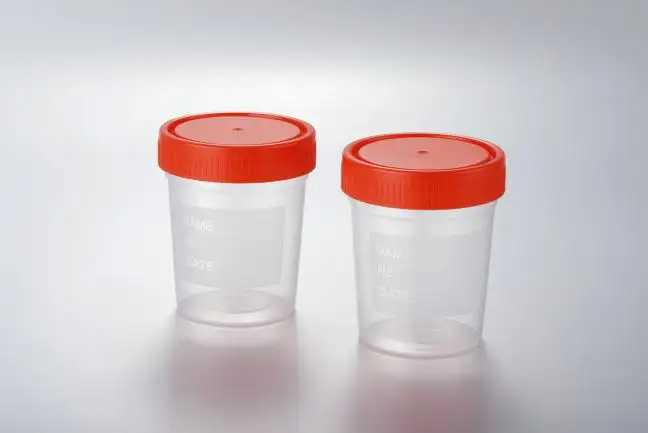
Sterile Cap for Extreme Cases
When dealing with microbiology and the infectious disease field, we offer ethylene oxide (EO) to fully sterilize these production batches.
This option suits laboratories whose protocols for testing infectious urine specimens need to be controlled and where risk factors for transmitting infectious disease are extremely high.
Trustlab's design reduces the risk of multiple exposure events when used within PPE.
The GT208-512 models are expected to improve safety in the following ways:
•Decrease in glove changes due to leaks: Less interruption to workflow and less PPE removed.
•Less frequent splattering throughout transit: Especially noted in settings that have several hospital floors with pneumatic tube systems.
•Less frequent sample rejections: External containers lead to fewer requests to re-collect samples, less exposure to staff and patients due to repeated sample handling.
The use of leak-proof containers has proven to be among the most effective measures to reduce the handling of samples.
Regulatory Standards and Work Efficiency
Safety measures are also a means of fulfilling legal obligations. The OSHA (Occupational Safety and Health Administration) Bloodborne Pathogens Standard (29 CFR § 1910.1030) states that employers are obliged to implement controls to reduce exposure. The securement of a Urine Collection Container is a simple control obligation.
Other advantages to work include:
•Standardizing sizing. The GT208-512 can be fitted to most unused laboratory centrifuge buckets and storage racks.
•Compatible surface for labeling. The container body accepts standard laboratory labels without curling or falling off under refrigerated conditions.
•Optimized cartons. 250 containers of the 100 ml size fit into a carton of dimension 65x40x30 cm.
Questions for Sourcing in 2026
While sourcing Urine Collection Container suppliers for next year, Trustlab has provided some questions to be considered.
•Is the testing of containers for leaks among the standard operating procedures for the company?
•Regarding the materials (PP, PE), are the recorded standards consistent?
•Is EO sterilization available for applications that require it?
•Are graduations molded into the container or printed on the surface? (Molded lasts longer.)
Trustlab provides documented answers to each of these questions. Our GT208-512 (100ml, without spoon) and GT208-515 (60ml, with spoon) are available for sampling and validation before bulk commitment.
Conclusion
Biohazard safety does not require expensive technology or complex protocols. Often, the most meaningful improvements come from getting the basics right. A secure screw cap, sterilization options, and clear measurements on a collection container with a screw cap sterilization PP will mitigate risks of long-term exposure.
Trustlab focuses on these fundamentals because they work. For laboratories and hospitals preparing their 2026 procurement, the GT208-512 and GT208-515 offer a practical, evidence-informed step toward safer specimen handling.
Interested in a sample evaluation? Contact Trustlab to request GT208-512 samples or to review our latest batch test documentation.
Frequently Asked Questions
Q: In what way is the Trustlab Urine Collection Container superior to normal economy cups?
A: Trustlab targets two specific failure points: the screw cap seal and wall thickness. Our cups are routinely leak tested, and our GT208-512 cups maintain wall thickness and material consistency. Standard cups either leak or crack due to wall inconsistencies.
Q: Is this Urine Collection Container suitable for Pneumatic Tube Systems?
A: Absolutely! The deep threaded PE screw cap and reinforced PP system allows Trustlab Urine Collection Containers to endure the pressures and impacts of Pneumatic Tube Systems. Note: Validation is encouraged.
Q: Is the Urine Collection Container sterile?
A: The container is assembled in sanitary conditions. For sterility demands, like in microbiology or infectious disease applications, Trustlab offers EO sterilization as a processing step. Please advise your demands via your order.
Q: What sizes can one select from?
A: Trustlab currently offers two sizes: GT208-512 - 100ml graduated (w/out spoon), and GT208-515 - 60ml, (w/spoon). Both have clear graduations and have type of cap.
Q: Can they be used in laboratory for direct purposes?
A: For sure. The cupboard graduations are formed for quick volume use, like in urinalysis. In situations where absolute precise measurements are needed, as in the case of a measurement, nozzle pinch, etc., a second measurement is still recommended.