


Home /

cardinal health hcg combo rapid test instructions
There's a lot of waiting until right before a pregnancy test. So you've selected a reliable tool, but only if you know how to employ and understand it. Here's a detailed guide to help you navigate the HCG Combo Rapid test card, making those few lines a meaningful and confident move forward.
Understanding What the Test Detects
Human Chorionic Gonadotropin (HCG) is one of the hormones created by the placenta just after the fertilized egg attaches to the uterine wall. It increases very quickly in early pregnancy, doubling every 48-72 hours. An HCG combo rapid test is a qualitative immunoassay which analyzes urine or blood for the presence of HCG at a certain threshold. The term "combo" is used to describe a test that not only identifies the full HCG molecule, but also the free beta-subunit, and thus allows for earlier detection and greater sensitivity.
When performed correctly, the modern tests, such as QuickVue+ hCG Combo Test and Rapid Response™ Pregnancy Combo Test Strip are designed to be more than 99% accurate, with a sensitivity as low as 10 mIU/mL in serum and 20 mIU/mL in urine. These devices give quick results within 3-5 minutes so it is convenient for home or clinical use.
Pre-Test Preparation: Setting the Stage for Accuracy
Proper preparation is crucial for obtaining a reliable result. Follow these essential steps:
-
Check Expiration Date: Always inspect the packaging. An expired test may contain degraded antibodies, leading to inaccurate results.
-
Read Manufacturer Instructions: While this guide provides general information, always read the specific instructions included with your test kit. Details like urine collection time and reading windows can vary by brand.
-
Optimal Timing: For the highest concentration of HCG, use your first-morning urine. After a night's sleep, your urine is more concentrated, making it easier to detect early traces of HCG. If testing later, try to hold your urine for at least four hours.
-
Gather Supplies: Have everything ready: the unopened test device, a clean, dry container for urine collection, and a timer.
Step-by-Step Testing Procedure
Follow these steps meticulously to ensure proper test function:
-
Unpackage the Device: Tear open the foil pouch and remove the test card. Handle it by the edges, avoiding contact with the absorbent tip or result window.
-
Collect the Sample: Collect a small amount of urine in a clean, dry container.
-
Apply the Sample:
-
Dip Method: Hold the strip vertically and dip only the absorbent tip (usually marked with an arrow or "MAX" line) into the urine. Do not immerse past the indicated line. Hold for the time specified (typically 5-10 seconds).
-
Dropper Method: Some kits include a dropper. Draw urine into the dropper and place the specified number of drops (usually 3-4) directly into the sample well on the test cassette .
-
-
Wait: Place the device on a flat, non-absorbent surface. Start your timer immediately. Do not move or disturb the test during the development period.
-
Read at the Right Time: Check your instructions for the exact reading window (usually 3-5 minutes). Reading too early means the result hasn't fully developed; reading too late risks evaporation lines.
Interpreting Your Results: The Three Possible Outcomes
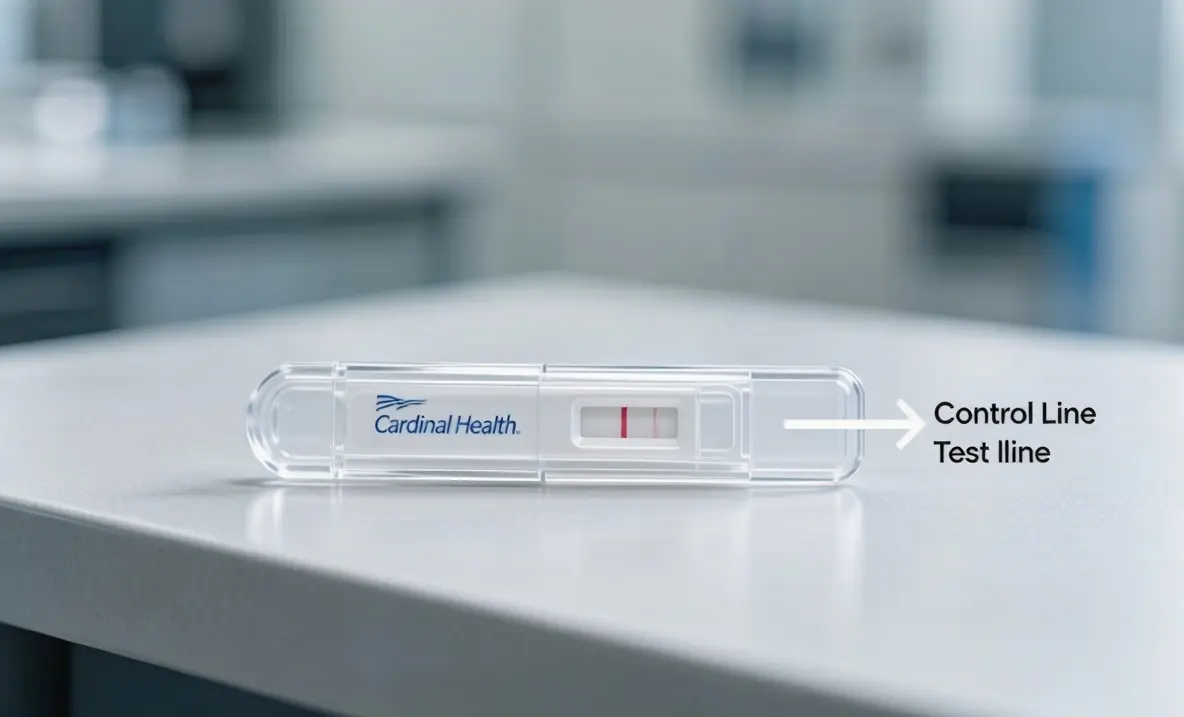
The test device has two windows: the Control window (C) and the Test window (T). Here's how to interpret what you see:
1. Positive Result (Pregnant)
-
What you see: Two distinct colored lines. One appears at the Control line (C) and another appears at the Test line (T).
-
What it means: HCG was found in your test specimen. It is possible that the line at "T" is rather faint; if any colour can be seen, however faint, it is a positive result and should be interpreted as such. The line intensity tends to be proportional to the level of HCG; a faint line usually signifies that the woman is very early in her pregnancy.
2. Negative Result (Not Pregnant)
-
What you see: Only one colored line appears, in the Control region (C). No line is visible in the Test region (T).
-
What it means: No HCG was detected at the test's sensitivity level. This usually indicates you are not pregnant. However, testing too early (before your missed period) is the most common cause of a false negative.
3. Invalid Result
-
What you see: No lines appear at all, OR only a line appears in the Test region (T) without a Control line (C).
-
What it means: The test did not function correctly. The result cannot be trusted. This is usually due to insufficient sample volume or a faulty test. Repeat the test with a new device.
The Faint Line
The most common source of uncertainty is a faint test line. The rule of thumb is: A faint line equals a positive line. This is because it is a test that looks to see if HCG is present rather than the concentration. If the line is faint, it's possible that you're in the early stages of pregnancy and the HCG hormone is still low. If it is confirmed, repeat the test in 48 hours using first-morning urine. If pregnant, HCG should have increased to a point where a darker line would be present by then.
The Evaporation Line
An evaporation line (evap line) is a very light colour line or a light, colourless or gray line that may form in the test window after the strip has dried, long after the recommended reading time (usually after 10-30 minutes). Not a positive result but just uric acid that has been evaporated.
-
Timing: A true positive appears within the development time (e.g., 5 min). An evap line appears later.
-
Color: A true positive has color (pink, red, blue). An evap line is typically colorless or gray.
-
The Golden Rule: Always read your result within the specified timeframe and then discard it. Do not re-examine it hours later .
Factors That Can Affect Accuracy
While modern tests are highly accurate, certain factors can influence results:
-
Testing Too Early: Implantation occurs 6-12 days after ovulation, and only then does HCG production begin. Testing before your missed period increases the chance of a false negative. The most reliable results come from the day of your expected period onward.
-
Medications: Fertility drugs containing HCG can cause a false positive. Most other medications, including antibiotics and birth control, do not affect the test.
-
Medical Conditions: Rarely, conditions like ovarian cysts, kidney disease, or some cancers can cause elevated HCG and lead to a false positive.
-
Chemical Pregnancy: An early miscarriage shortly after implantation can cause a brief positive test followed by a negative test and menstruation.
-
User Error: Incorrect dipping time, reading outside the window, or using diluted urine are common causes of inaccurate readings.
When to Seek Professional Confirmation
HCG combo rapid tests are screening tests and, when used properly, are very accurate. If positive, get a healthcare professional confirmation. A quantitative blood test (beta hCG) will be able to identify the exact level of the hormone in the blood and an ultrasound will give definitive confirmation of a viable intrauterine pregnancy.
Know the ins and outs of your test, from preparation to interpretation, and make a simple tool a powerful health tool. You master the symbols, limit the fear and establish a solid base of knowledge to enable your next steps to be taken in an informed manner and with confidence.