


Updated 5 days ago
Clot Activator Tube: Match the Right Collection Tube to Your Serum Workflow
Arafatshuvo
Clot Activator Tube
A serum tube may appear properly filled, but result in a sample which requires additional investigation before analysis. The type of tube used, mixing, the formation of the clot, and the handling of the tube after the clot forms can all affect the acceptability of the specimen for the test ordered.
A clot activator tube is used in that process to aid in coagulation. To understand its role helps to help clinical laboratory personnel and purchasing to link the product specification to the laboratory's approved preparation procedure, but don't use faster clotting as a justification to skip important checks.
Determine if the Test is a Serum Test
Start with a specimen requirement of the analytical method. Plasma is a different type of specimen than serum which is separated from clotted blood.
Therefore, a tube containing a clot activator will not replace an anticoagulant tube just because the size or amount of volume is the same. Check the specimen and the type of tubes used with the assay instructions and in the lab.
Some tests will accept more than one type of specimen and others have certain restrictions. Changes of supplied tube by a distributor/purchasing team should be approved by the laboratory for the intended application.
To know what the Activator does.
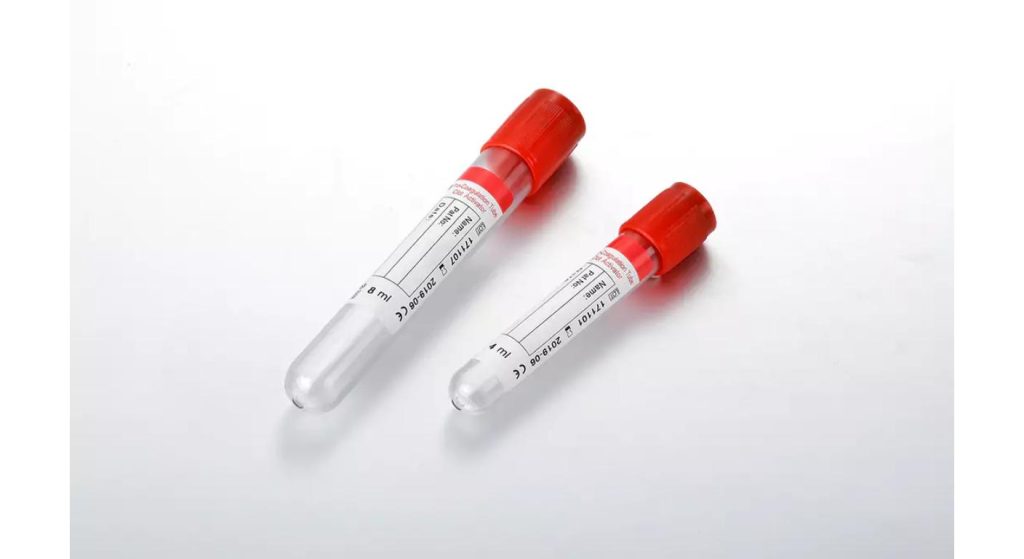
Trustlab's clot activator tube, GT210-1003, has micronised clot-activating particles on the inside. These are used to aid the coagulation of blood after collection, and should help in the preparation of serum.
The additive stimulates coagulation, but is by itself not a serum separator. However, there is still a need for centrifugation and proper recovery/handling as per the procedure.
Nor does the additive ensure that the clotting interval of each specimen is the same. Use the current product instructions and laboratory procedure; consider situations that may impact clot formation. Look out for general statements that imply a universal waiting time for very quick preparation.
Product pages do not provide all of the information necessary to operate a clinic. Before locally setting mixing, clotting or centrifugation conditions, find the current instructions for the EXACT reference.
Differentiate between Clot and Gel Barrier
A non-gel clot activator tube and a gel containing serum tube have the same coagulation function with a difference in the way the components are separated. A non-gel product will not form a gel barrier post centrifugation.
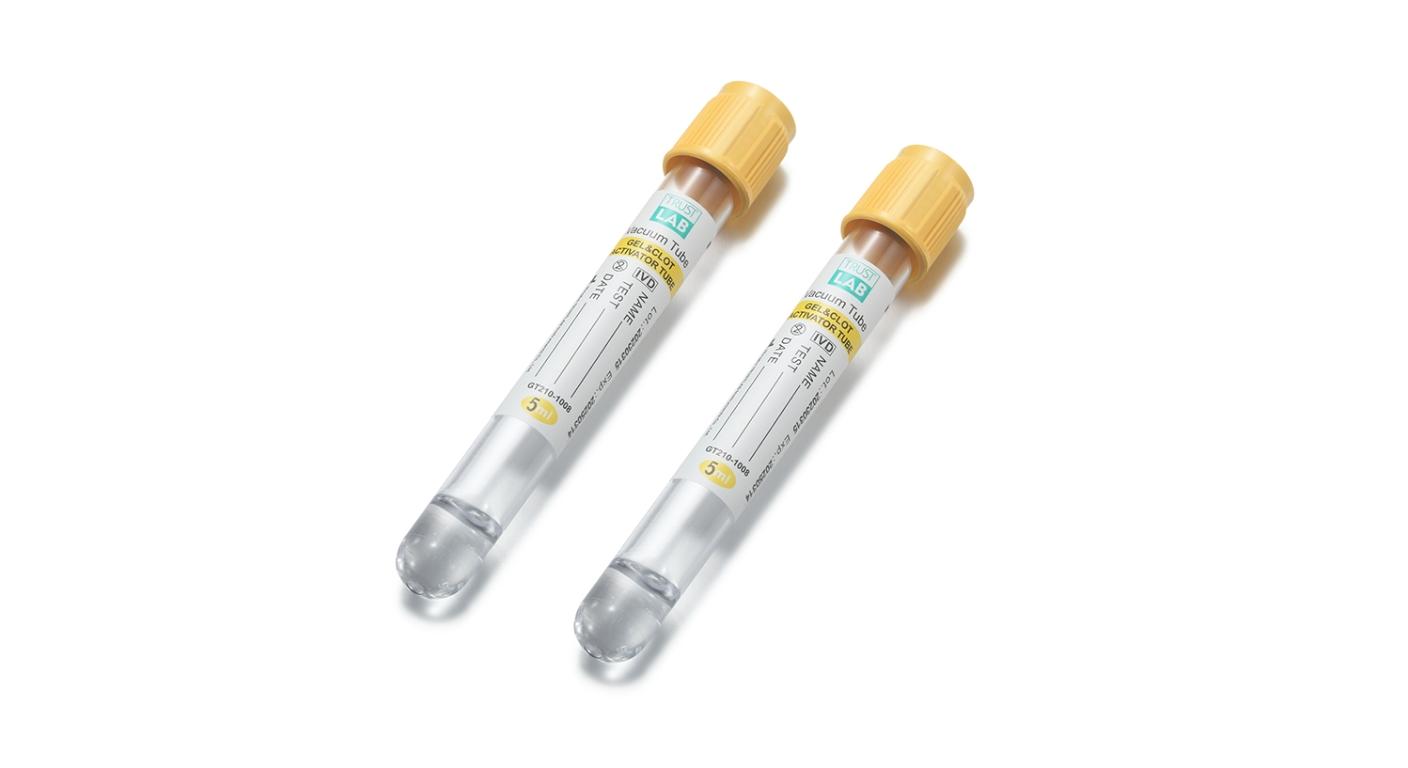
Gel clot activator tube GT210-1008 contains a separator gel that is added to the clot activator. The gel under the conditions given will act as a physical barrier between the cellular clot and the serum.
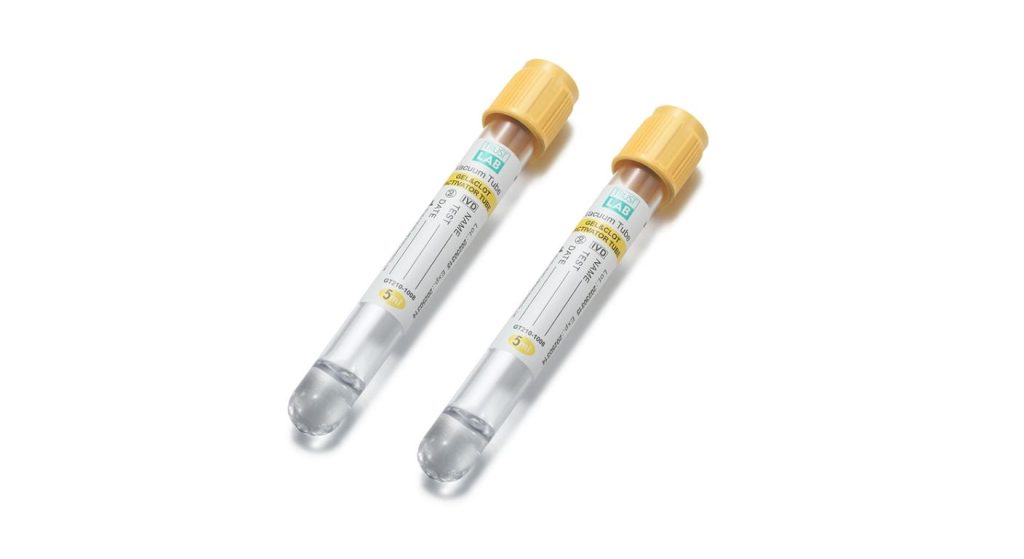
There is also a plain tube GT210-1001 from Trustlab, which is free from additives. Don't assume that it clots in a similar manner to a tube with an activator.
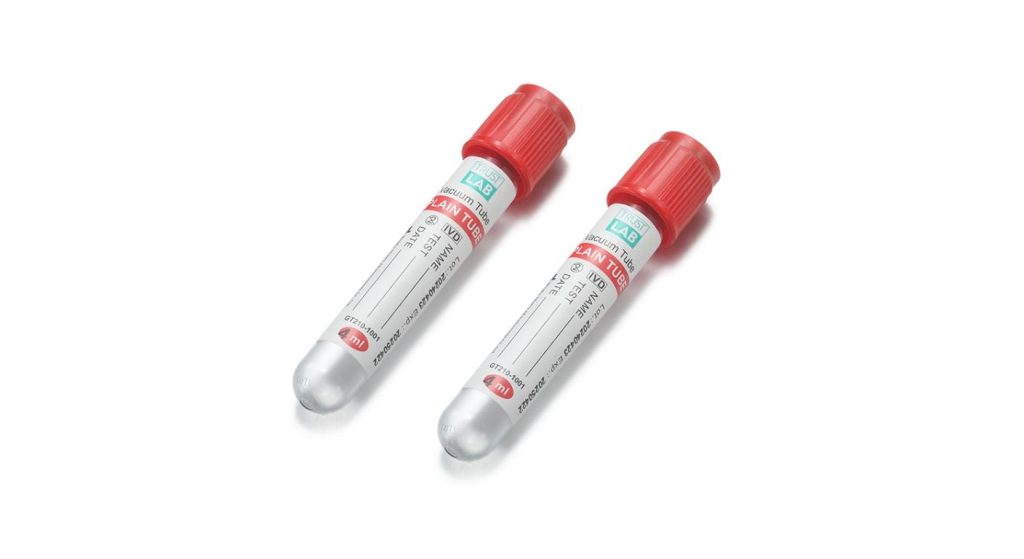
Choose from these formats based on the test needs and how the test will be handled. Gel compatibility, serum transfer and storage conditions allowed must be confirmed for each application. The use of cap colour may help identification, but the label, description of the additive and the product reference should dictate the choice.
You can verify the configuration prior to collection.
GT210-1003 is listed at Trustlab in PET or glass and available in several different dimensions and configurations of the draw-volumes. When ordering, the buyer shall specify a definite material, size, nominal draw volume and presentation form approved for the supply of the product, and the latter should not be ordered by the general name.
| Tube Reference | Tube Dimensions | Listed Draw-Volume Range | Listed Material Options |
| GT210-1003 | 13 × 75 mm | 1–4 mL | PET / Glass |
| GT210-1003 | 13 × 100 mm | 5–7 mL | PET / Glass |
| GT210-1003 | 16 × 100 mm | 7–10 mL | PET / Glass |
Ensure compatibility with the collection device, laboratory racks, centrifuge adapters and automated handling system.
Trained staff should refer to the facility's procedure and check the product identification, expiry date and condition prior to use. Do not mix additives between tubes or mix specimens to compensate for a collection mistake and use the collection technique and the order of draw specified.
Mix As Directed, Allow Clotting To Complete.
Follow the product instructions where necessary to invert the product after collection. This is to prevent unnecessary agitation of the specimen as it is being distributed between contact with the blood and contact with the additive.
Follow the mixing method and number of inversions that are specified in the actual product. NEVER COPY INSTRUCTIONS OF ANOTHER BRAND OR ANOTHER TYPE OF TUBE WITHOUT CONFIRMATION.
After the specified time, position and environmental conditions, let the sample clot before centrifugation. An activator will help facilitate this process but will not remove this stage.
Follow laboratory assessment procedure if clotting seems to be delayed or specimen does not meet criteria for acceptance. Don't improvise mechanical clot removal or rush the process by inappropriate handling.
Match Centrifugation with the Tube Instructions
The centrifugation conditions need to be adjusted according to the type of tube and the preparation method. Relative centrifugal force, time, temperature and rotor configuration should be verified instead of using a generalized serum processing guideline.
While refrigerated table top centrifuges are present in Trustlab's tabletop centrifuge range, it is not always necessary to run the refrigeration on a serum tube being separated. Conditions should be dictated by the directions of the tube and by a validated method.

Balance complete assemblies and use approved adapters as per manufacturer's instructions of the centrifuge. Where the setting is given in terms of RPM, ensure the correlation with the desired RCF for the actual rotor.
However, the maximum force that can be applied to the tube and the force needed to process the tube are entirely different. Do not exceed any of the limits and don't think you will get a better specimen if you increase the speed!
Sera check prior to reaching the Analyser.
Process and evaluate specimen following laboratory's acceptance rules. Further handling may be impacted by residual fibrin, inadequate separation, haemolysis or other sample quality issues, which may necessitate investigation.
Appearance does not guarantee suitability of the specimen for all assays. Utilise appropriate laboratory checks and analyser information including interference assessment as appropriate.
Use the same method for serum transfer, storage, transport and time of analysis. The stability of analytes in a gel tube is certainly not infinite and a separate transfer arrangement may be necessary for a non-gel tube.
Write down any relevant collection and processing information for review of any recurring problems. If using a new tube reference, assess it via the lab verification procedure, instead of taking it for granted based on appearances.
Conclusion
The preparation of a serum sample is a complete pre-analytical process, in which a clot activator tube is an important component for coagulation. Identify the additive from the separator gel, request the proper arrangement and adhere to product specific mixing, clotting and centrifugation procedures.
Link specimen evaluation to the laboratory to purchasing decisions. This contributes to maintaining the tube's intended function and in congruence with the needs of the test.
FAQs
Q1. Which of the following would be formed in a clot activator tube: serum or plasma?
Used for the preparation of serum after clotting and separating. Appropriate collection system that requires plasma for the use of appropriate anticoagulants.
Q2. Are all clot activator tubes separator gel?
No, Trustlab has GT210-1003 and GT210-1008 containing gel separately. Verify description and reference of additive.
Q3. Is the tube collected for and ready to be centrifuged immediately?
Let clot as indicated before centrifugation. Perform the current instructions for the precise tube and laboratory technique.
Q4. Is identifying the tube to use possible by cap colour alone?
No, the label, additive and product reference are not a full specification of a colour convention.
Q5. Where to get mixing and spin parameters?
Follow directions and requirements for the current tube, following a laboratory approved procedure. Never change another manufacturer's setting without checks.