



Choosing the best dengue test
Dengue fever is still one of the most rapidly expanding mosquito-borne illness in the world with millions of people being impacted annually. Prompt and accurate diagnosis is important as the symptoms of dengue are sometimes confused with those of other viral infections like influenza, malaria, chikungunya and Zika virus. Timely use of appropriate dengue test during the appropriate stage of infection can help in timely treatment of the patient and minimize chances of its complications.
There are multiple diagnostic approaches currently being used by healthcare providers, such as NS1 antigen testing, molecular testing using the RT-PCR, and antibody testing via blood IgM/IgG. Each option is used for a specific purpose after a certain period of time from the onset of symptoms. The CDC Dengue Testing Guidance states that both molecular or antigen testing and antibody testing is of value for diagnosis in the early stages of infection.
Why Accurate Dengue Testing Matters
Dengue symptoms can range from mild fever to life-threatening severe dengue. Common symptoms include:
- High fever
- Severe headache
- Pain behind the eyes
- Joint and muscle pain
- Skin rash
- Nausea and vomiting
- Fatigue
These symptoms may be confused with those of many tropical diseases and laboratory confirmation is essential. Accurate testing enables doctors:
- Confirm dengue infection quickly
- Differentiate dengue from similar illnesses
- Monitor disease progression
- Prevent complications such as dengue hemorrhagic fever
- Support outbreak surveillance and public health control
The timing of the test is one of the most important factors influencing accuracy.
Understanding the Main Types of Dengue Tests
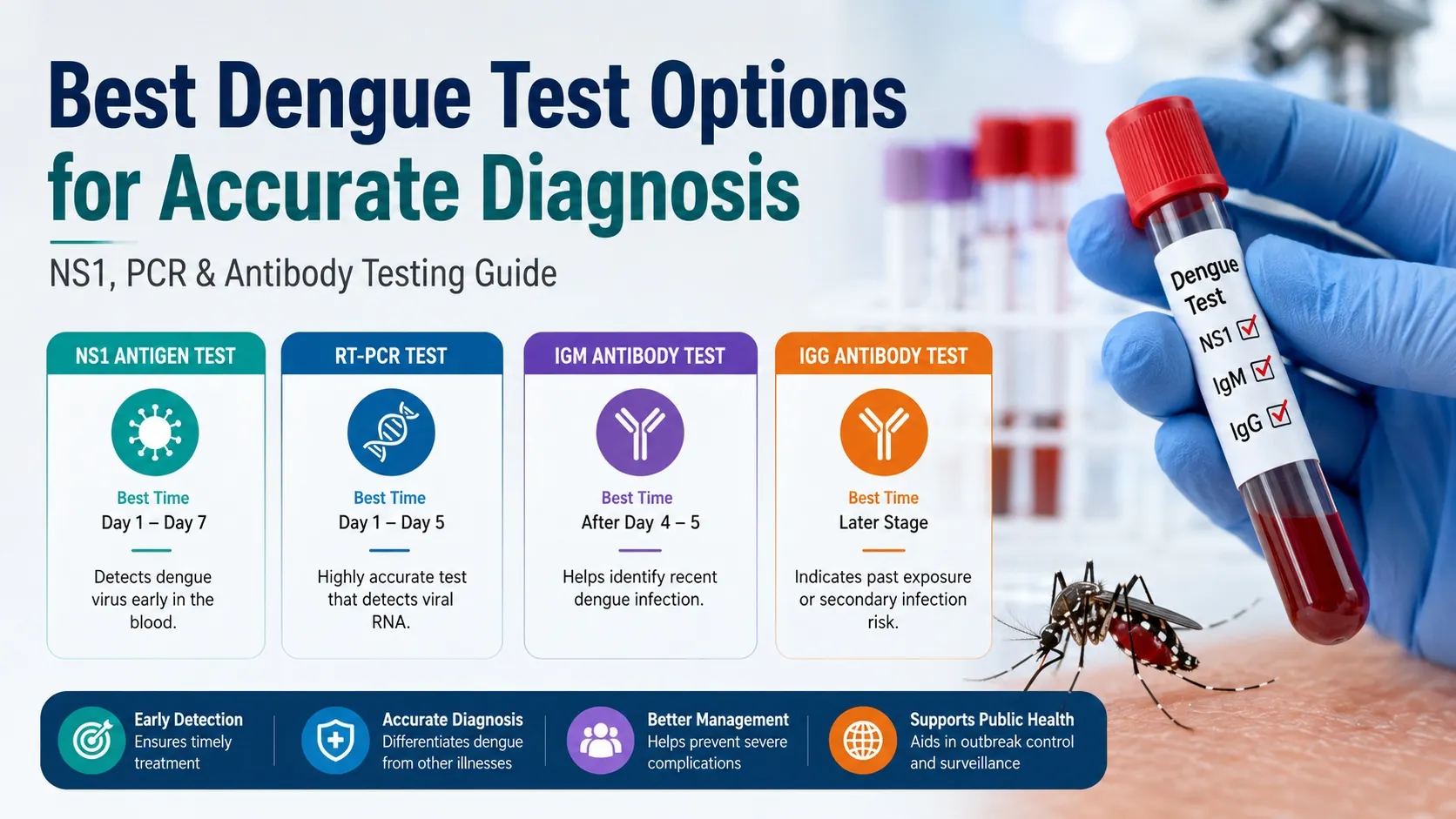
1. NS1 Antigen Test
One of the most frequently used tests for early detection of dengue are the NS1 antigen test. NS1 is a protein found in the bloodstream that is released early in the infection process by the dengue virus.
Best Time for Testing
- Day 1 to Day 7 after symptom onset
Advantages
- Rapid results
- Detects active infection early
- Useful before antibodies develop
- Widely available in hospitals and clinics
Limitations
- Accuracy may decrease after the first week
- Some rapid kits have lower sensitivity compared to laboratory ELISA tests
The CDC states that NS1 antigen testing is as sensitive as molecular testing in the first week of symptoms.
NS1 testing is favoured by many clinicians due to its balance of convenience, speed and affordability. NS1 rapid diagnostic tests can be employed as a quick test for screening in outbreak areas.
2. RT-PCR Dengue Test
One of the most accurate diagnostic techniques for dengue today is a technique called Reverse Transcription Polymerase Chain Reaction (RT-PCR).
Best Time for Testing
- Within the first 5–7 days of illness
Advantages
- Highly sensitive and specific
- Detects viral RNA directly
- Confirms active infection
- Can identify dengue virus serotypes
Limitations
- More expensive than rapid tests
- Requires advanced laboratory equipment
- Longer turnaround time in some facilities
Yes, if the person tests positive for NAAT or RT-PCR, it means there's an active dengue infection, according to the CDC.
RT-PCR testing is especially useful in hospitals, research labs, and outbreak investigations where accurate identification is crucial.
3. Dengue IgM Antibody Test
During the early phase of infection, IgM antibody testing is not usually done. IgM antibodies are made by the immune system several days after exposure to the virus.
Best Time for Testing
- Usually after Day 4 or Day 5 of symptoms
Advantages
- Useful during later stages of infection
- Helps identify recent dengue exposure
- Widely available
Limitations
- Cross-reactivity with other flaviviruses may occur
- Less reliable during the earliest phase of illness
CDC recommends that IgM antibodies are normally detectable starting 4-5 days after symptoms begin and can remain detectable for up to three months.
NS1 or PCR testing is often used with IgM testing when there is a low level of clinical suspicion.
4. Dengue IgG Antibody Test
IgG antibody test is primarily used to detect past dengue virus infection or secondary infection.
Best Time for Testing
- Later stages of infection or post-recovery
Advantages
- Detects previous exposure
- Useful for epidemiological studies
- Helps identify secondary dengue infection risk
Limitations
- Not recommended alone for diagnosing acute dengue
- May cross-react with other flavivirus infections
The CDC does not recommend using a single IgG test alone for acute dengue diagnosis because antibodies may reflect previous infections.
Which Dengue Test Is Most Accurate?
The most accurate option often depends on the timing of the illness.
| Stage of Infection | Recommended Test | Purpose |
|---|---|---|
| Days 1–5 | RT-PCR or NS1 Antigen | Detect active virus |
| Days 4–7 | NS1 + IgM Combination | Improve sensitivity |
| After Day 7 | IgM Antibody Test | Detect recent infection |
| Recovery Phase | IgG Antibody Test | Detect past exposure |
Many healthcare professionals now recommend combining multiple tests for the best accuracy. The CDC specifically recommends either:
- NAAT (RT-PCR) + IgM testing, or
- NS1 antigen + IgM testing during the first week of symptoms.
Rapid Dengue Tests vs Laboratory Testing
Rapid dengue test kits have become increasingly popular because they provide results within minutes. However, laboratory-based testing still offers superior sensitivity and specificity in many cases.
Rapid Tests
Pros:
- Fast turnaround
- Easy to use
- Suitable for clinics and remote areas
Cons:
- May produce false negatives
- Sensitivity varies between manufacturers
Laboratory Testing
Pros:
- Higher accuracy
- Better confirmation capability
- More reliable for complex cases
Cons:
- Longer processing time
- Higher cost
Community discussions among healthcare learners and clinicians frequently highlight that NS1 ELISA and PCR testing generally provide better reliability than some rapid methods.
Factors That Affect Dengue Test Accuracy
Several factors can influence test results:
Timing of Sample Collection
Testing too early or too late may reduce accuracy.
Previous Flavivirus Exposure
Past infections with Zika, West Nile, or yellow fever can affect antibody test interpretation.
Test Quality
Different commercial kits have varying sensitivity and specificity.
Sample Handling
Improper storage or delayed processing can affect results.
The CDC emphasizes that cross-reactivity remains a challenge for antibody-based dengue testing.
When Should You Get Tested for Dengue?
You should consider dengue testing if you:
- Develop sudden high fever
- Recently traveled to a dengue-endemic region
- Experience severe headache, rash, or joint pain
- Live in an area with active dengue outbreaks
If they are tested early, doctors can keep an eye on warning signs like platelet drop, bleeding or dehydration, before they occur.
Final Thoughts
The selection of the best dengue test is based on the clinical presentation and the time of the onset of symptoms. To detect it early, NS1 antigen and RT-PCR are the most accurate. In later phases, testing for IgM antibody will be more helpful. Using more than one diagnostic technique usually gives the most accurate diagnosis.
The emergence of dengue virus cases in different parts of the world has made prompt and precise diagnosis as an important aspect of proper patient management and outbreak control. Testing should be used in decision-making to determine individual or group risk and should be tailored to the duration of symptoms, laboratory capacity and epidemiological context of the area.
Early evaluation and proper lab testing can greatly enhance the prognosis when patients present with possible dengue symptoms.