



how to test dengue
Dengue fever is a viral disease spread by mosquitoes, commonly found in tropical and subtropical areas. Early diagnosis is crucial to avoid complication and to ensure that patients are given appropriate medical attention. The best method to confirm a dengue infection is a blood test, as symptoms of dengue can be similar to those of flu, malaria, chikungunya, and Zika virus infection. Medical sources said there are different methods of testing dengue according to the number of days since patients first reported symptoms.
What Is Dengue Fever?
Dengue virus causes Dengue Fever, transmitted through the bite of infected Aedes mosquito. The infection occurs particularly in Southeast Asia, South America, Africa and some parts of the Pacific region. The symptoms typically occur 4-10 days after a bite from a mosquito.
Dengue symptoms that are commonly seen are:
- High fever
- Severe headache
- Pain behind the eyes
- Muscle and joint pain
- Nausea and vomiting
- Skin rash
- Fatigue and weakness
Dengue may develop into internal bleeding, organ damage or even into Dengue Shock Syndrome in severe cases, which will need urgent medical attention.
Why Is a Dengue Blood Test Important?
A blood test for dengue will assist your doctor in confirming that it is the dengue virus which is causing your symptoms. Sometimes, dengue is similar to other viral infections and thus a laboratory test is required to get a correct diagnosis. Tests are also conducted at an early stage to allow health workers to monitor platelet levels, hydration status and warn for severe dengue.
Dengue testing is recommended if:
- You have persistent fever for more than 2–3 days
- You recently traveled to a dengue-prone area
- You develop rash, body pain, or unusual bleeding
- Your symptoms worsen after the fever decreases
Types of Dengue Blood Tests
There are several laboratory tests available that will help diagnose dengue infection. The best test will be dependent on the stage of ill health.
1. NS1 Antigen Test
NS1 antigen test is used to identify proteins secreted by the dengue virus in the early stages of the infection. It is thought to be one of the most efficient and rapid means of early diagnosis.
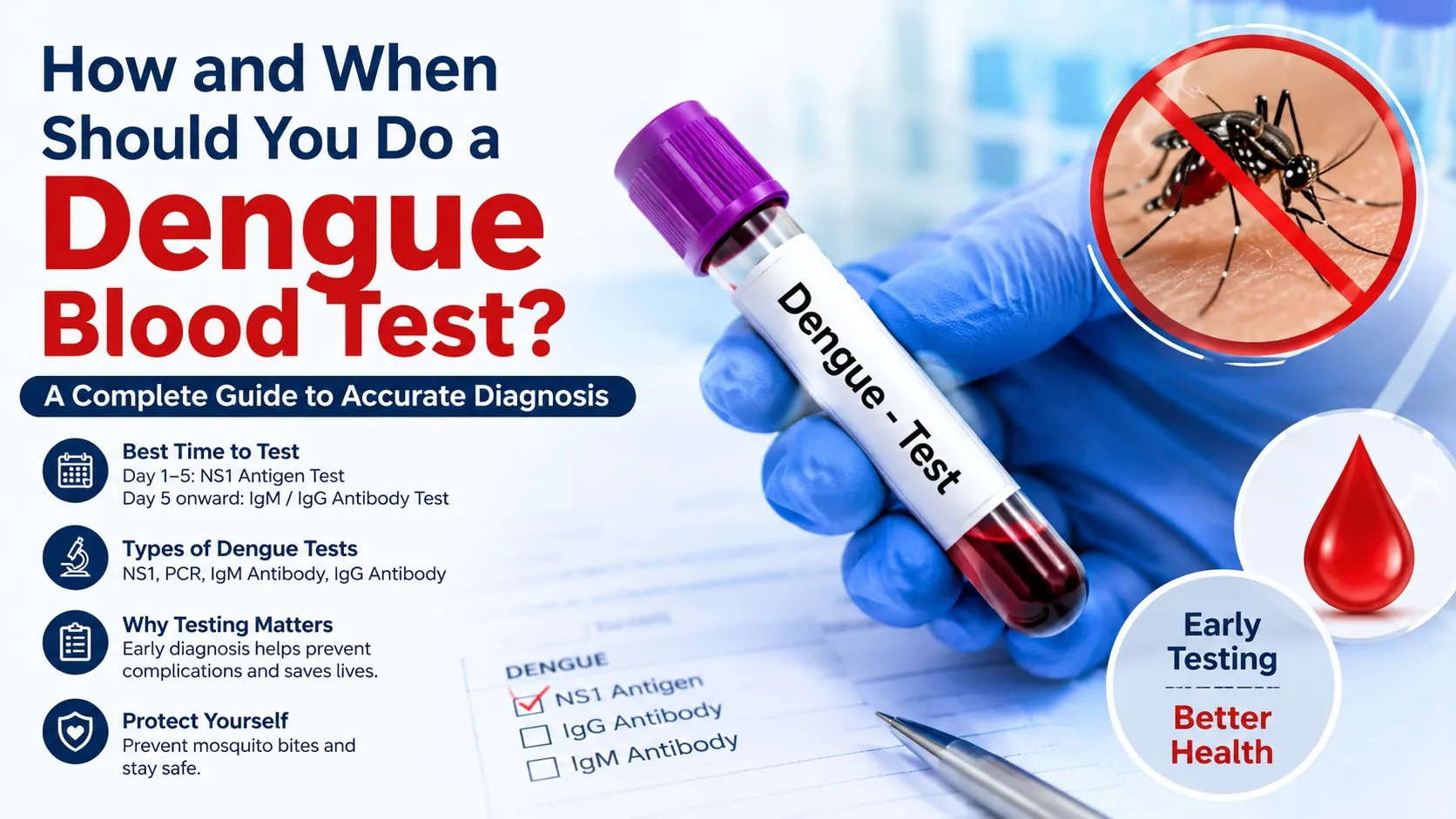
Best Time to Do the NS1 Test
NS1 test is most accurate in the first 1-5 days after symptoms occur. Following this time, the level of viral antigen diminishes making tests less sensitive.
2. PCR Test for Dengue
The PCR (Polymerase Chain Reaction) test is used to identify the presence of the dengue viral RNA in the bloodstream. It is very sensitive and is able to detect the onset of acute infections.
Best Time for PCR Testing
The PCR tests have higher sensitivity in the first 7 days of symptoms, particularly while the fever is present, in the acute phase. Viral RNA may not be detectable after 1 week.
3. IgM Antibody Test
IgM antibody tests indicate if the immune system has begun to react to the dengue virus.
When Should You Take an IgM Test?
IgM antibodies typically start to develop on day 4-5 after symptoms start. This test is ordered often in the later stages of the infection when patients seek medical attention.
4. IgG Antibody Test
Later, IgG antibodies will form and can persist for years after infection. This test is used by doctors to diagnose previous exposure to dengue or secondary infections.
When Is IgG Useful?
IgG testing is usually ordered once the initial week of illness has passed or for follow-up testing.
When Should You Get Tested for Dengue?
Accurate diagnosis of dengue is highly dependent on the right time. Tests have different onsets of effectiveness at different stages of the disease.
| Days After Symptoms Start | Recommended Test |
|---|---|
| Day 1–5 | NS1 Antigen Test |
| Day 1–7 | PCR Test |
| Day 5 onward | IgM Antibody Test |
| Day 7 onward | IgG Antibody Test |
Timing and type of the test can be wrong, which can lead to a false or invalid result. For instance, antibody tests can give a false negative if the antibody level is not high enough because the immune system has not yet developed.
What Happens During a Dengue Blood Test?
A blood sample is taken from a vein in the arm by a trained health care provider. This takes typically just a few minutes. The blood sample is then sent to a laboratory for testing to look for Dengue antigens, viral RNA, or antibodies.
There is no special preparation or fasting needed for most blood tests for dengue. Depending on the type of test and laboratory it may take several hours to one day for results to be available.
How to Interpret Dengue Test Results
Positive Result
If the result of a dengue test is positive, it is likely that the person is currently or recently infected with dengue. Physicians might suggest platelet counts to monitor, a lot of fluids to drink and some signs of severe dengue.
Negative Result
Negative test does NOT always mean NO Dengue. Viral markers could not be detected if they are tested too early or too late. Doctors will suggest another test several days later if symptoms continue in many cases.
Warning Signs That Require Immediate Medical Attention
Seek urgent medical care if you experience:
- Severe abdominal pain
- Persistent vomiting
- Bleeding gums or nose
- Blood in stool or vomit
- Difficulty breathing
- Extreme weakness or restlessness
These symptoms may indicate severe dengue, which can become life-threatening without proper treatment.
Tips to Prevent Dengue Fever
Although testing is important, prevention remains the best defense against dengue infection.
Reduce Mosquito Exposure
- Use mosquito repellents
- Wear long sleeves and pants
- Sleep under mosquito nets
- Remove standing water around your home
Stay Hydrated During Illness
Hydration is very important for dengue sufferers. Take fluids, electrolyte solutions and clear liquids by the sips.
Avoid Certain Medications
As doctors recommend, avoid aspirin and ibuprofen as they may pose more bleeding risks during Dengue infection. Acetaminophen is usually preferred in controlling fever.
Final Thoughts
An understanding of the indications and timing of a dengue blood test can be a huge factor in early diagnosis and treatment. NS1 antigen and PCR will be most useful in the early stage of disease; antibody tests (IgM and IgG antibody) will be useful later in the disease. Dengue symptoms are often similar to those of other infections so it is very important to have your test done at the right time for a correct diagnosis and appropriate treatment.
Seek timely medical attention after exposure by a mosquito or travel to a tropical area if you have developed fever or severe body pain or dengue symptom; discuss the best dengue blood test for your symptom timing.