



How to Read Dengue Virus Blood Test Results
Dengue fever is a viral infection transmitted by the mosquito and is a problem in millions of people annually, particularly in the tropics and subtropics. Blood tests are an important part of confirming the diagnosis of dengue and are also used to monitor the progression of the disease, because the early signs and symptoms are similar to other common viral infections like the flu or measles. Knowing the results of the blood test for dengue can encourage people to get prompt treatment and minimise the risk of complications.
What Is Dengue Fever?
The dengue virus causes dengue fever and is mainly spread by infected Aedes mosquitoes. Symptoms can come on rapidly and include:
- High fever
- Severe headache
- Pain behind the eyes
- Muscle and joint pain
- Skin rash
- Nausea and vomiting
- Fatigue
- Mild bleeding from gums or nose
Dengue can cause serious complications like bleeding, plasma leakage, low blood pressure and organ damage in severe cases. Proper treatment and monitoring requires early laboratory testing.
Why Blood Tests Are Important for Dengue
Symptoms alone do not always make the diagnosis of dengue and there are many viruses with similar symptoms. Blood tests provide information about:
- Whether dengue virus is present
- The stage of infection
- Whether it is a primary or secondary infection
- The severity of the illness
- Potential complications such as low platelets or dehydration
Different tests are used depending on how many days have passed since symptoms started.
Main Types of Dengue Blood Tests
1. NS1 Antigen Test
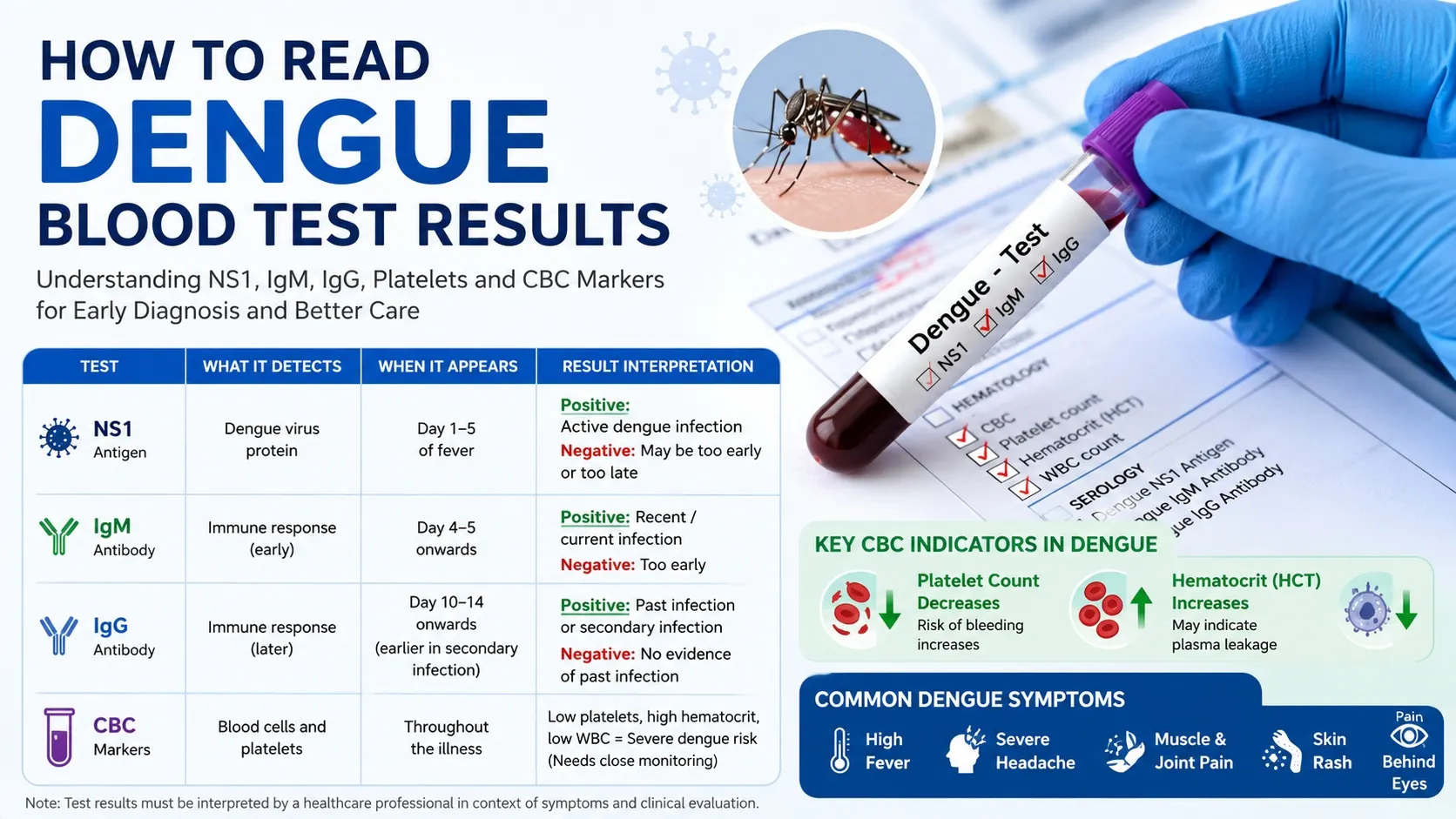
NS1 antigen test is the testing of a protein secreted by the dengue virus during the initial phase of infection.
When Is It Used?
- Best performed within the first 1–5 days after fever begins
What Do the Results Mean?
- Positive NS1: Active dengue infection is likely
- Negative NS1: Dengue may still be present if testing is done too late or viral levels are low
One of the early and quickest tests for dengue is the NS1 test. However, after the first few days, the accuracy becomes less as the amount of viral antigens reduces over time.
2. IgM Antibody Test
IgM antibodies are produced by the immune system shortly after infection.
When Does IgM Appear?
- Usually detectable from day 4 or 5 after symptom onset
Result Interpretation
- Positive IgM: Recent or current dengue infection
- Negative IgM: Infection may be too early for antibody production
IgM testing is useful during the acute phase of illness and is often combined with other tests for better accuracy.
3. IgG Antibody Test
IgG antibodies appear later than IgM and may remain in the body for years.
When Does IgG Appear?
- Around day 10–14 in primary infections
- Earlier in secondary dengue infections
Result Interpretation
- Positive IgG only: Past dengue infection
- Positive IgM and IgG: Secondary dengue infection or progressing immune response
Secondary dengue infections may carry a higher risk of severe complications, making IgG monitoring important.
Understanding Common Dengue Test Combinations
Doctors often interpret several markers together for a clearer diagnosis.
| NS1 | IgM | IgG | Possible Meaning |
|---|---|---|---|
| Positive | Negative | Negative | Very early dengue infection |
| Positive | Positive | Negative | Primary dengue infection |
| Positive | Positive | Positive | Secondary dengue infection |
| Negative | Positive | Positive | Later stage or recovering infection |
| Negative | Negative | Negative | No evidence of dengue or test performed too early |
Testing time is extremely important because antibody levels change throughout the illness. In some cases, repeat testing may be necessary.
Complete Blood Count (CBC) in Dengue
A Complete Blood Count (CBC) is commonly used to monitor dengue severity.
Platelet Count
Platelets help blood clot properly. Dengue often causes platelet levels to decrease.
Normal platelet range:
150,000 to 450,000 platelets/μL150{,}000\text{ to }450{,}000\ \text{platelets}/\mu L
What Low Platelets Mean
- Mild decrease: common in dengue
- Severe thrombocytopenia: increased bleeding risk
A rapidly falling platelet count may indicate worsening disease and requires close monitoring.
Hematocrit (HCT)
Hematocrit measures the percentage of red blood cells in the blood.
Why It Matters
A rising hematocrit level may indicate plasma leakage, which is a warning sign of severe dengue.
Doctors often monitor hematocrit together with platelet count:
- High hematocrit + low platelets = possible severe dengue
White Blood Cell Count (WBC)
Dengue infection frequently causes leukopenia, or low white blood cell count.
Low WBC may support the diagnosis when combined with fever and thrombocytopenia.
Additional Tests Used in Severe Dengue Cases
Liver Function Tests
Dengue can affect liver function. Doctors may check:
- ALT
- AST
- GGT
Elevated liver enzymes may indicate inflammation or liver injury.
Kidney Function Tests
Kidney monitoring may include:
- Creatinine
- Urea
- Microalbumin
Severe dengue can reduce blood circulation and impact kidney health.
Electrolyte Tests
Patients with vomiting, dehydration, or diarrhea may develop electrolyte imbalance.
Doctors may measure:
- Sodium (Na+)
- Potassium (K+)
- Chloride (Cl-)
CRP Test
C-reactive protein (CRP) helps evaluate inflammation and identify possible secondary bacterial infections.
When Should You Get Tested for Dengue?
You should consider dengue testing if you experience:
- Fever lasting more than 2–3 days
- Severe body aches
- Rash
- Eye pain
- Bleeding gums or nose
- Persistent vomiting
- Extreme fatigue
- Recent exposure to mosquito-prone areas
Early testing improves monitoring and reduces complications.
Can Dengue Tests Be False Negative?
Yes. Timing is one of the biggest reasons for false-negative results.
For example:
- NS1 may become negative after the first few days
- IgM may not appear during very early infection
Doctors may recommend repeating tests daily if dengue is strongly suspected clinically.
Final Thoughts
Interpretation of dengue blood test results isn't a simple positive or negative test. Doctors use all these laboratory markers and tests to determine the stage and severity of an infection.
Dengue can rapidly progress, so early diagnosis is crucial. Immediate medical attention is required if symptoms become worse or blood tests indicate low platelet count, increasing hematocrit, or indications of bleeding.
Interpretation of results from the dengue test can help you make better decisions about your health and help you to be treated and recover quickly.