



Updated 4 months ago
What Does a Negative Fecal Occult Blood Test (FOBT) Mean?

Admin
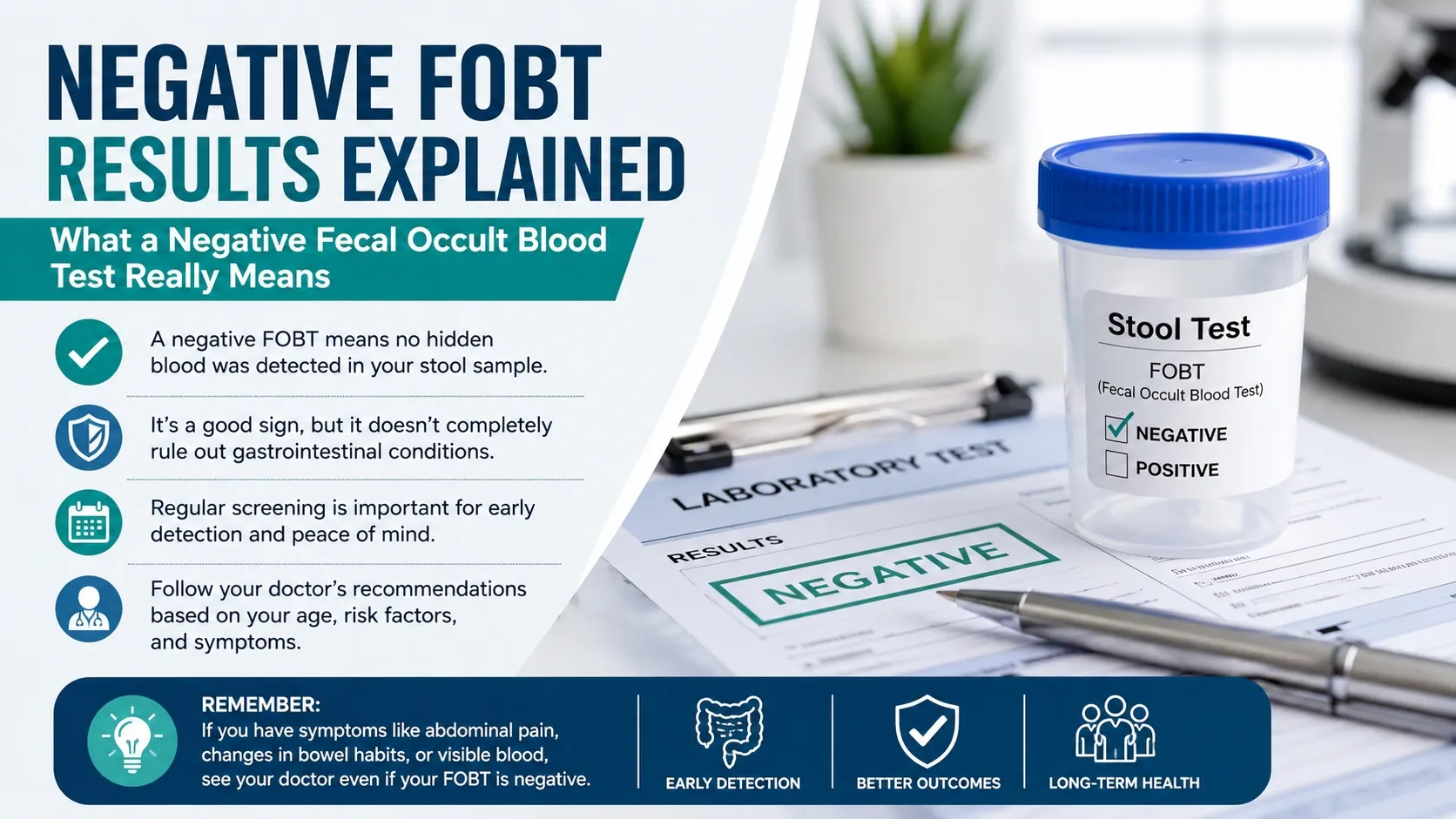
What Does a Negative Fecal Occult Blood Test (FOBT) Mean?
One of the most frequently performed stool tests for the detection of blood in the stool is a fecal occult blood test (FOBT). This test is sometimes recommended as a routine check-up for colorectal cancer or to help diagnose conditions of the digestive tract. However, what about when the test results are negative? Does it mean that all is well?
Patients can better educate themselves about the meaning of a negative FOBT and when it may be necessary to have further testing. In this guide, we will outline the information about FOBT, the meaning of a negative result, potential limitations of the test and the need for follow-up care.
What Is a Fecal Occult Blood Test (FOBT)?
Fecal occult blood test is used to detect small quantities of blood in the stool that cannot be seen with the naked eye. Occult means hidden, meaning that there is microscopic bleeding which can happen anywhere in the digestive tract.
A FOBT is commonly ordered by healthcare professionals to look for:
- Colorectal cancer
- Colon polyps
- Gastrointestinal bleeding
- Ulcers
- Inflammatory bowel disease (IBD)
- Hemorrhoids
- Certain stomach or intestinal disorders
There are two primary types of FOBT tests:
Guaiac-Based FOBT (gFOBT)
This conventional technique involves using a chemical reaction to identify blood in stool samples. Some foods and medications have an impact on results, and dietary restrictions may be necessary prior to testing.
Fecal Immunochemical Test (FIT)
The FIT testing is specific to human blood in the lower intestines. It is more precise, and most often not limited by diet.
What Does a Negative FOBT Result Mean?
If the FOBT test is negative, then no hidden blood was found in the stool at the time the test was conducted. This is a reassuring sign in many cases as it implies that there is no bleeding at the present time in the digestive tract.
A negative test result is not 100% proof that a person doesn't have the disease, however. Bleeding may be irregular in some conditions, so that the blood is not found in all samples of stool.
Key Points About a Negative FOBT
- No occult blood was found in the tested sample
- The risk of significant gastrointestinal bleeding is lower
- Further testing may still be needed depending on symptoms and risk factors
- Routine screening should continue according to medical guidelines
Why FOBT Screening Is Important
Colorectal cancer is a major cause of death from cancer around the world. The earlier the diagnosis, the better the prognosis of treatment. FOBT screening helps to identify the warning signs before symptoms develop.
The American Cancer Society suggests adults have an FOBT or FIT test every 10 years starting at age 45, particularly if they have an average risk for colorectal cancer.
The advantages of screening include:
- Early detection of colorectal cancer
- Identification of precancerous polyps
- Improved survival rates
- Less invasive treatment options when caught early
Can a Negative FOBT Be Wrong?
While FOBT testing can be helpful, there are no ideal screening tests. A false negative reaction occurs when there is bleeding but no reaction is detected.
Common Reasons for False-Negative FOBT Results
Intermittent Bleeding
Occasional bleeding, not continuous, may be the case for some polyps, cancers, or ulcers. If there is no blood in the sample when it is collected, the test could come back negative.
Improper Sample Collection
Errors during sample handling or collection can reduce test accuracy.
Small Amounts of Blood
Very minimal bleeding may fall below the test’s detection threshold.
Upper Gastrointestinal Bleeding
Some tests are more useful for identifying bleeding from the lower digestive tract than from the upper digestive tract or stomach.
Due to these limitations, physicians might need to recommend further testing if symptoms continue to occur despite a negative FOBT.
Symptoms That Should Not Be Ignored
Even with a negative FOBT result, patients should seek medical evaluation if they experience symptoms such as:
- Persistent abdominal pain
- Changes in bowel habits
- Unexplained weight loss
- Chronic fatigue
- Visible blood in stool
- Iron-deficiency anemia
- Ongoing constipation or diarrhea
These symptoms may indicate conditions that require further investigation.
Conditions That May Still Exist With a Negative FOBT
A negative result lowers the likelihood of active bleeding but does not completely rule out gastrointestinal disease.
Possible conditions include:
Colon Polyps
Some polyps do not bleed consistently, especially in early stages.
Early Colorectal Cancer
Very early cancers may not produce detectable bleeding.
Hemorrhoids
Hemorrhoids can bleed intermittently and may not always trigger a positive test.
Inflammatory Bowel Disease
Crohn’s disease and ulcerative colitis can fluctuate between active and inactive phases.
Gastric Ulcers
Small ulcers may bleed only occasionally.
When Is Additional Testing Needed?
Doctors evaluate FOBT results together with medical history, age, family history, and symptoms. Additional diagnostic procedures may include:
Colonoscopy
A colonoscopy provides a direct view of the colon and is considered the gold standard for colorectal cancer detection.
Endoscopy
Upper endoscopy examines the esophagus, stomach, and upper intestines.
Imaging Studies
CT scans or specialized imaging may help identify gastrointestinal abnormalities.
Blood Tests
Blood work can reveal anemia or signs of chronic blood loss.
FOBT vs FIT: Which Is Better?
Modern FIT testing is generally preferred over traditional guaiac FOBT because it offers improved sensitivity and convenience.
| Feature | FOBT | FIT |
|---|---|---|
| Dietary Restrictions | Often required | Usually not required |
| Specificity | Lower | Higher |
| Detects Human Blood Only | No | Yes |
| Ease of Use | Moderate | Easier |
FIT tests are increasingly recommended for routine colorectal cancer screening programs worldwide.
How Often Should You Get an FOBT?
Screening frequency depends on age, medical history, and risk factors.
General recommendations include:
- Annual FIT or FOBT testing for average-risk adults
- Earlier or more frequent screening for high-risk individuals
- Colonoscopy every 10 years for some patients
People with a family history of colorectal cancer should discuss personalized screening schedules with their healthcare provider.
Tips for Accurate FOBT Results
To improve test reliability:
- Carefully follow collection instructions
- Avoid restricted foods if using gFOBT
- Inform your doctor about medications
- Submit samples promptly
- Complete all required sample cards or kits
Accurate collection significantly improves diagnostic value.
Lifestyle Habits That Support Colon Health
Maintaining digestive health may help reduce colorectal cancer risk.
Healthy habits include:
- Eating high-fiber foods
- Limiting processed meats
- Exercising regularly
- Staying hydrated
- Avoiding smoking
- Reducing excessive alcohol consumption
- Maintaining a healthy body weight
Preventive healthcare and regular screenings remain essential.
Frequently Asked Questions
Is a Negative FOBT Always Good News?
Generally, yes. A negative result means no hidden blood was found in the stool sample. However, it does not completely rule out disease.
Can Colon Cancer Be Present With a Negative FOBT?
Yes. Some early-stage cancers or polyps may not bleed consistently enough to be detected.
Should I Still Get a Colonoscopy After a Negative FOBT?
Even if you don't have symptoms, high risk factors or abnormal findings, your doctor may still order a colonoscopy.
How Accurate Is FOBT Testing?
The accuracy varies for different types of tests and samples. FOBT tests are less reliable than the traditional FIT tests.
Final Thoughts
A negative faecal occult blood test is a positive result which indicates that no hidden blood was found in the stool during the test. It should be noted, though, that FOBT is a screening test, not a diagnosis.
The need for screening, symptom awareness and follow-up care continue to be important for digestive and colorectal health. Despite a negative test result, further evaluation may be needed in the presence of risk factors or when symptoms continue.
With regular screenings and healthy lifestyle habits, people can be proactive about their gastrointestinal health and early detection.