



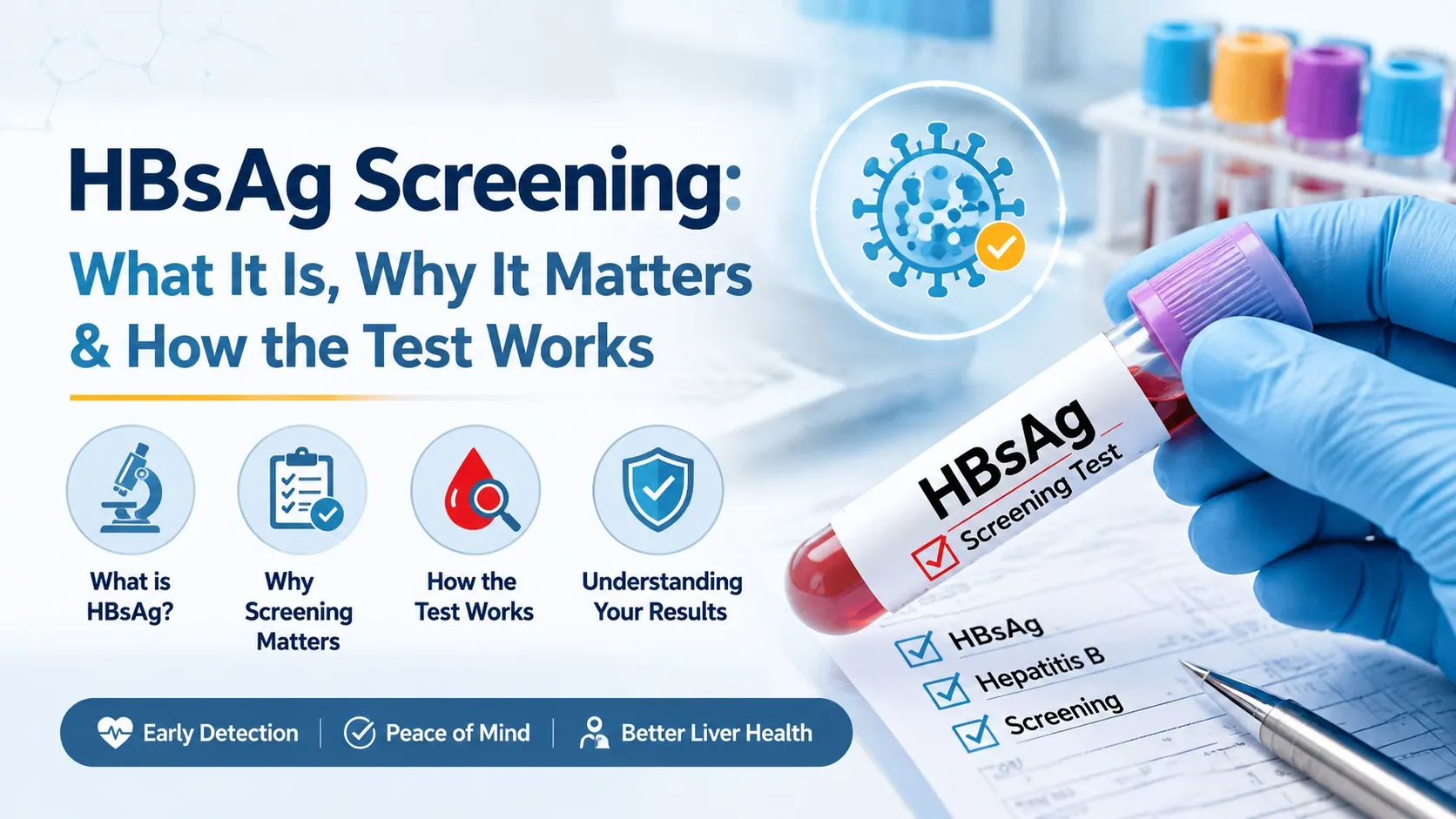
What is a HBsAg screening
Hepatitis B is an acute disease of the liver, caused by the hepatitis B virus (HBV). Early detection is essential and the most common method of diagnosis is the Hepatitis B surface antigen test (HBsAg). This blood test is a key part in the diagnosis of an active HBV infection, in monitoring treatment and to prevent transmission.
What is the HBsAg Test?
Hepatitis B surface antigen (HBsAg) is a blood test that identifies the presence of the hepatitis B surface antigen in the blood. It's a protein that's on the surface of the virus and tells you that the virus is actively multiplying in the liver cells. HBsAg is a test that will tell you if you are currently infected with hepatitis B, while antibody tests will tell you if you were previously infected or immune to the disease.
Key points about the HBsAg test:
- Detects current hepatitis B infection
- Helps distinguish between acute and chronic hepatitis B
- Monitors patients undergoing treatment
- Evaluates the risk of transmission to others
Why is HBsAg Testing Important?
Early symptoms of hepatitis B infection may be nonexistent. A significant number of people can be carriers of the virus without showing any symptoms, but still pass it on to others. The use of the HBsAg test is critical since it:
- Supports Early Detection: Early diagnosis can prevent severe liver damage, including cirrhosis and liver cancer.
- Guides Treatment Decisions: Positive results help doctors determine if antiviral therapy is necessary.
- Protects Public Health: Identifying carriers allows healthcare providers to implement measures that reduce the spread of hepatitis B.
When Should You Get an HBsAg Test?
The Centers for Disease Control and Prevention (CDC) recommends HBsAg testing for:
- Pregnant women: Early detection prevents mother-to-child transmission.
- Individuals at high risk: Those with multiple sexual partners, healthcare workers, or people living with hepatitis B carriers.
- People with liver disease: To rule out hepatitis B as the underlying cause.
- Routine screening in certain regions: Areas with high HBV prevalence often include HBsAg testing in standard medical checkups.
Understanding HBsAg Test Results
HBsAg test results can be either positive or negative, and interpretation depends on the context:
- Positive Result: Indicates the presence of the hepatitis B virus. Further testing may be needed to determine if the infection is acute or chronic.
- Negative Result: Suggests no current infection. If there’s a history of vaccination or previous infection, additional antibody tests may be conducted.
Tip: A positive HBsAg test doesn’t indicate immunity. For that, an anti-HBs antibody test is required.
HBsAg Testing Procedure
The HBsAg test is a simple blood test performed in a clinical laboratory:
- A healthcare professional draws a small blood sample from a vein in the arm.
- The sample is sent to a laboratory for analysis.
- Results are usually available within a few days.
The test is safe, minimally invasive, and does not require special preparation. However, it’s important to discuss any medications or medical conditions with your doctor beforehand.
Chronic vs. Acute Hepatitis B
Understanding the difference between acute and chronic hepatitis B is vital for interpreting HBsAg results:
- Acute Hepatitis B: Occurs shortly after infection. Symptoms may include fatigue, jaundice, abdominal pain, and nausea. Most adults recover fully within six months, and HBsAg typically disappears.
- Chronic Hepatitis B: If HBsAg remains positive for more than six months, the infection is considered chronic. Chronic infection increases the risk of liver damage, cirrhosis, and liver cancer.
Global Importance of HBsAg Testing
In regions with high hepatitis B prevalence, routine HBsAg testing is a cornerstone of public health strategies. Early detection and vaccination programs significantly reduce transmission rates. For example:
- Asia-Pacific countries have implemented nationwide screening for pregnant women to prevent mother-to-child transmission.
- United States and Europe emphasize screening high-risk populations and providing vaccinations to uninfected individuals.
How to Prepare for the HBsAg Test
No extensive preparation is needed, but consider these steps for accurate results:
- Inform your healthcare provider of current medications.
- Fast if instructed (some labs require fasting for concurrent tests).
- Discuss any recent vaccinations or illnesses.
Follow-Up After Testing
If your HBsAg test is positive, your doctor may recommend:
- Further blood tests: To measure viral load and liver function.
- Regular monitoring: To track disease progression.
- Vaccination of contacts: Close family members or sexual partners may need hepatitis B vaccination.
- Lifestyle adjustments: Reducing alcohol intake and avoiding hepatotoxic medications to protect liver health.
Prevention and Vaccination
HBsAg testing alone cannot prevent hepatitis B, but it complements vaccination programs. The hepatitis B vaccine is highly effective and recommended for:
- Infants and children
- Healthcare workers
- Individuals at high risk of HBV exposure
Routine screening combined with vaccination is the most effective strategy to reduce hepatitis B infections globally.
Conclusion
The HBsAg test plays a significant role in the detection and management of hepatitis B, from the point of view of personal health monitoring to public health programs, for active infections, treatment and prevention of the spread of hepatitis B.
Healthcare providers can make a major impact in reducing the global burden of hepatitis B through promoting awareness, encouraging regular screening, and integrating vaccination programs.
Your local healthcare provider will provide testing for the Hepatitis B surface antigen (HBsAg) if you are at risk or have questions about Hepatitis B. Early detection saves lives and protects communities.