



how do you test for malaria
Malaria continues to be one of the greatest health problems in the world and kills millions of people every year, particularly in tropical and subtropical countries. Early diagnosis and correct diagnosis is vital for a successful treatment and prevention of serious illness and transmission. The guide discusses malaria diagnostic tests, their methods and their role in clinical and public health.
Understanding Malaria and Its Symptoms
Malaria is an infection caused by Plasmodium parasites in the blood that is carried by infected Anopheles mosquito. Common symptoms include fever, chills, headaches, fatigue and, in severe cases, organ failure. The symptoms of malaria can be confused with those of other diseases, so it's important to get a laboratory diagnosis.
Why Accurate Malaria Testing Matters
Timely malaria diagnosis is vital for several reasons:
- Effective Treatment: Different Plasmodium species respond to specific antimalarial medications. Accurate testing ensures patients receive the right drug regimen.
- Preventing Complications: Early detection reduces the risk of severe malaria, which can lead to cerebral malaria, anemia, and death.
- Controlling Outbreaks: Identifying and treating cases promptly helps prevent the spread of malaria within communities.
Types of Malaria Diagnostic Tests
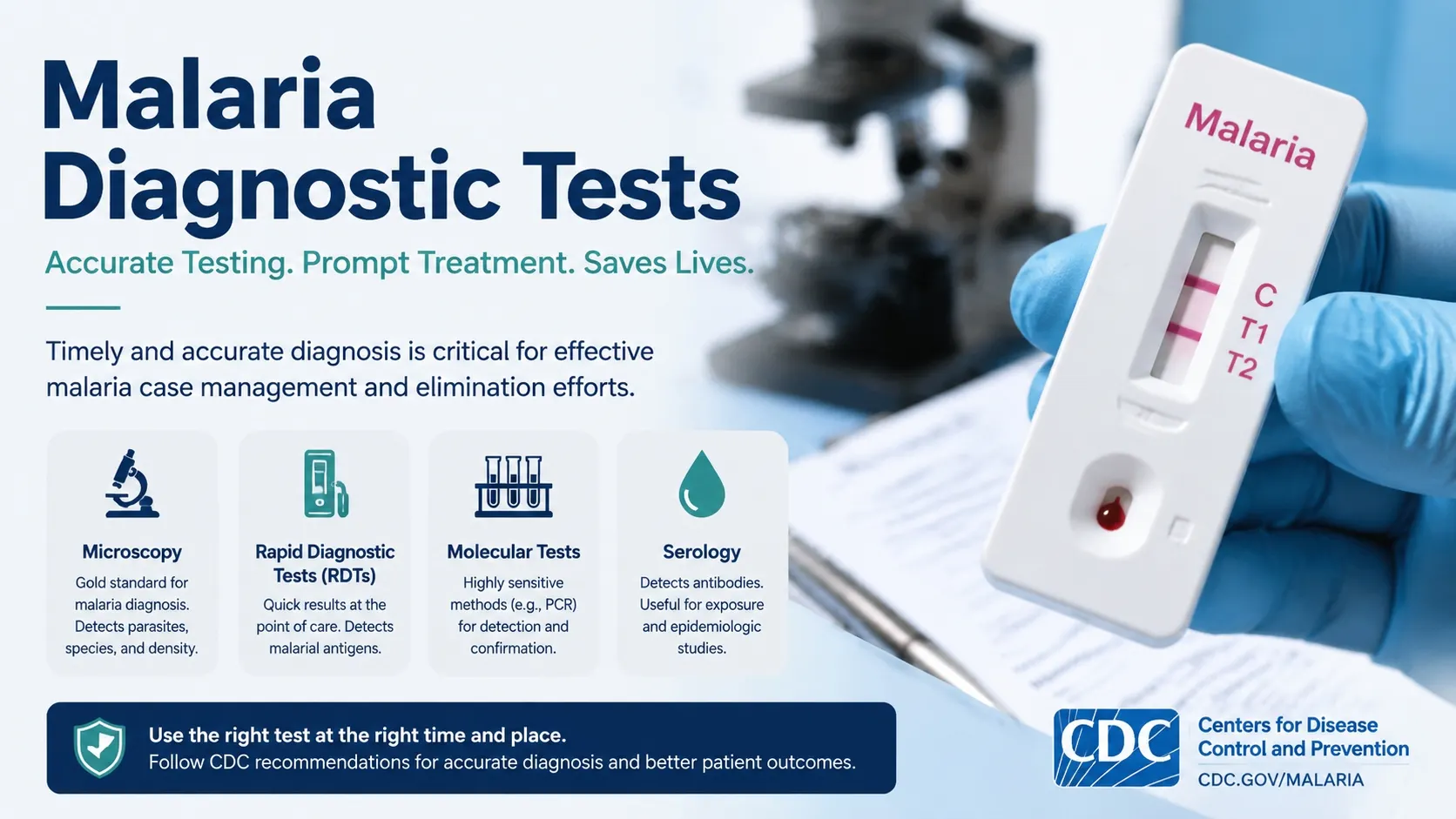
There are three types of malaria diagnostic tests: microscopy, rapid diagnostic tests (RDTs) and molecular methods. There are specific advantages and factors to consider with each method.
1. Microscopy: The Gold Standard
Microscopy involves examining blood smears under a microscope to detect malaria parasites. Two types of smears are commonly used:
- Thick Smear: Concentrates blood cells to detect parasites more efficiently, offering higher sensitivity.
- Thin Smear: Helps identify Plasmodium species and quantify parasite density, crucial for treatment planning.
Advantages:
- High accuracy when performed by skilled technicians.
- Can differentiate between Plasmodium species.
Limitations:
- Requires trained personnel and proper laboratory equipment.
- Time-consuming, making it less ideal in resource-limited or high-volume settings.
Microscopy remains the benchmark for malaria diagnosis in hospitals and reference laboratories worldwide.
2. Rapid Diagnostic Tests (RDTs)
RDTs are used to detect a specific antigen from malaria in a small amount of blood and are able to give results in 15-30 minutes. These tests are useful in the field where microscopy is not possible.
Advantages:
- Quick and simple, requiring minimal training.
- Portable and suitable for rural or remote areas.
Limitations:
- Slightly lower sensitivity compared to microscopy, especially for low parasite densities.
- Some RDTs may not detect all Plasmodium species equally.
RDTs have revolutionized malaria detection in low-resource settings, enabling timely treatment and reducing mortality.
3. Molecular Methods: PCR and Beyond
Malaria DNA can be identified by nucleic acid amplification tests like polymerase chain reaction (PCR) with high sensitivity and specificity. These tests are especially helpful in research, outbreak investigations, and in surveillance of low-level infections.
Advantages:
- Detects very low levels of parasites, even in asymptomatic carriers.
- Can accurately identify Plasmodium species.
Limitations:
- Requires specialized laboratory infrastructure and trained personnel.
- Higher cost, limiting routine use in many endemic regions.
Molecular diagnostics complement traditional methods and are increasingly integrated into reference laboratories and surveillance programs.
Interpreting Malaria Test Results
Accurate interpretation of malaria tests is critical for patient care:
- Positive Result: Confirms malaria infection; species identification guides treatment.
- Negative Result: Does not entirely rule out infection, especially in low-density cases; repeat testing may be necessary if symptoms persist.
Healthcare providers combine test results with clinical assessment to make informed treatment decisions.
Geographic Considerations in Malaria Testing
Malaria prevalence varies geographically, and testing strategies should align with local transmission patterns:
- High-Endemic Regions: Routine testing and widespread use of RDTs ensure rapid treatment and control of outbreaks.
- Non-Endemic Regions: Imported malaria cases require high vigilance; microscopy and PCR are often preferred for precise diagnosis.
Understanding local epidemiology helps public health authorities optimize malaria detection and prevention efforts.
Best Practices for Malaria Testing
To ensure accurate results, healthcare providers follow key best practices:
- Proper Sample Collection: Blood samples should be collected and handled using sterile techniques.
- Quality Assurance: Laboratories must adhere to standard protocols and undergo regular proficiency testing.
- Timely Testing: Early testing increases the likelihood of detecting the parasite and initiating effective treatment.
Public health programs also emphasize community education on malaria symptoms and the importance of prompt testing.
Future Directions in Malaria Diagnostics
Innovations in malaria diagnostics aim to improve accessibility, accuracy, and speed:
- Next-Generation RDTs: Enhanced sensitivity for low parasite densities and broader species detection.
- Point-of-Care Molecular Tests: Portable devices enabling PCR-level accuracy outside centralized laboratories.
- Digital Microscopy: AI-assisted tools for rapid parasite identification and quantification.
These advances promise to strengthen malaria control and elimination efforts globally.
Conclusion
One of the most vital elements of efficient disease control is the diagnosis of malaria. Accurate detection, whether through conventional microscopy, rapid diagnostic testing, or innovative molecular techniques, empowers timely treatment, minimizing complications and aiding public health interventions. Healthcare providers and public health authorities need to implement suitable testing strategies, based on the geographic prevalence and resources available. Accurate diagnosis will significantly decrease the burden of malaria worldwide and become a step closer to malaria eradication.