Although collecting a stool sample is not the most pleasant chore, it is important in the diagnosis of digestive issues, infections and other health issues. Not only will it help your healthcare provider get a reliable stool sample, but it will be important to know how to collect it if your provider asks you for a test as part of routine health checks or just to check for symptoms.
What Is a Stool Sample Test?
The stool sample test or fecal test (also called a stool culture) involves a small sample of stool that is tested in a laboratory. Stool tests are used by doctors to look for:
- Bacterial or viral infections
- Parasites
- Digestive disorders
- Blood in the stool
- Inflammatory bowel disease
- Colon cancer indicators
- Problems with nutrient absorption
The sample may be sent to the laboratory to be tested for bacteria, hidden blood, fat content or abnormal cells, depending on the reason for the test.
Why Stool Sample Collection Matters
It is important for proper stool collection as it can be contaminated and may impact test results. Poor sampling can result in inaccurate results, delayed diagnosis, or re-sampling.
Typically, healthcare providers will include a stool collection kit with:
- A clean collection container
- A sealable sample tube or pot
- A small scoop or spoon
- Gloves
- Written instructions
Careful following of instructions aids in the proper processing of the sample within the laboratory and provides more accurate results in a timely fashion.
When Doctors Recommend a Stool Test
A healthcare professional may request a stool sample if you experience symptoms such as:
- Persistent diarrhea
- Blood in bowel movements
- Severe abdominal pain
- Unexplained weight loss
- Long-term constipation
- Suspected food poisoning
- Digestive inflammation
Stool tests are also commonly used in preventive healthcare screenings, especially for colorectal cancer detection in adults over a certain age.
How to Prepare Before Collecting a Stool Sample
Preparation is simple, but there are a few important steps to follow.
1. Read All Instructions Carefully
Different stool tests may require different collection methods. Some samples must be refrigerated, while others should be delivered immediately to a laboratory.
2. Avoid Contamination
Do not allow the stool sample to mix with:
- Urine
- Toilet water
- Cleaning chemicals
- Toilet paper
Contamination may interfere with laboratory analysis.
3. Check Medication Restrictions
Certain medications may affect test results. Your healthcare provider may advise avoiding:
- Antibiotics
- Antacids
- Anti-diarrheal medicine
- Iron supplements
Always consult your doctor before stopping any prescribed medication.
4. Use a Clean Collection Surface
Many stool collection kits include a disposable container or plastic catcher that fits over the toilet bowl. This helps keep the sample clean and dry.
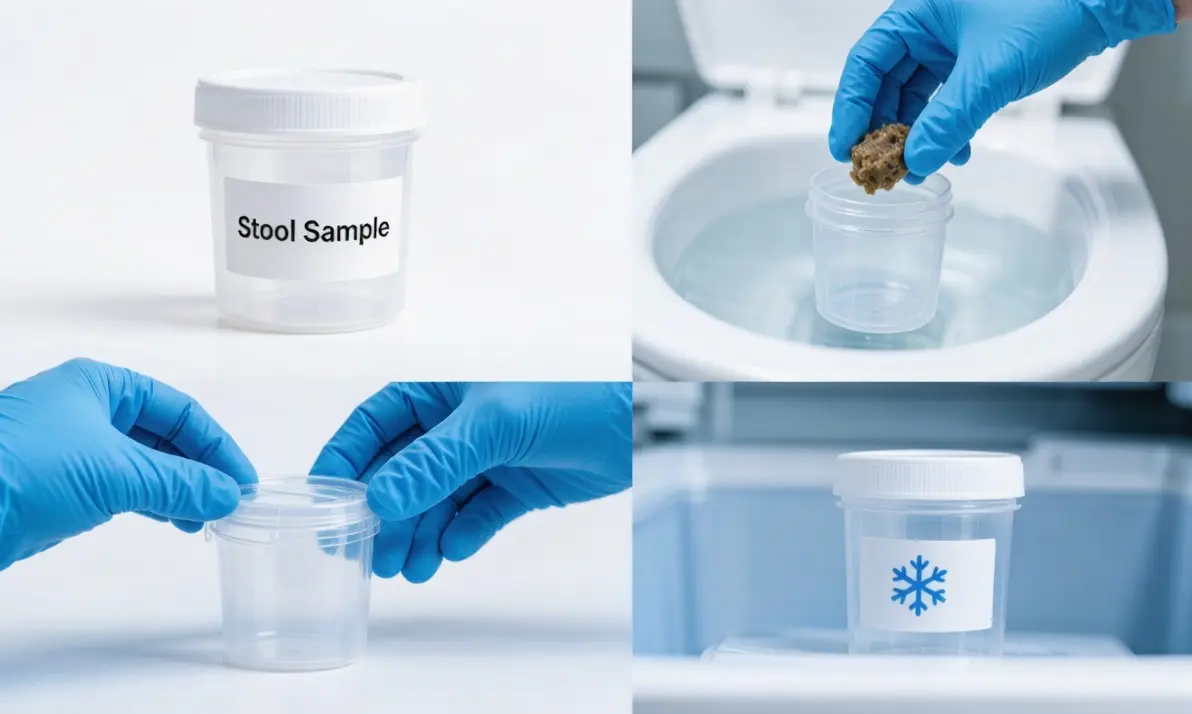
Step-by-Step Guide to Collecting a Stool Sample
Correct collection is easier when broken into simple steps.
Step 1: Wash Your Hands
Before beginning, wash your hands thoroughly with soap and warm water.
Step 2: Prepare the Collection Area
Place the provided collection tray, clean container, or plastic wrap securely over the toilet to catch the stool.
Avoid passing stool directly into toilet water.
Step 3: Pass the Stool Sample
Use the toilet as normal while ensuring the sample remains uncontaminated.
Step 4: Transfer the Sample
Using the scoop or spoon provided in the kit:
- Collect a small amount of stool
- Sample from different areas if instructed
- Place the stool into the sample container
Most tests require only a small quantity.
Step 5: Seal the Container
Close the lid tightly to prevent leakage.
Label the container if required, including:
- Name
- Date of birth
- Collection date and time
Step 6: Dispose of Waste Safely
Throw away disposable collection materials according to instructions.
Wash your hands carefully after handling the sample.
How to Store a Stool Sample Before Delivery
Some stool samples must be delivered immediately, while others can be refrigerated temporarily.
General storage recommendations include:
- Keep the sample sealed tightly
- Store in a cool place if instructed
- Avoid excessive heat
- Deliver to the laboratory within the recommended timeframe
Never freeze a stool sample unless specifically instructed by a healthcare provider.
Common Mistakes to Avoid
Many people accidentally compromise their sample quality. Avoid these common errors:
Mixing With Toilet Water
Water can dilute the sample and interfere with testing.
Using an Unclean Container
Always use the sterile collection equipment provided.
Waiting Too Long
Old samples may become unsuitable for testing.
Collecting Too Much
Most laboratories only require a small amount.
Forgetting Labels
Unlabeled samples may be rejected.
Types of Stool Tests
Different stool tests serve different medical purposes.
Fecal Occult Blood Test (FOBT)
This test detects hidden blood in stool that may indicate colorectal cancer or digestive bleeding.
Stool Culture
A stool culture identifies bacteria causing infections.
Ova and Parasite Test
This test checks for parasites and their eggs in the digestive tract.
Fecal Immunochemical Test (FIT)
FIT is commonly used for colon cancer screening and detects human blood proteins.
Calprotectin Test
Doctors use this test to evaluate intestinal inflammation associated with inflammatory bowel disease.
Stool Sample Collection for Babies and Children
Collecting samples from infants or young children may require extra care.
Tips include:
- Use plastic wrap inside the diaper
- Avoid mixing stool with diaper absorbent material
- Transfer the sample quickly into the collection container
Healthcare providers may provide pediatric-specific instructions.
When to Contact a Healthcare Professional
Seek medical advice if you experience symptoms such as:
- Severe dehydration
- Persistent blood in stool
- High fever
- Severe abdominal pain
- Continuous vomiting
These symptoms may require urgent evaluation beyond standard stool testing.
Tips for a Smooth Stool Collection Process
To make collection easier and more hygienic:
- Prepare supplies in advance
- Wear disposable gloves
- Use bathroom wipes for cleanup
- Keep children and pets away during handling
- Deliver the sample promptly
Being organized reduces stress and improves accuracy.
Frequently Asked Questions
How much stool is needed for testing?
Usually only a small spoon-sized sample is required.
Can I collect a stool sample at night?
Yes, but follow storage instructions carefully if immediate delivery is not possible.
What happens if the sample touches toilet water?
You may need to collect a new sample because contamination can affect results.
How long can a stool sample stay at room temperature?
It depends on the test type. Many samples should be delivered within a few hours.
Is stool testing painful?
No. Stool sample collection is non-invasive and painless.
Final Thoughts
Proper collection of stool is crucial for proper lab testing and prompt diagnosis. Although initially it might be uncomfortable, with right preparation and handling, it is easy and sanitary.
Infection diagnosis, digestive disease assessment and cancer screening are all examples of situations where the test might be ordered. If the test is ordered, it is important to follow the instructions for collection carefully to avoid the possibility of obtaining inaccurate results. If you have any questions about any of the instructions please ask your healthcare provider or laboratory before sending in your specimen.
Correct specimen collection of the stool helps to improve the quality of healthcare and enables physicians to be able to give the best treatment possible.