



how to read malaria test results
Malaria is one of the most important infectious diseases of the world that impacts millions of people every year. Correct diagnosis and treatment also provide vital information for the proper treatment of the disease as well as avoidance of its transmission and spread of a life threatening disease. Sometimes the results of malaria tests can be difficult to interpret because there are different ways to diagnose malaria. We will guide you through the most important malaria tests, the meaning of their results, and what they imply for patients and health care providers.
1. Types of Malaria Tests
There are 3 main categories of tests used to diagnose malaria: microscopy, rapid diagnostic tests (RDTs) and molecular tests like PCR. These methods have their strengths and weaknesses, and it is important to know them to correctly interpret the results.
a. Microscopy
Malaria diagnosis is traditionally done using microscopy. A blood smear is looked at with a microscope for the presence of Plasmodium parasites that cause malaria. There are two types of smears which are commonly used:
- Thick smears: Concentrate the blood to detect low levels of parasites.
- Thin smears: Allow species identification and quantification of parasitemia.
Interpreting microscopy results:
- Positive: Parasites are visible in the blood smear. The result should specify the species (e.g., Plasmodium falciparum, P. vivax) and parasite density.
- Negative: No parasites detected. Note that in early infections or low parasitemia, repeated testing may be necessary.
b. Rapid Diagnostic Tests (RDTs)
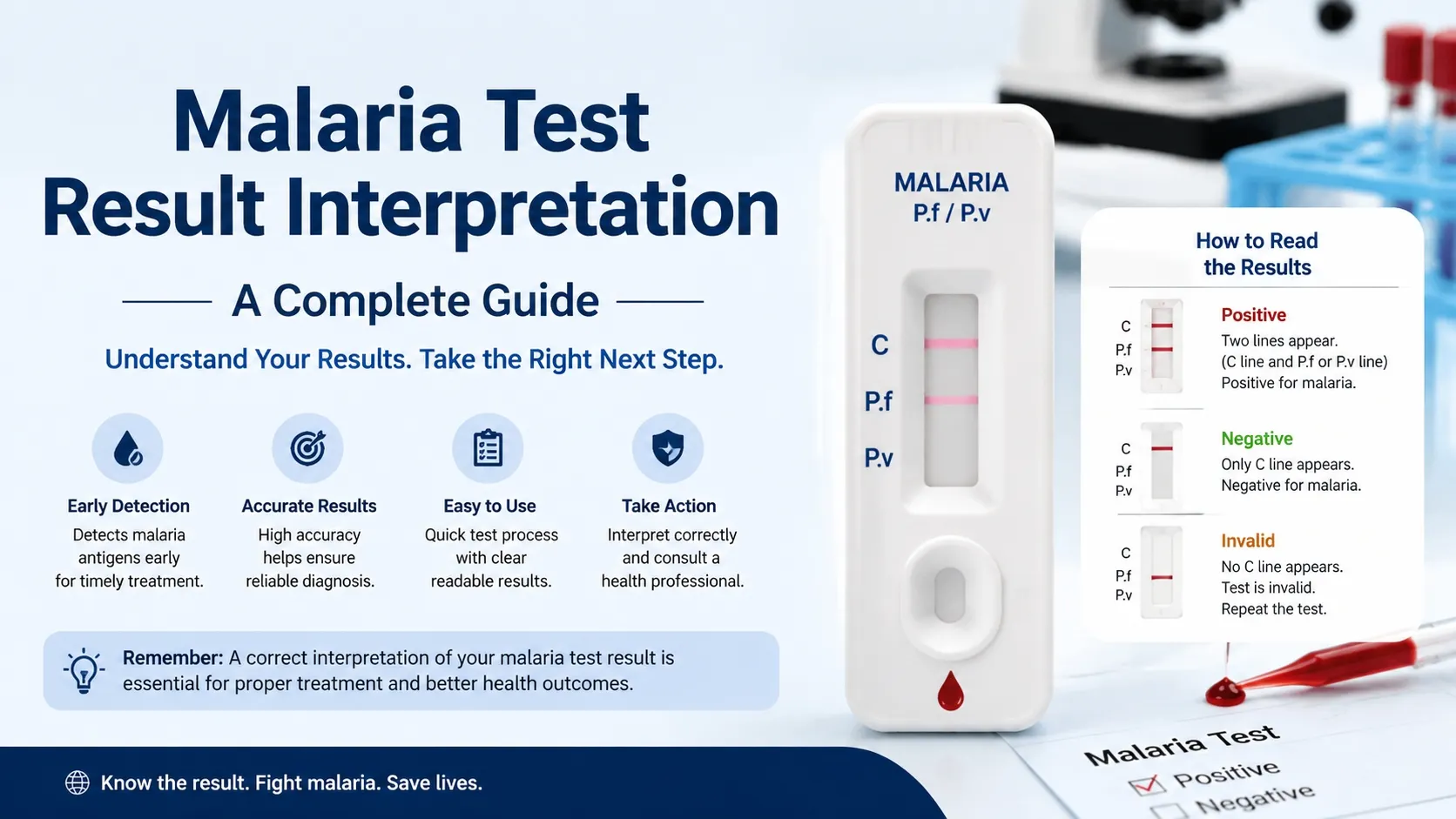
RDTs look for the presence of antigens — a substance that comes from the malaria parasite — in a small sample of blood (typically a finger prick). Their speed and ease of use makes them widely used in areas with a lack of laboratory facilities.
Interpreting RDT results:
- Positive: Indicates malaria infection. Some RDTs can differentiate between P. falciparum and other species.
- Negative: Suggests no detectable infection. However, false negatives may occur if parasite levels are very low.
c. Polymerase Chain Reaction (PCR)
PCR's can detect DNA from the malaria parasite with a high degree of sensitivity and specificity. The method is particularly useful for identifying low level infections or for confirmation of species if sample microscopy or RDT were not definitive.
Interpreting PCR results:
- Positive: Confirms the presence of malaria parasites.
- Negative: Strongly suggests no infection, though technical errors can occasionally affect results.
2. Key Components of Malaria Test Reports
Understanding the terminology used in malaria test reports can help patients and healthcare providers make informed decisions. Here are some key components commonly included:
- Parasite species: Identifies which Plasmodium species is causing the infection. P. falciparum is the most dangerous, whereas P. vivax and P. ovale can cause relapsing malaria.
- Parasite density: Expressed as a percentage or number of parasites per microliter of blood, this indicates the severity of infection. Higher densities are associated with severe malaria and complications.
- Test type and sensitivity: Indicates whether the test used is RDT, microscopy, or PCR, along with the detection limit.
3. Interpreting Different Results
a. Positive Test Results
A positive malaria test requires immediate attention. The next steps depend on:
- Species identification: P. falciparum infections require urgent treatment due to the risk of severe disease.
- Parasite density: High parasite loads may necessitate hospitalization and intravenous therapy.
- Patient factors: Age, pregnancy status, and coexisting health conditions influence treatment decisions.
b. Negative Test Results
A negative result does not always guarantee the absence of malaria. Factors to consider include:
- Early-stage infection: Parasite levels may be below detection limits.
- Test accuracy: RDTs and microscopy may have limitations in sensitivity.
- Repeat testing: Recommended if symptoms persist, usually 24–48 hours later.
4. Factors Affecting Test Accuracy
Several factors can influence the reliability of malaria test results:
- Sample quality: Poorly collected or stored blood samples can yield false results.
- Parasite density: Low parasitemia may escape detection, especially in RDTs.
- Test timing: Testing too early in the infection cycle can produce false negatives.
- Cross-reactivity: Certain RDTs may react to other infections, leading to false positives.
5. Importance of Local Context in Malaria Testing
optimized malaria diagnosis emphasizes adapting testing strategies to regional conditions. For instance:
- In sub-Saharan Africa, where P. falciparum predominates, RDTs targeting specific antigens may be preferred.
- In Southeast Asia, where multiple Plasmodium species coexist, microscopy and PCR are essential for accurate species identification.
Public health authorities often adjust testing protocols based on local malaria prevalence, seasonal trends, and available healthcare resources.
6. Post-Test Guidance
After receiving malaria test results:
- Positive result: Start treatment promptly according to local guidelines. Follow-up testing may be required to confirm parasite clearance.
- Negative result: Monitor symptoms and consider repeat testing if symptoms continue. Preventive measures such as insecticide-treated nets and prophylactic medications are crucial in endemic areas.
- Consult healthcare professionals: Proper interpretation and treatment decisions should always involve trained medical personnel.
7. Preventive Measures and Public Awareness
Understanding malaria test results is only one part of malaria management. Prevention remains critical:
- Use mosquito nets and repellents in high-risk areas.
- Prompt treatment reduces transmission and prevents complications.
- Community awareness programs help educate populations about early testing, accurate interpretation, and adherence to treatment.
Conclusion
Decoding malaria test results is an essential component in the battle against this ubiquitous disease. Informed choices in relation to timely and effective treatment can be made by both patients and health providers when they understand the various methods of testing, the components of a report and regional considerations. Malaria diagnosis, by microscopy, RDT or PCR, ensures the proper identification of the disease and contributes to the global fight against malaria, saving lives.
In areas where malaria is endemic, it is crucial to be aware of the meaning of tests and how to prevent it. Community awareness and accurate testing can make a substantial contribution to the control of malaria and to public health across the world.