



laboratory glassware names
Glassware is used in chemistry laboratories for various experimental purposes, liquids measurement, solution mixing and safe handling of chemicals. Each piece of laboratory glassware has a specific function. The importance of knowing the names and applications of chemistry glassware is vital to students, scientists, and lab technicians in the scientific world.
The modern laboratory glassware is usually constructed from borosilicate glass which is resistant to sudden shifts in temperature, corrosion by chemicals, and heat. These can include beakers, test tubes, pipettes, flasks, burettes, and graduated cylinders. Every tool has been utilized to increase the accuracy, efficiency and safety of experiments.
Why Chemistry Glassware Matters
Laboratory experiments require precision and consistency. Using the correct glassware helps scientists:
- Measure liquids accurately
- Prevent contamination
- Heat chemicals safely
- Store solutions properly
- Transfer substances efficiently
Various experiments require various tools. There are many types of glassware for mixing and others for measuring with accuracy or in high-temperature reactions. Appropriate choice of equipment increases reliability of the experiments and laboratory safety.
Beakers
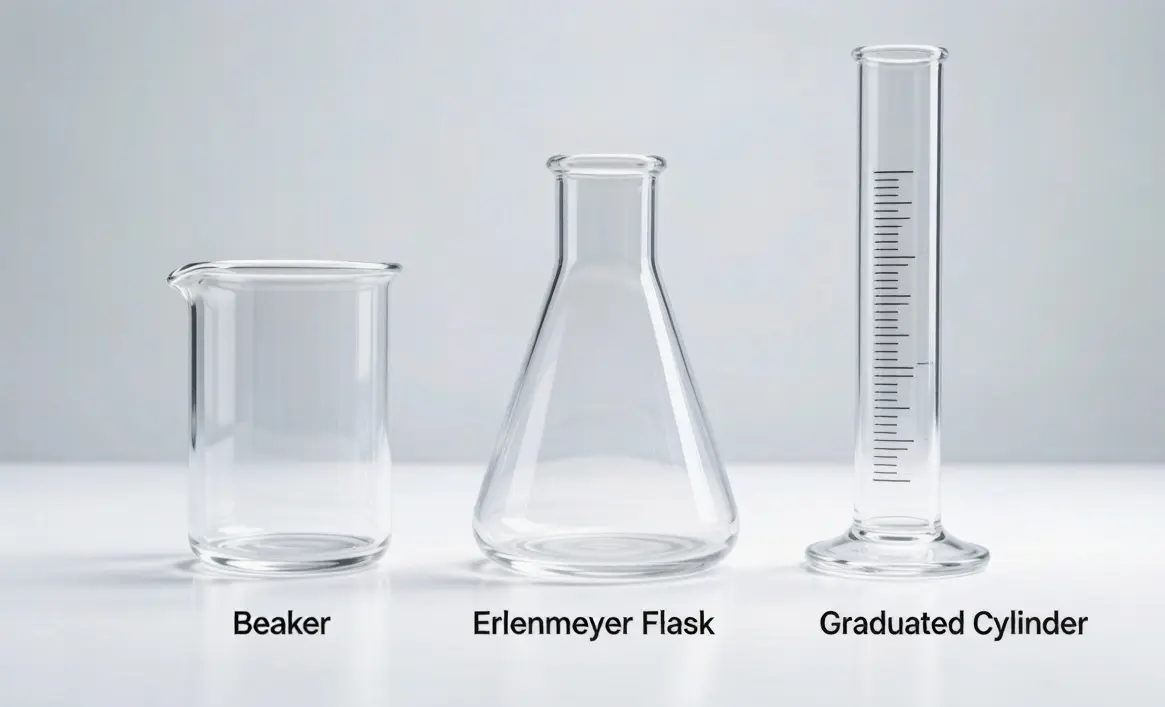
Beakers are some of the most utilized lab glassware. They have a flat base, they can be opened widely and have a pouring spout, which is ideal for mixing, stirring and heating liquids.
Main Uses of Beakers
- Mixing chemicals
- Heating solutions on hot plates
- Holding liquids temporarily
- Pouring substances into other containers
There are different sized beakers, from small (50mL) to large (multi-liter). Beakers can have volume markings on them but are not very accurate. They are used primarily for general laboratory use, not for measurements.
Erlenmeyer Flasks
The Erlenmeyer flask is easily identified because of its narrow neck and the conical shape of the flask. It can be used to swirl liquids in chemistry and biology labs without spilling.
Common Applications
- Mixing chemical solutions
- Conducting titrations
- Heating liquids
- Temporary chemical storage
The narrow neck also can be fitted with a stoppered flask to minimize evaporation and contamination. Erlenmeyer flasks are commonly found in analytical chemistry and microbiology laboratories.
Test Tubes
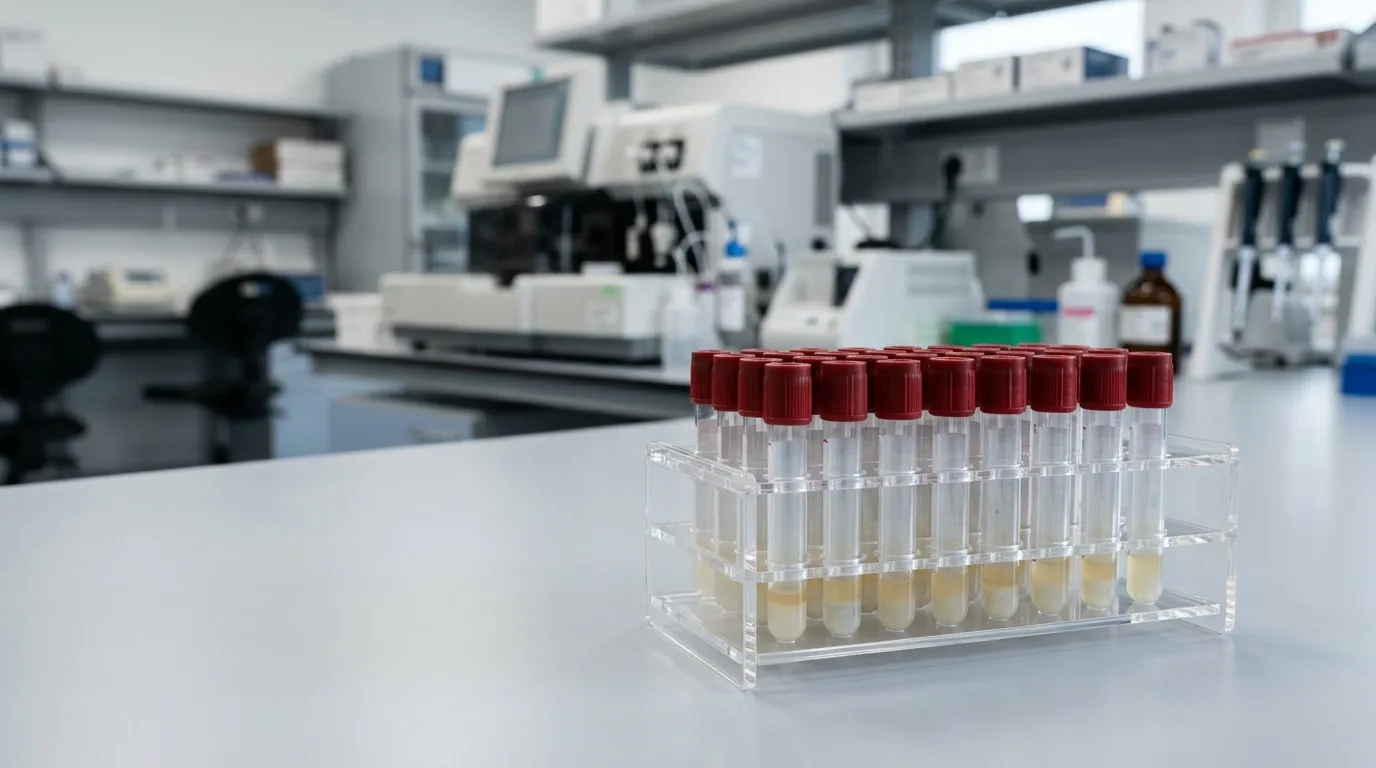
A small cylindrical glass container for storing, heating, or experimenting with small amounts of material. They are used in almost all science laboratories.
Uses of Test Tubes
- Heating small quantities of chemicals
- Observing reactions
- Collecting samples
- Conducting qualitative experiments
A large number of test tubes are manufactured from borosilicate glass to be able to stand direct heat from the flame. They are cheap, washable, and can be used repeatedly, so they are optimum for educational and research laboratory.
Pipettes
A pipette is a precision device used to deliver small amounts of liquid to a specified degree of accuracy. There are various types of pipette depending on the accuracy needed for the volume of liquid in the lab.
Types of Pipettes
- Transfer pipettes
- Graduated pipettes
- Volumetric pipettes
- Micropipettes
Common Uses
- Delivering measured liquid volumes
- Preparing chemical solutions
- Performing biological assays
- Transferring sensitive samples
Precision pipettes are essential in pharmaceutical, biological, and chemical research because even small measurement errors can affect experimental outcomes.
Florence Flasks
Florence flasks, also called boiling flasks, have a round body with a long neck. Their shape distributes heat evenly, making them excellent for heating liquids.
Main Functions
- Boiling liquids
- Conducting distillation experiments
- Uniform heating of solutions
These flasks are usually made from thick borosilicate glass that can withstand thermal stress. They are commonly used in organic chemistry and distillation setups.
Volumetric Flasks
Volumetric flasks are specialized laboratory containers used for preparing solutions with precise concentrations. They feature a narrow neck with a calibration mark indicating an exact volume.
Uses of Volumetric Flasks
- Preparing standard solutions
- Measuring exact liquid volumes
- Analytical chemistry procedures
Unlike beakers, volumetric flasks provide highly accurate measurements. However, they are not intended for heating because temperature changes can alter the flask’s calibrated volume.
Graduated Cylinders
Graduated cylinders are tall, narrow containers used for measuring liquid volumes more accurately than beakers or flasks.
Benefits of Graduated Cylinders
- Improved measurement precision
- Easy-to-read volume markings
- Stable base for laboratory use
They are available in both glass and plastic versions and commonly range from 10 mL to 1000 mL capacities. Graduated cylinders are widely used in chemistry education and industrial laboratories.
Burettes
Burettes are long graduated tubes equipped with a stopcock at the bottom. They are designed to dispense precise volumes of liquid during titration experiments.
Common Uses
- Acid-base titrations
- Quantitative chemical analysis
- Controlled liquid dispensing
Because burettes deliver liquid drop by drop, they provide exceptional accuracy for analytical chemistry procedures.
Petri Dishes
Petri dishes are shallow circular dishes commonly used in microbiology and life science laboratories.
Typical Applications
- Culturing bacteria
- Growing microorganisms
- Observing biological samples
Glass petri dishes can be sterilized and reused, while disposable plastic versions are commonly used in medical and research settings.
Glassware Materials and Durability
Most chemistry glassware is made from borosilicate glass, which offers several advantages:
- High thermal resistance
- Chemical durability
- Reduced risk of cracking
- Long service life
Popular borosilicate glass brands include Pyrex and Kimax. Some specialized laboratory equipment may also use Teflon or high-grade plastics for improved chemical resistance.
Tips for Proper Laboratory Glassware Use
To maintain accuracy and safety, laboratory glassware should always be handled carefully.
Best Practices
- Clean glassware thoroughly after use
- Avoid sudden temperature changes
- Inspect for cracks before heating
- Use the correct glassware for each experiment
- Store fragile items safely
Proper maintenance extends equipment lifespan and improves experimental reliability.
Choosing the Right Chemistry Glassware
Selecting appropriate laboratory glassware depends on several factors:
| Laboratory Need | Recommended Glassware |
|---|---|
| Mixing liquids | Beaker |
| Precise measurements | Volumetric flask |
| Heating chemicals | Florence flask |
| Titration experiments | Burette |
| Small sample testing | Test tube |
| Accurate liquid transfer | Pipette |
Understanding these differences helps laboratories operate more efficiently and safely.
Conclusion
In scientific research, education and industrial testing, chemistry glassware can serve a vital function. All laboratory apparatus has been specially constructed to perform certain functions like measuring, heating, storing, etc., for chemicals. Beakers, Erlenmeyer flasks, test tubes, pipettes, burettes and volumetric flasks are all used within the laboratory to ensure accurate and reliable work to be performed.
An understanding of the names and uses of chemistry glassware increases scientific knowledge and laboratory safety, whether you are a chemistry student, laboratory technician, or a researcher. High-quality borosilicate glassware also guarantees long-lasting performance, accuracy, and durability in professional laboratory settings.