


Updated 7 days ago
PCR Tube Supplier China for OEM and Research Supply
trustlabofficial

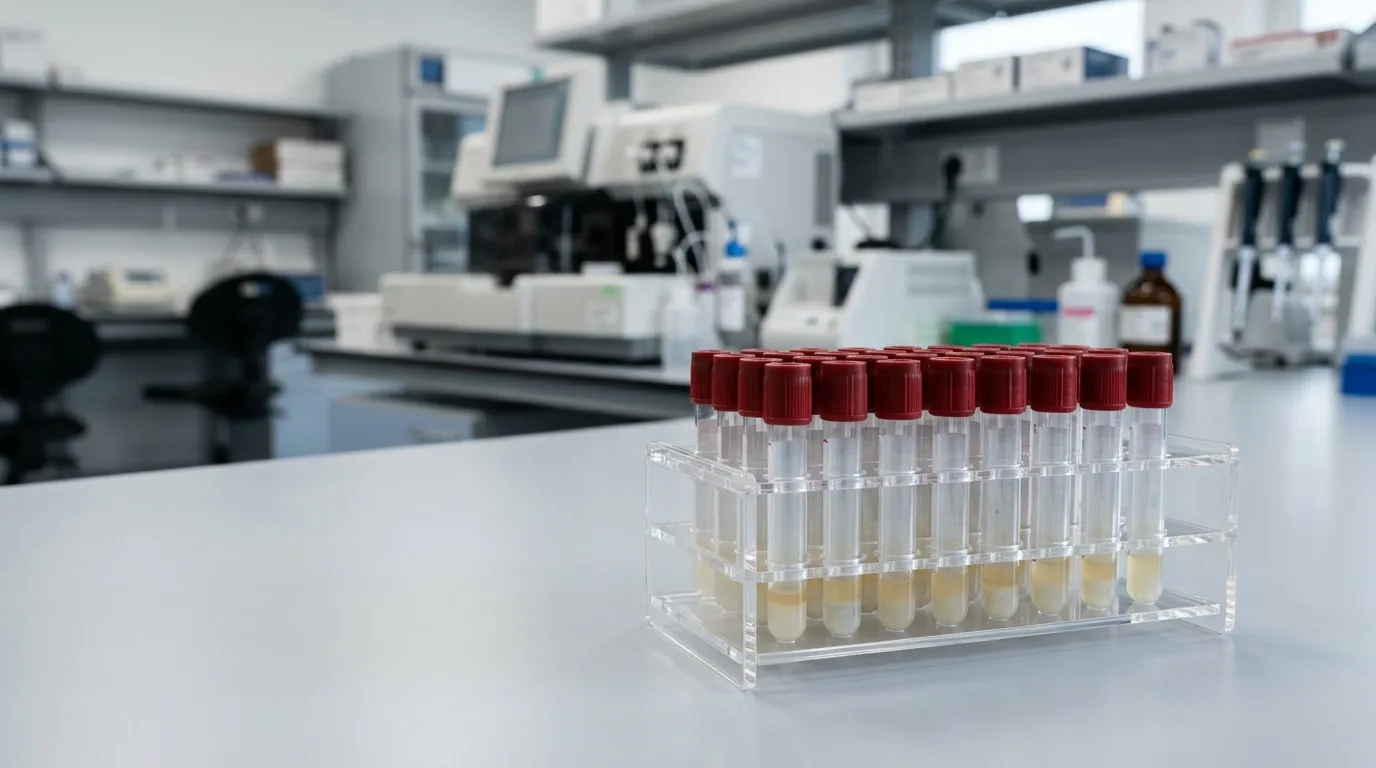
Clear PCR tubes in a lab rack with a gloved hand holding one tube
If you are evaluating pcr tubes manufacturer options for your laboratory, research project, or distribution business, supplier selection is a procurement decision that deserves scrutiny. Trustlab is a Ningbo, China-based supplier of laboratory consumables whose Life Science product range includes PCR plates and tubes, marketed through its PCR Plate & Tube product category. This page explains what Trustlab offers, what quality documentation a buyer should request from any PCR tube supplier in China, and how to initiate a direct inquiry.
Trustlab describes itself as a manufacturer and wholesaler of medical and laboratory supplies. Its product catalog spans several laboratory areas, and its Life Science category explicitly lists PCR consumables among its offerings. As with any China-based supplier, the practical next step is to verify that the specific product family meets your technical and documentation requirements before ordering.
What "China PCR Tube Supplier" Means — Sourcing from Trustlab
Trustlab operates as Ningbo Trustlab Instruments Co., Ltd., based in Ningbo, Zhejiang Province, China. The company presents itself as a B2B supplier of laboratory and medical consumables, serving an international customer base that includes research institutions, clinical laboratories, and distributors.
When buyers search for a "PCR tube supplier China," they are typically looking for a direct source of consumables at competitive volume pricing. The Chinese market includes several supplier types: manufacturers who produce goods in their own facilities, wholesalers who distribute products made by multiple factories, and trading companies that facilitate export orders. Trustlab's own website language describes the company as a "manufacturer and wholesaler," which indicates a direct supply role, though the exact production scope for every listed item is not detailed on the public pages reviewed.
For an international buyer, the practical questions are the same regardless of supplier type: Does the supplier's catalog match your required formats? Can they provide product documentation? What are their commercial terms? A supplier's self-description is a starting point, not the full verification.
Trustlab PCR Tube Product Range — What Is Available Today
Trustlab's website currently lists a PCR Plate & Tube category under its Life Science section. This category page is the primary destination for the full product range. Trustlab also markets colored PCR tubes as a distinct product listing.
These pages confirm that Trustlab's catalog includes PCR tube products, but the exact model codes, packaging quantities, and full specification tables are displayed on those product pages rather than repeated here. If you are evaluating whether Trustlab carries the format you need, the most efficient step is to review the product category directly.
Common decision points for PCR tube buyers include:
- Tube volume — 0.1 mL, 0.2 mL, and 0.5 mL tubes are the most common formats used with standard thermal cyclers.
- Format — individual tubes, tube strips, or tubes attached to plate frames.
- Cap style — flat caps are typical for PCR where minimal dead space matters; domed caps may be preferred for certain thermal cycler lid designs.
- Color options — colored tubes can help visually distinguish different reaction mixes or mastermixes.
For the exact formats, catalog numbers, and package sizes Trustlab currently supplies, see the PCR Plate & Tube product range or the dedicated colored PCR tubes product page.
Why PCR Tube Quality Is Non-Negotiable for Lab Buyers

PCR tubes are small, but their specifications matter disproportionately to experimental success. They must withstand the rapid heating and cooling cycles of PCR without warping, leaking, or releasing contaminants that inhibit the reaction.
The material is the first quality indicator. Most PCR tubes are molded from polypropylene (PP) , a polymer chosen for its thermal stability, chemical resistance, and low binding affinity for nucleic acids and proteins. Buyers should confirm that the tubes are made from virgin (unrecycled) polypropylene. Recycled material can introduce impurities or inconsistent physical properties.
Other specifications worth understanding before you contact a supplier:
- Wall-thickness uniformity. Heat transfers through the tube wall into the reaction. Inconsistent wall thickness can create temperature differences between wells or between tubes, contributing to well-to-well variation. Suppliers who control wall thickness produce more consistent results.
- Thermal tolerance. Tubes must survive repeated exposure to temperatures around 95°C during denaturation without melting, deforming, or becoming brittle. All polypropylene PCR tubes are expected to tolerate standard cycling, but cheap production can fail under real cycling stress.
- Evaporation control. A secure seal between tube and cap prevents sample evaporation during cycling, which would otherwise concentrate the reaction and alter results.
- Contamination control. PCR is highly sensitive to enzymes that degrade nucleic acids or to inhibitors that block polymerase activity. This is why buyers look for tubes free from DNase, RNase, and pyrogens.
- Optical properties for qPCR. Real-time PCR (qPCR) measures fluorescence through the tube or plate. Tubes used in qPCR must have consistent optical properties so that fluorescence readings are comparable between samples.
These factors are why reputable suppliers provide a Certificate of Analysis and batch-specific quality data rather than relying only on broad marketing phrases like "high quality" or "reliable."
Trustlab as a Potential OEM Partner — What to Clarify
Buyers who distribute PCR consumables under their own brand, or who require custom packaging, often look for an OEM (original equipment manufacturer) relationship rather than a simple catalog purchase. The SERP for "pcr tube supplier china" includes several suppliers who prominently advertise OEM and private-label services.
Trustlab's visible catalog, which includes colored PCR tubes, indicates some level of product variation, but the publicly reviewed pages do not specify the full range of OEM customization Trustlab can offer. If you are evaluating Trustlab as a potential OEM partner, the questions below are the ones to ask directly:
- Can Trustlab customize packaging, labeling, or barcoding for private-label distribution?
- What is the minimum order quantity for customized products?
- Can Trustlab provide reference samples of custom work before a production order?
- What product documentation accompanies each batch — a Certificate of Analysis, material certificates, or sterilization validation reports?
- What are the lead times for standard catalog items versus custom production?
These are standard qualification questions for any Chinese PCR tube supplier. The answers will tell you whether Trustlab's capabilities match your commercial model.
Quality and Documentation — What a Supplier Must Prove
The most important distinction in supplier evaluation is between a company-level quality certificate and product-level evidence.
ISO 9001 and ISO 13485 are quality-management-system (QMS) certificates. They confirm that an organization has a documented and audited quality-management process. ISO 13485 is specifically for medical devices. These certificates are meaningful — they indicate a supplier operates with structured quality procedures — but they do not by themselves prove that a specific PCR tube is sterile, or free from DNase and RNase, or CE-marked, or appropriate for a diagnostic application.
The table below summarizes the difference:
| Certificate or Document | Level | What It Tells You | What It Does Not Prove |
|---|---|---|---|
| ISO 9001 | Organization | The company has a certified quality-management system | Any specific product's purity, sterility, or performance |
| ISO 13485 | Organization | The company's QMS meets medical-device industry requirements | That every product is a certified medical device |
| CE marking | Product | The specific product meets EU regulatory requirements for its intended use | That other products in the catalog are also CE-marked |
| Certificate of Analysis (CoA) | Batch/lot | The specific batch was tested and met defined specifications | That future batches will be identical without their own CoA |
| Sterilization validation | Product/process | The sterilization method was validated for the product | That non-sterile products are sterile |
When a supplier tells you their tubes are "DNase-free" or "RNase-free," ask to see the Certificate of Analysis for the batch you are ordering. A CoA is the document that records the actual test results. It should state what was tested, the test method used, and the result.
Buyers evaluating Trustlab should follow the same process. The company's category pages may describe product features, but the definitive evidence for any specific lot is the CoA. Trustlab's contact channels are available for requesting this documentation.
What "Free from DNase, RNase, and Pyrogens" Means — and How It Is Proven
These phrases appear frequently in PCR consumable marketing. They are not interchangeable, and each requires its own verification.
- DNase is an enzyme that degrades DNA. If residual DNase is present in a tube, it can digest the template DNA in your reaction.
- RNase degrades RNA. RNase contamination is especially problematic for RT-PCR workflows where RNA is the starting material. RNases are stable and difficult to inactivate, which is why certified RNase-free consumables are important.
- Pyrogens are substances that cause fever when introduced into the body. In the context of PCR consumables, endotoxins (a type of pyrogen from bacterial cell walls) are measured for applications in cell culture or certain diagnostic workflows.
A supplier's claim that tubes are "free from" these contaminants is only meaningful when supported by a CoA that documents the test method and the measured result. Buyers should request this document before committing to a large order.
A Practical Checklist for Evaluating Chinese PCR Tube Suppliers

Before you place an order with any PCR tube supplier in China, work through this checklist. It will help you separate documented capability from marketing language.
- Confirm the supplier's identity and location. Obtain the legal company name, physical address, and direct contact channel. Verify the website matches the company identity.
- Review the actual catalog. Does the supplier list the specific product type — individual tubes, strips, plates — in the volumes and formats you need?
- Request the product datasheet. A datasheet should state material, dimensions, volume, temperature tolerance, and packaging. If the datasheet omits basic specifications, treat that as a warning sign.
- Ask for a Certificate of Analysis. Request the CoA for the specific batch you will receive, not just for a batch they happen to have tested. The CoA should list test methods and results for bioburden, DNase/RNase, or other relevant parameters.
- Ask about material. Confirm the tubes are molded from virgin polypropylene.
- Clarify sterility. If you need sterile tubes, ask what sterilization method is used (for example, ethylene oxide or gamma irradiation). Ask for sterilization validation documentation.
- Request samples for in-lab evaluation. Test the tubes in your actual thermal cycler with your real assay before committing to a production order. Check for evaporation, sealing consistency, and well-to-well variation.
- Confirm commercial terms. Ask for MOQ, lead time, packaging units, and Incoterms. These are not standardized across suppliers.
- Check for regulatory documentation. If your application requires CE-marked or FDA-compliant products, ask for the specific product certificate or registration. Do not accept a general company QMS certificate as proof.
- Verify communication quality. A supplier who responds clearly, provides documents promptly, and answers technical questions directly is more likely to be reliable than one who relies only on sales reassurance.
Procurement with Trustlab — Inquiry, Samples, and Next Steps
If Trustlab's PCR tube range looks suitable for your application, the next step is a direct inquiry. Here is the recommended process:
- Identify the product. Note the product family (PCR Plate & Tube or colored PCR tubes) and the format you need, such as 0.2 mL tubes with flat caps.
- Prepare your requirements. Include your estimated annual quantity, packaging preference, and any custom requirements such as private labeling.
- Contact Trustlab. Use the phone number or email address published on the Trustlab website. The contact details visible on the PCR Plate & Tube category page are +0086-574-87913860 and info@china-trustlab.com.
- Request documentation. Ask for the product datasheet, current pricing, MOQ, lead time, and a Certificate of Analysis for the batch if you place an order.
- Request samples. Before committing to a production quantity, ask whether samples are available. Test the tubes in your own laboratory.
A direct inquiry should always include enough information for Trustlab to respond with a meaningful quotation. The more specific you are about your format needs and volume, the more precise their response will be.
Frequently Asked Questions
Are Trustlab PCR tubes sterile?
Trustlab's website includes a category for sterile laboratory consumables, but the publicly reviewed PCR product listings did not specify a sterilization method or a sterile claim for specific PCR tubes. If sterility is a requirement for your application, contact Trustlab directly and request product-specific sterilization documentation.
Does Trustlab provide samples before ordering?
Trustlab's published pages do not detail a sample policy. The standard practice among Chinese PCR tube suppliers is to provide samples for evaluation. Ask Trustlab directly about sample availability for the specific product you need.
What is Trustlab's MOQ?
Trustlab does not publish MOQ information on the PCR product pages reviewed. MOQ varies by product type and packaging configuration. Contact Trustlab with your estimated volume to receive their current MOQ.
What documents should I ask Trustlab for?
Request the product datasheet, a Certificate of Analysis for the batch you will receive, material confirmation (virgin polypropylene), and, if you need sterile products, sterilization validation documentation. For any regulatory requirement, ask for the specific product certificate rather than accepting a general company statement.
What is the difference between "sterile" and "DNase/RNase-free"?
Sterile means the product has been treated to eliminate viable microorganisms. DNase/RNase-free means the product has been tested and found free from detectable levels of these specific enzymes. A product can be one without being the other. Both claims require their own evidence: sterilization validation for sterility, and a CoA for contamination-free status.
Sourcing PCR tubes from China can be a cost-effective procurement decision when the supplier passes a documentation review. Trustlab is a Ningbo-based supplier whose Life Science catalog includes PCR tubes, and its direct contact channel is open for inquiries about product specifications, documentation, and commercial terms. To evaluate Trustlab for your PCR consumables supply, contact the company with your product format, volume requirements, and any documentation needs you have identified from this page.