


Updated 4 months ago
Typhoid Diagnostics: Why Faster and More Accurate Testing Matters

Admin
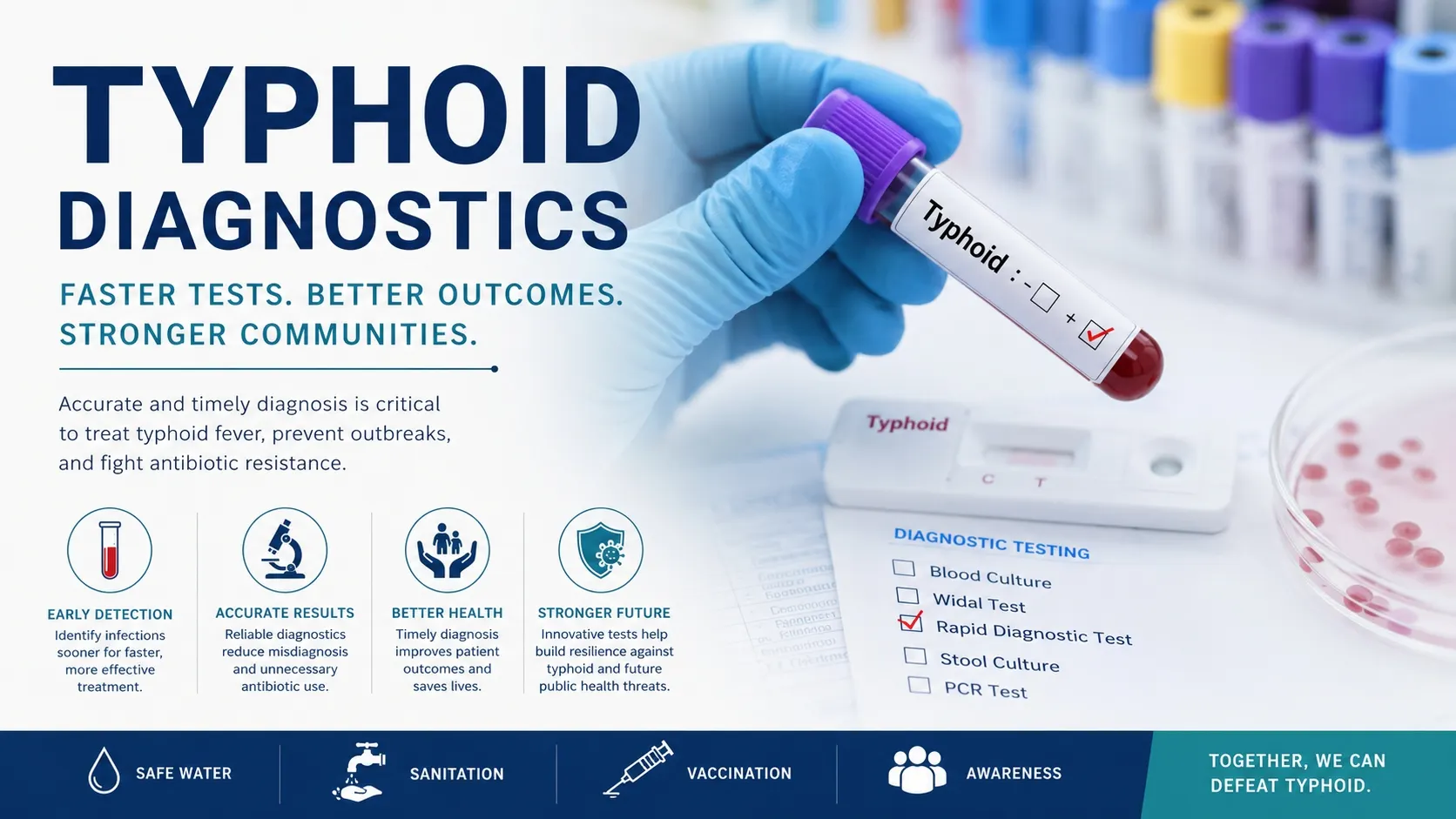
Typhoid Diagnostics: Why Faster and More Accurate Testing Matters
Typhoid fever continues to be one of the world's most severe waterborne infectious diseases, particularly in LMICs with few resources to provide clean water and health facilities. Typhoid fever is caused by Salmonella enterica serovar Typhi, which is transmitted via contaminated food and water, and still poses a risk to millions of people annually. The World Health Organization estimates that there are millions of cases of typhoid that occur worldwide, and that it is responsible for a significant number of deaths—especially in children and vulnerable people.
Diagnosis is one of the most difficult factors to control typhoid fever. The timely and precise diagnosis of typhoid is crucial for the treatment, prevention of outbreaks and antibiotic stewardship. Nevertheless, there are still significant limitations in the current tests, particularly in resource-limited areas with the highest disease burden.
Why Accurate Typhoid Diagnosis Is So Important
Symptoms of typhoid may show similarities with those of other febrile diseases like malaria, dengue, influenza or pneumonia. Patients commonly experience:
- Persistent fever
- Headache
- Fatigue
- Abdominal pain
- Diarrhea or constipation
- Loss of appetite
Typhoid infection often leads to a misdiagnosis since these symptoms are common to many infections. This can make it harder to get the proper treatment and lead to bad outcomes.
Accurate diagnostics are essential for a number of reasons:
- Ensuring patients receive the correct antibiotics
- Reducing unnecessary antibiotic use
- Preventing drug-resistant typhoid strains
- Supporting disease surveillance programs
- Helping governments understand the true burden of disease
Diagnostic tools are lacking and providers may only use clinical symptoms, resulting in the over- and underdiagnosis of the condition.
Current Typhoid Diagnostic Methods
Blood Culture: The Gold Standard
The World Health Organization considers blood culture to be the best method for confirming typhoid fever. This technique is used to isolate Salmonella Typhi bacteria from blood of a patient.
Although blood culture is the most definitive test available today, it has a number of limitations:
- Requires laboratory equipment and trained personnel
- Can be expensive for low-resource healthcare systems
- Takes several days to produce results
- Detects only 40–60% of cases in many situations
- Accuracy decreases if patients already took antibiotics
Blood culture laboratories are only available in large urban hospitals, so rural laboratories are unable to perform blood cultures in many endemic areas.
Widal Test
One of the oldest typhoid diagnostic tests, Widal test is still used in some health care facilities due to its simplicity and low cost. But this test isn't accurate enough or specific enough to rely on, experts say, as it can cross-react with other infections.
Many false-positive and false-negative results are reported, which diminishes confidence in clinical decision making.
Stool and Urine Cultures
In some instances, a urine and stool culture are also ordered. These tests have lesser sensitivity in the diagnosis of acute typhoid fever and are more simple and less expensive than blood culture.
The Growing Need for Rapid Diagnostic Tests
Healthcare providers in high-burden environments require fast, cost-effective and accurate testing options. Current approaches are too slow and/or resource consuming to be broadly applicable.
Rapid diagnostic tests (RDTs) have the potential to change the way typhoid is managed by allowing for earlier diagnosis and treatment. Rapid diagnosis would also minimize inappropriate antibiotic use, contributing to the global emergence of multidrug resistant and extensively drug resistant typhoid strains.
Several newer diagnostic technologies are currently being evaluated, including:
- Typhidot
- TUBEX®
- Test-It Typhoid
Experts say the serological rapid tests also have promising early results, but more large-scale studies are required to confirm their performance in the real world of the community.
Emerging Technologies in Typhoid Diagnostics
Typhoid detection is now on the horizon of new possibilities due to scientific advances. Scientists are seeking to develop more sophisticated methods of diagnostics, including:
Transcriptomics
Transcriptomics is used to look at the expression of the genes during infection. It could provide a way to detect particular biological markers in typhoid fever, scientists believe.
Metabolomics
Metabolomics is the study of small molecules generated in disease processes. These biomarkers could enable quicker and more accurate diagnosis of typhoid in the future.
While encouraging, research and investment efforts are required before such techniques can be used on a regular basis in the clinic.
Challenges in Low-Resource Settings
Typhoid disproportionately affects communities with limited access to:
- Clean drinking water
- Proper sanitation
- Laboratory infrastructure
- Trained healthcare workers
In many endemic regions, healthcare providers must diagnose patients based on symptoms alone because laboratory confirmation is unavailable. This creates several public health challenges:
- Inaccurate disease reporting
- Delayed treatment
- Increased healthcare costs
- Higher risk of outbreaks
- Greater antibiotic misuse
The problem becomes even more severe during humanitarian crises, flooding, or displacement events where sanitation systems break down.
Antibiotic Resistance and Diagnostic Accuracy
Increasingly, the need to enhance typhoid diagnostics hinges on the worldwide escalation of antimicrobial resistance.
There is global spread of multidrug-resistant typhoid and of extensively drug-resistant (XDR) typhoid in countries like Pakistan.
In the absence of good diagnostics, antibiotics might be unnecessarily or incorrectly prescribed. This promotes resistance and reduces the number of treatment options in the future.
Improved diagnostics can assist the clinician in:
- Select appropriate antibiotics
- Avoid overtreatment
- Reduce resistance development
- Improve patient outcomes
Integrated Solutions for Typhoid Control
Experts all agree that diagnostics are not enough to eradicate typhoid. A comprehensive public health strategy is needed.
People such as Coalition Against Typhoid believe that integrated typhoid prevention strategies that integrate:
- Improved diagnostics
- Typhoid conjugate vaccines (TCVs)
- Safe water access
- Sanitation improvements
- Hygiene education
- Responsible antibiotic use
Vaccination and water sanitation are still some of the best weapons against the spread of disease.
The Future of Typhoid Diagnostics
The future of typhoid diagnosis depends on developing tests that are:
- Rapid
- Affordable
- Highly accurate
- Easy to use
- Scalable in low-resource settings
It might be a possibility to boost the detection of outbreaks and patient care in endemic areas by using point-of-care testing technologies. The potential for enhanced diagnostic innovation globally will also bolster disease surveillance and public health response.
While diagnostic science continues to develop, healthcare systems can already help limit the impact of typhoid by increasing awareness, improving sanitation and vaccinating.
Typhoid is still a preventable disease. The global health community is closer to controlling, and ultimately eliminating, this dangerous infection, with better diagnostics, more options to access care, and integrated prevention strategies.