



what is life science
Many technological and medical advancements are driving the world today and are rooted in the life sciences. Life sciences are a wide field of study that includes the investigation of living things and how they interact with their surroundings, with applications in developing new therapies, advances in agriculture, and much more. It is a field that is essential for improving human health, for maintaining ecosystems, and for innovation in biotechnology, pharmaceuticals and healthcare.
What Are Life Sciences?
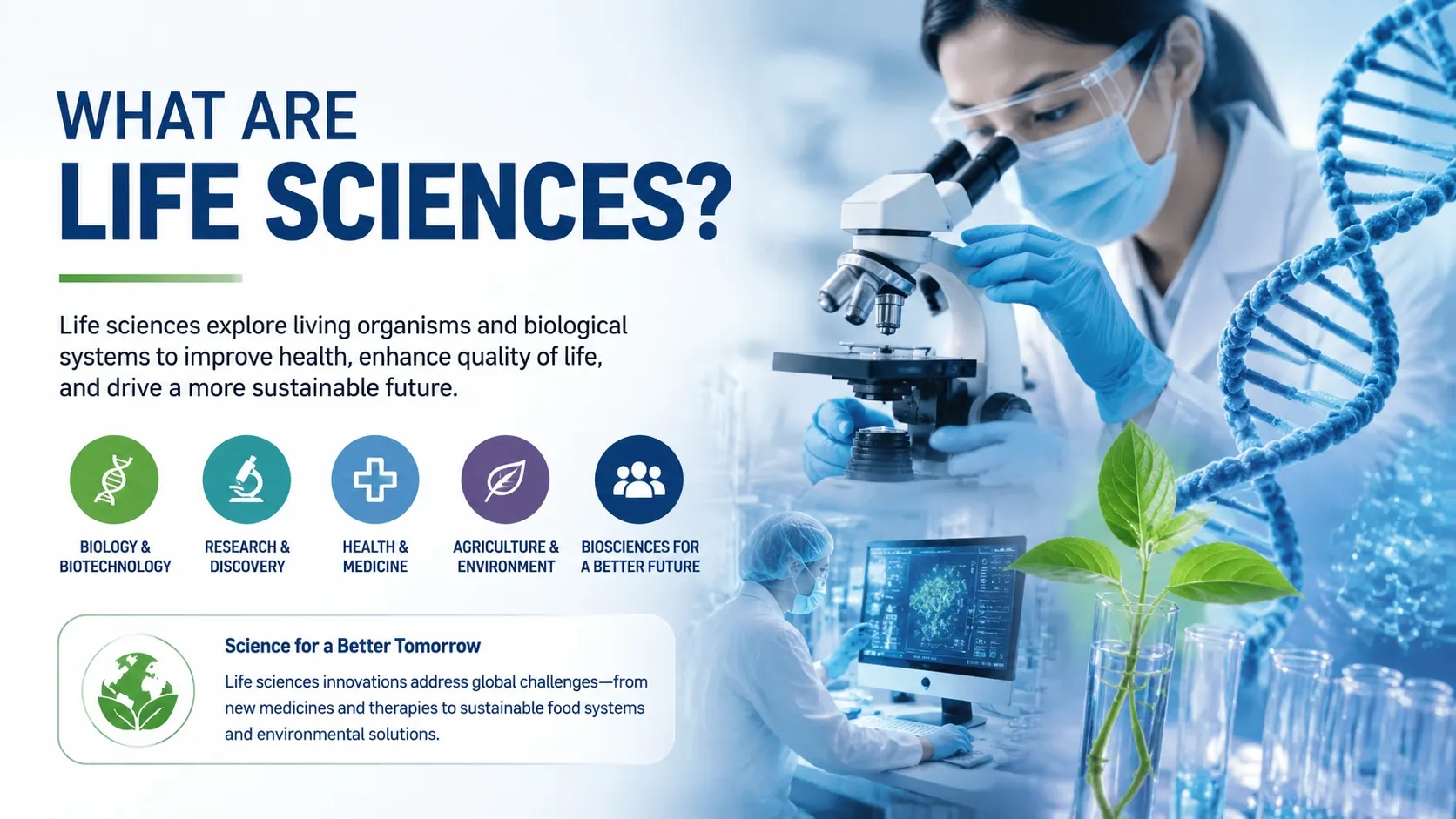
The life sciences (also called biological sciences) are about living organisms and life. This encompasses the smallest forms of life such as bacteria, and the largest, such as humans, plants and animals. Life scientists study the living organisms and how they grow, adapt, interact with one another and their environment.
Important areas of life sciences are:
- Biology: The study of living organisms, including their structure, function, and evolution.
- Genetics: Exploring how traits and characteristics are inherited and expressed.
- Biotechnology: Using biological systems and organisms to develop products and technologies.
- Biomedical Science: Investigating the biological foundations of health and disease.
- Agricultural Science: Improving crop yields, pest resistance, and sustainable farming practices.
Life scientists can use the study of these areas to find new medical treatments, improve food security and environmentally friendly technology.
The Importance of Life Sciences in Healthcare
Life science has one of the most apparent effects is in the healthcare industry. Researchers and medical professionals can use their knowledge of the biology of diseases and the human body to:
- Develop innovative therapies and medicines, including personalized medicine tailored to a patient’s genetic profile.
- Advance diagnostic tools that detect illnesses earlier and more accurately.
- Create vaccines that prevent the spread of infectious diseases.
- Improve public health strategies to manage outbreaks and pandemics.
Life sciences have made significant strides in recent years, thanks to the latest developments in genetics and molecular biology, including gene therapy, genome editing with the aid of CRISPER, and regenerative medicine. The use of these innovations is changing the face of patient care and bringing hope for conditions that once seemed impossible to treat.
Life Sciences and Biotechnology: Driving Innovation
Biotechnology is an important field of life sciences which utilizes biology for useful applications. That includes the development of medicines, biofuels and food. Biotechnological innovations have revolutionized industries by:
- Enhancing crop productivity through genetically modified organisms (GMOs) and sustainable farming solutions.
- Producing bio-based chemicals as alternatives to petroleum-derived products.
- Developing novel therapeutics using advanced cell and gene therapies.
- Creating diagnostic tools that speed up disease detection and monitoring.
Life Sciences research is fueling the creation of state-of-the-art solutions that can reach everyday life, from companies to research institutions in the biotech hubs all over the world. Laboratory automation and High Throughput Screening (HTS) are examples of technological progress that increase the speed of drug discovery to market.
The Role of Life Sciences in Environmental Sustainability
The life sciences also play a vital role in the conservation and sustainable development of the environment. Life scientists understand the effects of climate change, species interactions, and ecosystems by:
- Develop strategies for biodiversity conservation.
- Improve water and soil management for sustainable agriculture.
- Create bio-based solutions to reduce waste and environmental pollution.
- Study the impact of climate change on species and ecosystems.
The microorganisms, for instance, can be used to break down plastics, and biofertilizers can decrease the amount of chemicals used in farming. These are the solutions that are needed to ensure ecological balance and to solve global environmental problems.
Career Opportunities in Life Sciences
There are many career paths to choose from within the life sciences industry, spanning diverse industries such as healthcare, pharmaceuticals, agriculture, and the environment, among others. Key roles include:
- Research Scientist: Conducts experiments to understand biological processes.
- Biomedical Engineer: Designs medical devices and technologies.
- Clinical Laboratory Technician: Performs tests to diagnose diseases.
- Biotechnologist: Develops bio-based products and industrial applications.
- Environmental Scientist: Studies ecosystems and develops sustainability solutions.
Furthermore, there are opportunities in the life sciences to support entrepreneurship, with many startups working in biotech innovations, personalized medicine and environmental technologies. The field offers a combination of scientific research, technology, and business opportunities that are unique.
Global Impact of Life Sciences
Life sciences have global influence, impacting healthcare, agriculture and industry. Economies, public health and technology benefit the countries that invest in life sciences research and infrastructure. Boston, San Diego, and Cambridge, among others, are reputed to be life sciences hubs that encourage innovation with research institutions, universities, and biotech firms.
Moreover, life sciences make it easier to collaborate internationally. Researchers from all over the world come together, discuss issues of global food security and combat epidemics. International collaborations play a pivotal role in advancing the pace of discoveries and solutions that span the border.
Future Trends in Life Sciences
The future of life sciences promises exciting developments that could redefine human health and the environment. Key trends include:
- Precision Medicine: Tailoring treatments based on genetic and molecular profiling.
- Synthetic Biology: Designing new organisms to produce drugs, biofuels, and sustainable materials.
- Artificial Intelligence in Life Sciences: Using AI and machine learning for drug discovery, diagnostics, and personalized healthcare.
- Regenerative Medicine: Advancing tissue engineering and organ regeneration to treat chronic conditions.
- Sustainable Biotechnology: Creating environmentally friendly technologies that reduce resource consumption and waste.
These trends demonstrate the transformative potential of life sciences in addressing some of the most pressing challenges of the 21st century.
Conclusion
Life Sciences is not just a subject, it is a catalyst for health care innovation, environmental sustainability and economic growth. Through the study of the complex mechanisms of living things and the exploitation of their knowledge in biotechnology, medicine and agriculture, life scientists are developing a better, more sustainable, and technologically advanced world.
Investment in life sciences education, research and infrastructure is essential to future progress that leads to a better quality of life. From new treatments in medicine to sustainable agriculture and protecting ecosystems, the life sciences continue to be at the heart of progress and innovation for humanity.