


Updated 5 months ago
What are the different types of Blood Collection Needles?

Admin
What are the different types of Blood Collection Needles?
Blood collection is an important practice in the modern healthcare being used in diagnostics, monitoring, and research. The correct selection of blood collection needle is crucial to patient comfort, sample integrity, and efficiency of the procedure. We will discuss the various kinds of blood collection needles, their characteristics, applications and how to choose the appropriate needle to use in particular medical environments in this guide.
Knowing Blood Collection Needles.
Blood collection needles are medical instruments that are used to collect blood of patients safely and efficiently. They are commonly employed in hospitals, clinics, labs, and blood-donation centers. These needles are made precise to reduce pain and accurately collect the sample.
They are frequently combined with other equipment like vacutainer holders, syringes, or butterfly sets, depending on the nature of the procedure and condition of the patient.
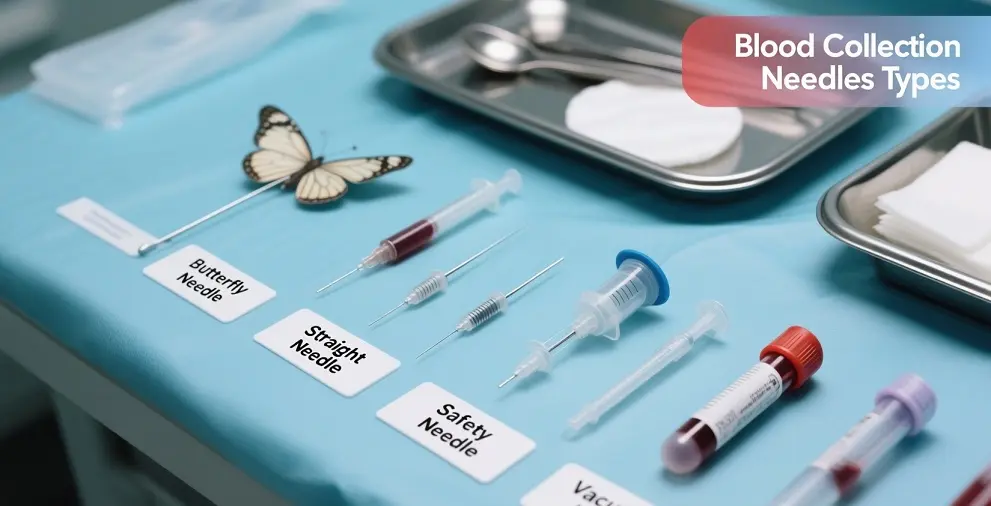
Main Types of Blood Collection Needles
1. Multi-Sample Needles (Multi-Sample Straight Needles)
Multi-sample needles (also called straight needles) are most frequently used in collecting blood routinely.
Features:
· Double-ended design
· One end pierces the vein, the other ends to collection tubes.
· Usually applied with vacuum tubes systems.
Advantages:
· Effective when it comes to collecting a variety of samples.
· Lessens the necessity of frequent punctures.
· Widely available and cost-effective
Best Use Cases:
· Routine blood tests
· Hospitals and laboratories.
· Patients whose veins are seen well.
2. Butterfly Needles (Winged Infusion Sets)
Winged infusion sets or Butterfly needles are more controlled and precise.
Features:
· Small needle with flexible “wings” on both sides
· Added tubing to enhance manoeuvrability.
· The size of the gauge is generally smaller.
Advantages:
· Ideal for difficult veins
· Gives a superior control to the insertion.
· Minimizes patient discomfort
Best Use Cases:
· Pediatric patients
· Elderly patients
· Patients who have weak or difficult-to-locate veins.
3. Hypodermic Needles
Hypodermic needles are flexible needles that are usually utilized with syringes as opposed to vacuum systems.
Features:
· Single-ended needle
· Manually drawn blood using a syringe.
· Available in various sizes and gauges
Advantages:
· Increased control of suction pressure.
· Applicable in situations where the veins can collapse due to pressure under vacuum.
· Flexible for different medical procedures
Best Use Cases:
· Patients with weak veins.
· Cases of need to withdraw blood under control.
· Special or emergency procedures.
4. Safety Needles
Safety needles are created to minimize the risk of needlestick injuries and enhance the safety of the healthcare workers.
Features:
· In-built safety features (shield, retractable needle or cover)
· Automatically or manually activated safety features
· Adheres to safety guidelines.
Advantages:
· Minimizes chances of infection and contamination.
· Protects healthcare professionals
· More and more demanded by the regulations on the global level.
Best Use Cases:
· Safety-compliant hospitals and clinics.
· Blood collection volumes.
· Environment that has high occupational safety standards.
6. Evacuated Tube System Needles.
Such needles are specially made to be used in vacuum blood collection.
Features:
· Double-ended needle
· Can be used with vacutainer holders and tubes.
· Permits direct flow of blood in pre-evacuated tubes.
Advantages:
· Fast and efficient sample collection
· Minimizes handling and contamination
· Laboratory testable.
Best Use Cases:
· Diagnostic laboratories
· Routine blood testing
· High-throughput clinical settings
Needle gauge and Size considerations.
The collection needles used to collect blood are of various gauges (levels of thickness) which greatly affect the work and comfort of the patient.
· Greater gauge number (e.g., 23G 25G): thinner needles, less painful, slower blood flow.
· Less gauge (e.g. 18G21G): the needles are thicker, the blood moves faster and can be more uncomfortable.
Common Choices:
· 21G: For most adult blood draws standard.
· 23G: Suited to smaller or weak veins.
· 25G: Pediatric or sensitive cases.
Choosing the right gauge is important in ensuring that the comfort and efficiency is balanced.
Design Features and Materials.
The contemporary blood collection needles are made with improved materials and functionalities that can improve performance:
· Stainless steel needles: are strong and sharp.
· Silicone coating: less friction and pain during insertion.
· Hubs color-coded: signal needle gauge to determine easily.
· Latex-free ingredients: decrease allergy:
These characteristics help in patient safety as well as efficiency of healthcare.
The way to select the correct Blood collection needle.
The choice of the necessary needle is determined by a number of factors:
1. Patient Condition
· Age (pediatric vs adult)
· Condition of veins (weak, deep, or prominent)
2. Procedure Type
· Routine blood tests
· Specialized diagnostics
· Blood donation
3. Safety Requirements
· Needlestick injury prevention
· Infection control standards
4. Volume of Blood Needed
· Single vs multiple tubes.
These factors should be taken into consideration by healthcare professionals in order to guarantee the best outcomes.
Significance of Technique.
No matter what kind of needle, bad technique may result in complications including:
· Hemolysis (broken blood cells)
· Patient pain or discomfort.
· Failed blood draws
· Infection risks
Safe and effective blood collection requires proper venipuncture training and following the guidelines.
Future Trends in Blood Collection Needles
This field is still being advanced by the medical industry, which is concerned with:
· Enhanced safety mechanisms
· Minimally invasive designs
· Improved patient comfort
· Green and environmentally friendly materials.
Smart devices and automation could also be used in the future of blood collection.
Conclusion
The knowledge of the various kinds of blood collection needles is of great importance to both healthcare personnel and medical supply companies. Starting with the use of straight needles, moving on to butterfly sets, safety-engineered designs, each has its role to play towards the achievement of efficient, safe and comfortable blood collection.
Using the appropriate needle depending on the needs of the patient, the demands of the procedure, and the safety of the needles, medical practitioners could achieve better results and contribute to the overall patient care.