



common lab equipment
Chemistry laboratories are crucial facilities for the purposes of scientific discovery, education, research, and industrial testing. Chemistry Lab Equipment in any setting, whether it's a school, university, pharmaceutical environment or industrial research centre, is critical to a proper experiment, safe working protocols and reliable outcomes. A knowledge of the use of some of the common chemistry laboratory implements assists students, researchers and technicians to operate with greater efficiency and safety in the laboratories.
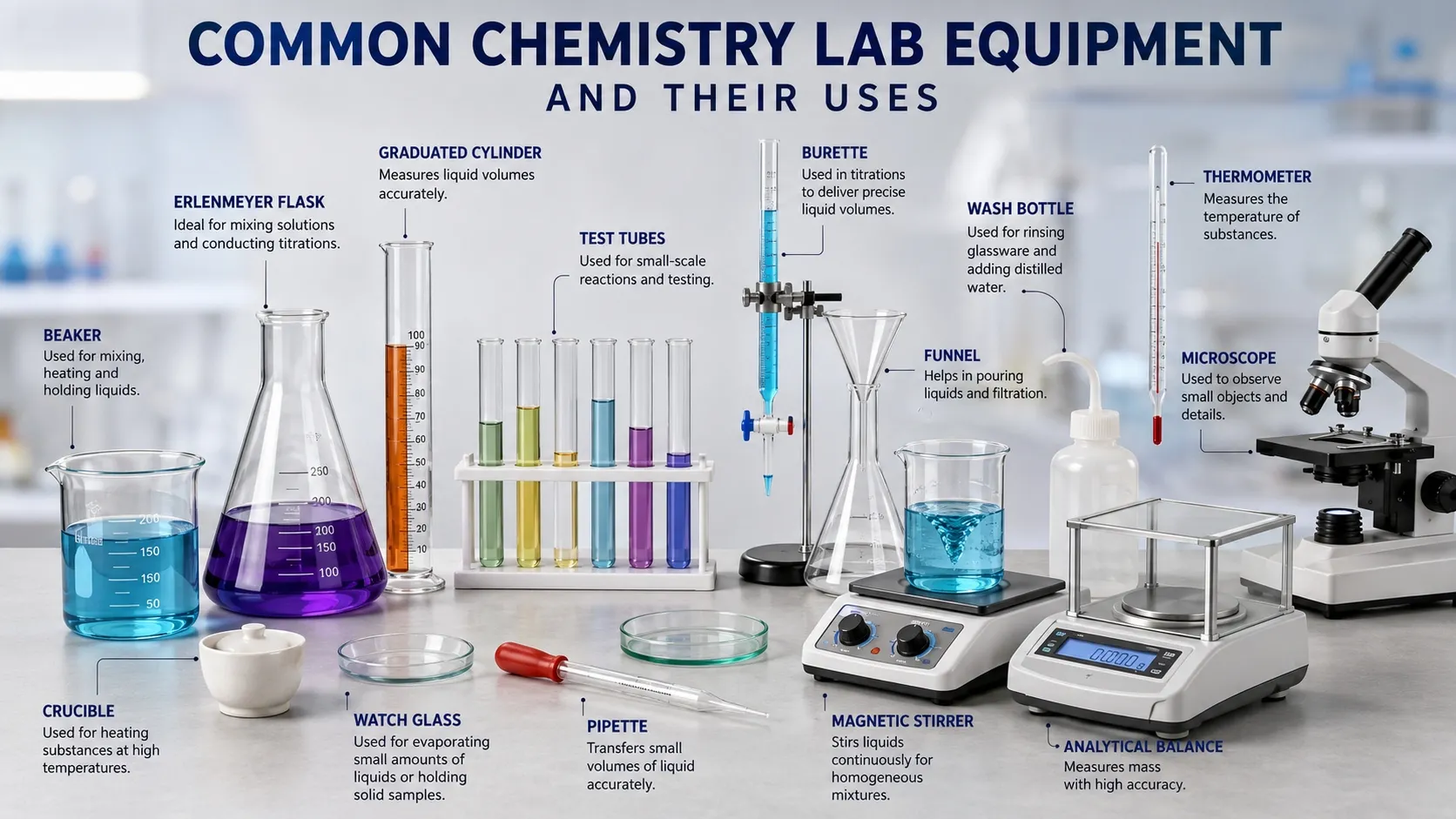
In the present guide, we will discuss the most prevalent laboratory equipment, their applications, and importance in the modern scientific lab.
Why Chemistry Lab Equipment Matters
Laboratory equipment is used to help make accurate measurements, safely handle chemicals, control reactions, and for analytical testing. Chemistry instruments of high quality help to reduce risks of contamination, increase the accuracy of experiments, and facilitate the researcher to meet laboratory safety regulations.
Whether a glassware is simple or advanced, all of them have specific functions in carrying out chemical experiments and scientific research.
Beakers
Beakers are one of the most frequently used chemistry lab equipment. They are short, cylindrical, flat bottomed, glass or plastic containers that have a pouring spout. There are several sizes of beakers: small (50 mL) and large (multi-liter).
Common Uses of Beakers
- Mixing chemicals
- Heating liquids
- Preparing solutions
- Temporary storage of samples
- Measuring approximate liquid volumes
Beakers do have measurement marks but are not made for very precise measurements.
Test Tubes
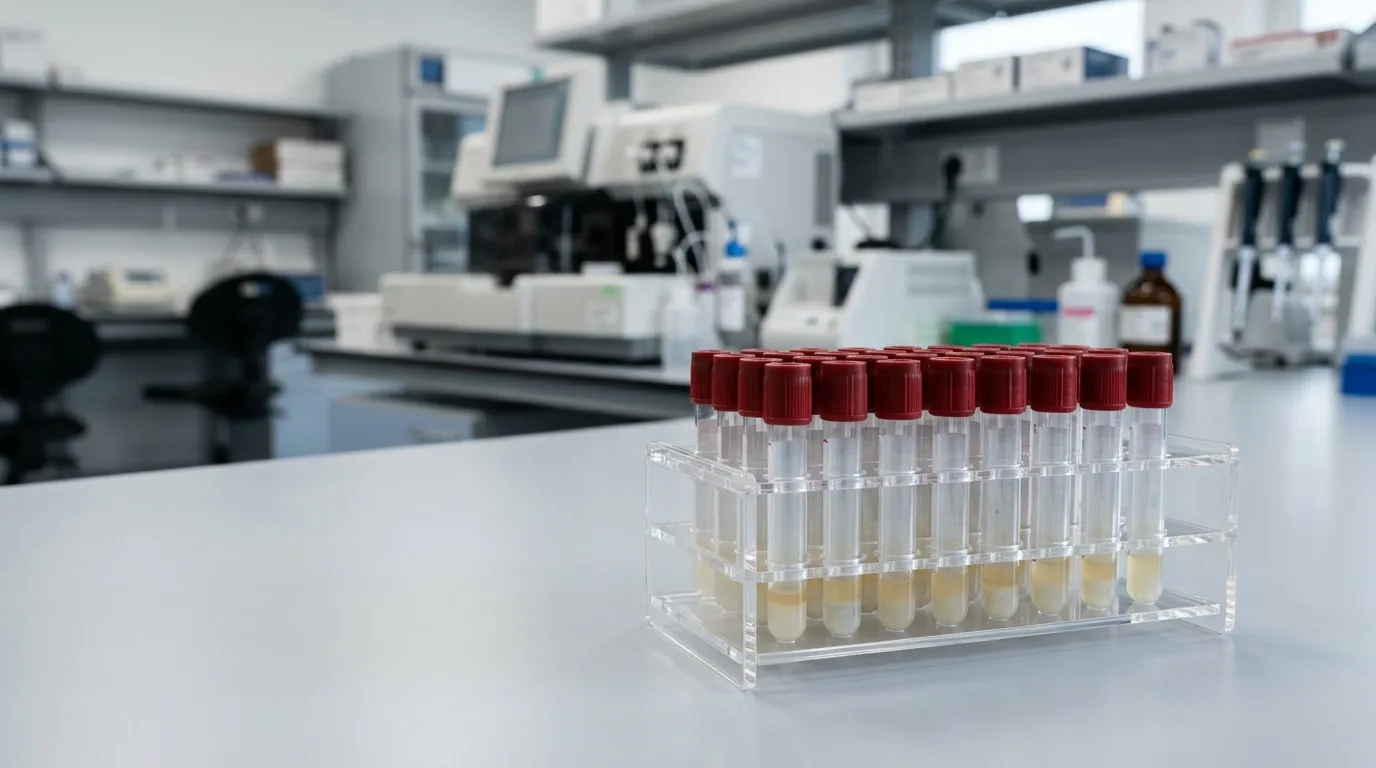
Test tubes are narrow glass or heat-resistant plastic tubes used for conducting tests. They are mainly used for the small-scale reactions and observation of samples.
Advantages of Test Tubes
- Easy handling of small chemical quantities
- Suitable for heating substances
- Ideal for reaction testing and comparisons
- Common in educational laboratories
Test tubes are often stored in test tube racks for organization and safety during experiments.
Erlenmeyer Flasks
Conical flask or Erlenmeyer flask, has a narrow neck and a flat bottom flask. The design will enable easy mixing without spilling liquids.
Applications of Erlenmeyer Flasks
- Mixing solutions
- Conducting titrations
- Heating liquids
- Temporary chemical storage
- Culturing microorganisms
The narrow neck also helps reduce evaporation and contamination during experiments.
Volumetric Flasks
Volumetric flasks are used to make solutions with very high accuracy. They have only one calibration mark to show the exact quantity of liquid in the cylinder.
Main Uses
- Preparing standard solutions
- Diluting chemicals accurately
- Analytical chemistry procedures
- Calibration experiments
These flasks are essential in laboratories that require exact concentration measurements.
Graduated Cylinders
Graduate cylinders are tall, narrow cylinders that are used for accurate measurements of liquid volume. They are much more accurate in measurement than beakers.
Features
- Clear measurement markings
- Available in various capacities
- Glass or plastic construction
- Stable base for laboratory safety
Graduated cylinders are commonly used in chemical analysis, pharmaceutical testing, and educational experiments.
Pipettes
Pipettes are used in the laboratory to transfer a small volume of liquid with great precision. There are several different types of pipettes used in chemistry labs.
Common Pipette Types
- Volumetric pipettes
- Graduated pipettes
- Micropipettes
- Pasteur pipettes
Typical Applications
- Transferring chemical samples
- Measuring reagents
- Biological testing
- Pharmaceutical research
Modern micropipettes are widely used in biotechnology and molecular chemistry laboratories.
Burettes
Burettes are long graduated tubes that have a stopcock at the bottom. Mainly used in titration experiments where precise delivery of liquid is needed.
Importance of Burettes
- Precise reagent dispensing
- Controlled chemical reactions
- Quantitative analysis
- Acid-base titration experiments
High-quality burettes improve experimental consistency and analytical accuracy.
Funnels
A funnel is a simple but important type of lab equipment that is used to pour liquids and powders into a narrow opening. Funnels are available in special models for filtration processes.
Types of Laboratory Funnels
- Filter funnels
- Separatory funnels
- Powder funnels
- Buchner funnels
Funnels help minimize spills and improve laboratory efficiency.
Watch Glasses
Watch glasses are shallow circular glass dishes used in chemistry labs for handling small samples.
Common Uses
- Evaporating liquids
- Covering beakers
- Holding solid samples
- Drying substances
They are inexpensive, reusable, and commonly found in educational and industrial laboratories.
Crucibles
Crucibles: small containers that resist heat; used to heat objects to very high temperatures. They are usually of porcelain, ceramic, or even certain metals.
Laboratory Applications
- Ash testing
- Material analysis
- High-temperature chemical reactions
- Metallurgical testing
Crucibles are often used with laboratory furnaces or Bunsen burners.
Bunsen Burners
Bunsen burners are used to create controlled flames of gas and are used for laboratory heating operations. They are still used as a typical piece of equipment in chemistry labs.
Uses of Bunsen Burners
- Heating chemicals
- Sterilizing equipment
- Flame testing
- Combustion experiments
Proper safety procedures should always be followed when operating open flames in laboratories.
Thermometers
Temperature is measured in an experiment or chemical reaction using a thermometer. Digital thermometers or infrared temperature sensors can be used in modern laboratories for greater accuracy.
Importance in Chemistry
- Monitoring reaction temperatures
- Controlling heating processes
- Recording experimental data
- Maintaining laboratory conditions
Temperature control is essential for obtaining reliable experimental results.
Balances and Scales
Chemical mass must be determined with high accuracy for the use of analytical balances and laboratory scales. The precision of the measurement can have a significant impact on the results of an experiment.
Types of Laboratory Balances
- Analytical balances
- Precision balances
- Digital laboratory scales
Common Applications
- Measuring reagents
- Sample preparation
- Quality control testing
- Pharmaceutical manufacturing
Analytical balances are highly sensitive and often placed in vibration-free environments.
Hot Plates and Magnetic Stirrers
Hot plates provide flameless heating, while magnetic stirrers continuously mix solutions using rotating magnetic bars.
Benefits
- Safe and even heating
- Continuous mixing
- Improved solution consistency
- Reduced contamination risks
Many laboratories use combination hot plate stirrers for efficiency.
Centrifuges
Centrifuges separate substances based on density by spinning samples at high speed.
Common Laboratory Uses
- Separating liquids and solids
- Blood sample processing
- Chemical purification
- Biological analysis
Advanced centrifuges are essential in medical, pharmaceutical, and research laboratories.
pH Meters
pH meters measure the acidity or alkalinity of solutions with high precision.
Why pH Measurement Matters
- Chemical reaction monitoring
- Water quality testing
- Food production
- Pharmaceutical manufacturing
Digital pH meters provide faster and more accurate results than traditional indicator papers.
Safety Equipment in Chemistry Labs
Laboratory safety equipment is just as important as experimental tools. Proper safety practices reduce the risk of accidents and chemical exposure.
Essential Lab Safety Equipment
- Safety goggles
- Lab coats
- Chemical-resistant gloves
- Eyewash stations
- Fire extinguishers
- Fume hoods
Every chemistry laboratory should follow strict safety protocols and proper equipment maintenance procedures.
Choosing High-Quality Chemistry Lab Equipment
Selecting reliable laboratory equipment improves experiment accuracy, durability, and operational safety. When purchasing chemistry lab tools, laboratories should consider:
- Material quality
- Chemical resistance
- Measurement precision
- Temperature tolerance
- Safety certifications
- Ease of cleaning
- Equipment lifespan
Trusted laboratory equipment suppliers often provide calibration services and technical support for advanced instruments.
Future Trends in Chemistry Laboratory Equipment
Technologies such as digital and automation are rapidly gaining traction in modern laboratories to boost efficiency and data accuracy.In the modern laboratory, digital and automated technologies are gaining traction to increase efficiency and accuracy of data.
Emerging Trends
- Smart laboratory systems
- AI-assisted analysis
- Automated liquid handling
- Digital data recording
- Energy-efficient lab equipment
- Remote laboratory monitoring
In the future, laboratory equipment will become more intelligent, connected and efficient as science goes through continued evolution.
Final Thoughts
Chemistry lab equipment is the backbone of science, teaching, and innovation in industry. Each piece of glassware, from beakers to test tubes, plays a vital role in the lab setting.Whether it's a beaker, a test tube, or a more sophisticated machine like a pH meter or a centrifuge, the tools are all essential to the lab.
The knowledge of the uses and working of common laboratory apparatus increases the accuracy of experiments, laboratory safety, and overall efficiency. For students setting up a school science lab, researchers establishing a research facility or anyone involved in testing for industry, it is important to invest in quality laboratory equipment in order to ensure long term success.
In this ever-evolving field, chemistry labs will keep utilizing smarter tools that will enable scientists to make quicker discoveries and more accurate results in a wide range of industries.