



Essential Lab Equipment Guide
In today's laboratories, the proper operation of equipment is essential to the research, testing and quality control processes, and the equipment must be accurate, durable and efficient. From a pharmaceutical lab, a biotechnology facility, educational institute to an industrial testing center, the choice of laboratory equipment has a direct effect on productivity, laboratory safety, and experimental accuracy.
Whether it's a simple beaker or a sophisticated piece of analytical equipment, each lab has a set of tools that are both necessary and vital for precision and reliability. Well-equipped laboratories enhance workflow, minimize contamination hazards, and enable scientists to obtain reliable results. Experts also stress the need for maintenance, calibration, and safety devices to guarantee long-term success in the industry.
Why Essential Lab Equipment Matters
The equipment used in the laboratory is the backbone of the scientific operations. If the instruments are not reliable, researchers could face inaccuracies, inconsistencies, delays in operation. High-quality equipment supports:
- Accurate scientific analysis
- Safe handling of chemicals and biological materials
- Efficient workflow management
- Regulatory compliance
- Long-term cost savings
Refurbished and certified equipment has come to the forefront of modern laboratories, as they seek a balance between performance and cost. Today, many organizations will buy used laboratory equipment to help them save money without compromising on reliability.
Basic Laboratory Equipment Every Lab Needs
Beakers and Flasks
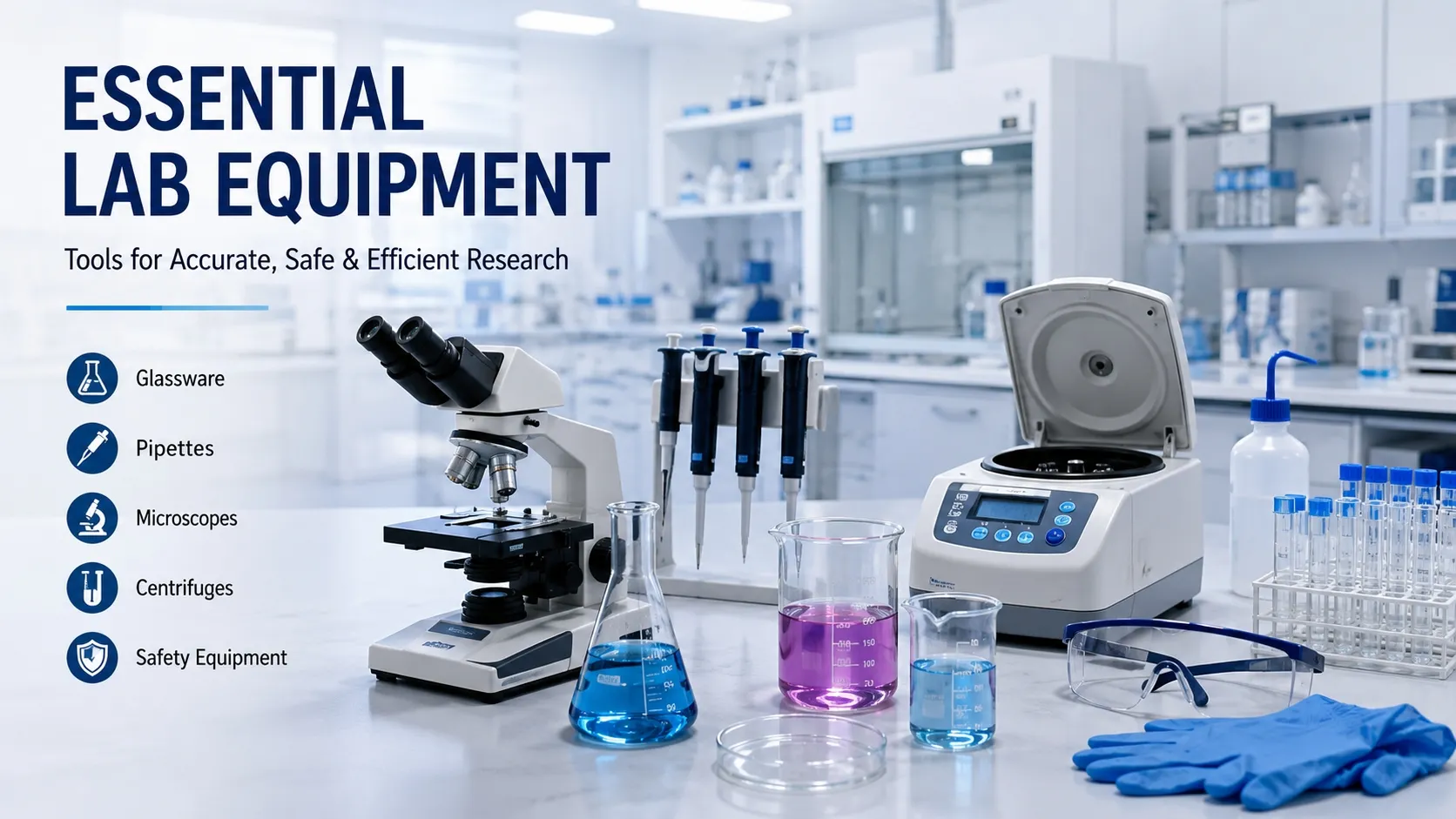
Beakers and flasks are some of the most basic laboratory equipment. They are frequently utilized for mixing, heating, storing and moving liquids. Erlenmeyer flasks, volumetric flasks and graduated beakers are common in pharmaceutical, biology, and chemistry laboratories.
The most popular material is borosilicate glass due to its resistance to chemicals and heat.
Pipettes and Micropipettes
Precise liquid transfer is crucial and requires the use of pipettes. Micropipettes are a vital part of molecular biology, microbiology and chemical analysis in modern laboratories.
Ergonomic pipette designs are usually focused on decreasing repetitive strain injuries and increasing accuracy in repetitive tasks. The risk of contamination is also reduced with filter tips and low retention tips which are both widely recommended.
Test Tubes and Centrifuge Tubes
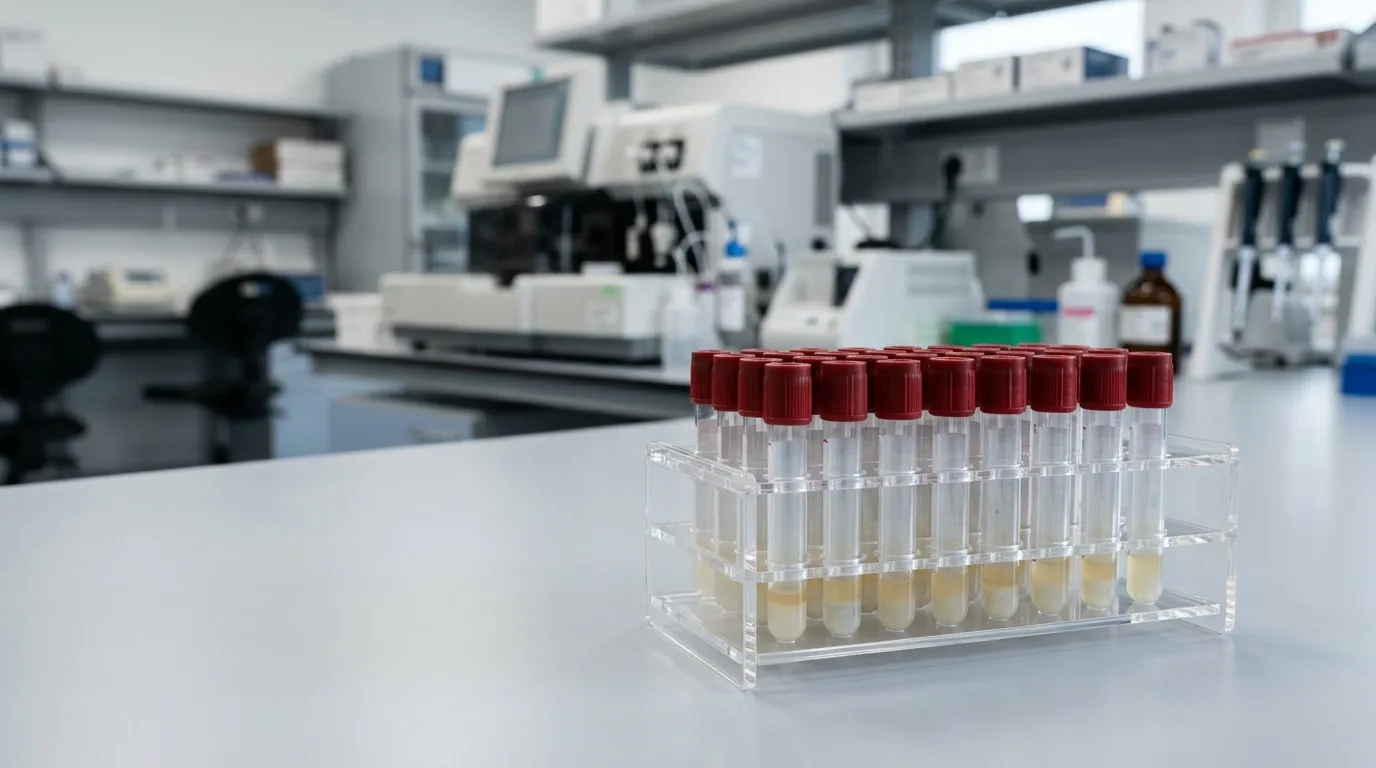
Test tubes are used in small scale reactions, heating and temporary storage of materials. Centrifuge tubes are completely engineered to resist high rotational forces in the course of separating samples.
These tools are essential in medical diagnostic processes, in biotechnology research and in the field of chemical testing.
Graduated Cylinders
A graduated cylinder gives more accurate measures of liquids than a beaker. They are widely used in the laboratory where accuracy of volume is essential for experiments and formulations.
Advanced Analytical Laboratory Equipment
Microscopes
Scientists use microscopes to view microorganisms, cells and microscopic particles that are too small to be seen by the naked eye. In research and diagnostics, optical microscopes, digital microscopes and electron microscopes are commonly used.
In areas like pathology, microbiology, materials science and life sciences, microscopy is still a vital part of the equation.
Spectrophotometers
Spectrophotometers can be used to determine the amount of light absorbed and transmitted by a sample. The instruments are extensively utilized in analysis of chemicals, in the pharmaceutical industry and in testing in environments.
Infrared spectroscopy systems can be particularly useful for the identification of chemical compounds and molecular structures.
Centrifuges
A centrifuge separates substances by using high-speed spins. Centrifuges are essential for sample preparation and purification in clinical laboratories, biotechnology companies and pharmaceutical companies.
They are offered in a variety of models, from small benchtop to high-capacity ultracentrifuges.
Chromatography Systems
Chromatography instruments are vital instruments used for separating and analysing complicated mixtures. Pharmaceutical research, food testing and environmental laboratories are typical applications for HPLC and GC systems.
Laboratory Heating and Mixing Equipment
Hot Plates and Heating Mantles
Heat devices play an important role in chemical reactions, evaporation and sample preparation. A heating mantle will give even heating of flasks, and hot plates are good for general heating in the laboratory.
Most up-to-date systems can incorporate magnetic stirring with heating.
Magnetic Stirrers and Vortex Mixers
Homogeneous solutions and sample consistency are ensured by mixing equipment. Magnetic stirrers are well suited for continuous mixing, and vortex mixers can be used to mix small volume liquid samples quickly.
They are commonly used in chemistry laboratories, molecular biology and pharmaceutical laboratories.
Laboratory Safety Equipment
Fume Hoods
Fume hoods are designed to keep laboratory workers safe from harmful vapors, toxic chemical and airborne contaminants. Laboratories dealing with volatile materials must have adequate ventilation.
Fume hoods are always considered by safety professionals as one of the most critical pieces of laboratory safety equipment.
Biosafety Cabinets
Biosafety cabinets are used for biological research in containment and in sterile work areas. These systems are of utmost importance in microbiological, virological, and pharmaceutical laboratories.
Fire Safety Equipment
Fire extinguishers and fire blankets, emergency shower stations, and eyewash stations help laboratories meet safety standards and minimize lab hazards. Chemical laboratories should always have readily accessible emergency response equipment.
Personal Protective Equipment (PPE)
Essential PPE includes:
- Safety goggles
- Laboratory coats
- Chemical-resistant gloves
- Face shields
- Respirators
Proper protective gear reduces exposure risks and improves workplace safety standards.
Laboratory Storage and Organization Equipment
Refrigerators and Freezers
Temperature sensitive chemicals, biological samples and pharmaceuticals are preserved with laboratory grade refrigerators and ultra-low freezers.
Chemical Storage Cabinets
Properly storing chemicals ensures they are not contaminated or accidentally react or pose a safety risk. Specialized cabinets are for flammable materials, corrosives and hazardous materials.
Laboratory Benches and Workstations
Ergonomic workstations help to organize and streamline work processes. Chemical resistance and easy maintenance are also provided by durable laboratory benches.
Choosing the Right Lab Equipment
There are a number of factors to consider when choosing laboratory equipment:
Accuracy and Precision
Science is based on repeatable and trustworthy measurements. Good instruments minimize experimenter variation and increase confidence in the results.
Durability and Material Quality
Laboratories can be challenging. Equipment must be heat, chemical and abrasion resistant.
Maintenance and Calibration
Regular calibration helps to maintain standardized performance and meet industry standards. Good maintenance will also prolong the life of equipment.
Budget and Cost Efficiency
There are many labs that are now refurbished or certified preowned equipment to lower costs and keep operations running at a quality standard. Laboratory equipment that has been used can greatly reduce the price of equipment purchase.
Trends in Modern Laboratory Equipment
The laboratory industry continues evolving with new technologies and automation tools. Key trends include:
- Smart laboratory systems
- Digital data integration
- AI-powered analytical instruments
- Sustainable laboratory practices
- Energy-efficient equipment
- Increased demand for refurbished systems
Lab automation and digital monitoring are increasing productivity, minimizing the risk of human error, and simplifying research workflow.
Final Thoughts
Every research and testing laboratory must have the essential equipment. The right equipment boosts accuracy, efficiency and lab safety, from simple glassware and pipettes to sophisticated analytical instruments and safety controls.
It is essential to invest in quality and high performance equipment to ensure the advancement of science, as laboratories keep getting upgraded. From designing a new laboratory to enhancing existing facilities, choosing reliable lab equipment is essential for ensuring long-term success and excellence in research.