


Updated 2 months ago
Lab Equipment for Research: Mini Dry Baths for DNA, RNA, and Protein Workflows

Admin

Lab Equipment for Research
Temperature control is essential in certain fields of molecular biology. For example, there are protocols in which samples must be held at specific temperatures for defined time periods. Inadequate temperature control can yield results of different enzyme activities, alter structures of nucleic acids, yield sub-par results of reactions, and result in non-reproducible results.
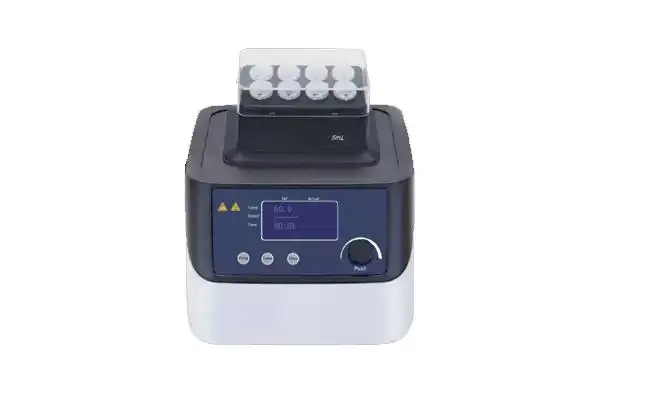
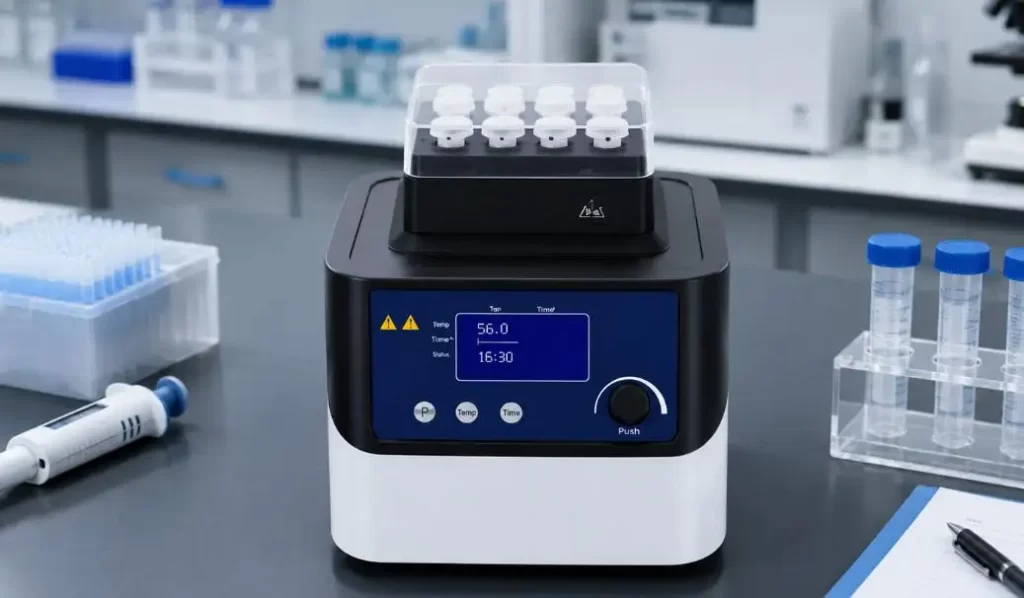
One of the many heating devices found in labs is the mini dry bath. The mini dry bath employs a solid metal block to control heating. The mini dry bath's small size, dry operation, and capacity for small sample tubes allow it to be employed in routine molecular biology, biochemistry, and teaching sample prep applications.
What Is a Mini Dry Bath?
Mini dry baths are used in labs. Dry baths transfer heat to a solid block through a heating element. The block can be fixed or removable. This block has openings that are designed to hold tubes of given sizes.
In contrast to a water bath, a dry bath does not use heated water as the temperature-transfer medium. In this case, samples are heated by direct contact between the tube and the metal block.
The main components of a mini dry bath include the following:
•Heating element: the part that generates the required thermal energy.
•Metal Block: Transfers the heat to tubes that are placed inside the openings of the block.
•Temperature Sensor: measures the heating system temperature.
•Control System: modifies output power to hold the desired temperature.
•Display and timer: These components enable the users to set the desired temperature and the time for incubation.
This structure makes a mini dry bath a practical category of Lab Equipment for Research when controlled, small-volume heating is required.
Why Temperature Stability Matters
Many biochemical and molecular reactions are temperature-dependent. Enzymes will have an optimum temperature range for activity, and nucleic acids and proteins may undergo structural changes due to temperature.
Variable heating may cause:
•Variable Enzyme Activity: Rates of reactions may be increased or decreased.
•Incomplete Reactions: The reaction may not be continuing due to an insufficiently high sample temperature.
•Unequal Sample Treatment: Test tubes in different positions in the block may receive different treatments.
•Decreased Reproducibility: More repetitions of the experiment may supply more variable results.
•Sample degradation: Excessive heating may cause the degradation of RNA, proteins, or other sensitive reagents.
Due to the above, temperature precision and consistency of blocks are a priority during the selection of temperature-control Lab Equipment for Research.
How Heat Transfers to the Samples
A mini dry bath transfers heat through mostly conduction. The heating element heats the block, and the block then heats the sample.
Several factors affect the heating efficacy.
•Blocking contact in tubing: Thermal transfer is enhanced in close contact situations.
•Blocking material: Metals of suitable thermal conductivity will better homogenize the temperature.
•Sample Volume: Generally, the larger the volume of the liquid, the longer it will take to achieve the target temperature.
•Tube material: Plastic of possibly different thickness may result in different heat transfer.
•Lid position: A lid may reduce heat loss and help reduce variation in the temperature.
•Environmental conditions: The temperature of the room coupled with the airflow may affect the heating.
The displayed block temperature may not always be identical to the actual liquid temperature inside the tube. Laboratories working with sensitive procedures may therefore need to validate heating time and sample temperature.
Common Applications in Molecular Biology
Mini dry baths support a range of DNA, RNA, protein, and enzyme-related procedures.
| Workflow | Role of the Mini Dry Bath | Typical Temperature Requirement |
| Restriction digestion | Maintains conditions for restriction enzyme activity | Often around 37°C |
| DNA ligation | Supports enzymatic joining of DNA fragments | Depends on ligase and protocol |
| RNA denaturation | Reduces RNA secondary structure before analysis | Protocol-dependent |
| Reverse transcription | Maintains temperature for complementary DNA synthesis | Based on enzyme requirements |
| Protein denaturation | Heats samples before electrophoresis | Commonly 95–100°C |
| Enzyme incubation | Provides stable conditions for biochemical reactions | Enzyme-specific |
| Heat-shock transformation | Supplies a controlled heating stage | Commonly around 42°C |
| Sample lysis | Supports heat-assisted disruption or reagent activation | Method-dependent |
The required temperature and incubation time should always be determined by the experimental protocol rather than by the heating device alone.
DNA Workflow Applications
DNA-related procedures frequently use controlled incubation.
Restriction Enzyme Digestion
Restriction enzymes act on recognition sequences in DNA and function best around 37°C. However, the use of individual enzymes will regulate the optimum temperature for use.
Incubating at a fixed temperature encourages:
•Constant activity of the enzyme
•Digestions that are repeatable
•Uniform treatment of the samples
DNA Ligation
DNA ligase generates phosphodiester linkages between DNA fragments. Enzymes, DNA fragments, and protocol impact the temperature of DNA ligation.
Short- or long-term DNA ligation can be performed by the use of a mini dry bath that is preset to a specific temperature.
DNA Denaturation
Heat can separate the two strands of double-stranded DNA. However, procedures requiring repeated heating and cooling cycles are generally better suited to a thermal cycler.
A dry bath is more appropriate for single-temperature or simple heating steps.
RNA Workflow Applications
RNA is sensitive to heat, contamination, and ribonuclease activity. Controlled heating may be used to reduce secondary structure or prepare RNA for electrophoresis and downstream analysis.
A dry bath offers water-free operation, which may simplify bench cleaning and reduce exposure to water bath contaminants. Though it is helpful for instructing on RNA handling, this information should not replace any of the established proper techniques for RNA handling.
Some key things to keep in mind are:
•RNase-free containers: using the wrong containers can introduce degrading contaminants for RNA.
•Avoid the use of heating: long exposures to heat can cause irreparable damage to RNA.
•Properly sealed containers: losses from evaporation and exposure to contaminants.
•Protocol-specified temperatures: various RNA protocols necessitate various temperature controls.
Protein Workflow Applications
Protein samples are most often subjected to heating prior to conductance in either electrophoretic or biochemical analyses.
SDS-PAGE Sample Preparation
In SDS-PAGE preparation, the protein sample is mixed with loading buffer and heated to 95–100°C. This loading buffer has a high boiling point and assists in binding SDS to the protein sample.
Not every protein is best served by the same high heating protocols. High heating protocols can lead to protein-membrane aggregates and protein complex aggregates so these protocols should be followed with care.
Incubation of Proteins and Enzymes
Particular protocols require heating for the protein, enzyme, or reagent, to facilitate the interaction or activation. The same is true for the sample. To facilitate accurate comparison of results or conditions between assay and experimental samples, it is best to maintain the same heating controls.
Comparison of a Mini Dry Bath with Other Heating Devices
| Equipment | Heating Method | Suitable Use | Limitations |
| Mini Dry Bath | Heated metal block | Small test tubes and fixed temperature incubations | Only cools to room temperature |
| Water Bath | Heated water | Irregular and flexible containers like bottles and test tubes | Need constant water cleaning and maintenance |
| Thermal Cycler | Programmed heating and cooling | Temperature cycling for PCR and similar applications | Over sophisticated for simple heating |
| Laboratory Oven | Heated air | Heating or drying larger samples | Unnecessarily large for small liquid samples |
| Incubator | Heated chamber | Heating or incubating larger sample batches | Tube heating takes longer |
Selecting the best lab equipment for research considers the sample type, temperature, the format of the sample vessel, and required heating, cooling, or temperature cycling.
Reproducibility in Laboratory Workflows
Trustlab's Mini Dry Bath is a compact thermal control device designed specifically to enhance the consistency and control of laboratory workflows involving DNA, RNA, and proteins, enzymes, and routine laboratory tasks. With an innovative design and ±0.5°C control accuracy and flexible timing, it is a reliable and easy sample incubation solution.
FAQs
Q1. What are the applications of a mini dry bath?
The apparatus is designed for even warming and incubation of small laboratory samples.
Q2. Are mini dry baths appropriate for use with DNA samples?
Certainly; mini dry baths are used for DNA digestion and ligation, and for sample preparation and denaturation.
Q3. Are mini dry baths denaturation and digestion of RNA samples contraindicated?
No, provided that RNase-free tubes are used and the dry bath is accurately set to the required temperatures.
Q4. Can proteins be denatured in a mini dry bath?
Yes; mini dry baths are appropriate for the denaturation of proteins and sample preparation prior to electrophoresis.
Q5. What are the differences between dry and water baths?
The primary difference is that dry baths use a metal block to conduct heat to the samples, while water baths use water to conduct heat and cover the samples.