


Updated 2 months ago
Lab Equipment for Testing: Cell Disruption for Yeast, Bacteria, Algae, and Fungi

Admin
Lab Equipment for Testing
Cell disruption is a critical sample-preparation step in molecular biology, microbiology, biotechnology, and biochemical testing. Whether a laboratory needs to isolate DNA, RNA, proteins, enzymes, or intracellular metabolites, downstream results often depend on how consistently the cell wall and membrane are opened.
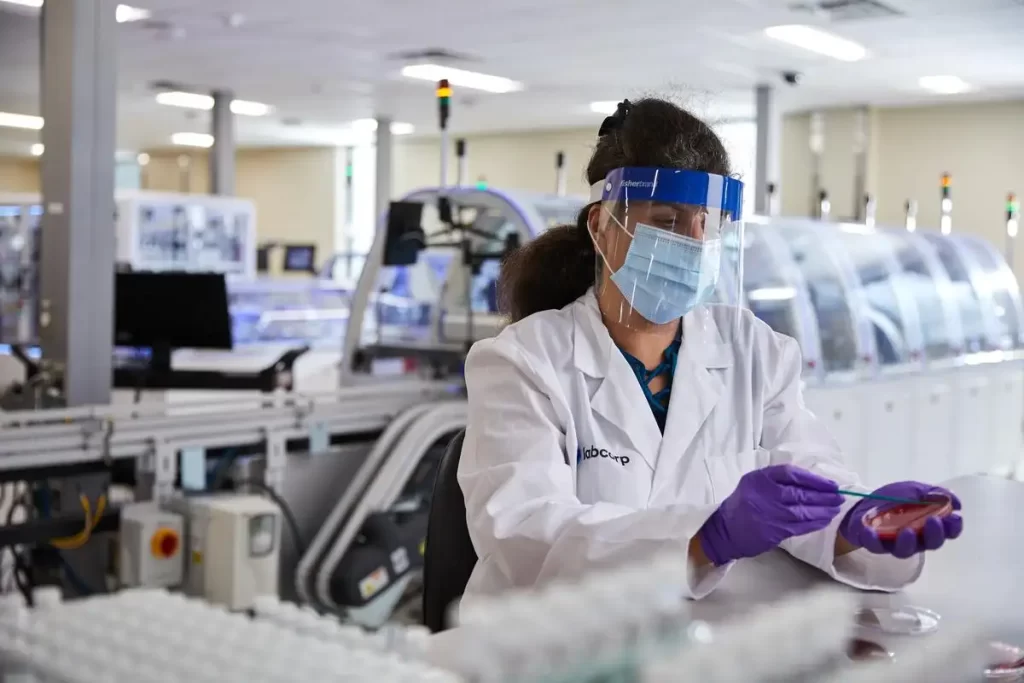
Due to the different structures of cell envelopes found in yeast, bacteria, algae, and fungi, labs must choose appropriate Testing Lab Equipment and develop suitable processing methods. High-quality cell disruption equipment fosters even disruption and helps labs streamline workflows for multiple samples while minimizing disruption variability and dependence on staff for consistency.
The Effect of Cell Structure on Equipment Choice
The response of microorganisms to mechanical disruption varies with the composition, thickness, and rigidity of cell walls.
| Microorganism | Main Cell-Wall Components | General Disruption Challenge |
| Yeast | Glucans, mannoproteins, and chitin | Resistance of cell walls requires use of beads and vigorous agitation. |
| Gram Positive Bacteria | Thick Peptidoglycan | Dense walls require longer or repeated processing. |
| Gram Negative Bacteria | Thin Peptidoglycan and Outer Membrane | Disruption is often easier than for Gram Positive Bacteria. |
| Algae | Cellulose, glycoproteins, and sporopollenin-like materials | Resistance varies considerably among different species. |
| Fungi | Chitin, glucans, and mannans | Disruption may require pre-treatment or reduction of sample size due to filaments. |
Incomplete disruption may leave cellular contents secluded within the cell. On the other hand, disruption beyond the desirable point may generate excess heat, which may denature sensitive cellular proteins or nucleic acids. Testing Lab Equipment should therefore help labs maintain optimal processing parameters for intensity, duration, volume, and temperature.
Mechanical Cell Disruption Using Vortex Based Lab Equipment
Mechanical, bead-based disruption relies on rapid, random movement of the beads to create collisions with the grinding media. The collisions create shear, impact, and friction forces, which gradually disrupt the cellular barriers.
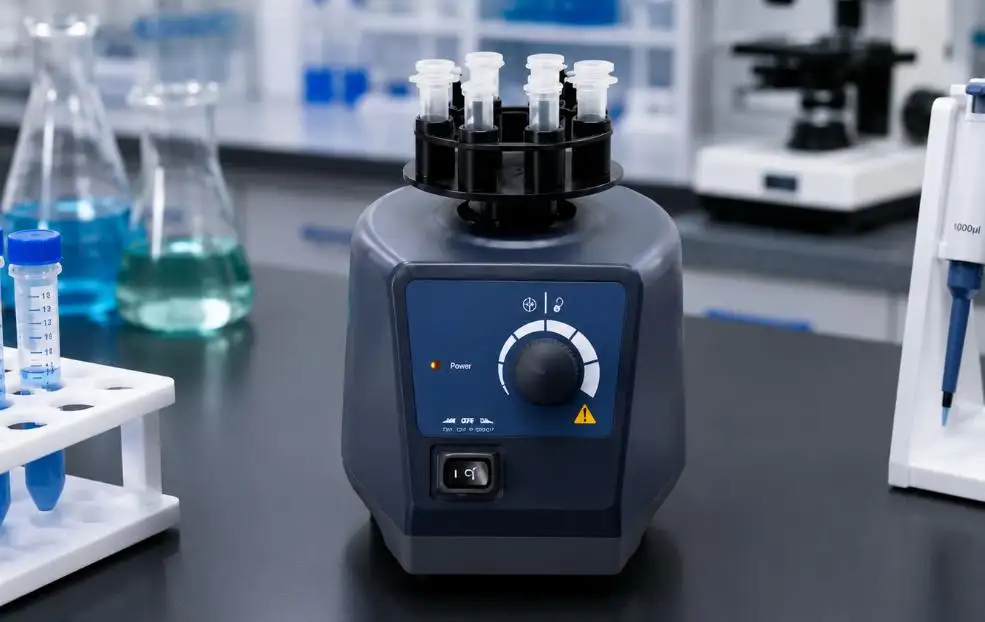
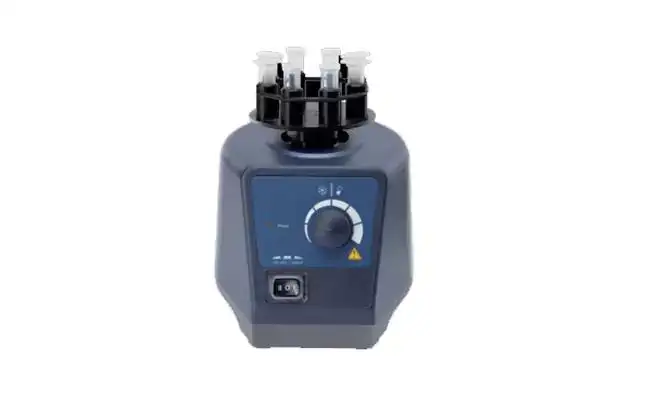
Trustlab uses this principle in its Testing Lab Equipment, which is designed to help with sample preparation for parallel processing using compact, vortex-based, Testing Lab Equipment. The equipment uses:
•Circumferential Vortex Motion: Uniform and rapid transport of beads and liquids in the sample tube is achieved.
•Vertical Oscillation: Added a layer of interaction and impact, promoting greater intermingling of particles and grinding media.
•4 mm Orbital Diameter: Disturbance caused within this diameter is sufficient to mix and aid the usual working of microorganisms.
•Multi-Tube Processing: Disruption of a number of samples held under identical processing conditions.
This system will allow for consistent disruption using appropriate bead materials, buffers, and processing conditions.
Essential Equipment Characteristics for Consistent Testing
Multiple design attributes of Lab Equipment for Testing affect the microbial sample preparation process.
Adjustable Speed Control
Laboratories should consider available equipment's capability of offering disruption speeds in the range of 0-3000 rpm. Lower-end disruption speeds may be sufficient for some types of microbial organisms. For example, Gram-negative bacteria may not require disruption above moderate speeds, while some fungi, yeast, and algae may require disruptors set at high speeds.
Parallel Tube Capacity
The capability of processing eight 2 mL tubes simultaneously is useful for laboratories to prepare:
•Replicates of the same experiment
•Microbial strains
•Samples taken at different time points
•Control groups and treatment groups
•Different extraction conditions
Sample parallel processing ensures that the time differences between the different processing steps are minimized, providing greater accuracy for subsequent analyses.
Speed Setting Visual with Scale
Operators can replicate empirical settings that have already been validated with a visual scale for speed setting. This is useful when several technicians follow the same standard operating procedure.
Compact Benchtop Design
With approximate dimensions of 127 × 130 × 160 mm and a weight of around 2 kg, the unit can be positioned on crowded laboratory benches and moved between work areas when necessary.
Flexible Power Compatibility
Due to its support for 100-120 V and 200-240 V at 50/60 Hz, this device is suitable for laboratories with localized adaptations of the international electrical standard.
Suggested Starting Parameters
The following ranges may be used to initiate the optimization for vortex-based disruption of cells. Optimization will depend on sample concentration, bead load, the composition of buffer, and the requirements of analysis.
| Sample Type | Speed Range (rpm) | Comments |
| Yeast | 2500 - 3000 | Use of glass beads and cooling may be beneficial. |
| Gram-positive bacteria | 2000 - 3000 | Smaller beads or additional cycles of disruption may be required for the disruption of thick peptidoglycan layers. |
| Gram-negative bacteria | 1500 - 2500 | Lysis may be achieved at moderate disruption speeds. |
| Microalgae | 2500 - 3000 | Performance may be influenced by disruption beads and species-specific walled cell structures. |
| Filamentous fungi | 2500 - 3000 | Uniformity of sample may be improved by disruption with prior freezing, cutting or grinding. |
Disruption should not be attempted at the given speeds. Testing at varying speeds should be considered prior to the use of disruption on large or valuable samples.
Factors That Influence Disruption
Even with identical Lab Equipment for Testing, there are numerous parameters that affect the results of extraction.
•Bead material: Different materials (glass, ceramic, zirconia, stainless steel) provide different impact characteristics.
•Bead diameter: Smaller beads may be suited for bacterial disruption while larger beads may be required for yeast or fungal disruption.
•Tube fill level: An excessive number of beads or beads with liquid can restrict the movement of beads and diminish the efficiency of bead interaction.
•Processing time: The Duration of cycles should just be enough to accomplish a thermal disruption to avoid a major shift at thermal equilibrium.
•Buffer viscosity: Bead movement and mixing will be negatively affected by higher viscosity buffer.
•Temperature management: Intermittent cooling to avoid thermal denaturation of labile proteins and RNA.
•Sample density: Modification of buffer and/or multiple treatments may be needed for treatment of sample pellets of high density.
Integration with Molecular Biological Workflows
Currently existing workflows for the extraction of DNA, RNA, proteins, and metabolites can be easily integrated with Vortex Mixers with the cell disruptor module.
Extraction of microbes from samples generally follows several steps:
1. Sample Preparation. Microbial samples are combined with lysis buffer and extraction beads in a tube.
2. Mechanical Disruption. Homogenization of samples occurs.
3. Resting/Cooling. The microbial samples are held at the target temperature for a specified time.
4. Clarification. In the process of clarification, lysis is separated from disruption debris by pelleting and centrifugation.
5. Purification. The supernatant is reserved for a purification column, or purification is accomplished by precipitation or an assay.
The ability to process many samples at once is of particular value for time-controlled, repeat experiments with the same sample type.
Cleaning, Safety, Long-Term Operation
The Practical Lab Equipment for Testing emphasizes the ability to conduct basic upkeep on equipment and safety.
•Secure Tube Positioning: A stable holder reduces tube movement, leakage, and unintended openings of tubes.
•Stress Resistant Surfaces: The outer surfaces should withstand cleaning chemicals used in a lab.
•Heat-management design: Component placement supports the performance of the unit in a stable manner for repeated cycles.
•Balanced loading: Directions should be followed to prevent uneven vibrations.
Trustlab's Approach to Lab Equipment for Testing
Trustlab uses its experience in the compact laboratory and sample-preparation systems to design Practical Lab Equipment for Testing for the academic, industrial, and routine laboratory markets.
Its vortex-based cell disruption design focuses on:
•Adjustable mechanical intensity
•Parallel sample processing
•Compact installation
•Straightforward operation
•Repeatable protocol settings
•Compatibility with different laboratory power standards
Manufacturer experience is particularly relevant when laboratories require equipment that can fit into existing workflows without adding complex installation or specialized infrastructure.
Closing Words
Cell disruption is not a single universal process. Bacteria, yeast, fungi, and algae require distinct combinations of buffer conditions, temperature control, processing time, bead size, and mechanical force.
Different sample types necessitate different lab equipment and method parameters. Therefore, laboratories can achieve more consistent extractions and reduced variability for upstream analysis. Disruption technology based on vortex and bead mixing provides an economical solution to laboratories that require controlled disruption, processing of several tubes in parallel, and variability in sample preparation for a range of microbes.
FAQs
Q1. What is the purpose of cell disruption?
Cell disruption has the purpose of liberating intra-cellular materials such as DNA, RNA, and proteins, and allows them to be analyzed in the lab.
Q2. Which organisms resist cell disruption the most?
Of the microbes, yeast and fungi and certain algae and Gram-positive bacteria are more resistant and difficult to disrupt because of their rigid cell structures.
Q3. What is the appropriate Lab Equipment for Testing to assist in cell disruption?
Disruptors that use beads, along with homogenizers, ultrasound devices, and grinders, are appropriate equipment.
Q4. What is the principle of disruption using beads?
The principle of disruption using beads is that the rapid motion of the beads cause them to strike the cell, and the cell is ruptured due to the mechanical force.
Q5. What is the proper size of bead to use?
It is proper to use smaller sized beads for bacteria, and relatively larger sized beads for yeast, fungi, and certain algae.