


Updated 2 months ago
Environmental Laboratory Equipment: Essential Instruments and Applications

Admin
Environmental Laboratory Equipment
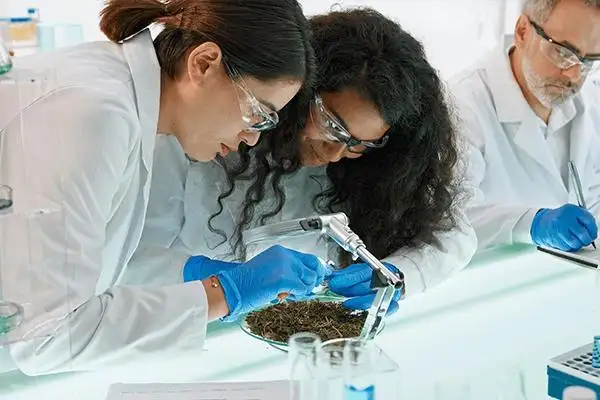
Environmental analysis enables laboratories to assess the quality of water, air, soil, and other environmental samples. Quality assurance for environmental analysis is anchored on established protocols, adequately representative samples, and optimum environmental and instrumental conditions.
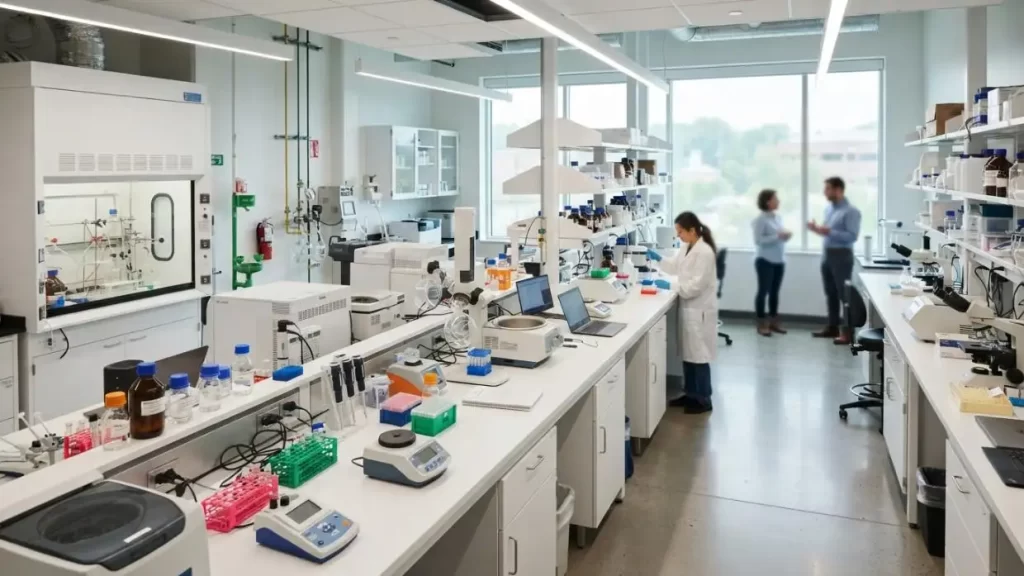
Environmental Laboratory Equipment is designed to facilitate all the procedures from sample preparation through separation, heating, and incubation to measurement and observation and storage. Knowledge of the role of every instrument enables a laboratory to optimise its workflow and to determine its equipment needs.
Trustlab, as a laboratory equipment manufacturer, serves environmental laboratories of universities, research institutions, hospitals, and industrial and environmental testing laboratories in over 130 countries and regions around the globe.
What Is Environmental Laboratory Equipment?
Environmental laboratory equipment is a collective term for the instruments used for the collection, preparation, processing, preservation, and analysis of samples pertinent to the environment.
Included in this category are instruments used for the assessment of:
•Water samples: Physical, chemical, and biological testing of drinking water, ground water, surface water, sea water, and industrial waste water.
•Soil and sediment: Assessment of moisture, nutrients, pollutants, particulates, and biological activity.
•Air particulates: Weighing and extraction, and microscopic examination of dust, aerosols, industrial emissions, and other filter deposits.
•Biological materials: Incubation and observation of algae, microorganisms, and other environmental organisms.
•Industrial waste: Assessment of chemical and physical residues, wastes, and process waters.
The Workflow of an Environmental Laboratory
Environmental testing typically proceeds through multiple discrete yet interrelated phases. The integrity of laboratory samples and the consistency of the results may be impacted by the equipment utilised in each phase of the workflow.
| Workflow Phase | Core Activity | Typical Instruments |
| Sample Preparation | Generate a sample that is representative and appropriately sized for analysis | Mixers, shakers, grinders, homogenizers |
| Separation | Process of isolating solids, liquids, cells, or precipitates | Centrifuges, filtration apparatus |
| Controlled Treatment | Reaction of sample under induced interaction with control of temperature or other parameters of the reaction | Ovens, incubators, water baths |
| Measurement | Assessment of the physical and/or chemical characteristics of the samples | Balances, pH meters, conductivity meters |
| Observation | Assessment of the physical and/or chemical characteristics of particles, cells or micro-organisms using a microscope | Microscopes |
| Preservation | Slowing or inhibiting the degradation of samples and/or reagents by biotic and/or abiotic means of preservation | Refrigerators, freezers, storage cabinets |
Important Equipment in Environmental Laboratories
Laboratory Centrifuges
The principle of laboratory centrifuges is the separation of sample components by application of force through controlled rotation. Centrifuges are versatile with many applications, including water clarification, separation of sediment, concentration of microbes, and preparation of extraction.
•Controlled rotation: Many laboratories are able to achieve separation of sample components with greater precision and repeatability through controlled and stable rotation.
•Many samples: Different rotors and tubes allow for separation of many sample sizes.
•Safety operation: Lid-locking and protection against imbalance are some features that reduce the risk of operation.
Laboratory Mixers and Shakers
Mixers and shakers facilitate even and complete interaction of sample and reagent. These devices are common in extraction and dissolution, preparation of suspension and other chemical reactions.
•Preparation of homogeneous samples: Agitation of samples at controlled levels cuts down uneven distribution of reagents.
•Flexibility of operation: Changing speed and time settings allows for the preparation of samples for different laboratory techniques.
•Sample versatility: Mixers and shakers can be used with water, soil, sediment and
Drying Ovens and Water Baths
Equipment in environmental laboratories that is used for drying, conditioning, digestion, heating and control of reactions is temperature-controlled environmental laboratory equipment.
•Drying Ovens: Controlled heating helps in the analysis of moisture content of soil, preparation of residues and drying of glassware.
•Water Baths: Evenness of heat assists in digestion of samples, warming of reagents, and carrying out reactions that are dependent on the temperature.
•Stability of temperature: The same conditions may help in minimising differences of a number of tests.
Laboratory Incubators
Incubators control environments for microbiological and biological tests. They are common in the analysis of the quality of water, the culture of microbes, biochemistry and the conditioning of samples.
•Controlled incubation: The same temperature helps in the same conditions for the growth of microbes.
•Sample placement: Adjustable shelving helps laboratories to accommodate different sizes of containers.
•Monitoring: Digital controls allow users to observe and change settings.
Precision Balances
Precision balances are integral to environmental laboratories for the preparation of reagents, gravimetric analysis, and the weighing of filters.
•Controlled weighing: In gravimetric and other types of analysis, it is important to control and define the ratio of samples to be weighed and the reagents to be used.
•Versatile application: A range of balances are available to suit the needs of routine and analytical work of various capacities and readabilities.
•Reliable measurement: Reliability is aided by calibration and a stable site of installation.
Laboratory Microscopes
Laboratory Microscopes are used to analyze microplastics and other microorganisms, as well as constituent particles and algae.
•Observing constituent particles: Enlarged imagery allow evaluators to examine constituent particles in terms of size, shape and distribution.
•Identifying the biological: Microorganisms and algae can be viewed using optical means.
•Providing documentation: Imaging provides laboratories with a means to document and record the characteristics of their samples.
Refrigeration and Sample Storage Equipment
Refrigeration and sample storage equipment is used to preserve samples to prevent degradation within the period when the analysis of the samples cannot be performed immediately. Refrigerators and freezers create and maintain appropriate storage conditions for samples, reagents, cultures, and reference materials.
•Storage that is cooled by temperature: Cooling storage slows chemical and biological degradation.
•Sample organization: Samples are organised due to the presence of shelves and compartments.
•Monitoring and Alarms: A change in storage is immediately detected by temperature monitors and alarms.
Applications of Environmental Laboratory Equipment
The applications of Environmental Laboratory Equipment are extensive.
| Field of Application | Sample Testing | Equipment |
| Water Quality Testing | pH, conductivity, suspended solids, microbial testing | Meters, centrifuges, incubators |
| Soil Quality Testing | Moisture, extraction, nutrients, contaminants | Ovens, shakers, balances |
| Air Quality Testing | Filter weighing, particulate observation, extraction | Balances, microscopes, mixers |
| Wastewater Testing | Sludge separation, digestion, microbial analysis | Centrifuges, water baths, incubators |
| Ecological Research | Organism observation and sample preservation | Microscopes, refrigerators, incubators |
| Industrial Monitoring | Process water, residue, and discharge testing | Mixers, balances, ovens |
Trustlab's Environmental Laboratory Equipment
Trustlab's Environmental Laboratory Equipment is designed for use, stability, and consistency. The breadth of our Environmental Laboratory Equipment includes both general use and specialized laboratory equipment.
•Comprehensive Portfolio: Trustlab's Environmental Laboratory Equipment includes equipment for preparation, separation, heating, incubation, observation, and measurement, as well as laboratory storage.
•Precision: Environmental Laboratory Equipment is designed for controlled speed, temperature, movement, and measurement.
•Focused Manufacturing: All functions of the equipment, including the material and components, are integrated into the manufacturing process.
•Durable Design: Laboratory use was a prime consideration in the selection of materials and structural design.
•User-Friendly: The design includes easy to use controls and areas that are easy to access for operation.
•Quality: Trustlab's Environmental Laboratory Equipment is designed to meet the CE and ISO safety and management requirements.
•Global Supply: Our Environmental Laboratory Equipment has been supplied to over 130 countries and regions.
Quality Inspection, Packaging, and Delivery Services
Before dispatch, equipment designed for environmental laboratories undergoes an evaluation to determine functionality and safety, the assessment of accessory completeness, as well as an evaluation of the equipment's appearance.
•Inspection of received materials: Parts and materials are inspected before being incorporated into the manufacturing process.
•Testing of functionality: The critical functions of the operation are tested and verified under stipulated conditions.
•Protective packaging: Packaging to protect an item during transport should limit the effects of vibration and impact.
•Clear labeling: Includes the products and/or its contents and information, instructions, and symbols about the required special handling of the package.
•Export-ready packing: Equipment is packed in a carton, wooden case, or on a pallet according to the size of the Equipment and the conditions under which it is intended to be transported.
•Flexible logistics: Air, sea, and land transport logistics can be arranged based on requirements of the delivery.
In Closing
Environmental Laboratory Equipment is essential for preparing, processing, measuring, and preserving environmental samples. Well-selected instruments assist laboratories in streamlining their processes and safeguarding sample integrity, as well as enhancing the consistency of laboratory tests.
Through the experience of precision-oriented engineering, structured quality control, practical design of equipment, and international supply, Trustlab offers environmental laboratories equipment for routine and research tests.
FAQs
Q1. What does Environmental Laboratory Equipment entail?
Environmental Laboratory Equipment pertains to devices that sample, prepare, measure, analyze, preserve and observe environmental samples.
Q2. What types of samples can be analyzed in an environmental lab?
Typically analyzed samples include water, wastewater, soil, sediments, air particulates, sludge, and other biological samples.
Q3. What types of equipment are typically used to analyze water samples?
Some common equipment are pH meters, conductivity meters, centrifuges, incubators, balances, and water baths.
Q4. What is the purpose of a centrifuge in an environmental lab?
The purpose of the centrifuge in environmental labs is to separate solids, sediments, and cells, as well as precipitates, from a liquid sample.
Q5. What is done to prepare soil samples for analysis?
Preparation of soil samples for analysis typically involves the sample to be dried, ground, and mixed, as well as sieving, extraction, and weighing.