


Updated 2 months ago
Centrifuge Manufacturer In China: Uniform Force For Faster Microplate Workflows

Admin

Centrifuge Manufacturer in China
Chinese centrifuge manufacturers help to create compact and interconnected lab workflows that demand consistent and high-throughput microplate processing.
Laboratories that need assistance with PCR preparation and molecular biology and clinical lab testing and multi-sample research focus on various aspects of centrifugation speed, including uniform distribution of centrifugal force over all microplate wells. This ensures that all labs have an equal and stable starting point across all downstream pipetting, reading, amplifying, and analysis.
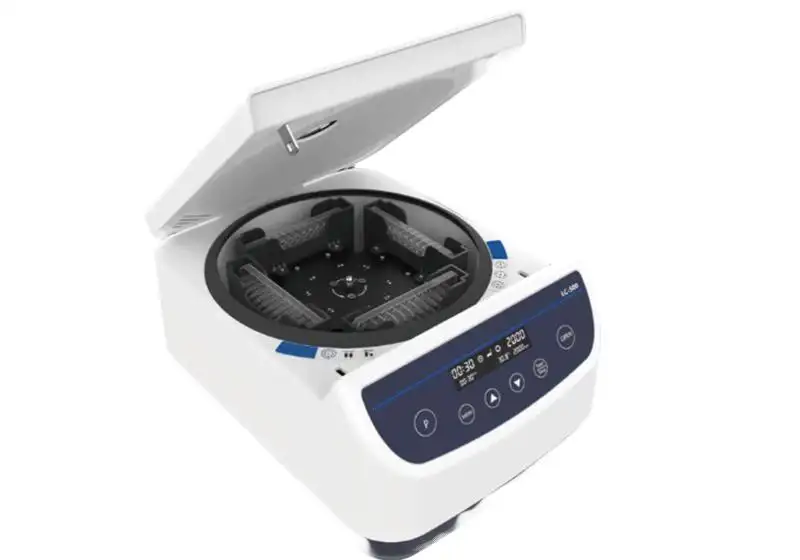
Trustlab has designed microplate centrifuges to help with this priority through even distribution of force and balanced rotation, in addition to practical operations and design that helps microplate centrifuges fit in the lab workflow.
Why Uniform Plate Processing is Important
Microplates are a great way for labs to analyze many samples under the same testing conditions. However, the value gained from microplates can be lost if there is inconsistent processing of the microplates.
Centrifugation can cause the samples to remain in the microplate wells or even in the microplate. Centrifugation can help position the microplate samples to the bottom of the microplate wells to help the next workflow.
Uniform plate processing can help:
• Sample Positioning: Balanced rotation helps position liquid at the bottom of multiple wells.
• Uniform and repeatable conditions can carry the workflow from the microplate to the next step in the PCR system, plate reader, or liquid handler.
• This microplate focuses on a trend in the scientific community that values repeatability and rigor in experimentation.
An example is the National Institutes of Health (NIH)'s growing focus on replication and reproducibility and the value they place on research practices that are standardized and can be repeated.
Key Highlight: Uniform Centrifugal Force
The Trustlab microplate centrifuge is uniquely designed to bring uniform centrifugal force to multi-well plates.
Today's laboratories view centrifugation as part of a connected chain of operations in sample preparation instead of a simple step in sample processing. Plate balance, rotor balance, control of vibrations, and consistency of rotation are just a few of the elements that determine the precision of sample placement.
The TL LC500-MP aids in sample preparation by:
• Balanced Rotation: The rotating mechanism allows the user to move the sample holder in a controlled manner across the sample preparation plate.
• Stable Operation: Predictable centrifugation is achieved during normal operations thanks to minimal vibrations of the equipment.
• Rapid Separation: Shorter time spans for the individual stages of the centrifugation process enable the design of more efficient workflows for repetitive tasks in the laboratory.
• Microplate Compatibility: The design of the equipment is based on the more common formats of laboratory plates.
• Ease of Use: Simple interface for different laboratory users to easily and quickly adjust and control the instrument.
The unique design of the TL LC500-MP around uniform force distribution gives laboratories a measurable advantage in both throughput and repeatability.
Tailored to 2026 Laboratory Needs
By 2026, consolidated laboratory workflows will take precedence over discrete instrumentation when planning laboratory purchases. Buyers will consider integration with automation, spatial constraints, sample throughput, staff, and room for future extension of the laboratory.
• The main themes of the SLAS Europe 2026 program are laboratory automation and IT, process efficiency, and high-quality data.
• Against this background, several centrifuge design priorities are becoming more relevant.
Compact Equipment With Practical Capacity
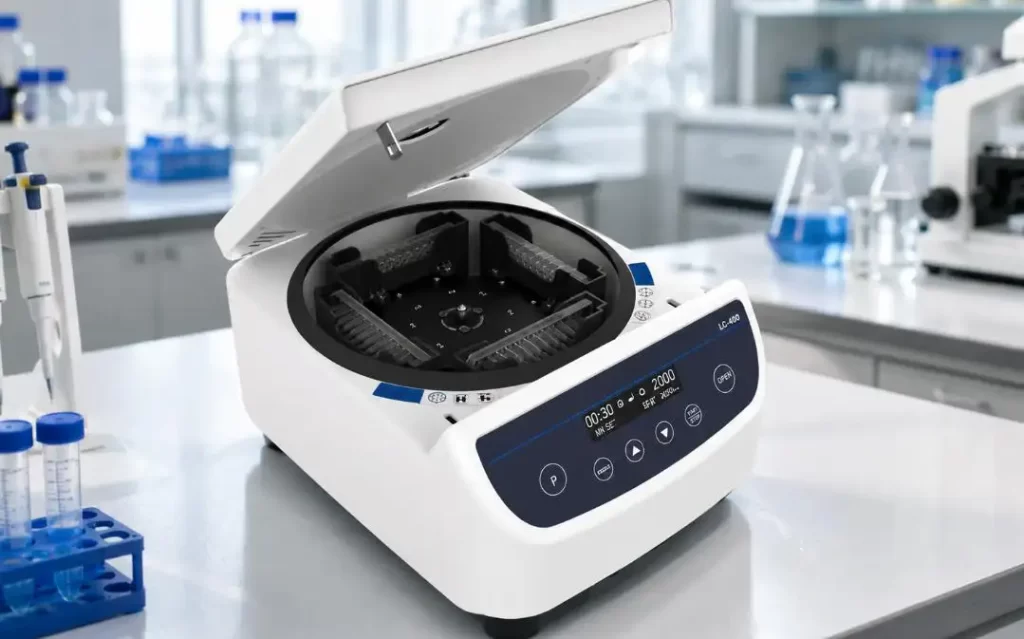
Many research, teaching, diagnostic, and biotechnology laboratories need to increase sample capacity while making thoughtful use of existing bench space. A compact microplate centrifuge provides dedicated plate processing without requiring a large installation area.
Its smaller footprint also allows laboratories to position the instrument closer to liquid-handling stations, PCR systems, or plate readers. This minimizes unwanted movements of plates during the workflow.
Assay Flexibility with Microplate Standards
Microplates may enhance or limit the flexibility of labware based on their dimensions. Most elements of labware, like the systems for storage and handling and the processes of centrifuging and reading, utilize microplates. The ANSI/SLAS standards are the most widely accepted microplate standards for framing, dimensions, well positions, and elevations.
For potential customers, alignment with the leading microplate standards provides:
• Choice of Variety of Plates: Their standards for assays dictate their selection of lab consumables.
• Optimization of Workflow: Standards of microplates and established formats ease the integration of centrifuging and other microplate-based labware.
• Fit for Automation: Compatible plate formats allow the integration of automated systems or semi-automated systems.
• Optimized Purchase: Established formats and standards allow alignment and purchase of labware and consumables.
More Than a Single Microplate Centrifuge
Trustlab believes in and focuses on more than just a single microplate centrifuge within their design and development philosophy. Being a manufacturer of laboratory equipment, Trustlab considers the influence of laboratory equipment on the workflows of clinical, research, and educational laboratories.
This implies a focus on the design of laboratory equipment that is based on:
• Workflow: The focus is on maintaining clean and simple tasks for each day.
• Dependability: The emphasis is on the consistency of a design.
• Adaptability: The focus is on the ability of a product to serve many functions.
• Design: the emphasis is on the user interface to lessen the burden of training on the system.
Portfolio Development: New products and ongoing research allow Trustlab to respond to changing laboratory applications.
Trustlab reports more than five years of continuous research and development, regular patent activity, and ongoing new-product introduction. Its products serve customers across more than 100 countries, giving the company practical experience with varied voltage requirements, laboratory layouts, applications, and purchasing expectations.
Manufacturing for Connected Laboratories
As laboratories become more automated, buyers increasingly prefer instruments that can support standardized, modular, and scalable workflows. Even when a centrifuge operates as a standalone device, its plate compatibility, processing consistency, footprint, and usability affect the performance of surrounding equipment.
Trustlab's advantage combines deep knowledge of product design engineering, application, and international trade. It aims to provide high-quality centrifugation tools for existing lab processes that are adaptable to the future changes of lab demands governed by higher sample volumes and advanced automation.
Final Words
The concept of Uniform Force Distribution directly addresses one of the key challenges for microplate processing, which is the ability to achieve consistent results over a large number of wells and within a very short time span.
Trustlab embraces the anticipated trends of laboratory purchasing for 2026 and consolidates the elements of balanced rotation and stable, fast, and compact design, which are microplate-compatible and centrifuge-related. In the context that buyers are considering a centrifuge manufacturer in China, the true benefit is in selecting a manufacturer who comprehensively grasps centrifuge design, along with the pertinent disciplines of microplate-based workflows, automation, and the future lab's need for sustainability and reproducible processes.
FAQs
Q1. What is the purpose of a microplate centrifuge?
The microplate centrifuge is used to separate samples in a microplate to the bottom of the wells in preparation for PCR, plate reading, or sample analysis.
Q2. What is the importance of uniform centrifugal force?
Uniform centrifugal force distributes samples evenly in each microplate well.
Q3. What type of microplates does the centrifuge accommodate?
The centrifuge is made to accommodate standard microplates used in the majority of laboratory testing and research.
Q4. Can a microplate centrifuge be used for PCR processes?
Yes. The centrifuge is able to collect sample droplets in the microplate after pipetting, sealing, or thermal cycling.
Q5. How does stable rotation assist in sample processing?
Stable rotation and low vibration makes it possible to achieve the same centrifugation conditions each time.