



Updated 1 week ago
Medical Centrifuge Supplier: Choosing the Right Centrifuge for Clinical Laboratory

Trustlab
The author is a specialist at Ningbo Trustlab Instruments Co., Ltd., a leading provider of laboratory and medical consumables since 2015. With extensive experience in global healthcare and laboratory markets, they focus on delivering high-quality, innovative solutions and professional support to laboratories, hospitals, and distributors worldwide. Trustlab’s products are trusted in over 100 countries, reflecting the company’s commitment to reliability, excellence, and customer satisfaction.

Medical Centrifuge Supplier
Choosing a supplier for medical centrifuges goes beyond considering maximum RPM. Clinical centrifuges affect sample separation and the efficiency of workflow while also influencing the risk associated with sample handling.
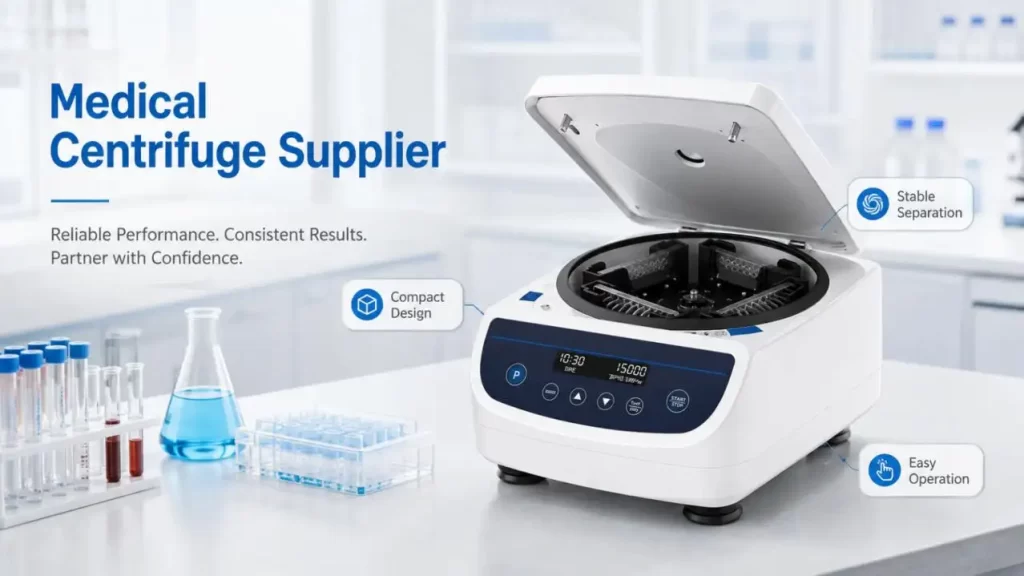
At TrustLab, we start with the sample when deciding on a centrifuge. We look at RCF, tube format, sample numbers, and temperature requirements. Our centrifuges quickly and efficiently separate small sample volumes, and have a small footprint and consistent performance in the lab.
What is a Medical Centrifuge?
A medical centrifuge uses centrifugal force to separate liquid sample components based on density. In many different lab processes, centrifugation separates blood, urine, cells, nucleic acids, proteins and other biological materials.
Due to this, a reputable Medical Centrifuge Supplier must be able to match the appropriate centrifuge to the actual separation methodology, as opposed to simply recommending equipment based on highest speed.
RCF vs. RPM: Why the Difference Matters
RPM describes how fast the rotor turns, but RCF (Relative Centrifugal Force) describes the effective centrifugal acceleration applied to the sample.
The relationship is commonly expressed as:
RCF = 1.118 × 10⁻⁵ × r × RPM²
where r is the rotor radius in centimeters.
This means two centrifuges running at the same RPM can generate different RCF values if their rotor radii differ. When transferring a laboratory protocol between centrifuges, matching RCF is therefore usually more meaningful than simply matching RPM.
In our view as a Medical Centrifuge Supplier, the best sequence is:
•Determine the desired result of the separation.
•Establish the required RCF.
•Identify the associated rotor and radius.
•Determine the associated RPM.
•Verify required sample volume, run time, and temperature.
This provides assurance that the separation requirement will not be lost due to overspeed.
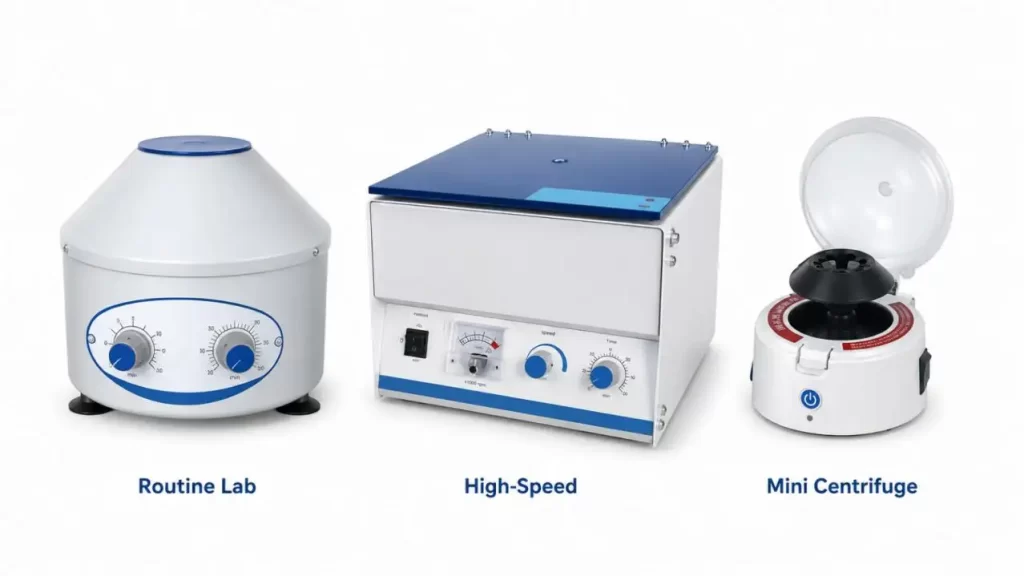
Which Medical Centrifuge Fits?
There is no medical lab centrifuge configuration that can be used in all situations.
| Type of Centrifuge | Typical Use | Main Selection Priority |
| Low speed centrifuge | Routine sample processing | Workflow and capacity |
| High speed centrifuge | Small volume separation | RCF and speed uniformity |
| Microcentrifuge | DNA, RNA, proteins, microtubes | Speed and small size |
| Refrigerated centrifuge | Temperature sensitive samples | Stable temperature |
| Hematocrit centrifuge | Processing capillary blood | RCF and rotor compatibility |
| Benchtop centrifuge | General laboratory use | Capacity and use |
Our line of centrifuges provides efficient small volume separation through both high speed and refrigerated benchtop configurations. Compact design allows labs to optimize limited bench space.
Rotor Type, Capacity and Tube Compatibility
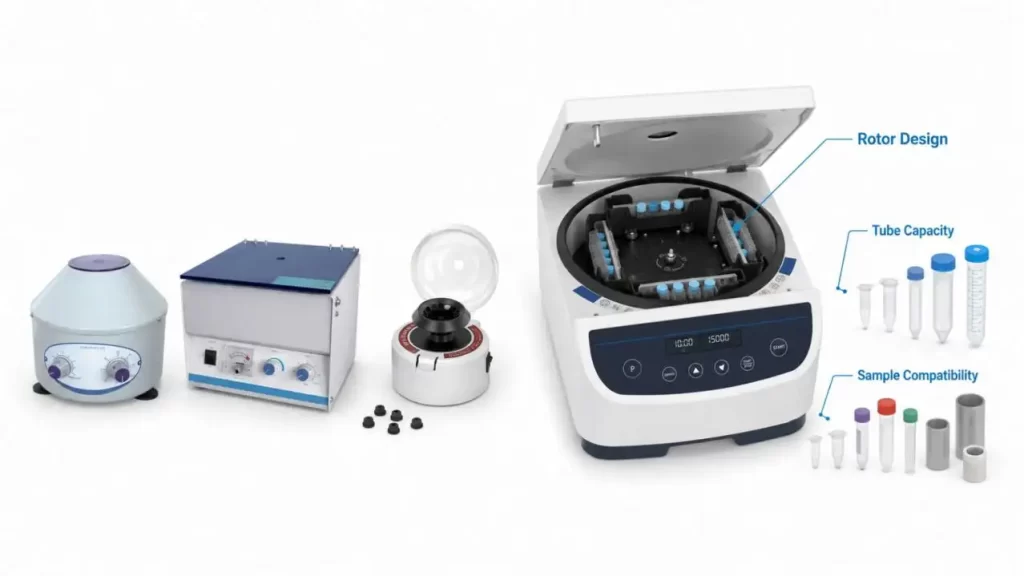
Rotors play a key role in both separation and the throughput of the lab.
Fixed-Angle Rotors
Rotors of this type have tubes at a set angle and can be used with higher speed and force. They are ideal for rapid spinning.
Swing-Out Rotors
Swing-out designs allow tubes to move toward a horizontal position during centrifugation, making them useful where clear horizontal sample layering is important.
Before selecting equipment from any Medical Centrifuge Supplier, buyers should verify:
•Tube diameter and length
•Individual tube volume
•Number of rotor positions
•Required adapters
•Maximum permitted RCF
•Required batch capacity
Higher capacity is not automatically better. A laboratory processing small microtubes frequently may benefit more from fast, compact equipment than from a larger rotor with unused capacity.
When Is Refrigeration Necessary?
Centrifugation can cause unwanted heating; combined with the heat sensitivity of some samples, temperature control can be essential.
These systems are typically used with cells, proteins, enzymes, RNA, and other temperature-sensitive materials that require a controlled environment. Refrigeration drives up the cost of these systems and should be used as sparingly as possible.
It is important to determine whether a refrigerated system is really necessary based on the protocol to be run. Centrifugation guidelines recommend that multiple parameters, including the type of sample and container, rotor speed and temperature, and the duration of a run, be considered as a system.
Speed Stability, Vibration and Repeatability
Maximum speed is important to note in specifications, but stable operation is more important than speed.
Reliable balancing of samples helps minimize the stress on the rotor during operation. Centrifugation that is not reliably balanced can damage the rotor and yield unreliable results.
Trustlab's centrifuges are designed for long, continuous runs at high speeds to efficiently handle small-volume separations. We focus on streamlining the control system to make our machines easier to use and more reliable in repetitive tasks in the lab. This simplifies equipment operation for the user.
Safety Must Be Part of Centrifuge Selection
Because rotors operate at high rotational speeds, safety cannot be separated from performance.
When evaluating a Medical Centrifuge Supplier, laboratories should consider:
•Rotor integrity and rated maximum speed
•Secure lid operation
•Protection against excessive speed
•Imbalance management
•Controlled acceleration and braking
•Correct sample balancing
•Easy cleaning and maintenance
•Clear operating documentation
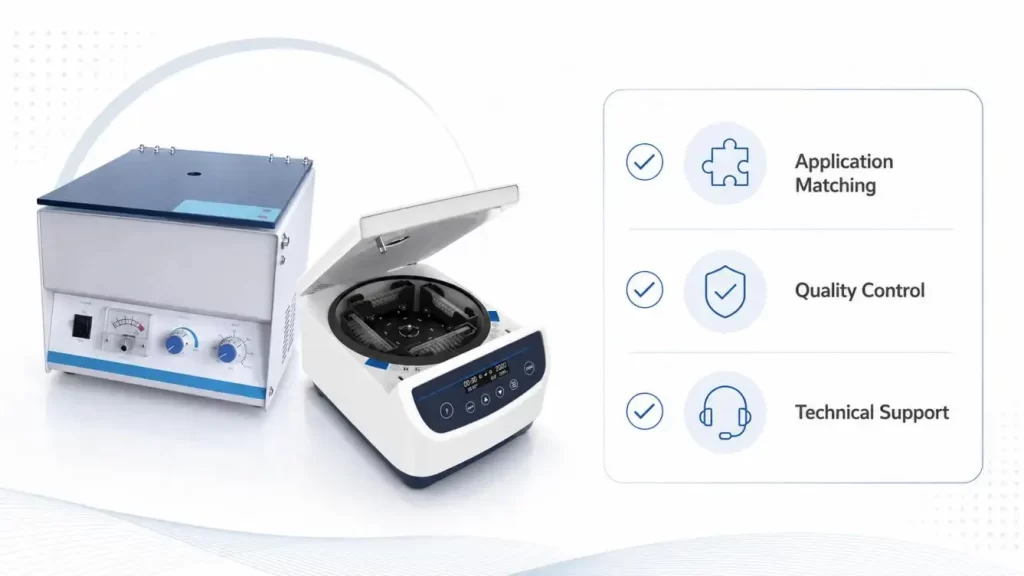
Trustlab states that its laboratory equipment is manufactured in compliance with CE and ISO certifications and undergoes quality testing focused on performance, safety, and reliability.
Choose the Centrifuge Around the Application
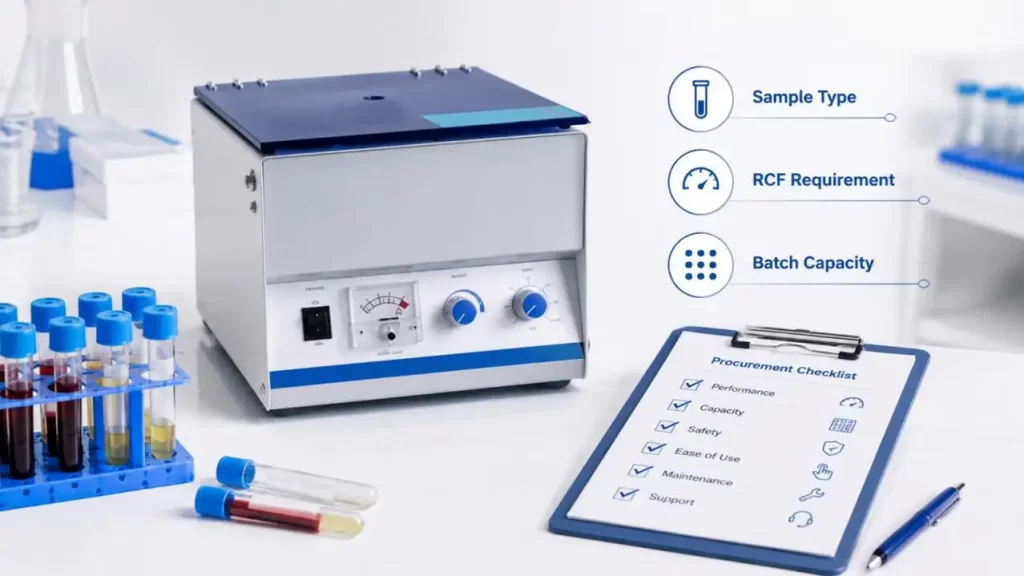
The right medical centrifuge is determined by the combination of RCF, rotor geometry, sample format, capacity, temperature, operating stability, and safety.
At Trustlab, we design and supply centrifuges with an emphasis on high-speed separation, compact laboratory integration, straightforward operation, durable construction, and consistent performance. Our laboratory equipment is supplied to hospitals, universities, research institutions, and industrial laboratories internationally.
If you are evaluating a Medical Centrifuge Supplier, share your sample type, tube size, required RCF, batch capacity, temperature requirement, and intended workflow with Trustlab. We can help evaluate a centrifuge configuration that fits the practical requirements of your laboratory rather than simply recommending the highest available specification.
FAQs
Q1. How does Trustlab stabilize centrifuge repeatability?
Stable rotational performance and balance, controlled operation, and consistent sample separation all contribute to repeatable workflows in Trustlab's centrifuges.
Q2. Which centrifuge applications can Trustlab cover?
Trustlab centrifuges can cover routine sample separation in the lab and small-scale sample processing of blood and other biological samples, as well as diagnoses involving proteins and nucleic acids, cells, and other lab specimens.
Q3. Can Trustlab recommend a centrifuge with respect to RCF?
Yes, the buyer can specify the RCF, sample type, tube size, rotor preference, and batch capacity, and Trustlab can evaluate the options for available centrifuges regarding the actual separation protocol.
Q4. Does Trustlab offer high-speed medical centrifuges?
Trustlab's catalog includes a series of high-speed separation centrifuges for small sample volumes with high G-forces.
Q5. Does Trustlab make refrigerated centrifuges?
Yes, high-speed separation is possible using a refrigerated centrifuge for temperature-sensitive lab specimens.
Written by
Trustlab
The author is a specialist at Ningbo Trustlab Instruments Co., Ltd., a leading provider of laboratory and medical consumables since 2015. With extensive experience in global healthcare and laboratory markets, they focus on delivering high-quality, innovative solutions and professional support to laboratories, hospitals, and distributors worldwide. Trustlab’s products are trusted in over 100 countries, reflecting the company’s commitment to reliability, excellence, and customer satisfaction.


