



Updated 1 week ago
Micro Centrifuge for DNA and RNA Extraction: How Temperature Control Protects RNA Integrity

Trustlab
The author is a specialist at Ningbo Trustlab Instruments Co., Ltd., a leading provider of laboratory and medical consumables since 2015. With extensive experience in global healthcare and laboratory markets, they focus on delivering high-quality, innovative solutions and professional support to laboratories, hospitals, and distributors worldwide. Trustlab’s products are trusted in over 100 countries, reflecting the company’s commitment to reliability, excellence, and customer satisfaction.

Micro Centrifuge for DNA and RNA Extraction
Purity of RNA is dependent on the consistency and care with which samples are handled. Along with contamination by RNases, changes in temperature while centrifuging samples also impact the stability and integrity of temperature-sensitive samples. Therefore, management of temperature is critical when purchasing a Micro Centrifuge for DNA and RNA extraction.
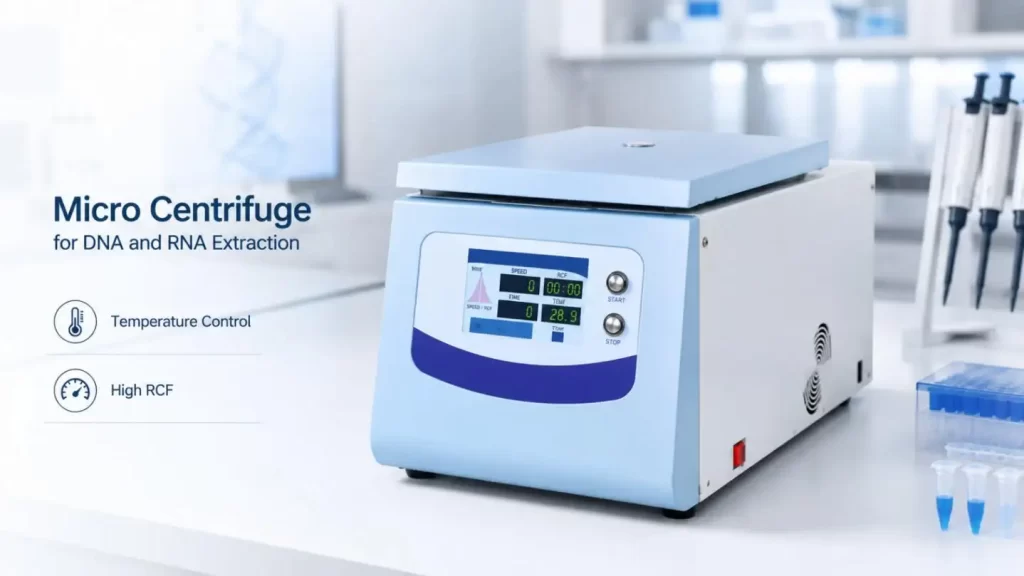
Recoulation alone will not yield high-quality RNA. Combinations that offer sufficient RCF, stable temperature, geometry of rotors, speed control, timed runs and RNAs of desired quality which include following the extraction protocol and not using a rigid rule such as "all RNA centrifugation must be done at 4°C."
Why Temperature Control Matters in RNA Extraction
RNA is more chemically labile than DNA and is subject to RNase-mediated hydrolysis. During a lengthy sample preparation process, repeated centrifugation may be necessary for clarifying samples, phase separation, washing membranes, precipitation, or elution preparation.
Temperature control is of utmost importance when:
•Sample processing requires refrigerated centrifugation.
•Centrifugation is required for long times or repeated high-speed spins.
•Prior to stabilization, RNA-abundant biological samples are processed.
•Thermo-sensitive proteins and RNA complexes are preserved.
•Thermal stability needs to be maintained throughout subsequent processing.
For these protocols, a Micro Centrifuge for DNA and RNA Extraction helps reduce thermal fluctuations during sample processing.
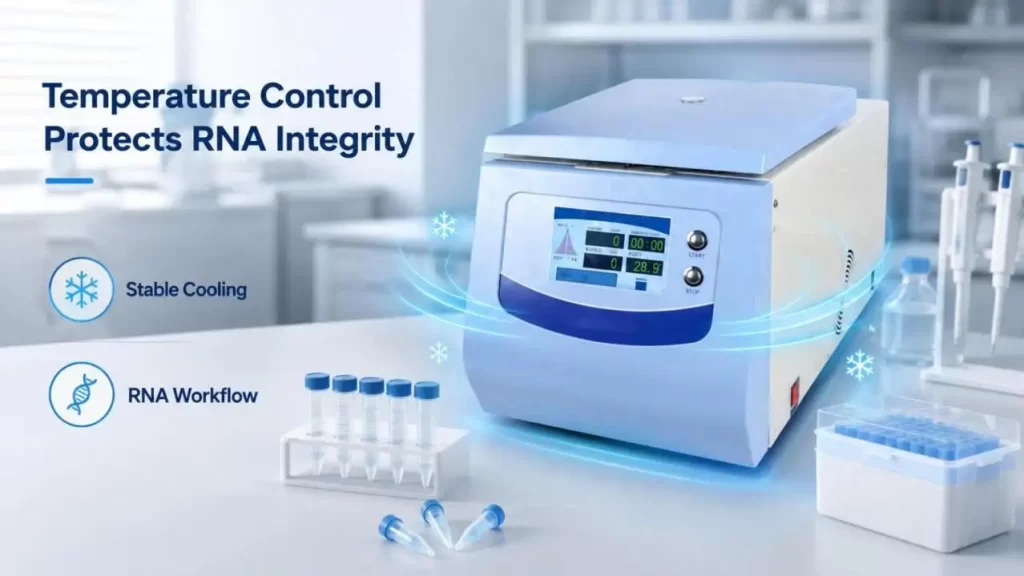
High-Speed Centrifugation Creates a Thermal Load
A centrifuge chamber is not a thermally static environment. At high rotor speeds, heat can arise from several sources:
•Rotor-air friction
•Motor operation
•Bearing friction
•Repeated acceleration and braking
•Extended centrifugation cycles
•Heat transferred from the laboratory environment
This effect is particularly important in compact high-speed centrifuges because the rotor operates at high angular velocity within a relatively small chamber.
A refrigeration system must therefore do more than reach a low temperature before operation. It must also compensate for the thermal load generated during the run.
Set Temperature Is Not the Same as Sample Temperature
A common mistake is to assume that a displayed chamber temperature directly represents the liquid temperature inside every microtube.
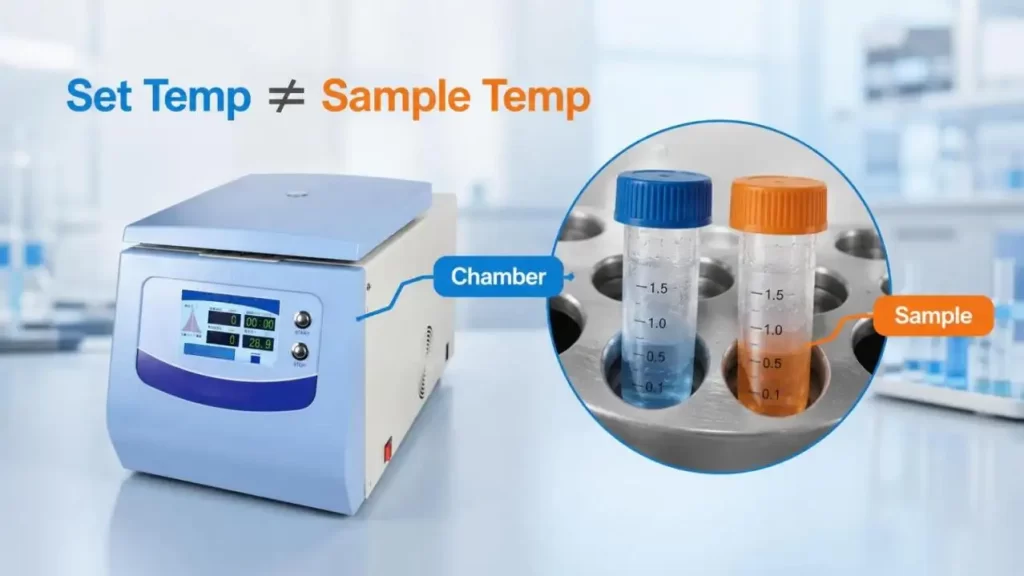
Actual sample temperature can also depend on:
•Initial rotor temperature
•Initial sample temperature
•Rotor material and mass
•Sample volume
•Tube material
•Centrifugation duration
•Rotor speed
•Ambient temperature
Laboratories need to consider the temperature range, the accuracy of temperature, the ability to pre-cool, and cooling performance at lower temperatures and under high-speed conditions as a combination.
The design of TrustLab's refrigerated micro centrifuges enables a temperature range from -20°C to +40°C, with a specified value of ±1°C, providing the ability to carry out protocols requiring refrigerated or defined-temperature centrifugation within a controlled operating window.
Which Temperature Parameters Should Laboratories Consider?
When purchasing a Micro Centrifuge for DNA and RNA Extraction, the lowest temperature value is not enough information.
| Temperature Parameter | Technical Significance |
| Temperature range | Determines the operating window |
| Temperature accuracy | Enables defined control of temperature |
| Cooling under load | Helps to control heat during high-speed operation |
| Pre-cooling | Prevent thermal equilibration before centrifugation |
| Rotor temperature | Determines the initial sample temperature |
| Recovery between runs | Important for continuous batch processing |
For RNA labs doing consecutive batch runs, thermal recovery can be as important as the nominal minimum temperature.
Pre-Cooling Should Be Part of the SOP
If the extraction method requires cold centrifugation, pre-cooling the rotor and centrifuge chamber can reduce the temperature difference between the sample and centrifuge environment at the beginning of the run.
Pre-cooling is especially useful for:
•Repeated high-speed centrifugation
•Longer spin cycles
•Temperature-sensitive RNA preparations
•High-throughput sample processing
It should be treated as part of the laboratory SOP rather than as a substitute for sufficient refrigeration capacity.
RCF and Temperature Must Be Evaluated Together
Temperature control cannot compensate for insufficient centrifugal force. Conversely, selecting the highest possible RPM does not automatically improve extraction performance.
A Micro Centrifuge for DNA and RNA Extraction should be chosen according to the specific standards of the extraction protocol.
| Selection Factor | Why It Matters |
| Maximum RCF | Force for gravity-based separation |
| Temperature Control | Enables control of specified thermal conditions |
| Speed Accuracy | Consistency and control of run-to-run variability |
| Rotor Capacity | Determines the batch throughput |
| Tube Compatibility | Fits extraction tubes and spin columns |
| Timer Control | Conforms to individual steps of the protocol |
| Acceleration/Braking | Controls disturbance of the pellet and reduces throughput time |
| Safety Protection Features | Stabilizes high speed operation |
Trustlab's Micro Centrifuge meets these important features with refrigerated centrifugation with a force of up to 21,532 × g, a speed of ±30 rpm, a programmable timer, and a rotor design for 36 × 1.5/2.2 mL tubes Micro.
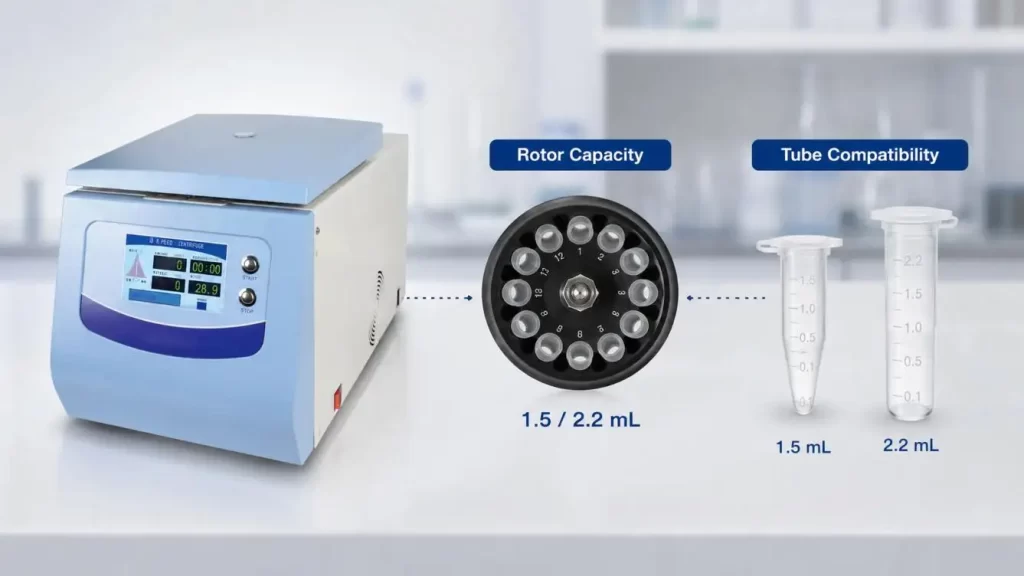
Spin Columns and Microtube Compatibility Matter
Many DNA and RNA purification workflows use 1.5–2.0 mL microcentrifuge tubes or silica-membrane spin columns. Rotor geometry therefore deserves the same attention as speed.
A suitable Micro Centrifuge for DNA and RNA Extraction should provide:
•Adequate clearance for tube caps and spin columns
•Stable positioning at high RCF
•Sufficient capacity for the required batch size
•Rotor options matched to the laboratory workflow
•Convenient loading for repetitive processing
For higher-throughput laboratories, increasing rotor capacity can reduce the number of centrifugation cycles, but a larger rotor also introduces greater rotating mass and thermal load. Capacity, refrigeration, and acceleration performance should therefore be considered as one system.
Why Higher RCF Is Not Always Better
Once the required separation force is achieved, additional RCF does not necessarily improve RNA purity or integrity. Excessive speed can also depart from the validated extraction protocol.
The more practical selection approach is to define:
•Required ×g for each centrifugation step
•Required operating temperature
•Spin duration
•Number of samples per batch
•Tube or spin-column format
•Acceptable acceleration and braking behavior
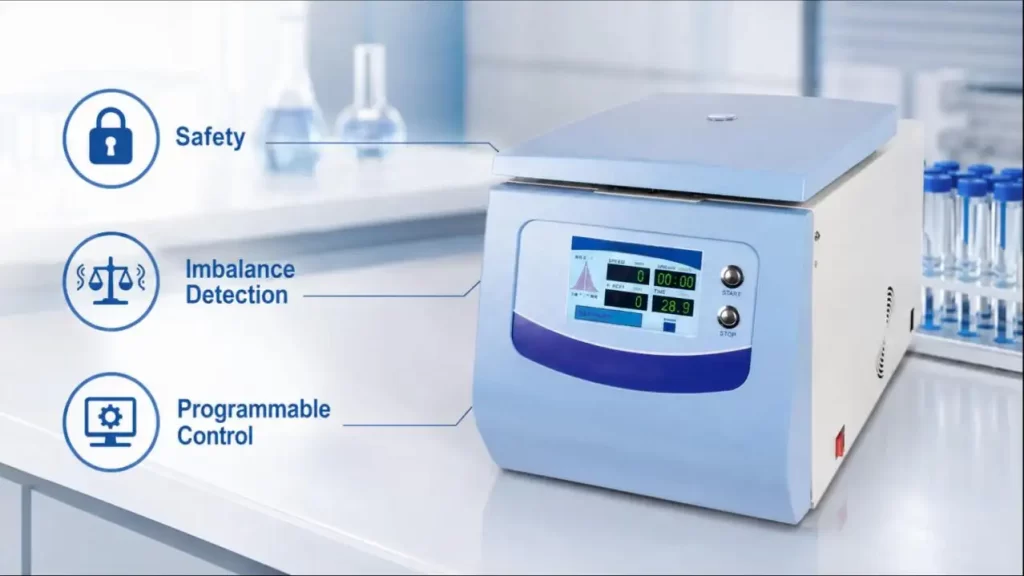
This is why Trustlab integrates microprocessor control, programmable operating parameters, LCD monitoring, lid interlock, and imbalance detection into its refrigerated centrifuge platform. These controls help maintain repeatable operating conditions during routine molecular-biology workflows.
Final Words
For laboratories, distributors, and molecular-biology equipment buyers, Trustlab can support the configuration of a Micro Centrifuge for DNA and RNA Extraction around practical RCF, temperature, rotor, and throughput requirements. Matching the centrifuge to the actual extraction protocol provides a more reliable basis for equipment selection than comparing maximum speed alone.
FAQs
Q1. Are Trustlab micro centrifuges suitable for spin-column extraction?
Trustlab's micro centrifuges use the industry-standard microtube formats and can be customized. Ensure the dimensions, rotor clearance, operating RCF, and spin-column fit are reviewed prior to finalizing a model.
Q2. What temperature setting range can Trustlab provide for cold micro centrifugation?
The low temperature setting range for Trustlab's cold micro centrifuge is -20°C, and the high temperature setting range is +40°C. This allows the lab to suit the temperature settings in alignment with the extraction methodology used.
Q3. How precise is the temperature control?
The temperature control is +/- 1°C, thereby providing the lab with precision in heat control so that repeat processing of DNA and RNA samples is performed consistently.
Q4. What is the maximum RCF [relative centrifugal force] that Trustlab offers?
Trustlab's cold micro centrifuges achieve a maximum RCF of 21,532 x g; it is thus suited for many high speed microtube and nucleic acid sample prep procedures.
Q5. What sample capacity does Trustlab offer?
36x 1.5/2.2 mL microtubes can be processed concurrently in Trustlab's microcentrifuges and therefore can be used for high throughput sample processing as well as large volume sample processing.
Written by
Trustlab
The author is a specialist at Ningbo Trustlab Instruments Co., Ltd., a leading provider of laboratory and medical consumables since 2015. With extensive experience in global healthcare and laboratory markets, they focus on delivering high-quality, innovative solutions and professional support to laboratories, hospitals, and distributors worldwide. Trustlab’s products are trusted in over 100 countries, reflecting the company’s commitment to reliability, excellence, and customer satisfaction.


