


Updated 3 weeks ago
qPCR Consumables Supplier: How to Choose the Right Partner for Reliable Amplification Workflows
trustlabofficial

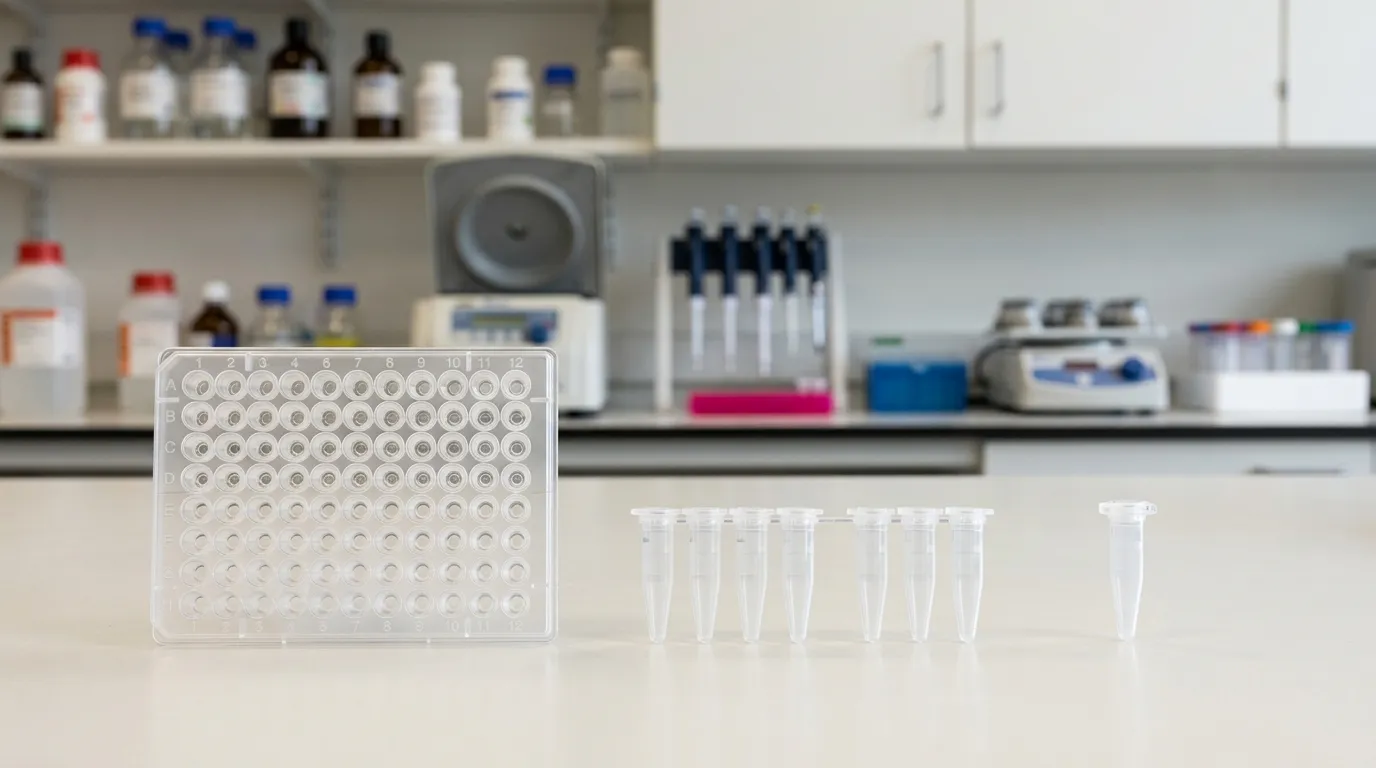
96-well qPCR plate, PCR tube strips, and optical sealing film on a laboratory benchtop
Choosing a qPCR consumables supplier is a procurement decision that directly affects the quality of your amplification data. The right supplier provides consumables manufactured under controlled conditions, with documented purity grades and lot-specific quality records. The wrong choice introduces variables — contamination, PCR inhibitors, evaporation, or optical interference — that compromise reproducibility and force you to repeat experiments.
A reliable qPCR consumables supplier demonstrates verifiable quality through cleanroom manufacturing, certified purity grades (DNase-free, RNase-free, PCR-inhibitor-free), and available lot-specific documentation. This guide explains what to evaluate when sourcing qPCR plates, tubes, strips, and sealing films — and how to verify supplier claims before you commit to an order.
For a closer look at tube-specific manufacturing processes, see our pcr tubes manufacturer overview.
What to Look for in a qPCR Consumables Supplier
Evaluating a qPCR consumables supplier requires more than checking product availability. The supplier's manufacturing environment, quality systems, and documentation practices determine whether their consumables will perform consistently in your workflow.
Quality Certifications and What They Mean for qPCR Consumables
Quality management system (QMS) certificates such as ISO 9001 and ISO 13485 certify that a manufacturer maintains documented, repeatable processes. They do not certify that a specific product is sterile, free of nucleases, or approved for a particular clinical use.
When a supplier cites ISO certification, ask what the certificate covers:
| Certificate Type | What It Certifies | What It Does Not Certify |
|---|---|---|
| ISO 9001 | Quality management system for manufacturing processes | Product purity, sterility, or performance |
| ISO 13485 | Quality management system for medical devices | Product-level regulatory approval (CE, FDA) |
| Product-specific claims | Purity grades, sterility, performance figures | Requires separate product-level evidence |
Suppliers should be able to show you the certificate scope and explain how their QMS translates into batch-to-batch consistency for the consumables you are buying.
Purity Grades: What "Reliable" Actually Means
For qPCR, consumables must not introduce contaminants that degrade nucleic acids or inhibit polymerase activity. Three purity grades matter most:
DNase-free means the product contains no detectable DNA-degrading enzymes. DNase contamination would degrade your template DNA before amplification begins.
RNase-free means the product contains no detectable RNA-degrading enzymes. This is essential for RT-qPCR workflows where RNA template integrity determines results.
PCR-inhibitor-free means the product does not introduce substances that interfere with polymerase activity. Inhibitors can include residual dyes, detergents, heavy metals, or chemicals left from manufacturing. Even trace amounts raise Cq values or cause complete reaction failure.
Some suppliers also offer endotoxin-free consumables. Endotoxins are bacterial cell wall components that can interfere with sensitive assays, particularly those involving cell-based systems or certain diagnostic applications.
A supplier should be able to explain which purity grade each product carries and provide evidence through lot-specific testing.
Cleanroom Manufacturing and Raw Material Quality
Two manufacturing factors support purity claims:
Cleanroom production minimizes airborne particulate contamination during molding, packaging, and handling. Cleanroom classifications (for example, Class 100,000 / ISO 8) indicate the maximum allowable particle counts. A supplier should state its cleanroom class and explain how it controls contamination throughout the production process.
Virgin polypropylene is the standard raw material for PCR consumables. Polypropylene is biologically inert, withstands the thermal cycling temperatures used in qPCR (typically up to 95–100°C), and can be molded into thin-walled tubes and plates with the thermal conductivity needed for efficient heat transfer. "Virgin" means the material has not been recycled or blended with reprocessed plastics, which could introduce impurities or inconsistent thermal properties.
Documentation and Verification Checklist
Before placing a bulk order, request and review these documents:
- Lot-specific certificates of analysis (COAs) — verify the specific batch you receive meets stated purity grades
- Test methodology descriptions — understand how DNase, RNase, and PCR-inhibitor levels were tested
- Environmental monitoring reports — confirm cleanroom conditions during production
- Certificate scope and validity dates — confirm the supplier's QMS certificates are current and relevant
Red flags to watch for:
- Generic "ISO compliant" language without a named certificate or scope
- Purity claims without test methodology or lot-specific evidence
- Reluctance to provide documentation before purchase
- No response to questions about manufacturing conditions
Questions to Ask a Supplier Before Ordering
- What cleanroom class is used for production?
- Can you provide a lot-specific COA for each batch?
- What test methods are used to verify DNase-free and RNase-free status?
- Which purity grades apply to which specific products?
- Do you provide export documentation for international shipments?
- What packaging protects consumables during transit?
Choosing the Right qPCR Consumables for Your Workflow
Once you have identified a supplier that meets your quality requirements, the next step is selecting the consumable format that fits your thermal cycler, throughput, and automation needs.
Plates vs. Tubes vs. Strips: Matching Format to Throughput
| Format | Best For | Considerations |
|---|---|---|
| 96-well plates | Standard qPCR workflows, moderate-to-high throughput | Matches most standard thermal cyclers; good for automation |
| 384-well plates | High-throughput screening, low-volume reactions | Requires compatible cycler block and precision pipetting |
| Strip tubes (8 or 12 wells) | Smaller batches, flexible runs | Reduces plate handling; good for optimization experiments |
| Individual tubes | Single reactions, maximum flexibility | Requires cap strips or individual caps; higher handling time |
Plates offer the highest throughput and are the standard for qPCR workflows involving many samples. Strip tubes balance flexibility with convenience — you can process eight samples without loading a full plate. Individual tubes suit small, variable experiments.
For automation workflows, plates — particularly skirted plates — provide the rigid structure robotic handlers need. Non-skirted plates are lighter and fit many standard cyclers but may flex under automated handling.
White vs. Transparent Wells: Why It Matters for Fluorescence Detection
White wells reflect emitted fluorescence upward toward the detector, increasing signal intensity and reducing cross-talk between adjacent wells. For most qPCR instruments, white wells improve detection sensitivity and data quality.
Transparent wells are suitable for certain instrument geometries, particularly systems that read fluorescence from above with minimal cross-talk concerns. Before choosing, check your thermal cycler's optical design and manufacturer recommendations.
| Well Type | Signal Behavior | Typical Use |
|---|---|---|
| White | Reflects emitted light; higher signal; reduced cross-talk | Most qPCR instruments; preferred for sensitive detection |
| Transparent | Transmits light; may allow cross-talk | Specific instrument geometries; some multiplex chemistries |
Skirted vs. Non-Skirted Plates and Automation Compatibility
The skirt — the rigid plastic wall surrounding the plate's wells — affects structural stability and automation fit.
- Skirted plates have a full rigid frame that resists flexing. They are the preferred choice for automated liquid handling and robotic systems.
- Semi-skirted plates offer moderate rigidity while fitting more thermal cycler block configurations.
- Non-skirted plates are lighter and more flexible. They work well for manual pipetting workflows and many standard cyclers.
Always verify plate dimensions and skirt type against your thermal cycler's compatibility list. A plate that fits the block but interferes with the instrument's optical path or heated lid will compromise your results.
Sealing Options: Optical Films, Foils, and Cap Strips
Proper sealing prevents evaporation, maintains reaction volume, and protects samples from contamination during amplification.
| Seal Type | Key Feature | Best For |
|---|---|---|
| Optical adhesive films | Transparent to excitation and emission light | qPCR reaction plates; compatible with fluorescence detection |
| Foil seals | Light-blocking; robust seal | Long-term storage; some heated-lid protocols |
| Cap strips | Individual sealing for tube strips | Strip tube workflows |
Optical films must remain transparent across the fluorescence wavelengths your instrument detects. They also need to maintain a tight seal across the full thermal cycling temperature range to prevent evaporation — a common cause of high Cq values and inconsistent results.
How to Verify Supplier Claims: Documentation and Checks
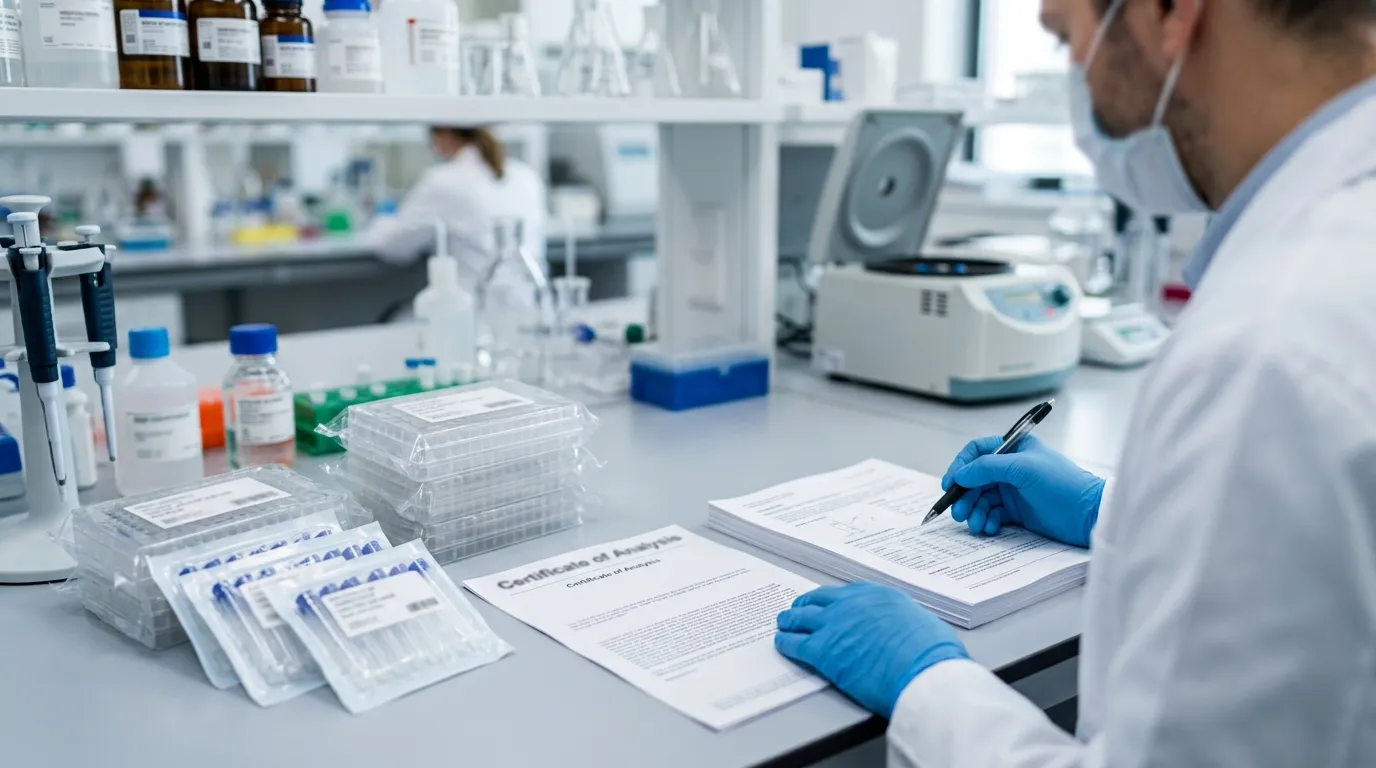
Verifying supplier claims is a practical process that protects your workflow and your budget. The cost of a failed experiment — repeated runs, wasted reagents, lost time — far exceeds any savings from choosing a supplier on price alone.
Documents to Request
- Lot-specific certificate of analysis (COA) for each batch you receive
- Test methodology summaries that describe how DNase-free, RNase-free, and PCR-inhibitor-free status was determined
- Manufacturing environment records confirming cleanroom conditions during production
- Certificate of conformance confirming materials match specifications (for example, virgin polypropylene)
What to Check in a COA
- Lot number matches the product batch you received
- Test date is recent and within the product's shelf life
- Test methods are named and appropriate (for example, fluorometric or enzymatic assays for nuclease detection)
- Lot-release tests are performed on every batch, not just type tests on occasional samples
Red Flags
- Purity claims without named test methods
- "Complies with ISO" language without a specific standard or certificate
- COAs that do not include lot-specific data
- Reluctance to provide documentation before ordering
Why Trustlab for qPCR Consumables?
Trustlab — Ningbo Trustlab Instruments Co., Ltd. — is a B2B manufacturer and supplier of laboratory and medical consumables based in Ningbo, China. The company's Life Science category includes PCR plates, PCR tubes, and related consumables designed for molecular biology workflows.
For tube-specific manufacturing capabilities and product detail, visit our pcr tubes manufacturer page.
Trustlab maintains ISO 9001 and ISO 13485 quality management system certificates. As with any supplier, we encourage you to review the certificate scope and request product-specific documentation — including purity testing evidence and lot-specific certificates — before placing orders.
Trustlab serves laboratory customers worldwide with export documentation and international shipping support. We welcome requests for product documentation, sample evaluation, and specification discussions. Contact our team to discuss your qPCR consumables requirements and request documentation that demonstrates our quality commitments.
Frequently Asked Questions
What documentation should I request from a qPCR consumables supplier?
Request lot-specific certificates of analysis, test methodology summaries, cleanroom monitoring records, and certificate of conformance for raw materials. These documents verify that the specific batch you receive meets stated purity grades.
Do white plates actually improve qPCR sensitivity?
White wells reflect fluorescence toward the detector, increasing signal intensity and reducing well-to-well cross-talk. For most qPCR instruments, this improves detection sensitivity and data reliability compared with transparent wells.
Can I reuse PCR plates and tubes?
PCR consumables are designed for single use. Reuse risks cross-contamination between samples, residual inhibitors from previous reactions, and compromised well integrity. The cost of a failed experiment far exceeds the cost of new consumables.
What is the difference between DNase-free, RNase-free, and PCR-inhibitor-free?
DNase-free means no DNA-degrading enzymes are detectable. RNase-free means no RNA-degrading enzymes are detectable — essential for RT-qPCR. PCR-inhibitor-free means the product introduces no substances that interfere with polymerase activity. These are distinct claims requiring separate testing.
Are qPCR consumables compatible with automated workflows?
Skirted plates provide the structural rigidity automation systems require. Non-skirted and semi-skirted plates may suit manual workflows. Verify plate dimensions, skirt type, and sealing compatibility against your automation system's specifications.
Ready to Evaluate Trustlab for Your qPCR Workflow?
We understand that choosing a consumables supplier requires confidence in quality, documentation, and long-term consistency. Request our product catalog, purity documentation, or sample materials to evaluate Trustlab's qPCR consumables against your requirements. Our team can help you match the right plates, tubes, and sealing options to your thermal cycler and workflow.