



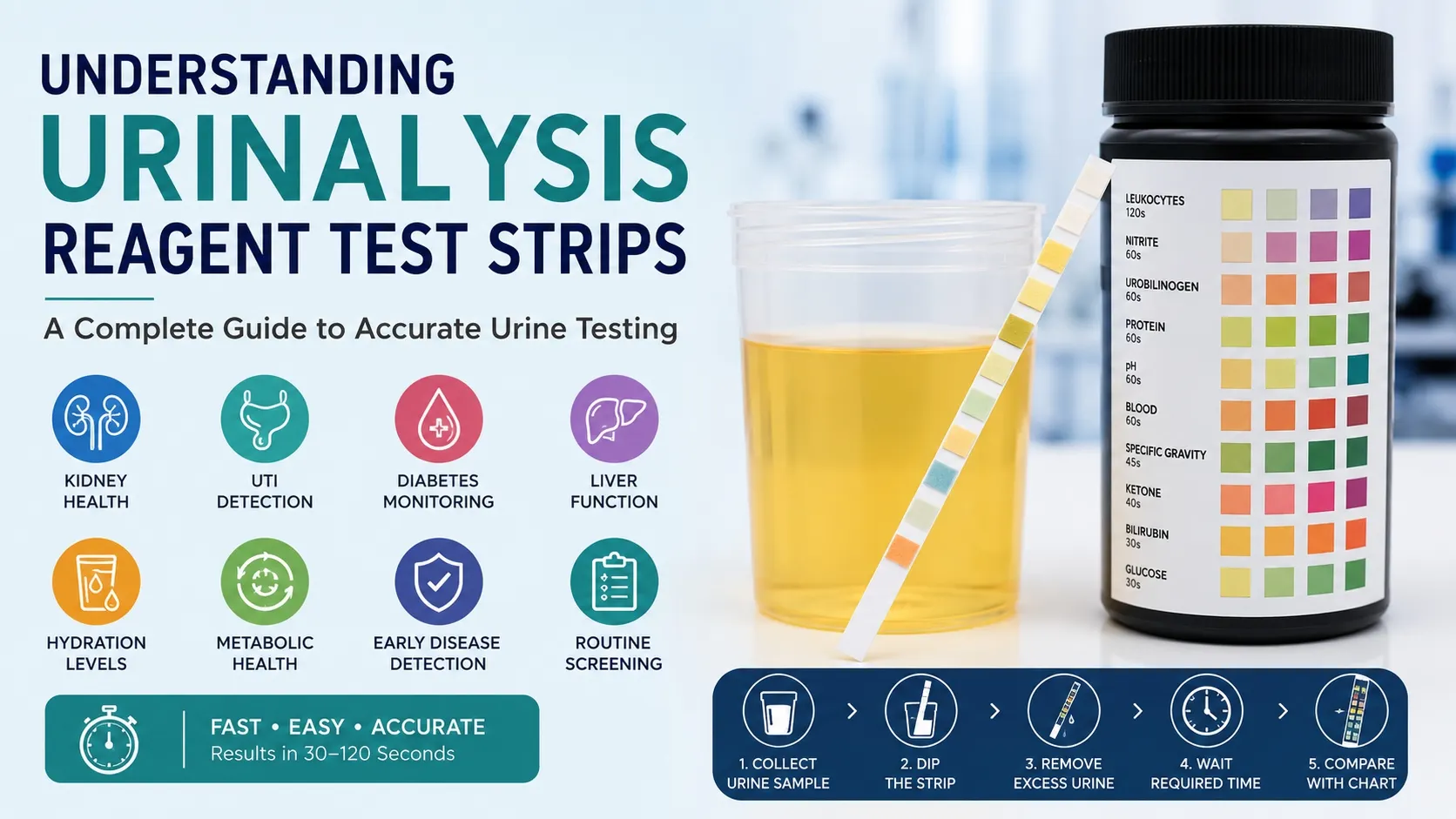
reagent strips for urinalysis
Among all of the diagnostic tests, urinalysis reagent test strip is one of the most popular ones used in the healthcare and home testing sector. The small plastic strips offer quick information about kidney function, urinary tract infection (UTI), diabetes, liver function, hydration status and metabolic diseases. Urine test strips are valuable at the clinical level, the laboratory, or at home to help keep track of overall wellness that is convenient and cost-effective.
Here you will find out how urinalysis reagent strips work, what each parameter is, how to accurately interpret the results and common errors that can impact test accuracy.
What Are Urinalysis Reagent Test Strips?
Urine dipsticks, or urinalysis reagent strips, are thin plastic sticks that contain chemical pads. Each pad is specific to a certain substance in urine. The strips will change colour in the presence of different chemical substances (analytes) in the urine.
These strips are usually employed for:
- Routine health screenings
- Diabetes monitoring
- Detecting urinary tract infections
- Evaluating kidney function
- Monitoring hydration and metabolism
- Liver disease screening
Most modern urine reagent strips can test between 2 and 14 parameters simultaneously.
How Do Urine Reagent Strips Work?
Chemicals to react with compounds in urine are present in each reagent pad. The strip is dipped into sample and chemical reactions take place on the strip pads, resulting in colour changes. The colors are then compared to a color chart supplied by the manufacturer.
The testing process will normally include:
- Collecting a fresh urine sample
- Dipping the strip briefly into the sample
- Removing excess urine
- Waiting for the recommended reaction time
- Comparing colors with the chart
Most results are available within 30 seconds to 2 minutes.
Key Parameters Measured by Urinalysis Test Strips
1. Glucose
The urine is tested for sugar using the glucose pad. Healthy kidneys do not allow glucose to pass into the urine.
The following are possible indications of positive glucose results:
- Diabetes mellitus
- Hyperglycemia
- Kidney tubular disorders
High urine glucose levels often require further blood sugar testing.
2. Protein
Increased protein in the urine (or proteinuria) may be the first sign of kidney damage.
The following may be indicated by high protein levels:
- Kidney disease
- Hypertension
- Diabetes complications
- Kidney infections
Small trace amounts may sometimes appear temporarily after exercise or dehydration.
3. pH
Urine pH measures acidity or alkalinity.
Typical urine pH range:
4.5≤pH≤8.04.5 \leq pH \leq 8.0
Acidic urine may be associated with:
- High-protein diets
- Dehydration
- Kidney stones
Alkaline urine may indicate:
- Urinary tract infections
- Vegetarian diets
- Certain medications
Urine pH helps assess metabolic balance and kidney function.
4. Ketones
Ketones are substances that start to form when the body uses fat for fuel, rather than glucose.
Common causes include:
- Diabetes
- Fasting
- Low-carbohydrate diets
- Starvation
- Severe vomiting
If there are high levels of ketones in a diabetic patient, it can be a serious medical condition called diabetic ketoacidosis (DKA).
5. Blood
The blood pad detects red blood cells or hemoglobin in urine.
Possible causes include:
- Urinary tract infections
- Kidney stones
- Kidney disease
- Trauma
- Intense exercise
Menstrual contamination can also produce false-positive results.
6. Leukocytes
Leukocyte esterase indicates white blood cells in urine.
Positive leukocyte results commonly suggest:
- Urinary tract infections
- Kidney infections
- Inflammation in the urinary system
This parameter is often evaluated together with nitrite results.
7. Nitrite
Some bacteria produce nitrites from nitrates in urine.
Positive nitrite tests can be a sign of bacterial infection, particularly UTIs (caused by gram-negative bacteria like E. coli).
8. Specific Gravity
Specific gravity measures urine concentration and hydration status.
Typical range:
1.003≤SG≤1.0301.003 \leq SG \leq 1.030
High specific gravity may indicate:
- Dehydration
- Excess glucose
- Kidney dysfunction
Low values may suggest excessive fluid intake or impaired kidney concentrating ability.
9. Bilirubin and Urobilinogen
These parameters help evaluate liver function and bile metabolism.
Abnormal levels may indicate:
- Liver disease
- Hepatitis
- Bile duct obstruction
- Hemolytic disorders
How to Use Urinalysis Reagent Test Strips Correctly
Proper testing technique is essential for accurate results.
Step-by-Step Instructions
Collect a Clean Sample
Use a clean, dry container. A midstream urine sample helps reduce contamination.
Dip the Strip
Immerse all reagent pads briefly into the urine sample.
Remove Excess Urine
Run the edge of the strip along the container rim to remove extra liquid and prevent chemical mixing between pads.
Hold Horizontally
Keeping the strip horizontal prevents colors from bleeding across pads.
Read Within the Recommended Time
Each parameter develops at different speeds. Reading too early or too late can produce inaccurate interpretations.
Factors That Can Affect Accuracy
Several variables can interfere with urinalysis strip results.
Expired or Improperly Stored Strips
Exposure to moisture, heat, or direct sunlight can damage reagent chemicals. Always store strips in tightly sealed containers at recommended temperatures.
Vitamin C Interference
High vitamin C intake may cause false-negative results for glucose and blood testing.
Contaminated Samples
Improper collection techniques can introduce bacteria, menstrual blood, or cleaning chemicals into the sample.
Delayed Testing
Fresh urine samples provide the most reliable results. Delayed testing may alter pH and bacterial counts.
Benefits of Urinalysis Reagent Strips
Urine test strips offer several important advantages:
- Rapid results
- Non-invasive testing
- Affordable screening
- Easy home monitoring
- Early disease detection
- Multi-parameter analysis
Healthcare professionals often use them as an initial screening tool before additional laboratory testing.
Limitations of Urine Test Strips
Although highly useful, reagent strips are not definitive diagnostic tools.
Limitations include:
- Semi-quantitative results
- Potential false positives or negatives
- Sensitivity to timing and storage
- Need for confirmatory laboratory testing
Abnormal findings should always be interpreted alongside symptoms and professional medical evaluation.
Choosing the Right Urinalysis Test Strip
Each strip is a test for a different combination of analytes. Basic strips measure glucose and protein, more sophisticated strips measure up to 14 parameters.
When choosing a product to wear, keep in mind:
- Number of parameters needed
- Home versus professional use
- Compatibility with urine analyzers
- FDA or CE certification
- Shelf life and storage requirements
Final Thoughts
The urinalysis reagent test strip is still one of the simplest and best methods for rapid health screening. These strips can give information in minutes – from detection of urinary tract infections to tracking diabetes and kidney function.
Proper sample collection, accurate timing, and interpretation of test results are essential for accurate testing. Urine dipstick is a good screening test but any abnormal results should always be verified by a qualified health care professional and lab testing.
The trend of preventive and home-based diagnostics will keep urinalysis reagent strips as a key component in early disease detection and general health monitoring.